🗊 Презентация Equivalence in translation: some problem-solving strategies

Категория: Образование

Нажмите для полного просмотра!
Equivalence in translation: some problem-solving strategies, слайд №1 Equivalence in translation: some problem-solving strategies, слайд №2 Equivalence in translation: some problem-solving strategies, слайд №3 Equivalence in translation: some problem-solving strategies, слайд №4 Equivalence in translation: some problem-solving strategies, слайд №5 Equivalence in translation: some problem-solving strategies, слайд №6 Equivalence in translation: some problem-solving strategies, слайд №7 Equivalence in translation: some problem-solving strategies, слайд №8 Equivalence in translation: some problem-solving strategies, слайд №9 Equivalence in translation: some problem-solving strategies, слайд №10 Equivalence in translation: some problem-solving strategies, слайд №11 Equivalence in translation: some problem-solving strategies, слайд №12 Equivalence in translation: some problem-solving strategies, слайд №13 Equivalence in translation: some problem-solving strategies, слайд №14

Вы можете ознакомиться и скачать презентацию на тему Equivalence in translation: some problem-solving strategies. Доклад-сообщение содержит 14 слайдов. Презентации для любого класса можно скачать бесплатно. Если материал и наш сайт презентаций Mypresentation Вам понравились – поделитесь им с друзьями с помощью социальных кнопок и добавьте в закладки в своем браузере.

Слайды и текст этой презентации


Слайд 1


EQUIVALENCE IN TRANSLATION: SOME PROBLEM-SOLVING STRATEGIES
Описание слайда:

EQUIVALENCE IN TRANSLATION: SOME PROBLEM-SOLVING STRATEGIES

Слайд 2


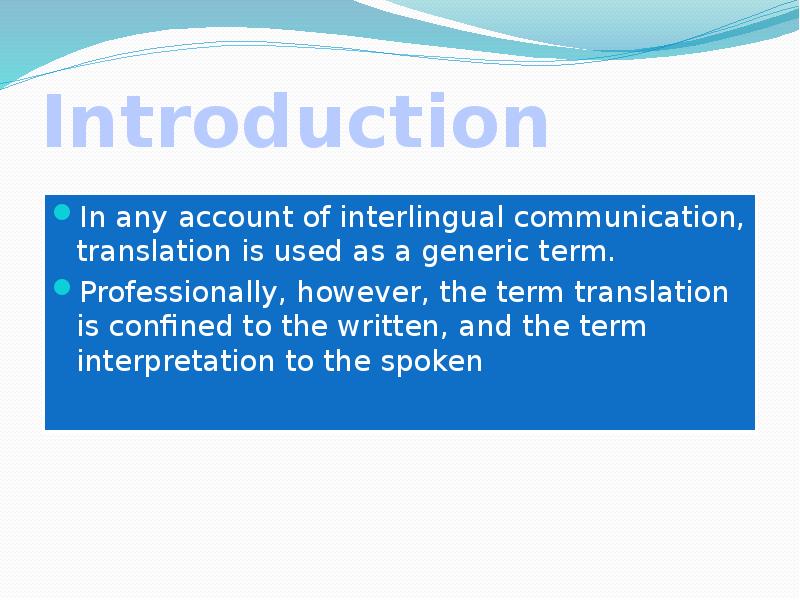
Introduction In any account of interlingual communication, translation is used as a generic term. Professionally, however, the term translation is...
Описание слайда:

Introduction In any account of interlingual communication, translation is used as a generic term. Professionally, however, the term translation is confined to the written, and the term interpretation to the spoken

Слайд 3


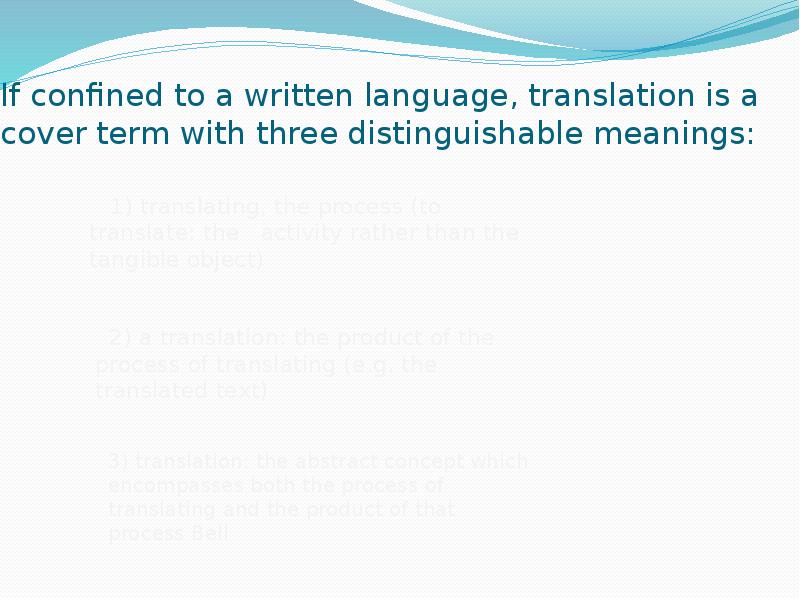
If confined to a written language, translation is a cover term with three distinguishable meanings:
Описание слайда:

If confined to a written language, translation is a cover term with three distinguishable meanings:

Слайд 4


The definitions of translation suggested above imply that producing the same meaning or message in the target language text as intended by the...
Описание слайда:

The definitions of translation suggested above imply that producing the same meaning or message in the target language text as intended by the original author is the main objective of a translator. This notion of 'sameness' is often understood as an equivalence relation between the source and target texts. This equivalence relation is generally considered the most salient feature of a quality translation. The definitions of translation suggested above imply that producing the same meaning or message in the target language text as intended by the original author is the main objective of a translator. This notion of 'sameness' is often understood as an equivalence relation between the source and target texts. This equivalence relation is generally considered the most salient feature of a quality translation.

Слайд 5


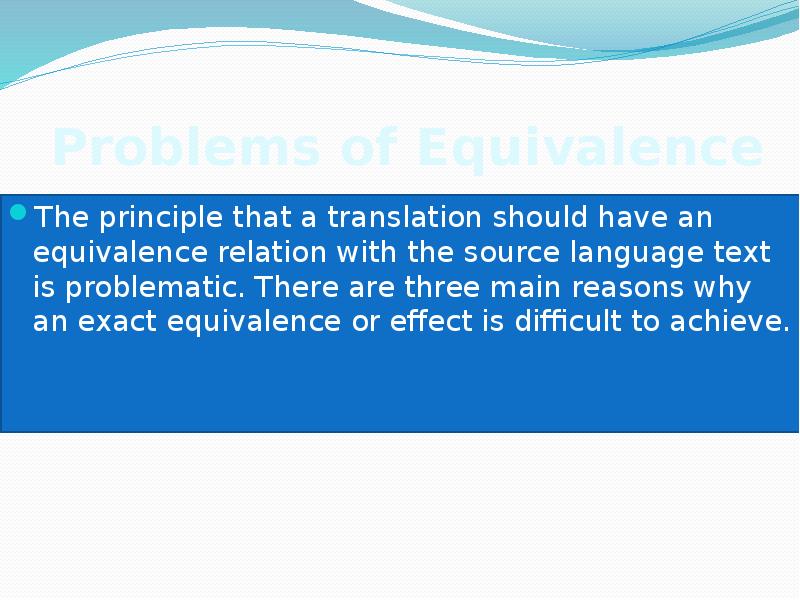
Problems of Equivalence The principle that a translation should have an equivalence relation with the source language text is problematic. There are...
Описание слайда:
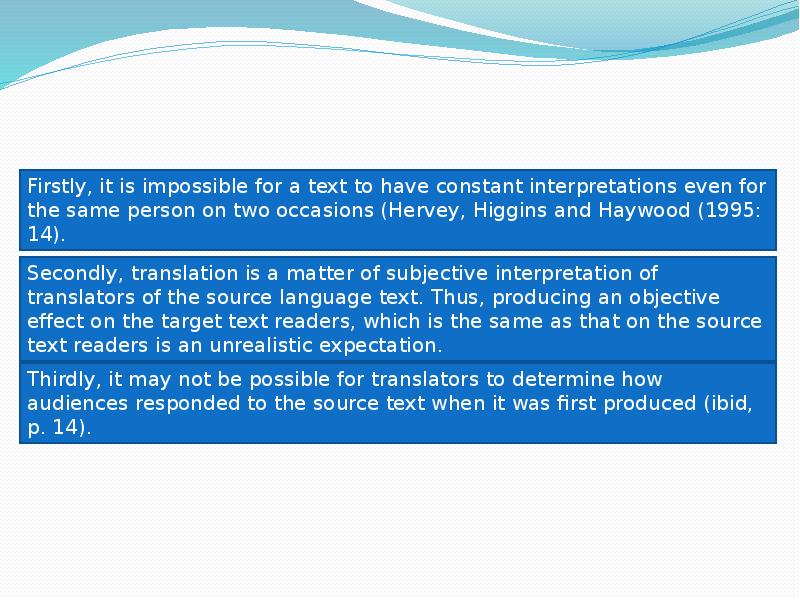
Problems of Equivalence The principle that a translation should have an equivalence relation with the source language text is problematic. There are three main reasons why an exact equivalence or effect is difficult to achieve.

Слайд 6


Equivalence in translation: some problem-solving strategies, слайд №6
Описание слайда:

Слайд 7


Dynamic equivalence is based on the principle of equivalent effect, where the relationship between the receptor and message should be substantially...
Описание слайда:
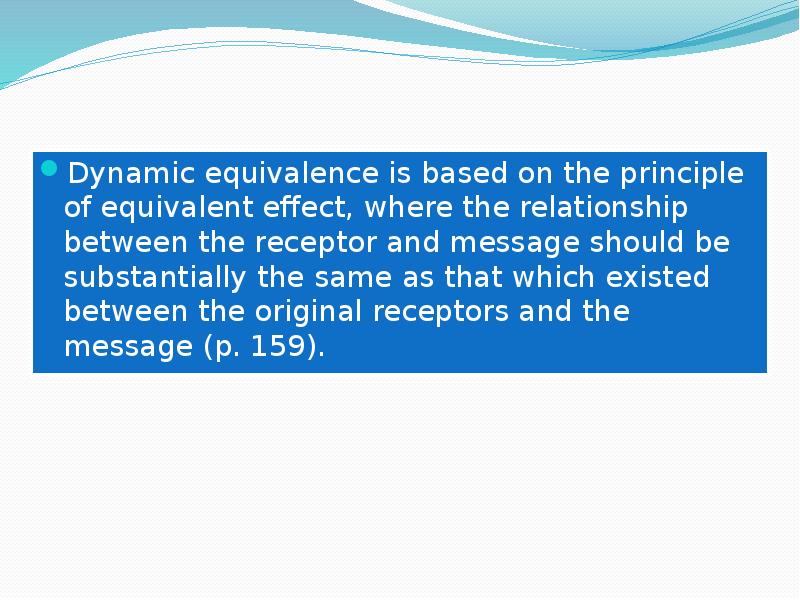
Dynamic equivalence is based on the principle of equivalent effect, where the relationship between the receptor and message should be substantially the same as that which existed between the original receptors and the message (p. 159). Dynamic equivalence is based on the principle of equivalent effect, where the relationship between the receptor and message should be substantially the same as that which existed between the original receptors and the message (p. 159).

Слайд 8


Munday (2001) describes these five different types of equivalence as follows:
Описание слайда:
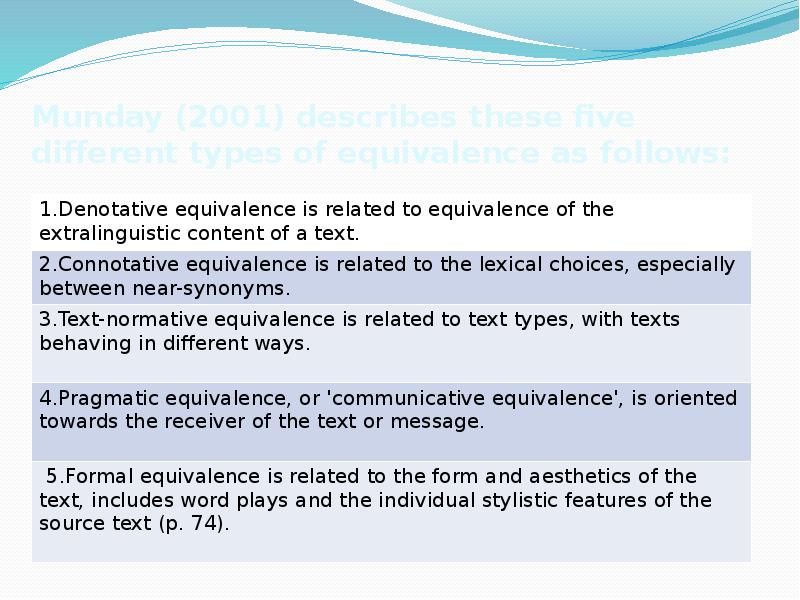
Munday (2001) describes these five different types of equivalence as follows:

Слайд 9


Strategies to solve problems of equivalence As has been mentioned above, problems of equivalence occur at various levels, ranging from word to...
Описание слайда:
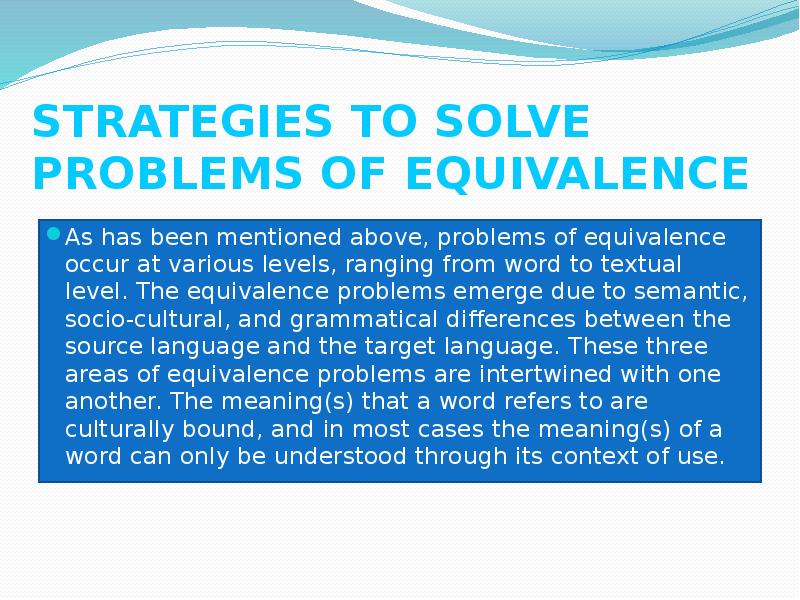
Strategies to solve problems of equivalence As has been mentioned above, problems of equivalence occur at various levels, ranging from word to textual level. The equivalence problems emerge due to semantic, socio-cultural, and grammatical differences between the source language and the target language. These three areas of equivalence problems are intertwined with one another. The meaning(s) that a word refers to are culturally bound, and in most cases the meaning(s) of a word can only be understood through its context of use.

Слайд 10


Addition of information
Описание слайда:
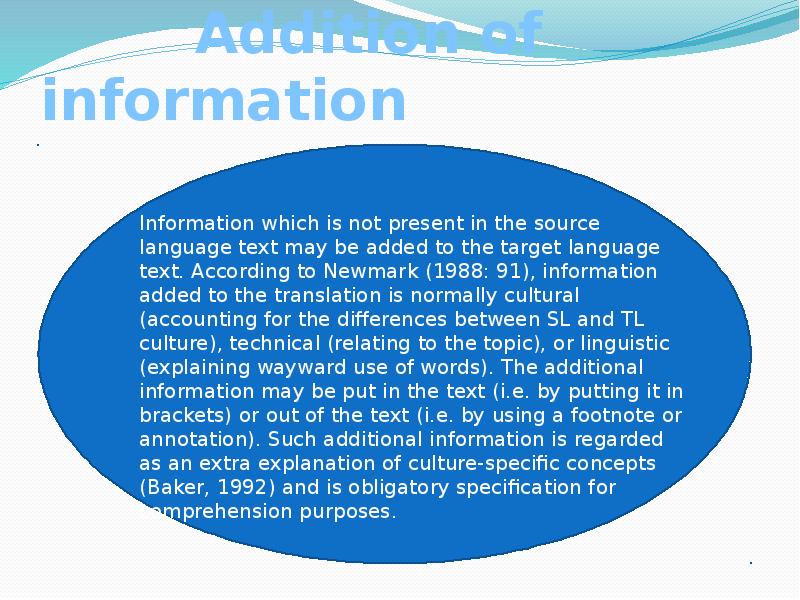
Addition of information

Слайд 11


Deletion of information Baker (1992: 40) refers to deletion as "omission of a lexical item due to grammatical or semantic patterns of the...
Описание слайда:
Deletion of information Baker (1992: 40) refers to deletion as "omission of a lexical item due to grammatical or semantic patterns of the receptor language" (Baker, 1992: 40). She states further that this strategy may sound rather drastic, but in fact it does no harm to omit translating a word or expression in some contexts. If the meaning conveyed by a particular item or expression is not vital enough to the development of the text to justify distracting the reader with lengthy explanations, translators can and often do simply omit translating the word or expression in question (Baker, 1992: 40).

Слайд 12


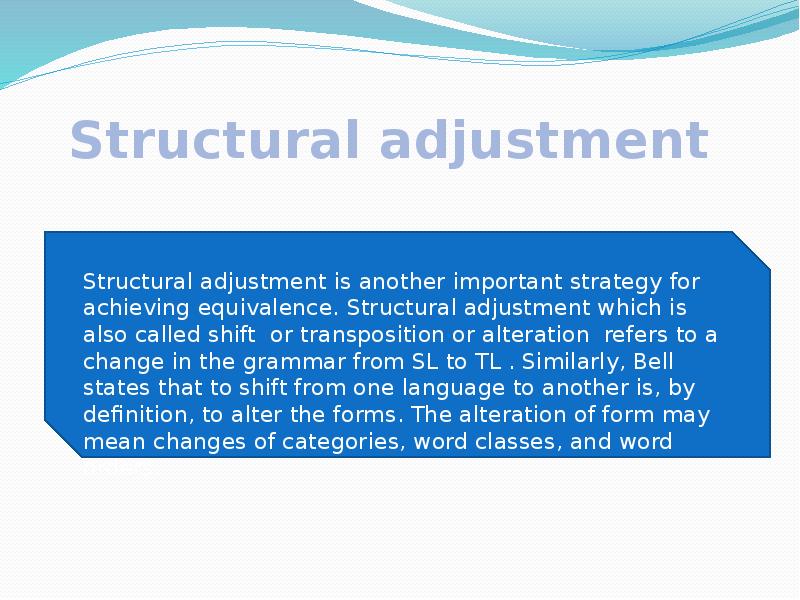
Structural adjustment
Описание слайда:
Structural adjustment

Слайд 13


Structural adjustment, according to Nida (1964: 226), has various purposes, including:
Описание слайда:
Structural adjustment, according to Nida (1964: 226), has various purposes, including:

Слайд 14


Thanks for attention!
Описание слайда:
Thanks for attention!


Похожие презентации
Mypresentation.ru
Загрузить презентацию