🗊 Презентация Chemical bonds

Категория: Химия
Нажмите для полного просмотра!
Chemical bonds, слайд №1 Chemical bonds, слайд №2 Chemical bonds, слайд №3 Chemical bonds, слайд №4 Chemical bonds, слайд №5 Chemical bonds, слайд №6 Chemical bonds, слайд №7 Chemical bonds, слайд №8 Chemical bonds, слайд №9 Chemical bonds, слайд №10 Chemical bonds, слайд №11 Chemical bonds, слайд №12 Chemical bonds, слайд №13 Chemical bonds, слайд №14 Chemical bonds, слайд №15 Chemical bonds, слайд №16 Chemical bonds, слайд №17 Chemical bonds, слайд №18 Chemical bonds, слайд №19 Chemical bonds, слайд №20 Chemical bonds, слайд №21 Chemical bonds, слайд №22 Chemical bonds, слайд №23 Chemical bonds, слайд №24 Chemical bonds, слайд №25 Chemical bonds, слайд №26 Chemical bonds, слайд №27 Chemical bonds, слайд №28 Chemical bonds, слайд №29 Chemical bonds, слайд №30 Chemical bonds, слайд №31 Chemical bonds, слайд №32 Chemical bonds, слайд №33 Chemical bonds, слайд №34 Chemical bonds, слайд №35 Chemical bonds, слайд №36 Chemical bonds, слайд №37 Chemical bonds, слайд №38 Chemical bonds, слайд №39 Chemical bonds, слайд №40 Chemical bonds, слайд №41 Chemical bonds, слайд №42 Chemical bonds, слайд №43 Chemical bonds, слайд №44

Содержание

Вы можете ознакомиться и скачать презентацию на тему Chemical bonds. Доклад-сообщение содержит 44 слайдов. Презентации для любого класса можно скачать бесплатно. Если материал и наш сайт презентаций Mypresentation Вам понравились – поделитесь им с друзьями с помощью социальных кнопок и добавьте в закладки в своем браузере.
Слайды и текст этой презентации


Слайд 1


Chemical bonds, слайд №1
Описание слайда:
Слайд 2


Chemical bonds, слайд №2
Описание слайда:
Слайд 3


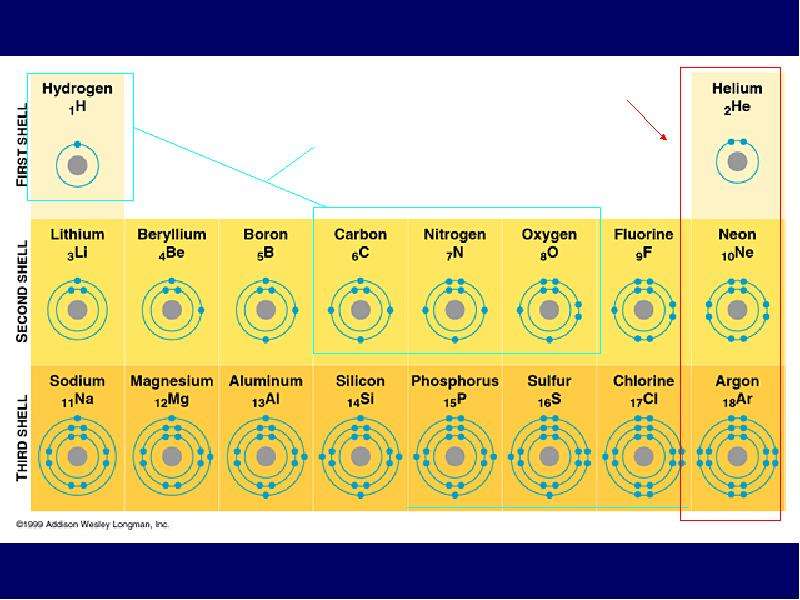
electron shells Atomic number = number of Electrons Electrons vary in the amount of energy they possess, and they occur at certain energy levels or...
Описание слайда:
electron shells Atomic number = number of Electrons Electrons vary in the amount of energy they possess, and they occur at certain energy levels or electron shells. Electron shells determine how an atom behaves when it encounters other atoms

Слайд 4


Electrons are placed in shells according to rules: The 1st shell can hold up to two electrons, and each shell thereafter can hold up to 8 electrons.
Описание слайда:
Electrons are placed in shells according to rules: The 1st shell can hold up to two electrons, and each shell thereafter can hold up to 8 electrons.

Слайд 5


Chemical bonds, слайд №5
Описание слайда:

Слайд 6


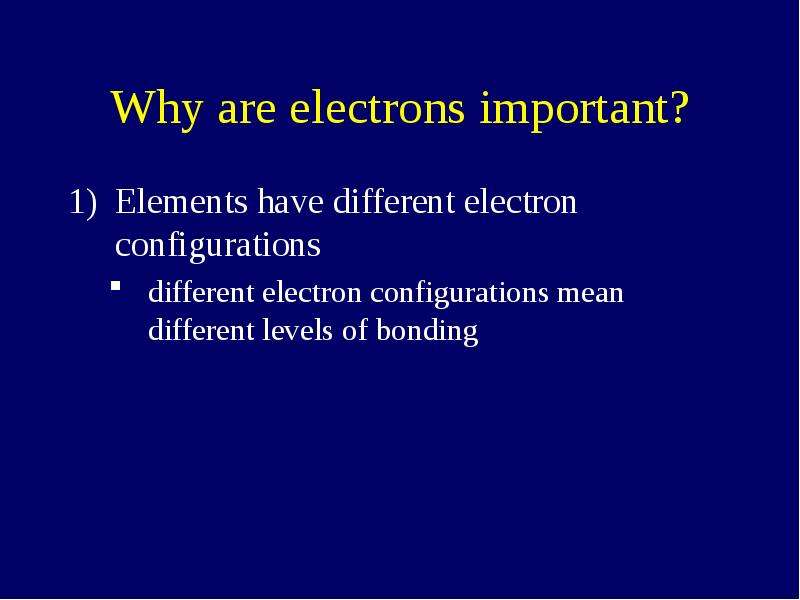
Why are electrons important? Elements have different electron configurations different electron configurations mean different levels of bonding
Описание слайда:
Why are electrons important? Elements have different electron configurations different electron configurations mean different levels of bonding

Слайд 7


Chemical bonds, слайд №7
Описание слайда:

Слайд 8


Chemical bonds, слайд №8
Описание слайда:

Слайд 9


Electron Dot Structures Symbols of atoms with dots to represent the valence-shell electrons 1 2 13 14 15 16 17 18 H He:            Li...
Описание слайда:
Electron Dot Structures Symbols of atoms with dots to represent the valence-shell electrons 1 2 13 14 15 16 17 18 H He:            Li Be  B   C   N   O  : F  :Ne :                    Na Mg  Al  Si  P S :Cl  :Ar :        

Слайд 10


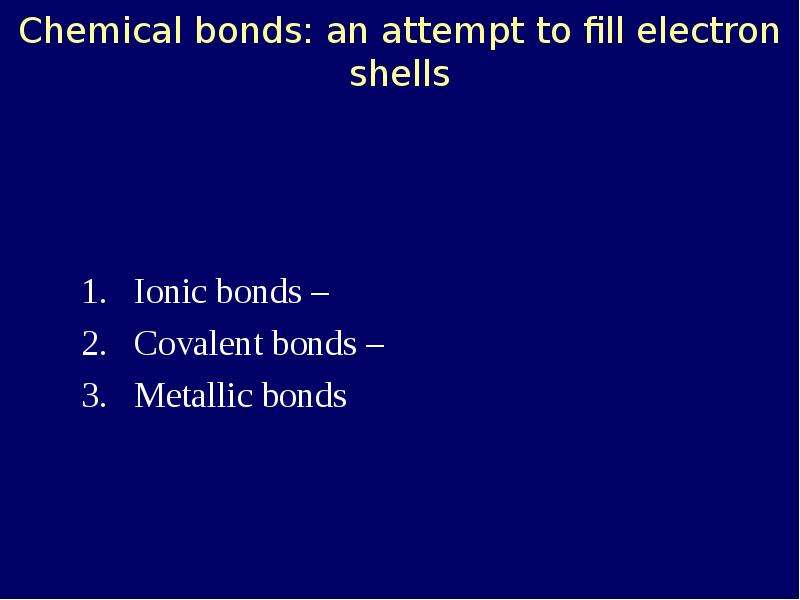
Chemical bonds: an attempt to fill electron shells Ionic bonds – Covalent bonds – Metallic bonds
Описание слайда:
Chemical bonds: an attempt to fill electron shells Ionic bonds – Covalent bonds – Metallic bonds

Слайд 11


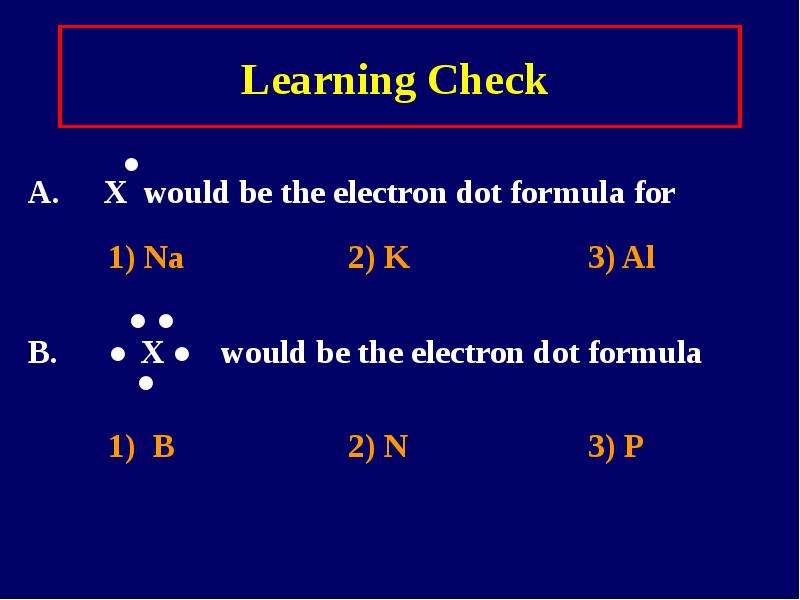
Learning Check  A. X would be the electron dot formula for 1) Na 2) K 3) Al   B.  X  would be the electron dot formula  1) B 2) N 3) P
Описание слайда:
Learning Check  A. X would be the electron dot formula for 1) Na 2) K 3) Al   B.  X  would be the electron dot formula  1) B 2) N 3) P

Слайд 12


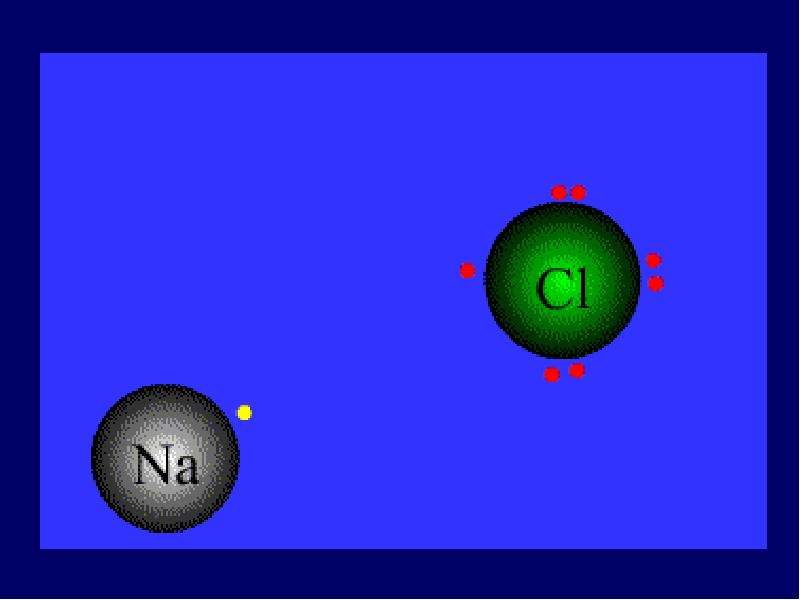
IONIC BOND bond formed between two ions by the transfer of electrons
Описание слайда:
IONIC BOND bond formed between two ions by the transfer of electrons

Слайд 13


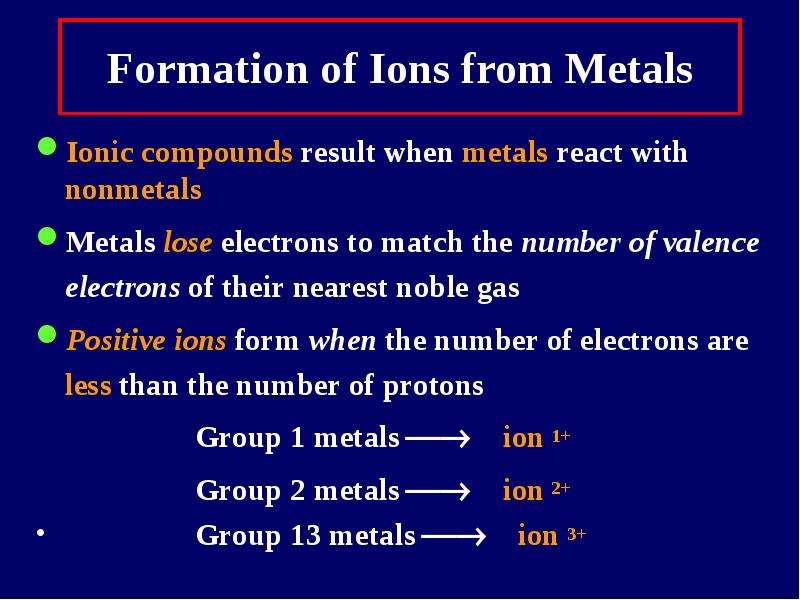
Formation of Ions from Metals Ionic compounds result when metals react with nonmetals Metals lose electrons to match the number of valence electrons...
Описание слайда:
Formation of Ions from Metals Ionic compounds result when metals react with nonmetals Metals lose electrons to match the number of valence electrons of their nearest noble gas Positive ions form when the number of electrons are less than the number of protons Group 1 metals  ion 1+ Group 2 metals  ion 2+ Group 13 metals  ion 3+

Слайд 14


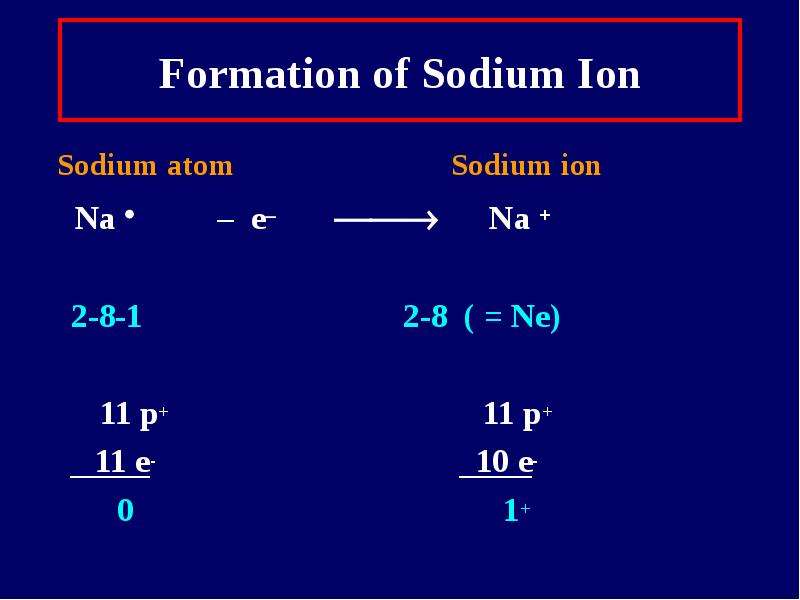
Formation of Sodium Ion Sodium atom Sodium ion Na  – e  Na + 2-8-1 2-8 ( = Ne) 11 p+ 11 p+ 11 e- 10 e- 0 1+
Описание слайда:
Formation of Sodium Ion Sodium atom Sodium ion Na  – e  Na + 2-8-1 2-8 ( = Ne) 11 p+ 11 p+ 11 e- 10 e- 0 1+

Слайд 15


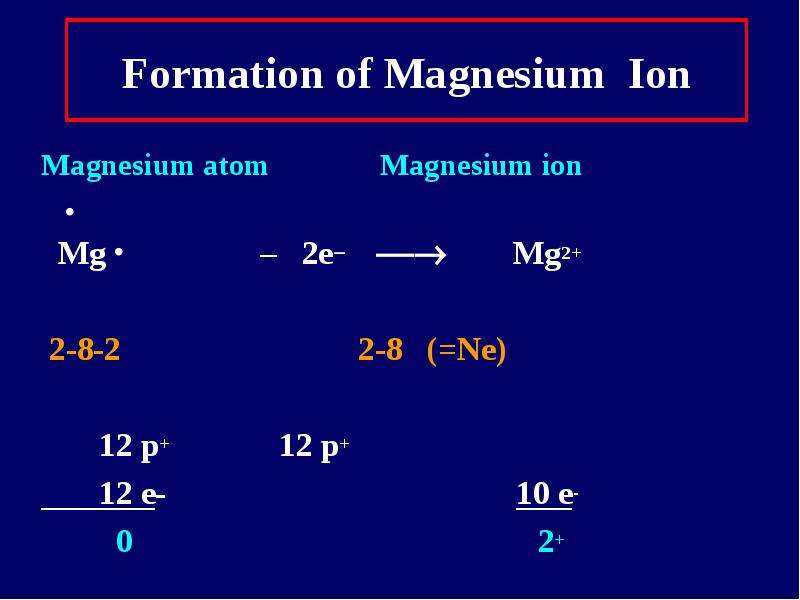
Formation of Magnesium Ion Magnesium atom Magnesium ion  Mg  – 2e  Mg2+ 2-8-2 2-8 (=Ne) 12 p+ 12 p+ 12 e- 10 e- 0 2+
Описание слайда:
Formation of Magnesium Ion Magnesium atom Magnesium ion  Mg  – 2e  Mg2+ 2-8-2 2-8 (=Ne) 12 p+ 12 p+ 12 e- 10 e- 0 2+

Слайд 16


Some Typical Ions with Positive Charges (Cations) Group 1 Group 2 Group 13 H+ Mg2+ Al3+ Li+ Ca2+ Na+ Sr2+ K+ Ba2+
Описание слайда:
Some Typical Ions with Positive Charges (Cations) Group 1 Group 2 Group 13 H+ Mg2+ Al3+ Li+ Ca2+ Na+ Sr2+ K+ Ba2+

Слайд 17


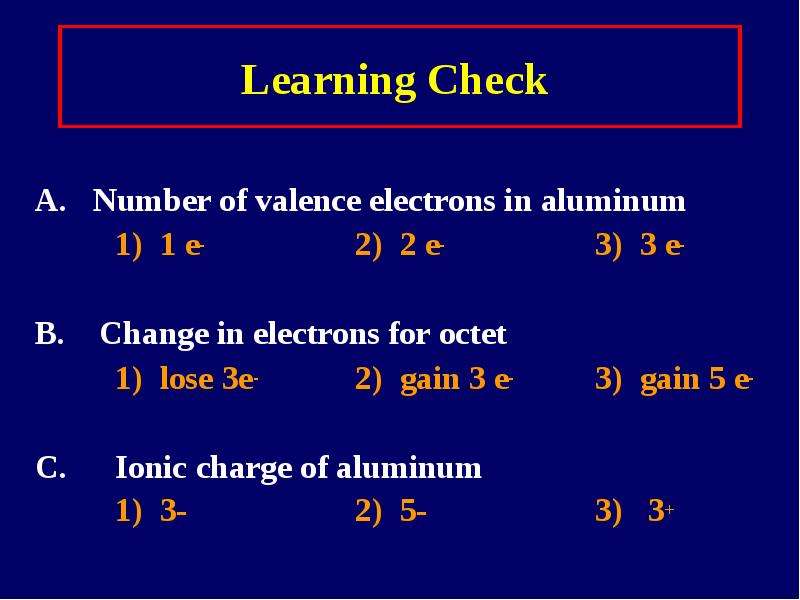
Learning Check A. Number of valence electrons in aluminum 1) 1 e- 2) 2 e- 3) 3 e- B. Change in electrons for octet 1) lose 3e- 2) gain 3 e- 3) gain 5...
Описание слайда:
Learning Check A. Number of valence electrons in aluminum 1) 1 e- 2) 2 e- 3) 3 e- B. Change in electrons for octet 1) lose 3e- 2) gain 3 e- 3) gain 5 e- C. Ionic charge of aluminum 1) 3- 2) 5- 3) 3+

Слайд 18


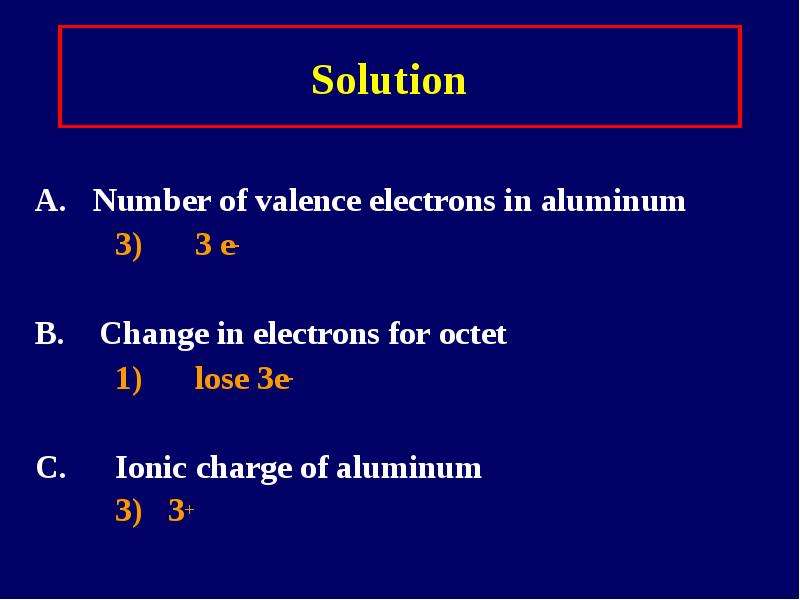
Solution A. Number of valence electrons in aluminum 3) 3 e- B. Change in electrons for octet 1) lose 3e- C. Ionic charge of aluminum 3) 3+
Описание слайда:
Solution A. Number of valence electrons in aluminum 3) 3 e- B. Change in electrons for octet 1) lose 3e- C. Ionic charge of aluminum 3) 3+

Слайд 19


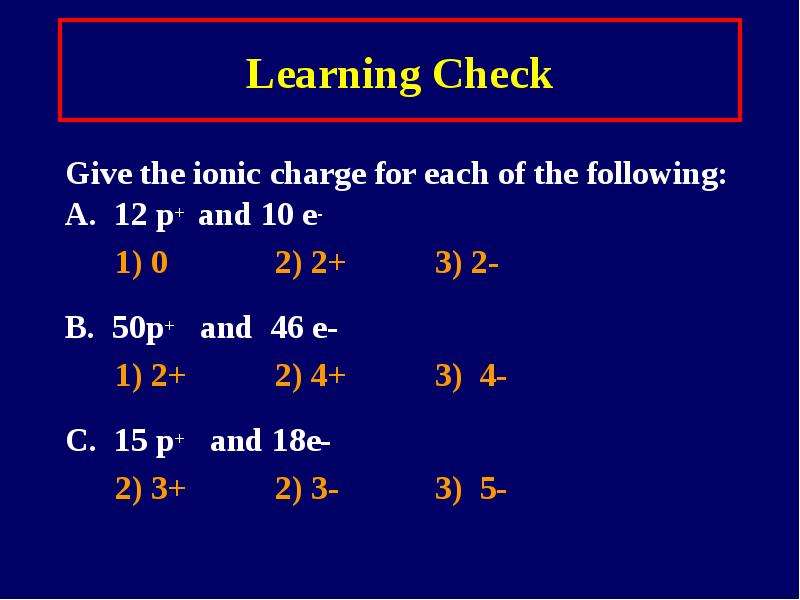
Learning Check Give the ionic charge for each of the following: A. 12 p+ and 10 e- 1) 0 2) 2+ 3) 2- B. 50p+ and 46 e- 1) 2+ 2) 4+ 3) 4- C. 15 p+ and...
Описание слайда:
Learning Check Give the ionic charge for each of the following: A. 12 p+ and 10 e- 1) 0 2) 2+ 3) 2- B. 50p+ and 46 e- 1) 2+ 2) 4+ 3) 4- C. 15 p+ and 18e- 2) 3+ 2) 3- 3) 5-

Слайд 20


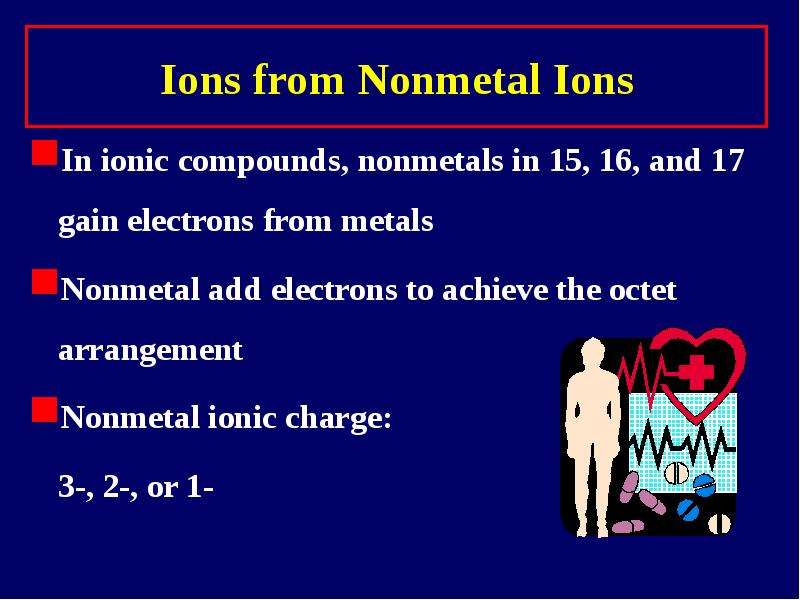
Ions from Nonmetal Ions In ionic compounds, nonmetals in 15, 16, and 17 gain electrons from metals Nonmetal add electrons to achieve the octet...
Описание слайда:
Ions from Nonmetal Ions In ionic compounds, nonmetals in 15, 16, and 17 gain electrons from metals Nonmetal add electrons to achieve the octet arrangement Nonmetal ionic charge: 3-, 2-, or 1-

Слайд 21


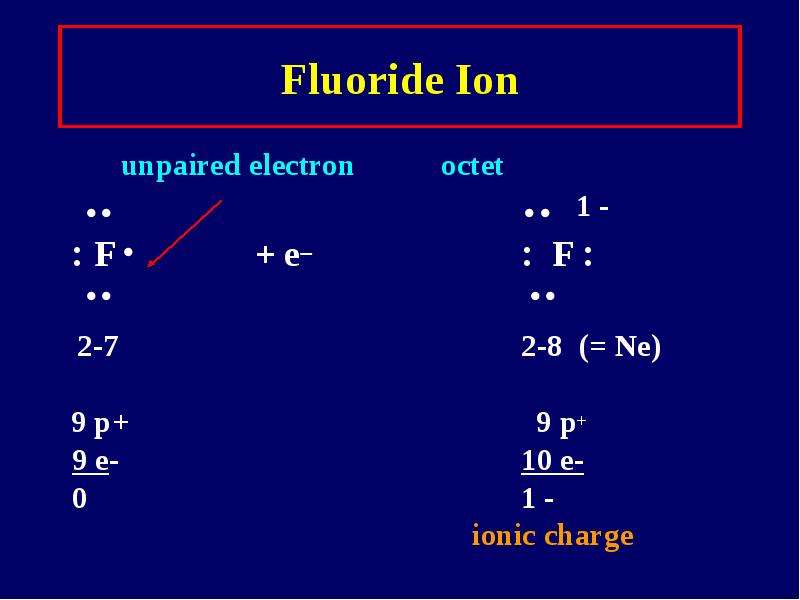
Fluoride Ion unpaired electron octet     1 - : F  + e : F :     2-7 2-8 (= Ne) 9 p+ 9 p+ 9 e- 10 e- 0 1 - ionic charge
Описание слайда:
Fluoride Ion unpaired electron octet     1 - : F  + e : F :     2-7 2-8 (= Ne) 9 p+ 9 p+ 9 e- 10 e- 0 1 - ionic charge

Слайд 22


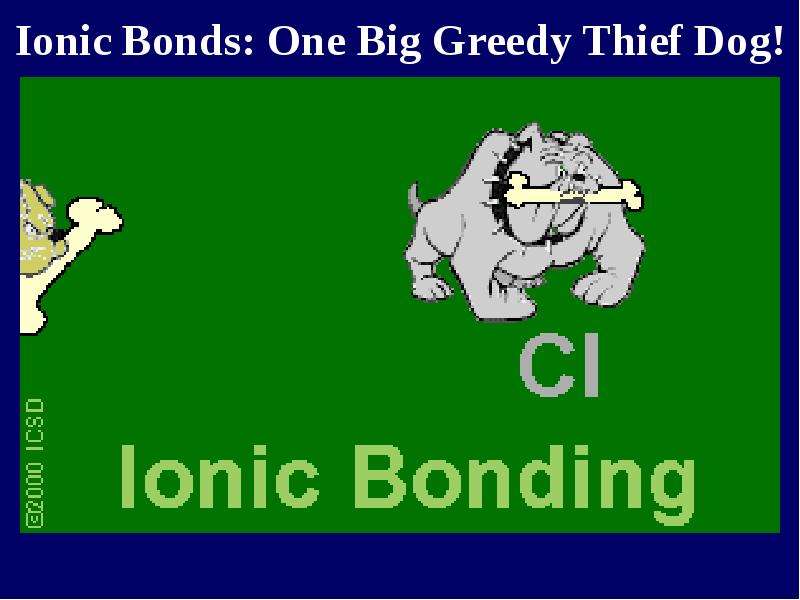
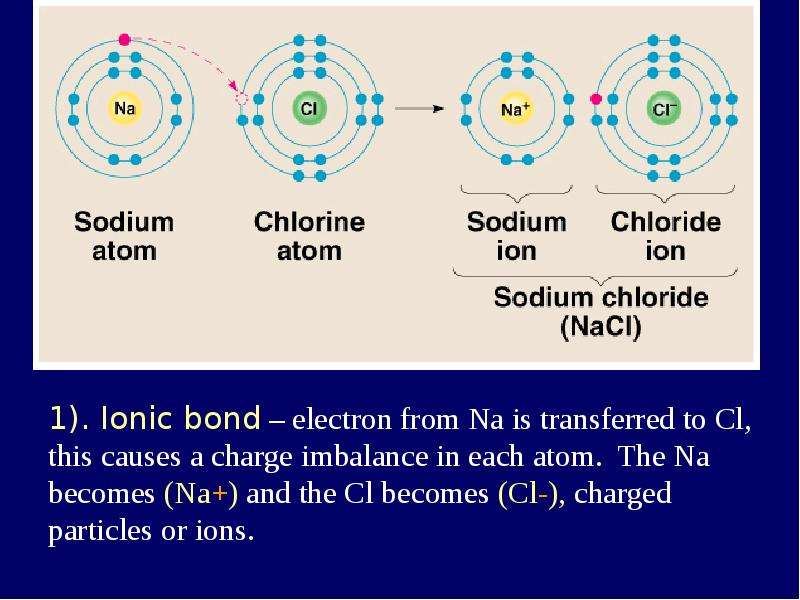
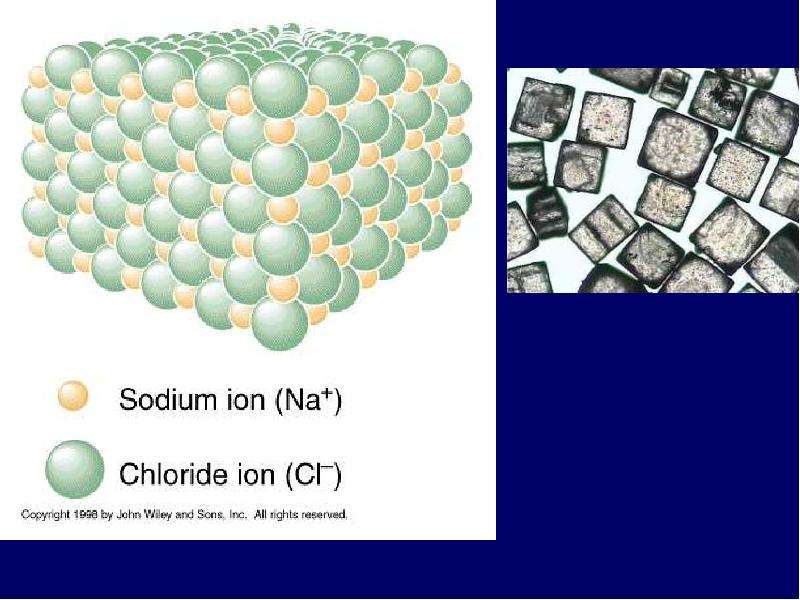
Ionic Bond Between atoms of metals and nonmetals with very different electronegativity Bond formed by transfer of electrons Produce charged ions all...
Описание слайда:
Ionic Bond Between atoms of metals and nonmetals with very different electronegativity Bond formed by transfer of electrons Produce charged ions all states. Conductors and have high melting point. Examples; NaCl, CaCl2, K2O

Слайд 23


Chemical bonds, слайд №23
Описание слайда:

Слайд 24


Chemical bonds, слайд №24
Описание слайда:

Слайд 25


Chemical bonds, слайд №25
Описание слайда:

Слайд 26


Chemical bonds, слайд №26
Описание слайда:

Слайд 27


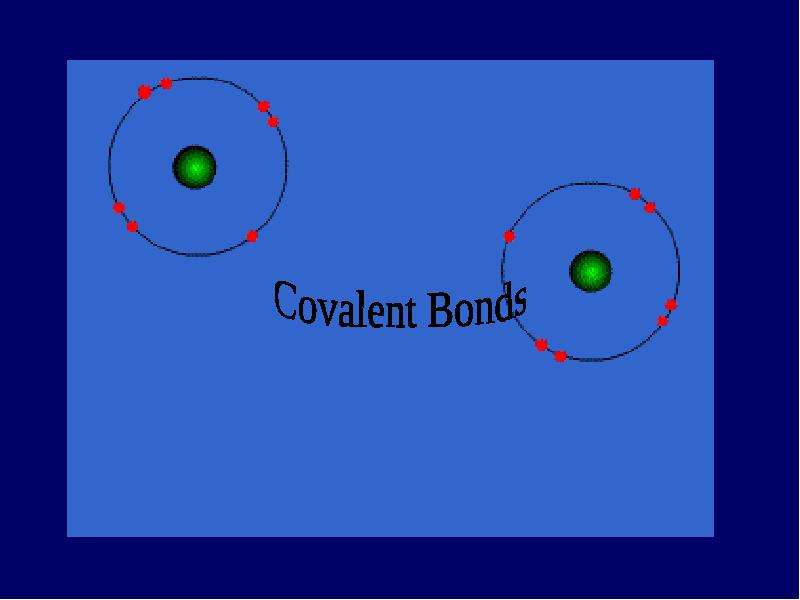
COVALENT BOND bond formed by the sharing of electrons
Описание слайда:
COVALENT BOND bond formed by the sharing of electrons

Слайд 28


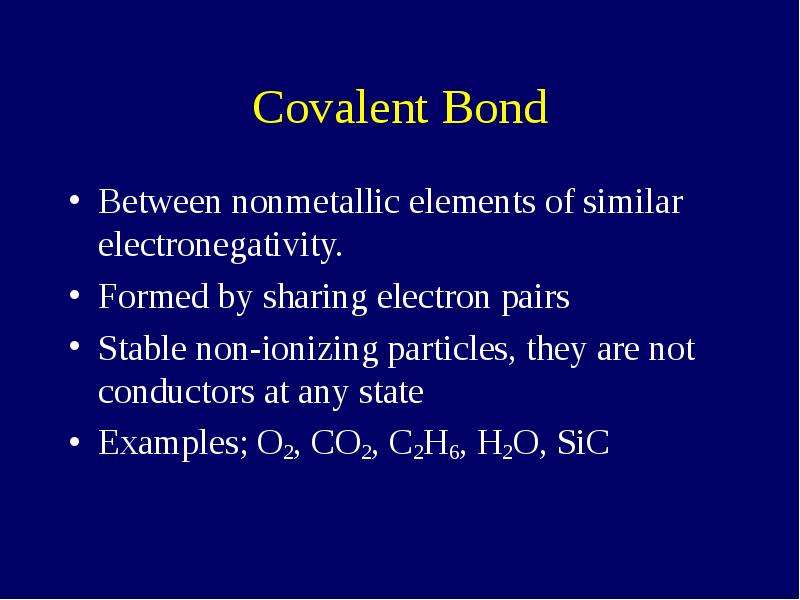
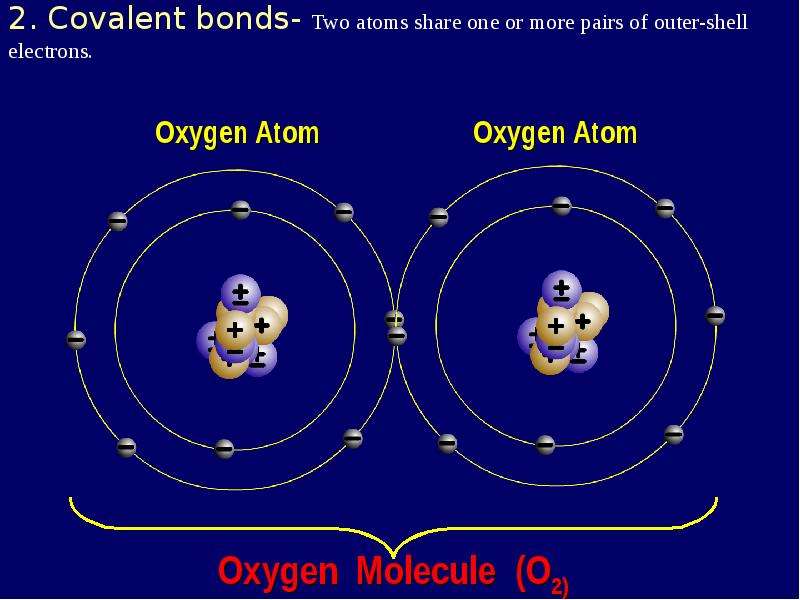
Covalent Bond Between nonmetallic elements of similar electronegativity. Formed by sharing electron pairs Stable non-ionizing particles, they are not...
Описание слайда:
Covalent Bond Between nonmetallic elements of similar electronegativity. Formed by sharing electron pairs Stable non-ionizing particles, they are not conductors at any state Examples; O2, CO2, C2H6, H2O, SiC

Слайд 29


Chemical bonds, слайд №29
Описание слайда:

Слайд 30


Bonds in all the polyatomic ions and diatomics are all covalent bonds Bonds in all the polyatomic ions and diatomics are all covalent bonds
Описание слайда:
Bonds in all the polyatomic ions and diatomics are all covalent bonds Bonds in all the polyatomic ions and diatomics are all covalent bonds

Слайд 31


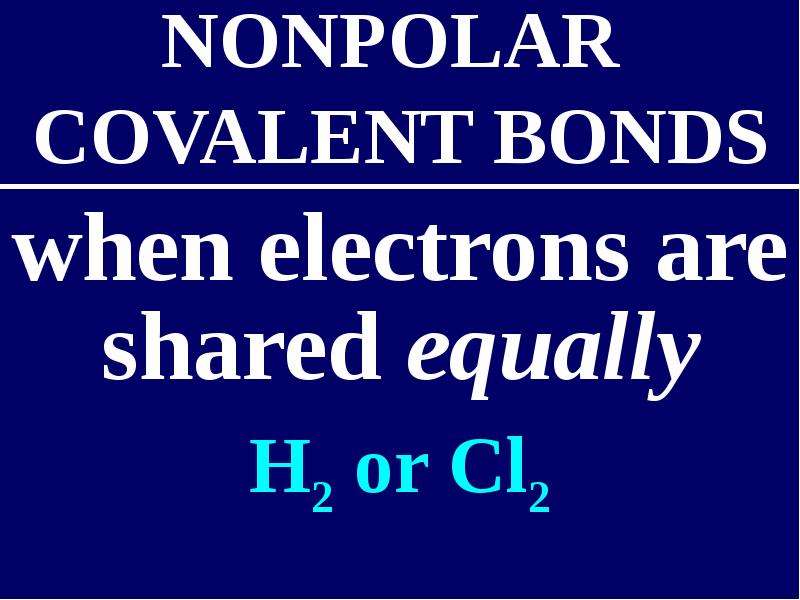
when electrons are shared equally
Описание слайда:
when electrons are shared equally

Слайд 32


Chemical bonds, слайд №32
Описание слайда:

Слайд 33


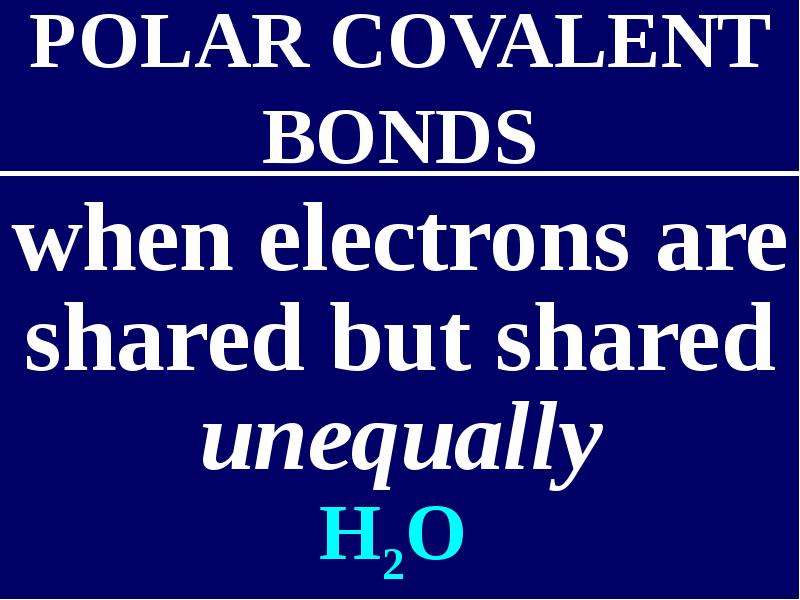
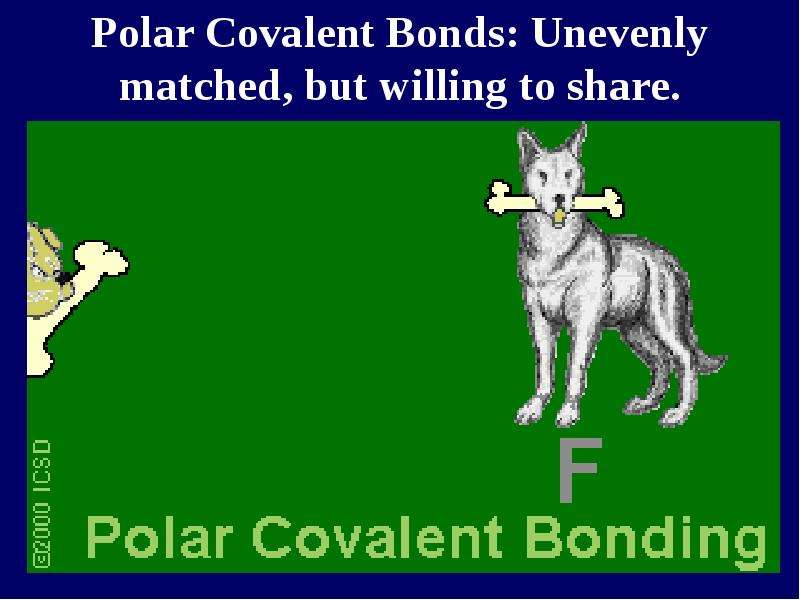
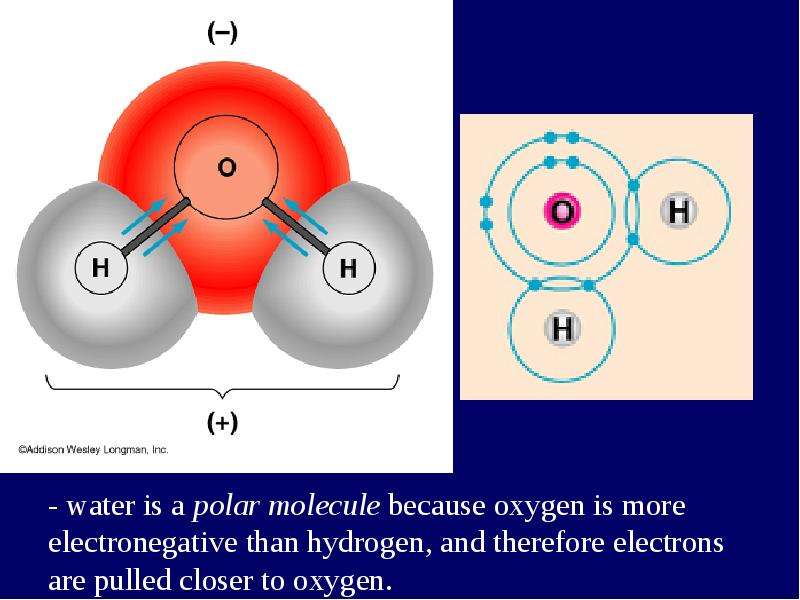
when electrons are shared but shared unequally
Описание слайда:
when electrons are shared but shared unequally

Слайд 34


Chemical bonds, слайд №34
Описание слайда:

Слайд 35


Chemical bonds, слайд №35
Описание слайда:

Слайд 36


METALLIC BOND bond found in metals; holds metal atoms together very strongly
Описание слайда:
METALLIC BOND bond found in metals; holds metal atoms together very strongly

Слайд 37


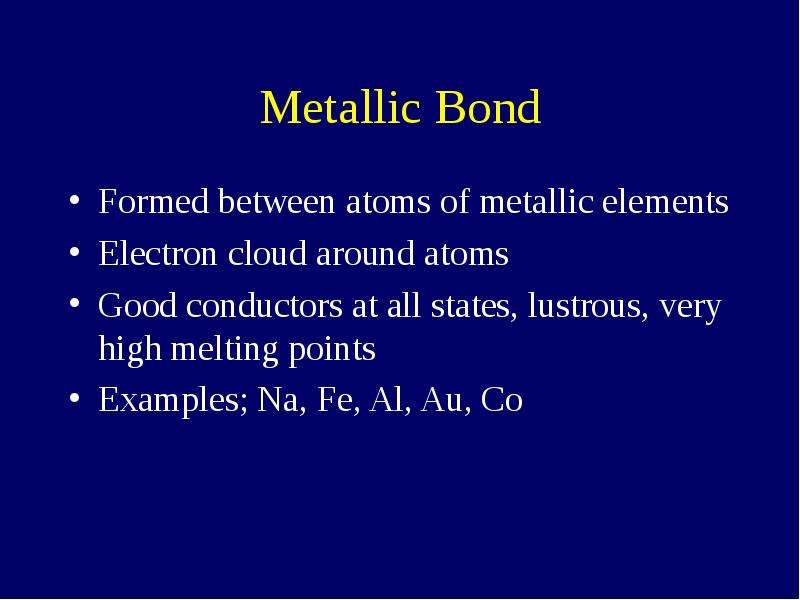
Metallic Bond Formed between atoms of metallic elements Electron cloud around atoms Good conductors at all states, lustrous, very high melting points...
Описание слайда:
Metallic Bond Formed between atoms of metallic elements Electron cloud around atoms Good conductors at all states, lustrous, very high melting points Examples; Na, Fe, Al, Au, Co

Слайд 38


Chemical bonds, слайд №38
Описание слайда:

Слайд 39


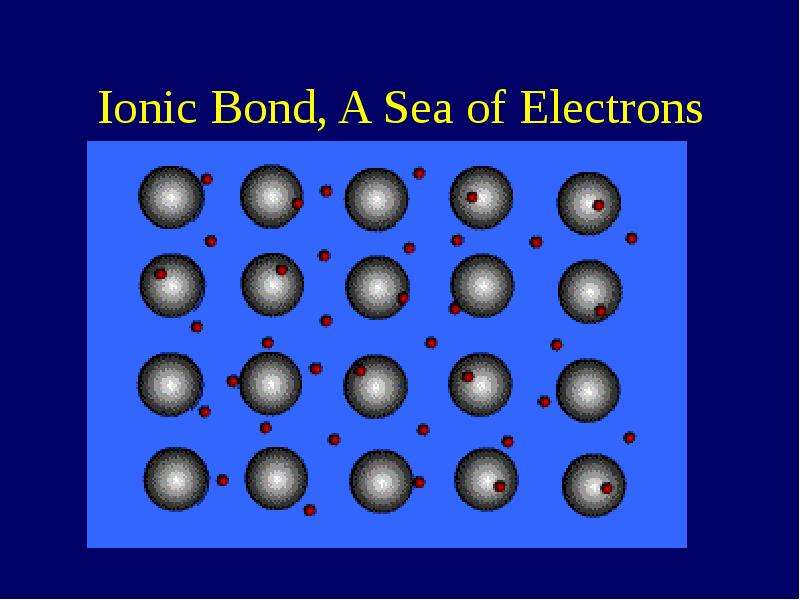
Ionic Bond, A Sea of Electrons
Описание слайда:
Ionic Bond, A Sea of Electrons

Слайд 40


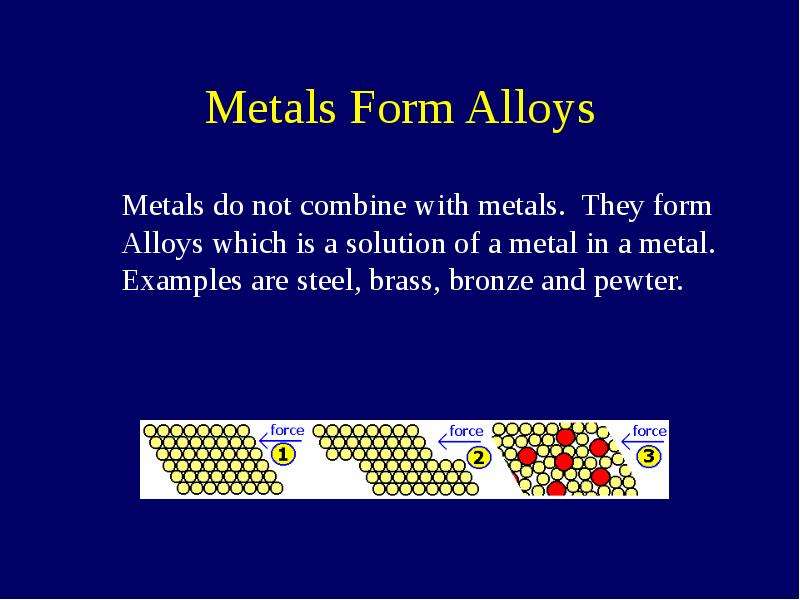
Metals Form Alloys
Описание слайда:
Metals Form Alloys

Слайд 41


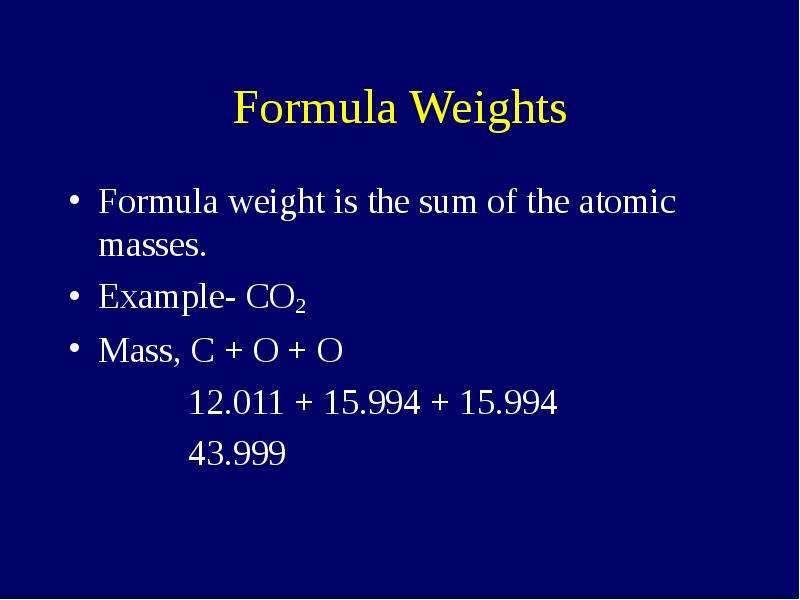
Formula Weights Formula weight is the sum of the atomic masses. Example- CO2 Mass, C + O + O 12.011 + 15.994 + 15.994 43.999
Описание слайда:
Formula Weights Formula weight is the sum of the atomic masses. Example- CO2 Mass, C + O + O 12.011 + 15.994 + 15.994 43.999

Слайд 42


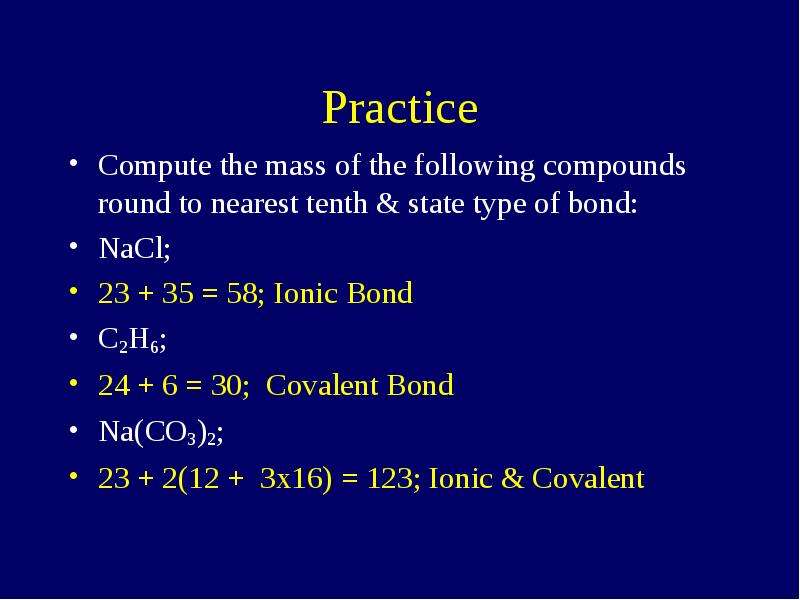
Practice Compute the mass of the following compounds round to nearest tenth & state type of bond: NaCl; 23 + 35 = 58; Ionic Bond C2H6; 24 + 6 = 30;...
Описание слайда:
Practice Compute the mass of the following compounds round to nearest tenth & state type of bond: NaCl; 23 + 35 = 58; Ionic Bond C2H6; 24 + 6 = 30; Covalent Bond Na(CO3)2; 23 + 2(12 + 3x16) = 123; Ionic & Covalent

Слайд 43


Chemical bonds, слайд №43
Описание слайда:

Слайд 44


Chemical bonds, слайд №44
Описание слайда:


Теги Chemical bonds
Похожие презентации
Mypresentation.ru
Загрузить презентацию