🗊 Презентация Industrial Economics A: Structure, Conduct and Performance ( lecture 1 )

Нажмите для полного просмотра!
Industrial Economics A: Structure, Conduct and Performance ( lecture 1 ), слайд №1 Industrial Economics A: Structure, Conduct and Performance ( lecture 1 ), слайд №2 Industrial Economics A: Structure, Conduct and Performance ( lecture 1 ), слайд №3 Industrial Economics A: Structure, Conduct and Performance ( lecture 1 ), слайд №4 Industrial Economics A: Structure, Conduct and Performance ( lecture 1 ), слайд №5 Industrial Economics A: Structure, Conduct and Performance ( lecture 1 ), слайд №6 Industrial Economics A: Structure, Conduct and Performance ( lecture 1 ), слайд №7 Industrial Economics A: Structure, Conduct and Performance ( lecture 1 ), слайд №8 Industrial Economics A: Structure, Conduct and Performance ( lecture 1 ), слайд №9 Industrial Economics A: Structure, Conduct and Performance ( lecture 1 ), слайд №10 Industrial Economics A: Structure, Conduct and Performance ( lecture 1 ), слайд №11 Industrial Economics A: Structure, Conduct and Performance ( lecture 1 ), слайд №12 Industrial Economics A: Structure, Conduct and Performance ( lecture 1 ), слайд №13 Industrial Economics A: Structure, Conduct and Performance ( lecture 1 ), слайд №14 Industrial Economics A: Structure, Conduct and Performance ( lecture 1 ), слайд №15 Industrial Economics A: Structure, Conduct and Performance ( lecture 1 ), слайд №16 Industrial Economics A: Structure, Conduct and Performance ( lecture 1 ), слайд №17 Industrial Economics A: Structure, Conduct and Performance ( lecture 1 ), слайд №18 Industrial Economics A: Structure, Conduct and Performance ( lecture 1 ), слайд №19 Industrial Economics A: Structure, Conduct and Performance ( lecture 1 ), слайд №20 Industrial Economics A: Structure, Conduct and Performance ( lecture 1 ), слайд №21 Industrial Economics A: Structure, Conduct and Performance ( lecture 1 ), слайд №22 Industrial Economics A: Structure, Conduct and Performance ( lecture 1 ), слайд №23 Industrial Economics A: Structure, Conduct and Performance ( lecture 1 ), слайд №24 Industrial Economics A: Structure, Conduct and Performance ( lecture 1 ), слайд №25 Industrial Economics A: Structure, Conduct and Performance ( lecture 1 ), слайд №26 Industrial Economics A: Structure, Conduct and Performance ( lecture 1 ), слайд №27 Industrial Economics A: Structure, Conduct and Performance ( lecture 1 ), слайд №28 Industrial Economics A: Structure, Conduct and Performance ( lecture 1 ), слайд №29 Industrial Economics A: Structure, Conduct and Performance ( lecture 1 ), слайд №30 Industrial Economics A: Structure, Conduct and Performance ( lecture 1 ), слайд №31 Industrial Economics A: Structure, Conduct and Performance ( lecture 1 ), слайд №32 Industrial Economics A: Structure, Conduct and Performance ( lecture 1 ), слайд №33 Industrial Economics A: Structure, Conduct and Performance ( lecture 1 ), слайд №34 Industrial Economics A: Structure, Conduct and Performance ( lecture 1 ), слайд №35 Industrial Economics A: Structure, Conduct and Performance ( lecture 1 ), слайд №36 Industrial Economics A: Structure, Conduct and Performance ( lecture 1 ), слайд №37 Industrial Economics A: Structure, Conduct and Performance ( lecture 1 ), слайд №38 Industrial Economics A: Structure, Conduct and Performance ( lecture 1 ), слайд №39 Industrial Economics A: Structure, Conduct and Performance ( lecture 1 ), слайд №40 Industrial Economics A: Structure, Conduct and Performance ( lecture 1 ), слайд №41 Industrial Economics A: Structure, Conduct and Performance ( lecture 1 ), слайд №42 Industrial Economics A: Structure, Conduct and Performance ( lecture 1 ), слайд №43 Industrial Economics A: Structure, Conduct and Performance ( lecture 1 ), слайд №44 Industrial Economics A: Structure, Conduct and Performance ( lecture 1 ), слайд №45 Industrial Economics A: Structure, Conduct and Performance ( lecture 1 ), слайд №46 Industrial Economics A: Structure, Conduct and Performance ( lecture 1 ), слайд №47 Industrial Economics A: Structure, Conduct and Performance ( lecture 1 ), слайд №48

Содержание

Вы можете ознакомиться и скачать презентацию на тему Industrial Economics A: Structure, Conduct and Performance ( lecture 1 ). Доклад-сообщение содержит 48 слайдов. Презентации для любого класса можно скачать бесплатно. Если материал и наш сайт презентаций Mypresentation Вам понравились – поделитесь им с друзьями с помощью социальных кнопок и добавьте в закладки в своем браузере.
Слайды и текст этой презентации


Слайд 1


Industrial Economics A: Structure, Conduct and Performance Lecture 1
Описание слайда:
Industrial Economics A: Structure, Conduct and Performance Lecture 1

Слайд 2


Module logistics See the module outline for details. Some highlights: Textbooks: Lipczynski, Wilson and Goddard Church Assessment: 1.5 hour exam...
Описание слайда:
Module logistics See the module outline for details. Some highlights: Textbooks: Lipczynski, Wilson and Goddard Church Assessment: 1.5 hour exam (70%), and an individual coursework (30%) The seminar will take place during teaching weeks 9 and 10 (depending on your group).

Слайд 3


Module structure
Описание слайда:
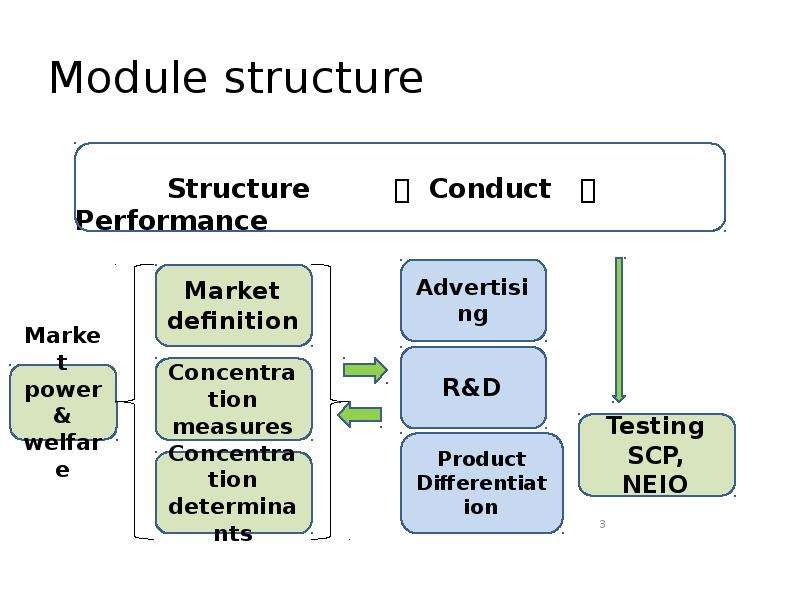
Module structure

Слайд 4


What is industrial organization? IO is the application of microeconomic theory to the analysis of firms, markets and industries In IO (unlike...
Описание слайда:
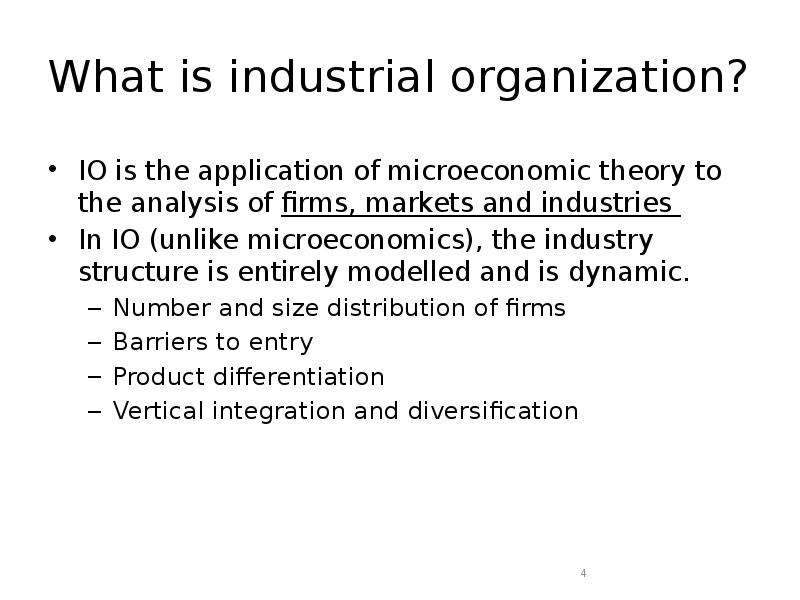
What is industrial organization? IO is the application of microeconomic theory to the analysis of firms, markets and industries In IO (unlike microeconomics), the industry structure is entirely modelled and is dynamic. Number and size distribution of firms Barriers to entry Product differentiation Vertical integration and diversification

Слайд 5


What is industrial organization? IO increases our understanding of problems faced by firms: Externally, how firms compete in the marketplace (Theory...
Описание слайда:
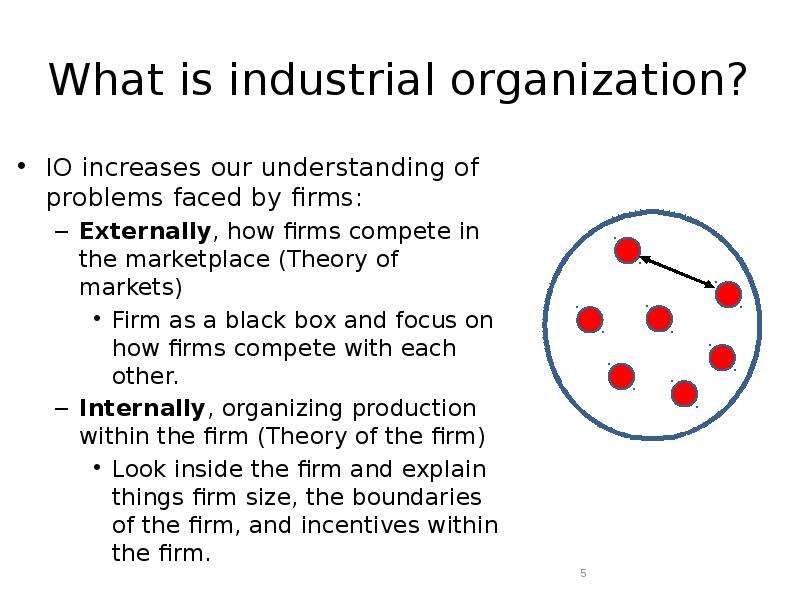
What is industrial organization? IO increases our understanding of problems faced by firms: Externally, how firms compete in the marketplace (Theory of markets) Firm as a black box and focus on how firms compete with each other. Internally, organizing production within the firm (Theory of the firm) Look inside the firm and explain things firm size, the boundaries of the firm, and incentives within the firm.

Слайд 6


IO and policymaking For policy makers: Competition policy aims to prevent firms from abusing market power. [Sherman Act 1890, China antitrust law...
Описание слайда:
IO and policymaking For policy makers: Competition policy aims to prevent firms from abusing market power. [Sherman Act 1890, China antitrust law 2007] How to measure market power and excess profit? How competitive is a specific industry? What types of firm behavior can make an industry less competitive? What type of market structure is most conductive of innovation?

Слайд 7


IO and policymaking: The Google antitrust case 2010: The EU commission accuses Google of promoting its shopping service in internet search at the...
Описание слайда:
IO and policymaking: The Google antitrust case 2010: The EU commission accuses Google of promoting its shopping service in internet search at the expense of rival services Google is accused of systematically favouring its own comparison shopping product in its general search results pages Google’s response: “Economic data (…), and statements from complainants all confirm that product search is robustly competitive”. Google claims that Google shopping is operating in a field that includes Amazon and eBay, where shoppers go to compare prices.

Слайд 8


IO and policymaking: The Google antitrust case Google could face a 3bn euros fine. Related to that case, IO provides answers to the following...
Описание слайда:
IO and policymaking: The Google antitrust case Google could face a 3bn euros fine. Related to that case, IO provides answers to the following questions. How to define a market? How to measure market power? How to stop dominant firms from abusing market power?

Слайд 9


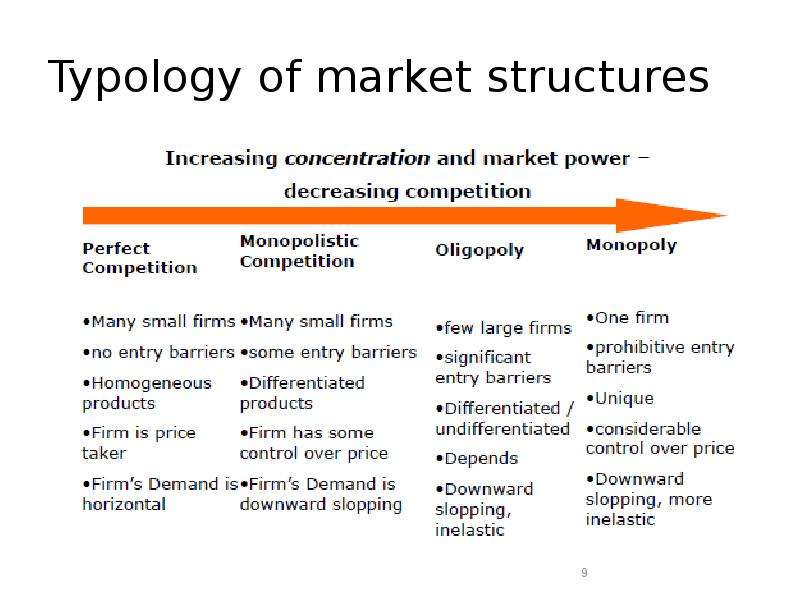
Typology of market structures
Описание слайда:
Typology of market structures

Слайд 10


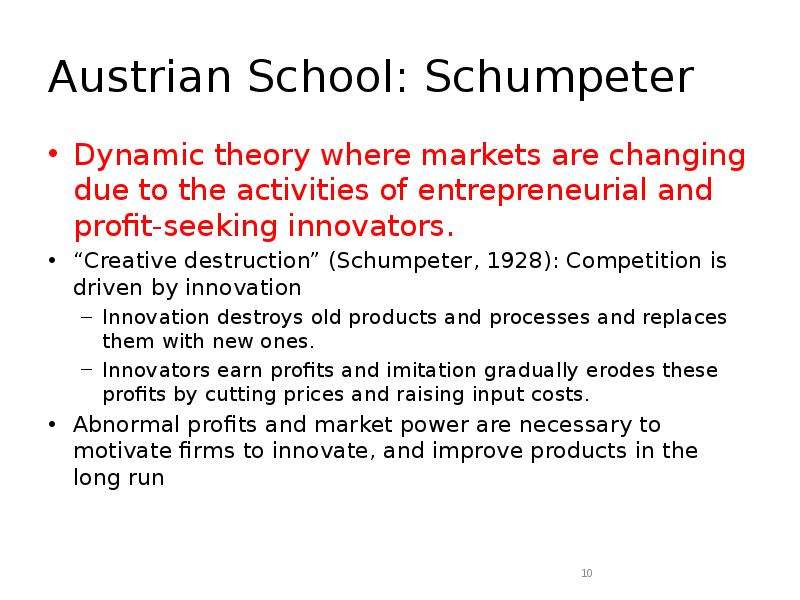
Austrian School: Schumpeter Dynamic theory where markets are changing due to the activities of entrepreneurial and profit-seeking innovators....
Описание слайда:
Austrian School: Schumpeter Dynamic theory where markets are changing due to the activities of entrepreneurial and profit-seeking innovators. “Creative destruction” (Schumpeter, 1928): Competition is driven by innovation Innovation destroys old products and processes and replaces them with new ones. Innovators earn profits and imitation gradually erodes these profits by cutting prices and raising input costs. Abnormal profits and market power are necessary to motivate firms to innovate, and improve products in the long run

Слайд 11


Creative destruction: The music industry
Описание слайда:
Creative destruction: The music industry

Слайд 12


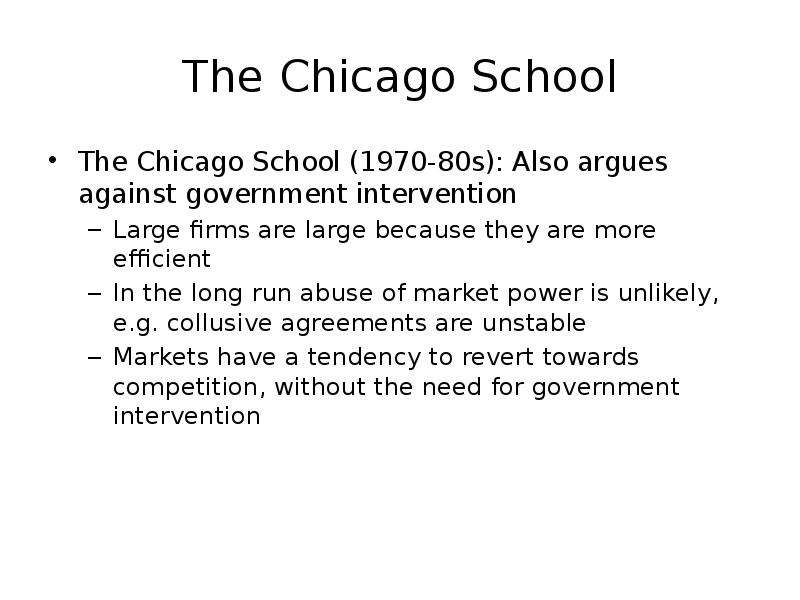
The Chicago School The Chicago School (1970-80s): Also argues against government intervention Large firms are large because they are more efficient...
Описание слайда:
The Chicago School The Chicago School (1970-80s): Also argues against government intervention Large firms are large because they are more efficient In the long run abuse of market power is unlikely, e.g. collusive agreements are unstable Markets have a tendency to revert towards competition, without the need for government intervention

Слайд 13


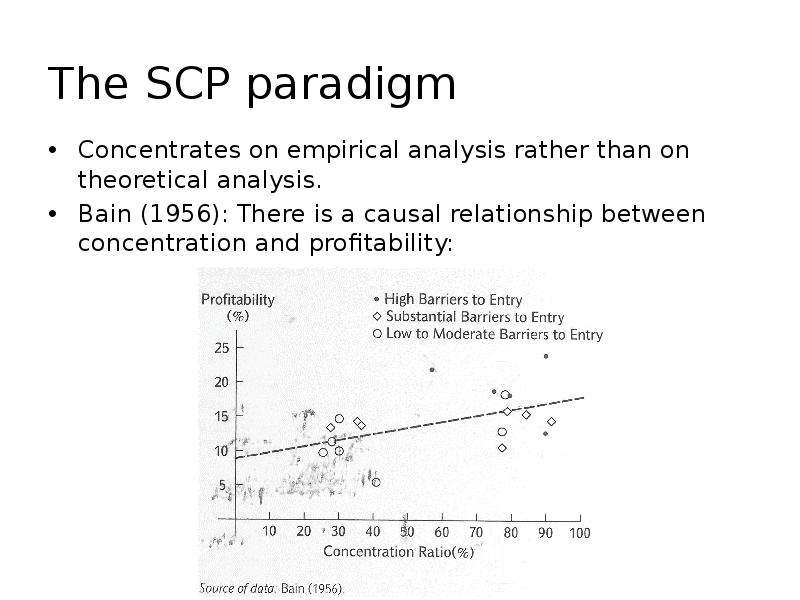
The SCP paradigm Concentrates on empirical analysis rather than on theoretical analysis. Bain (1956): There is a causal relationship between...
Описание слайда:
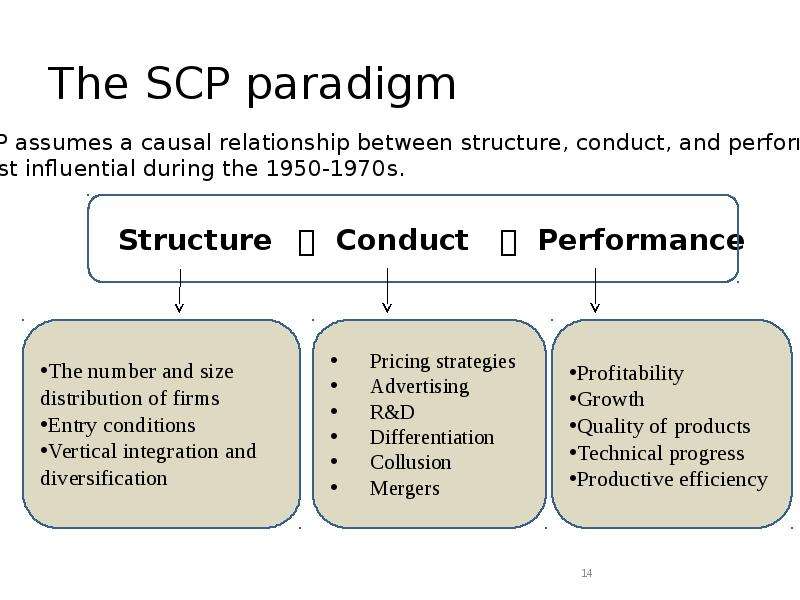
The SCP paradigm Concentrates on empirical analysis rather than on theoretical analysis. Bain (1956): There is a causal relationship between concentration and profitability:

Слайд 14


The SCP paradigm Structure  Conduct  Performance
Описание слайда:
The SCP paradigm Structure  Conduct  Performance

Слайд 15


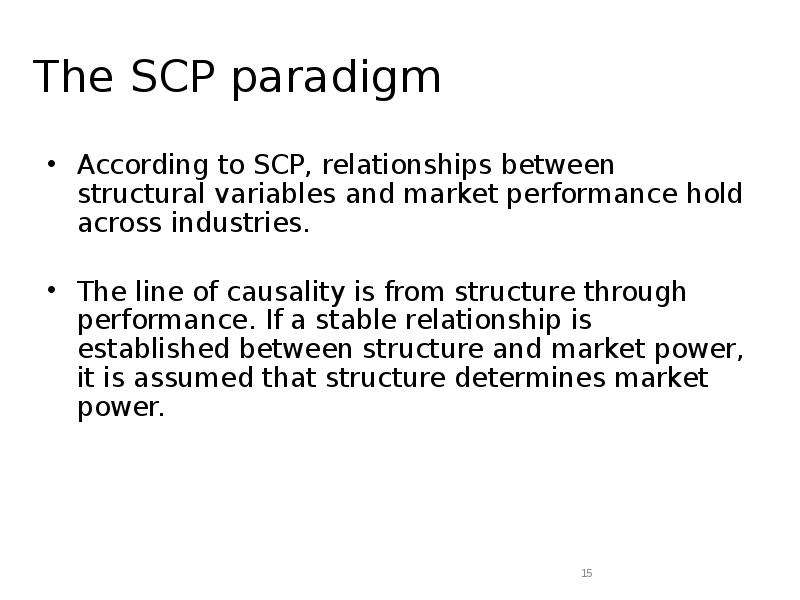
The SCP paradigm According to SCP, relationships between structural variables and market performance hold across industries. The line of causality is...
Описание слайда:
The SCP paradigm According to SCP, relationships between structural variables and market performance hold across industries. The line of causality is from structure through performance. If a stable relationship is established between structure and market power, it is assumed that structure determines market power.

Слайд 16


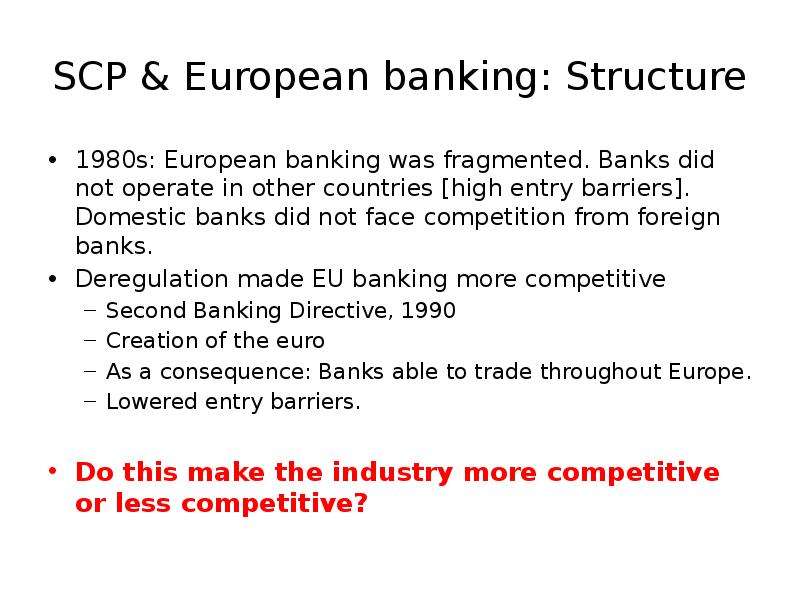
SCP & European banking: Structure 1980s: European banking was fragmented. Banks did not operate in other countries [high entry barriers]. Domestic...
Описание слайда:
SCP & European banking: Structure 1980s: European banking was fragmented. Banks did not operate in other countries [high entry barriers]. Domestic banks did not face competition from foreign banks. Deregulation made EU banking more competitive Second Banking Directive, 1990 Creation of the euro As a consequence: Banks able to trade throughout Europe. Lowered entry barriers. Do this make the industry more competitive or less competitive?

Слайд 17


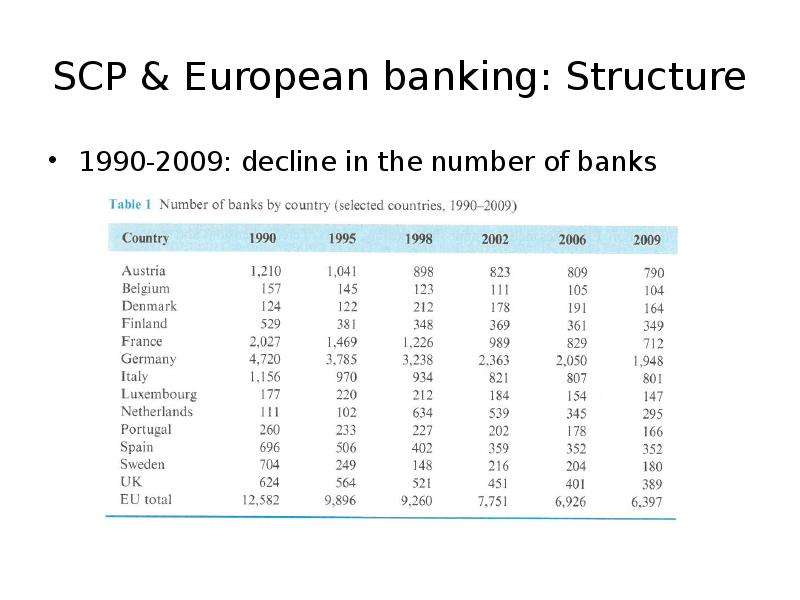
SCP & European banking: Structure 1990-2009: decline in the number of banks
Описание слайда:
SCP & European banking: Structure 1990-2009: decline in the number of banks

Слайд 18


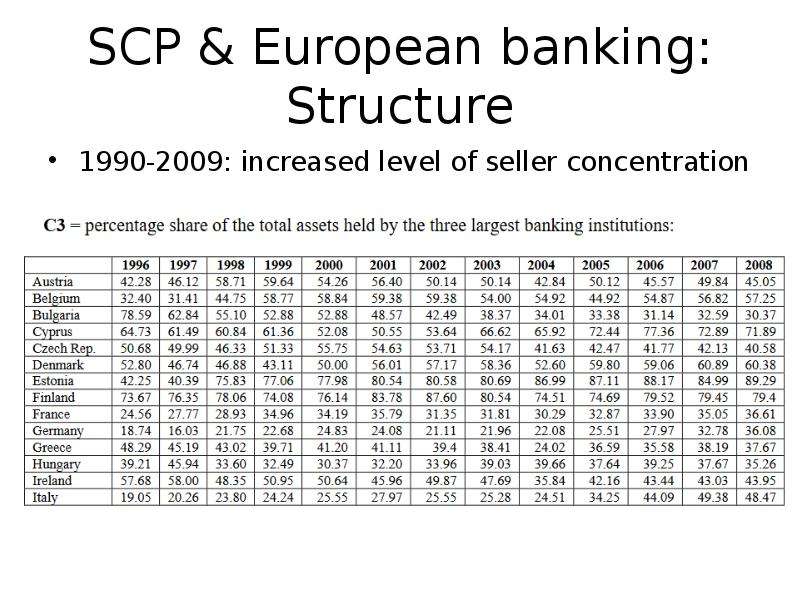
SCP & European banking: Structure 1990-2009: increased level of seller concentration
Описание слайда:
SCP & European banking: Structure 1990-2009: increased level of seller concentration

Слайд 19


SCP & European banking: Conduct Following the deregulation, many banks have consolidated (M&A), e.g. Unicredito (Italy) and HVB (Germany) BNP Paribas...
Описание слайда:
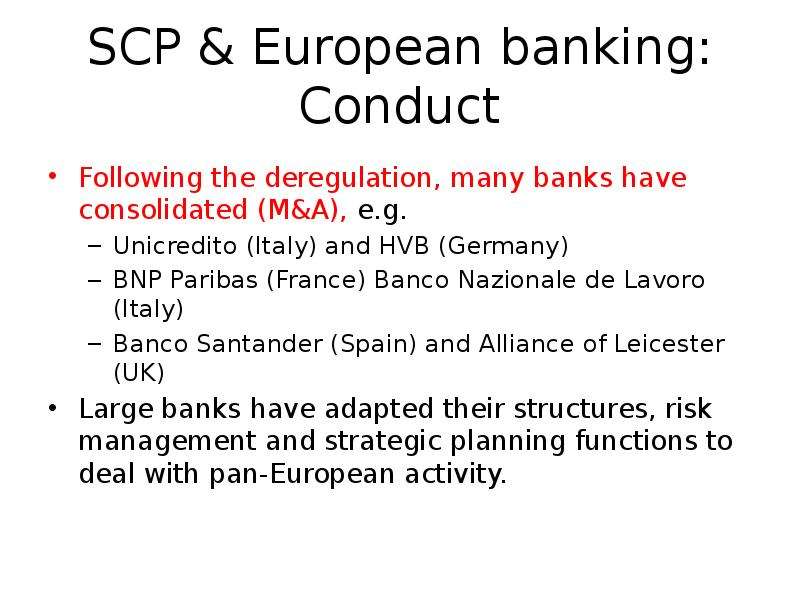
SCP & European banking: Conduct Following the deregulation, many banks have consolidated (M&A), e.g. Unicredito (Italy) and HVB (Germany) BNP Paribas (France) Banco Nazionale de Lavoro (Italy) Banco Santander (Spain) and Alliance of Leicester (UK) Large banks have adapted their structures, risk management and strategic planning functions to deal with pan-European activity.

Слайд 20


SCP & European banking: Performance 1990-2006: increased profitability despite the lowering of entry barriers. How to explain the increased profits?...
Описание слайда:
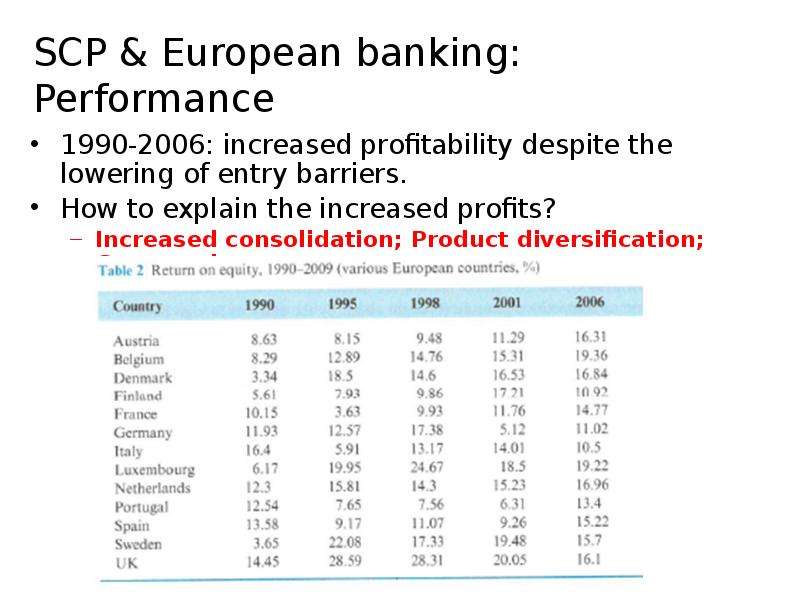
SCP & European banking: Performance 1990-2006: increased profitability despite the lowering of entry barriers. How to explain the increased profits? Increased consolidation; Product diversification; Cost-cutting

Слайд 21


SCP: Reverse causality? Structure  Conduct  Performance Conduct to structure? R&D, advertising, differentiation Performance to structure? Growth...
Описание слайда:
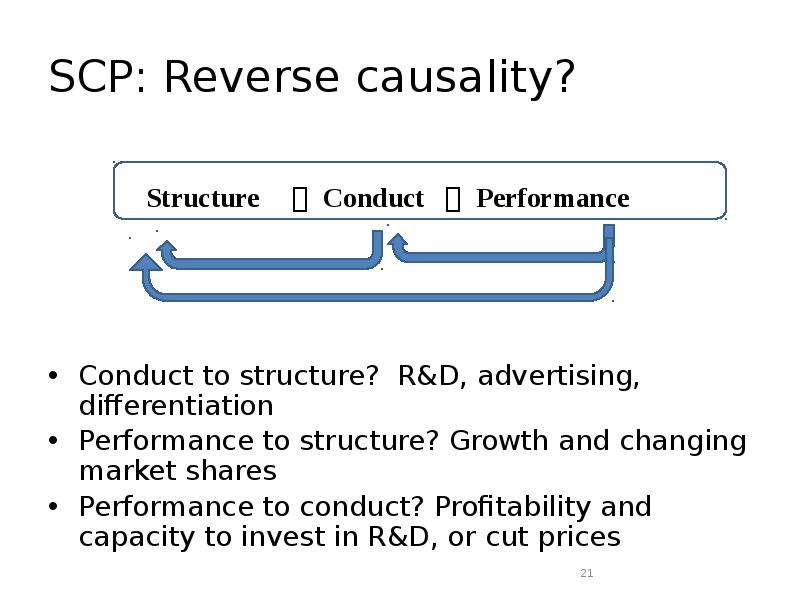
SCP: Reverse causality? Structure  Conduct  Performance Conduct to structure? R&D, advertising, differentiation Performance to structure? Growth and changing market shares Performance to conduct? Profitability and capacity to invest in R&D, or cut prices

Слайд 22


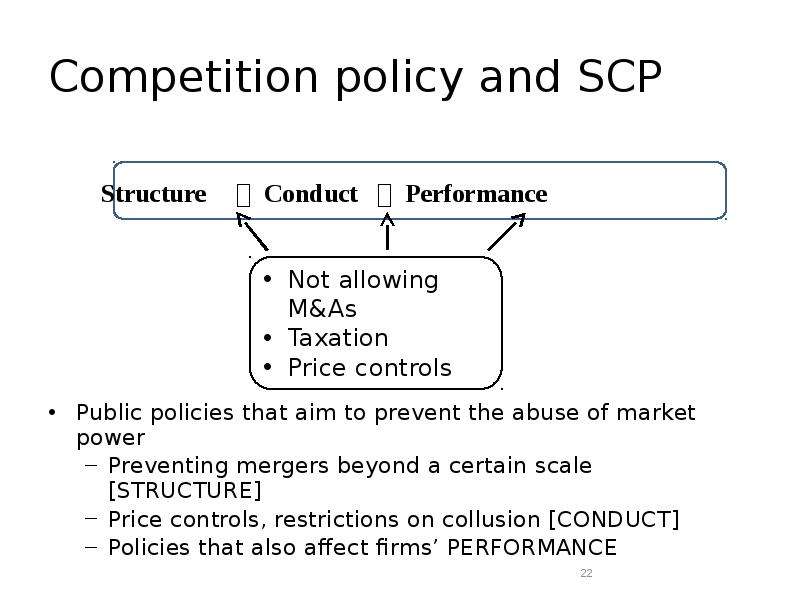
Competition policy and SCP Structure  Conduct  Performance Public policies that aim to prevent the abuse of market power Preventing mergers beyond...
Описание слайда:
Competition policy and SCP Structure  Conduct  Performance Public policies that aim to prevent the abuse of market power Preventing mergers beyond a certain scale [STRUCTURE] Price controls, restrictions on collusion [CONDUCT] Policies that also affect firms’ PERFORMANCE

Слайд 23


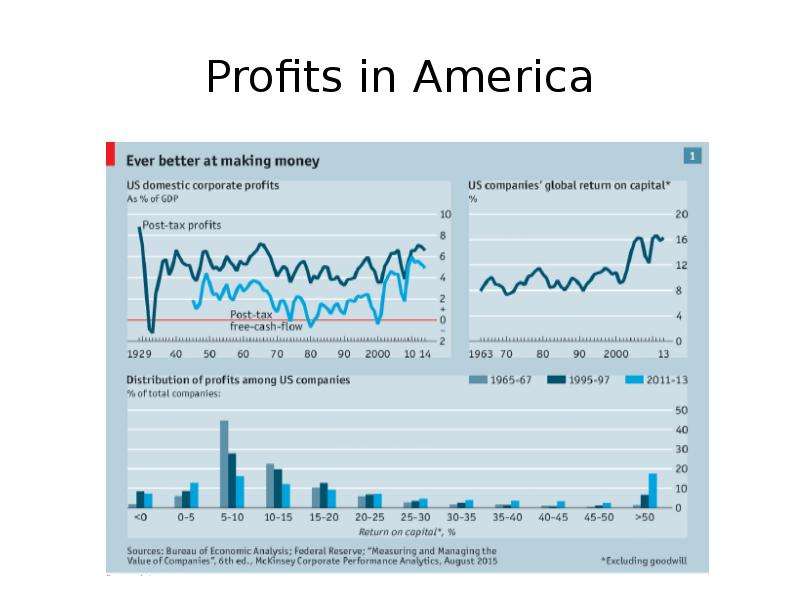
Profits in America and the practical relevance of IO Source: ‘Too much of a good thing’. The Economist, 2016. Profits have risen in most rich...
Описание слайда:
Profits in America and the practical relevance of IO Source: ‘Too much of a good thing’. The Economist, 2016. Profits have risen in most rich countries over the past ten years. E.g. America Airlines: Used to make losses; but made $24bn profit in 2015. How? The falling price of fuel has not been passed on to the consumers. Why not? Consolidations has left the industry with 4 dominant firms with many shareholders in common.

Слайд 24


Profits in America
Описание слайда:
Profits in America

Слайд 25


Profits in America - Historical developments In the 1990s American firms faced a wave of competition from low-cost competitors abroad. In 1998, Joel...
Описание слайда:
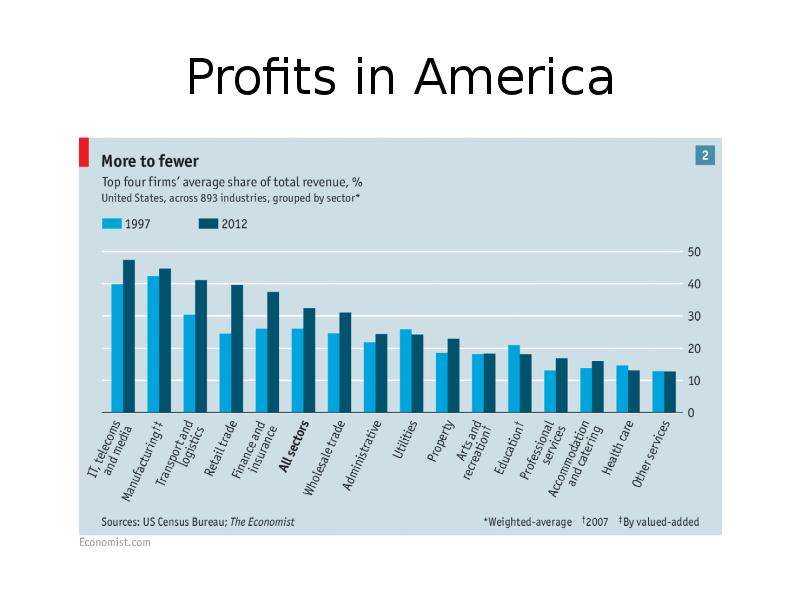
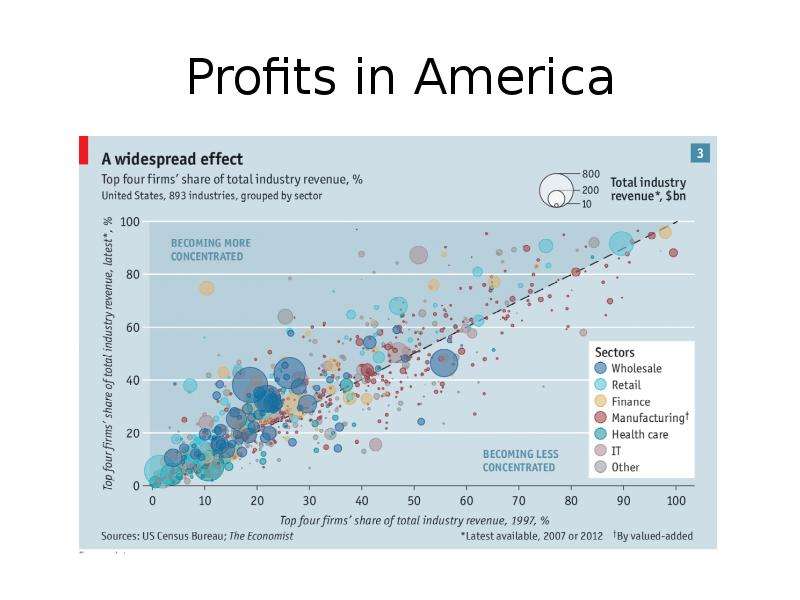
Profits in America - Historical developments In the 1990s American firms faced a wave of competition from low-cost competitors abroad. In 1998, Joel Klein (DoJ), declared that “our economy is more competitive today than it has been in a long, long time.” How to explain the recent increase in corporate earnings? Since 2008 American firms have engaged in mergers worth $10 trillion, allowing the merged companies to increase market shares and cut costs. Two-thirds of the industry sectors became more concentrated between 1997 and 2012. The average share of the top 4 firms has risen from 26% to 32%.

Слайд 26


Profits in America
Описание слайда:
Profits in America

Слайд 27


Profits in America
Описание слайда:
Profits in America

Слайд 28


Profits in America About 25% of America’s abnormal profits are spread across a wide range of sectors. Another 25% comes from the health-care industry...
Описание слайда:
Profits in America About 25% of America’s abnormal profits are spread across a wide range of sectors. Another 25% comes from the health-care industry (pharmaceutical and medical-equipment). Patent rules allow temporary monopolies on new drugs and inventions. Much of health-care purchasing is controlled by insurance firms. Four of the largest, Anthem, Cigna, Aetna and Humana, are planning to merge into two larger firms. The remaining 50% abnormal profits are in the technology sector, where firms such as Google and Facebook enjoy market shares of 40% or more.

Слайд 29


Production and costs
Описание слайда:
Production and costs

Слайд 30


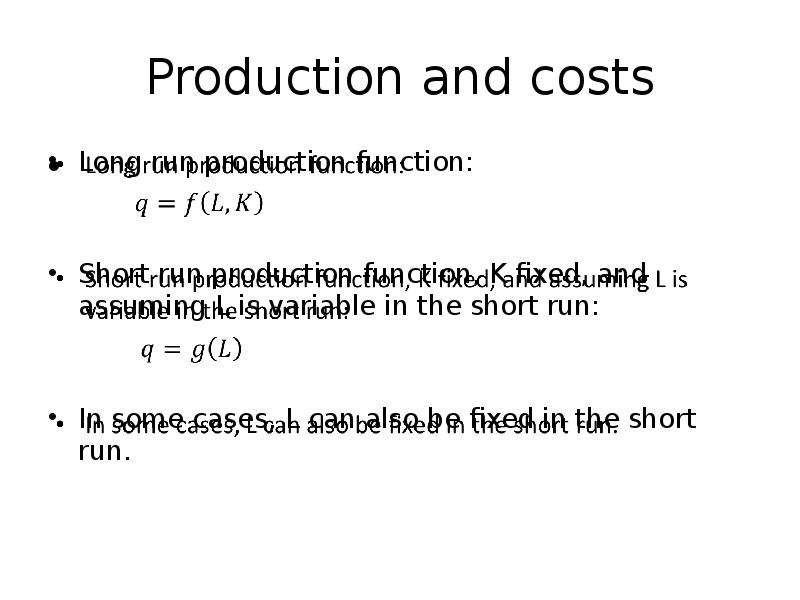
Production and costs Long run production function: Short run production function, K fixed, and assuming L is variable in the short run: In some...
Описание слайда:
Production and costs Long run production function: Short run production function, K fixed, and assuming L is variable in the short run: In some cases, L can also be fixed in the short run.

Слайд 31


Short run production
Описание слайда:
Short run production

Слайд 32


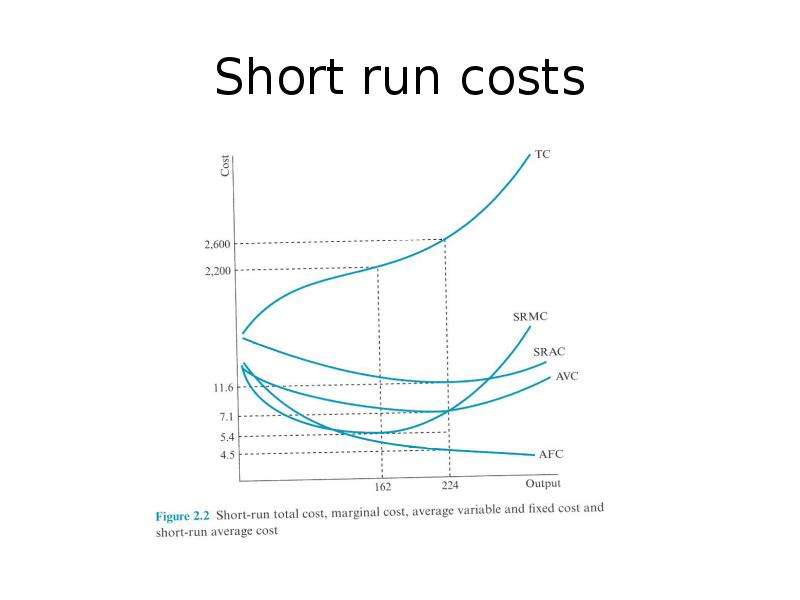
Short run costs
Описание слайда:
Short run costs

Слайд 33


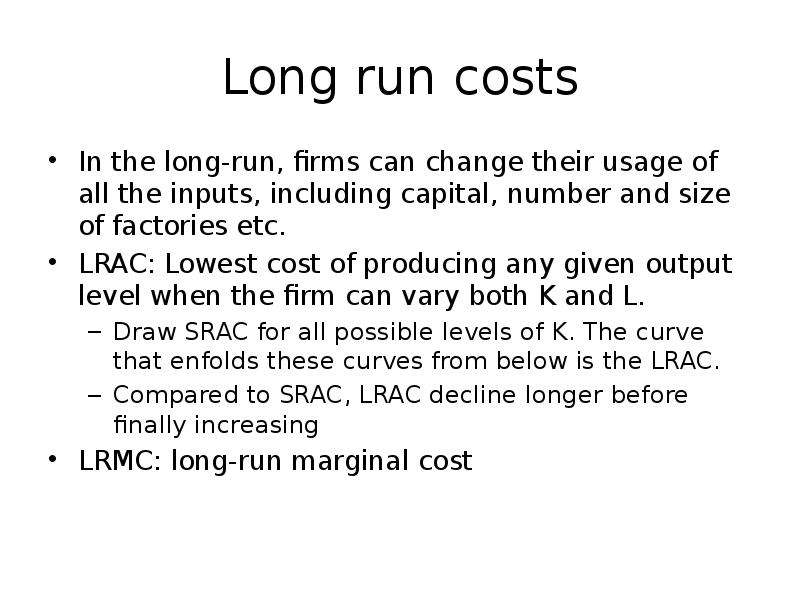
Long run costs In the long-run, firms can change their usage of all the inputs, including capital, number and size of factories etc. LRAC: Lowest...
Описание слайда:
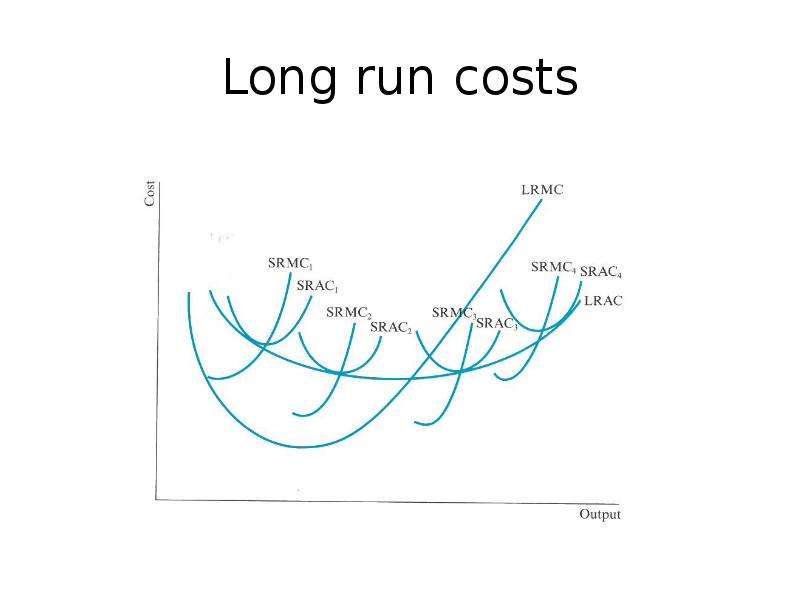
Long run costs In the long-run, firms can change their usage of all the inputs, including capital, number and size of factories etc. LRAC: Lowest cost of producing any given output level when the firm can vary both K and L. Draw SRAC for all possible levels of K. The curve that enfolds these curves from below is the LRAC. Compared to SRAC, LRAC decline longer before finally increasing LRMC: long-run marginal cost

Слайд 34


Long run costs
Описание слайда:
Long run costs

Слайд 35


Application to oil pipelines Costs associated with construction and operation: Planning and design Acquisition of clearing the right-of-way...
Описание слайда:
Application to oil pipelines Costs associated with construction and operation: Planning and design Acquisition of clearing the right-of-way Construction costs Steel for the pipeline Pumps (One time fixed costs) Electricity to power the pumps (variable costs) Labor (monitoring personnel) (fixed cost)

Слайд 36


Application to oil pipelines Electricity costs vary with throughput, but the number of personnel does not. The salary of personnel is avoidable if...
Описание слайда:
Application to oil pipelines Electricity costs vary with throughput, but the number of personnel does not. The salary of personnel is avoidable if the pipeline shuts down. What are the variable costs? What are the fixed costs?

Слайд 37


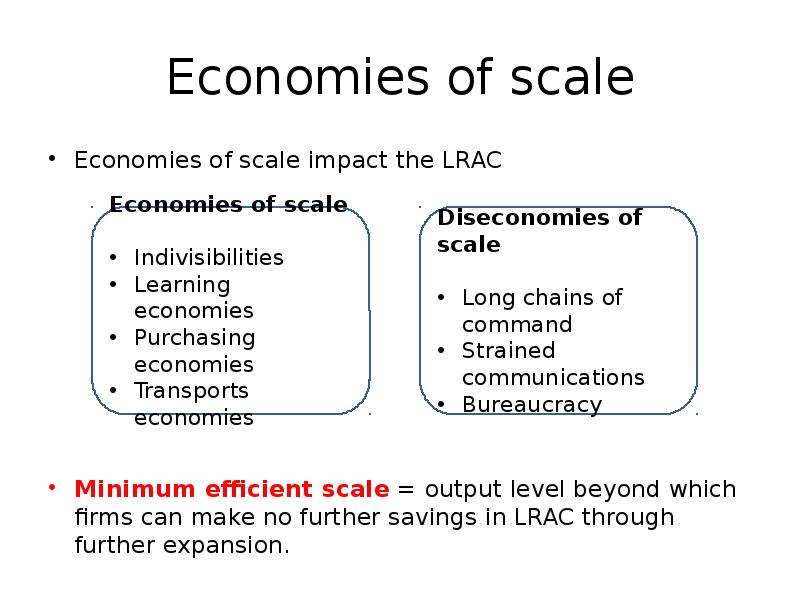
Economies of scale Economies of scale impact the LRAC Minimum efficient scale = output level beyond which firms can make no further savings in LRAC...
Описание слайда:
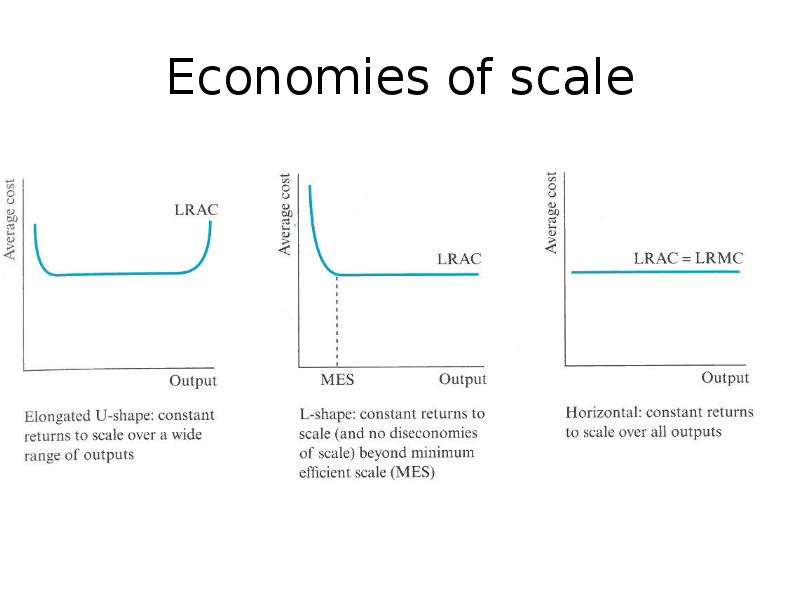
Economies of scale Economies of scale impact the LRAC Minimum efficient scale = output level beyond which firms can make no further savings in LRAC through further expansion.

Слайд 38


Economies of scale
Описание слайда:
Economies of scale

Слайд 39


Empirical studies of economies of scale Some firms have U-shaped LRAC However, manufacturing firms often have L-shaped LRAC Estimates of MES:
Описание слайда:
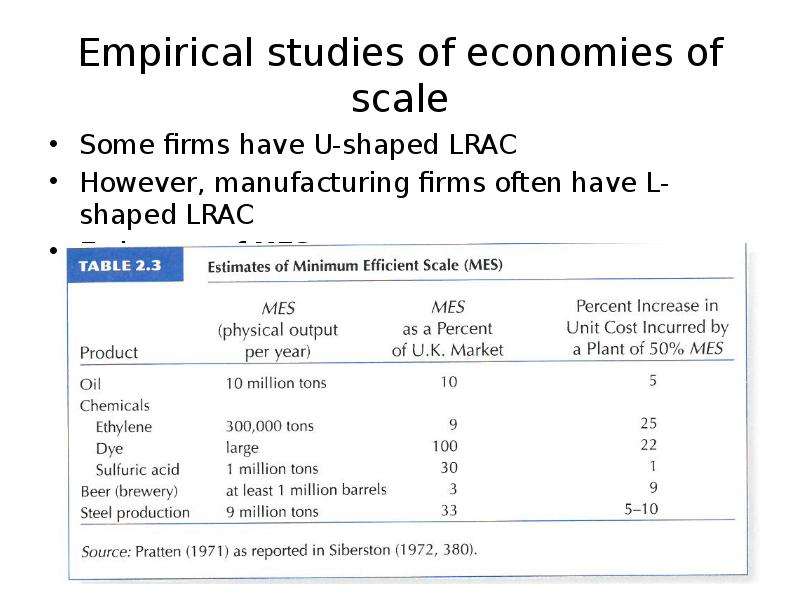
Empirical studies of economies of scale Some firms have U-shaped LRAC However, manufacturing firms often have L-shaped LRAC Estimates of MES:

Слайд 40


Empirical studies of economies of scale Survivorship studies: If a particular plant size is efficient, eventually all plants in that industry should...
Описание слайда:
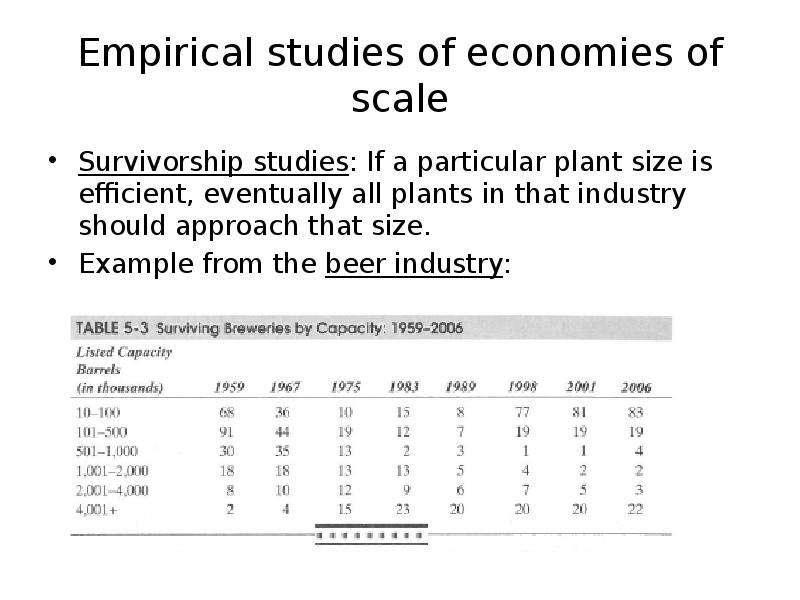
Empirical studies of economies of scale Survivorship studies: If a particular plant size is efficient, eventually all plants in that industry should approach that size. Example from the beer industry:

Слайд 41


Economies of scope Economies of scope are the cost savings that arise when a firm produces two or more outputs using the same set of resources....
Описание слайда:
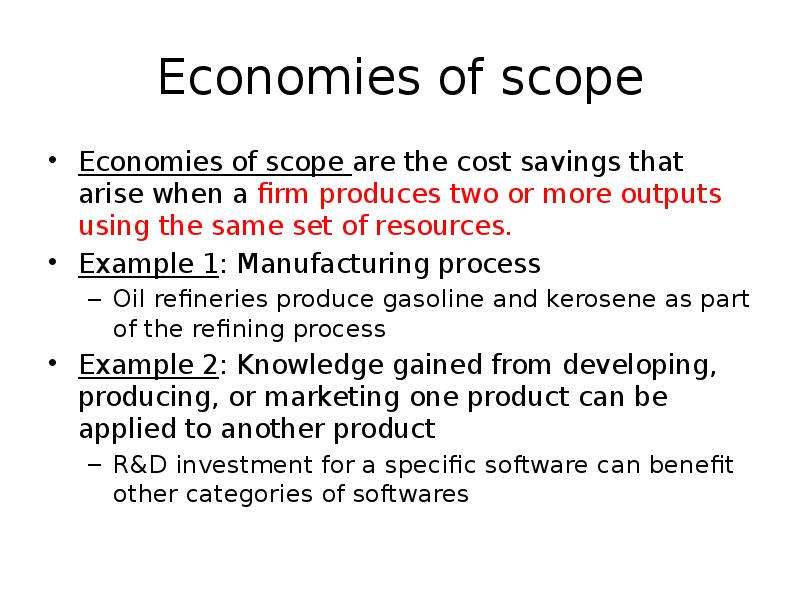
Economies of scope Economies of scope are the cost savings that arise when a firm produces two or more outputs using the same set of resources. Example 1: Manufacturing process Oil refineries produce gasoline and kerosene as part of the refining process Example 2: Knowledge gained from developing, producing, or marketing one product can be applied to another product R&D investment for a specific software can benefit other categories of softwares

Слайд 42


Economies of scope Example 3: Umbrella advertising Advertising one Samsung product will lead to more demand for other Samsung products (even if they...
Описание слайда:
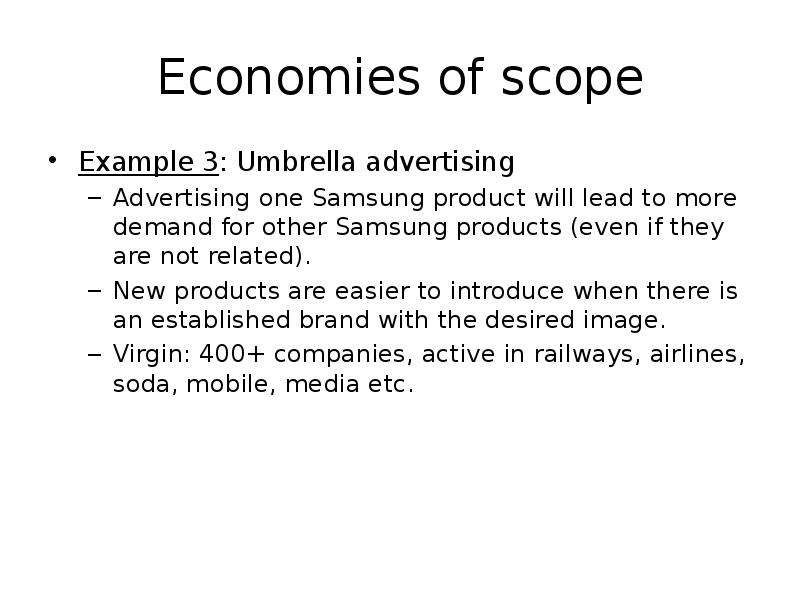
Economies of scope Example 3: Umbrella advertising Advertising one Samsung product will lead to more demand for other Samsung products (even if they are not related). New products are easier to introduce when there is an established brand with the desired image. Virgin: 400+ companies, active in railways, airlines, soda, mobile, media etc.

Слайд 43


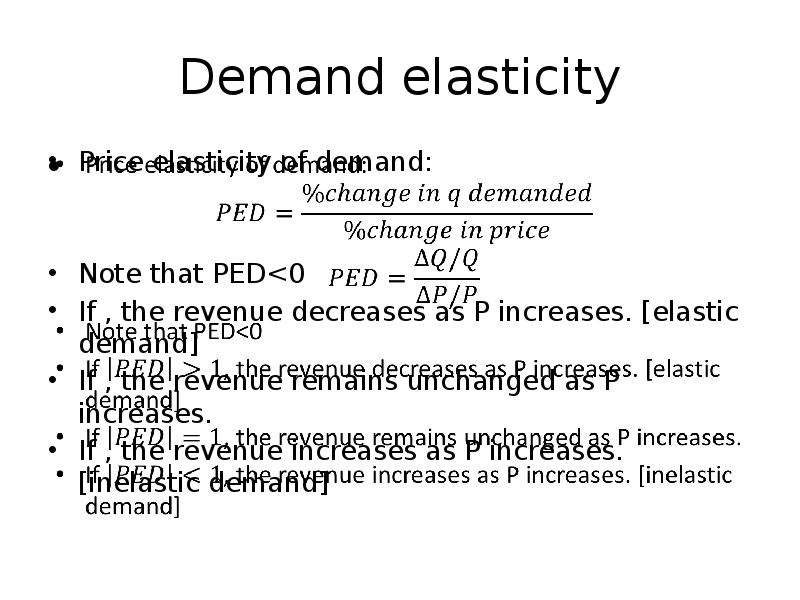
Demand elasticity Price elasticity of demand: Note that PED
Описание слайда:
Demand elasticity Price elasticity of demand: Note that PED

Слайд 44


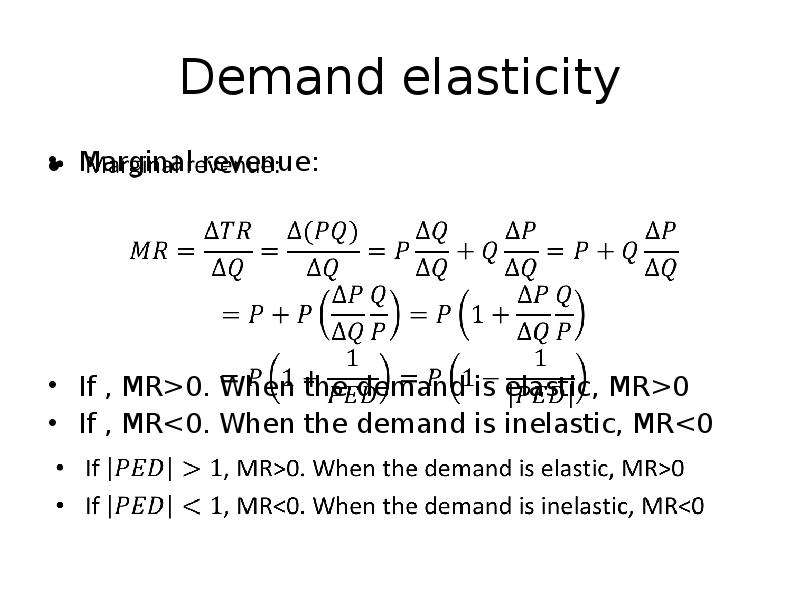
Demand elasticity Marginal revenue: If , MR>0. When the demand is elastic, MR>0 If , MR
Описание слайда:
Demand elasticity Marginal revenue: If , MR>0. When the demand is elastic, MR>0 If , MR

Слайд 45


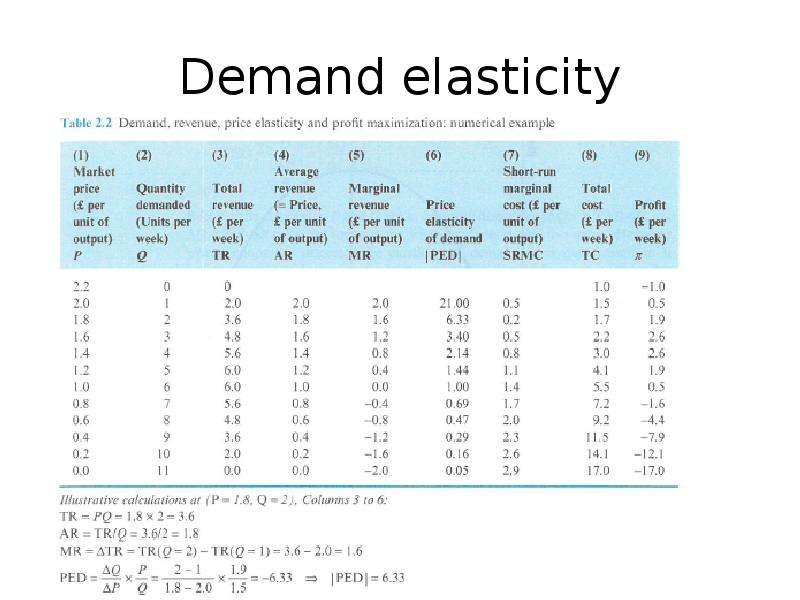
Demand elasticity
Описание слайда:
Demand elasticity

Слайд 46


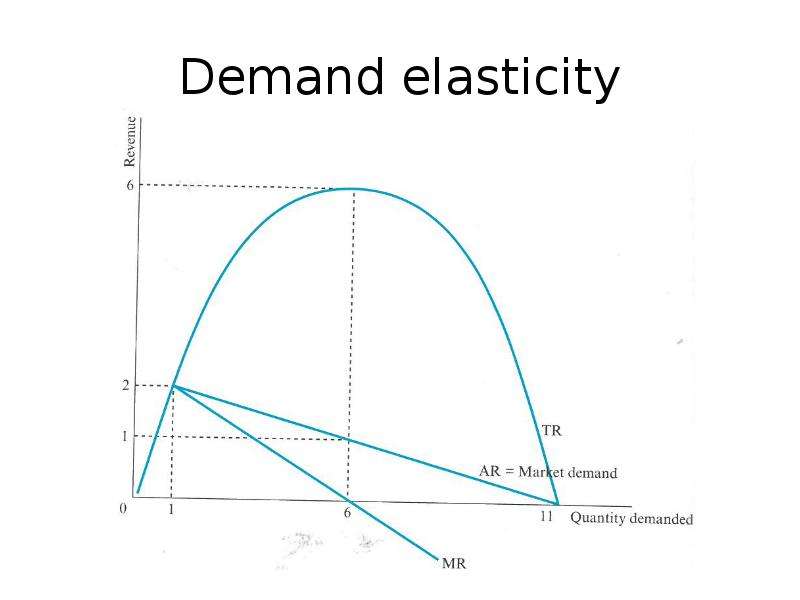
Demand elasticity
Описание слайда:
Demand elasticity

Слайд 47


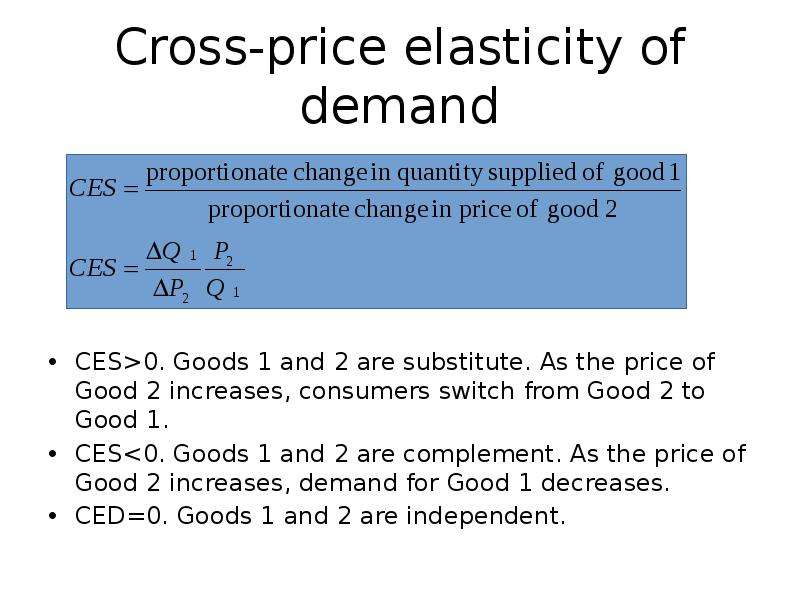
Cross-price elasticity of demand CES>0. Goods 1 and 2 are substitute. As the price of Good 2 increases, consumers switch from Good 2 to Good 1. CES
Описание слайда:
Cross-price elasticity of demand CES>0. Goods 1 and 2 are substitute. As the price of Good 2 increases, consumers switch from Good 2 to Good 1. CES

Слайд 48


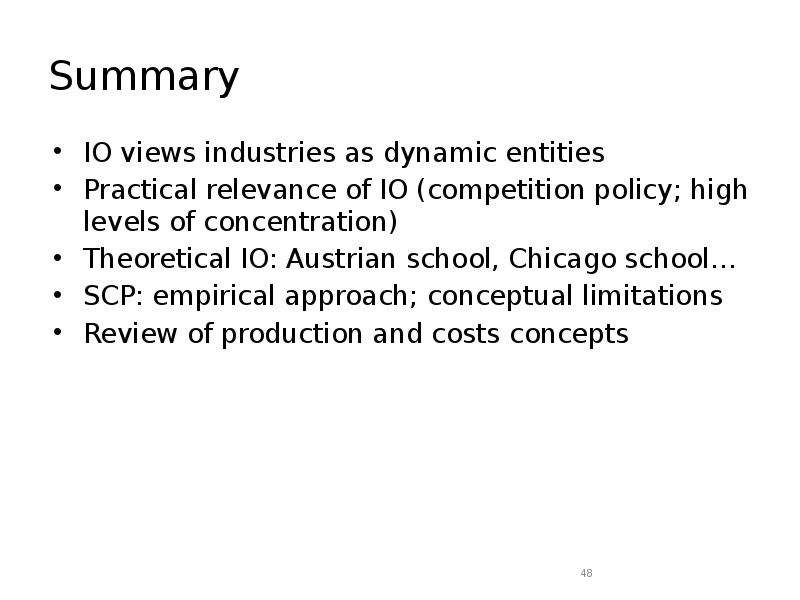
Summary IO views industries as dynamic entities Practical relevance of IO (competition policy; high levels of concentration) Theoretical IO: Austrian...
Описание слайда:
Summary IO views industries as dynamic entities Practical relevance of IO (competition policy; high levels of concentration) Theoretical IO: Austrian school, Chicago school… SCP: empirical approach; conceptual limitations Review of production and costs concepts


Похожие презентации
Mypresentation.ru
Загрузить презентацию