🗊 Презентация Properties of Atoms and the Periodic Table

Категория: Химия
Нажмите для полного просмотра!
Properties of Atoms and the Periodic Table, слайд №1 Properties of Atoms and the Periodic Table, слайд №2 Properties of Atoms and the Periodic Table, слайд №3 Properties of Atoms and the Periodic Table, слайд №4 Properties of Atoms and the Periodic Table, слайд №5 Properties of Atoms and the Periodic Table, слайд №6 Properties of Atoms and the Periodic Table, слайд №7 Properties of Atoms and the Periodic Table, слайд №8 Properties of Atoms and the Periodic Table, слайд №9 Properties of Atoms and the Periodic Table, слайд №10 Properties of Atoms and the Periodic Table, слайд №11 Properties of Atoms and the Periodic Table, слайд №12 Properties of Atoms and the Periodic Table, слайд №13 Properties of Atoms and the Periodic Table, слайд №14 Properties of Atoms and the Periodic Table, слайд №15 Properties of Atoms and the Periodic Table, слайд №16 Properties of Atoms and the Periodic Table, слайд №17 Properties of Atoms and the Periodic Table, слайд №18 Properties of Atoms and the Periodic Table, слайд №19 Properties of Atoms and the Periodic Table, слайд №20 Properties of Atoms and the Periodic Table, слайд №21 Properties of Atoms and the Periodic Table, слайд №22 Properties of Atoms and the Periodic Table, слайд №23 Properties of Atoms and the Periodic Table, слайд №24 Properties of Atoms and the Periodic Table, слайд №25 Properties of Atoms and the Periodic Table, слайд №26 Properties of Atoms and the Periodic Table, слайд №27 Properties of Atoms and the Periodic Table, слайд №28 Properties of Atoms and the Periodic Table, слайд №29 Properties of Atoms and the Periodic Table, слайд №30 Properties of Atoms and the Periodic Table, слайд №31 Properties of Atoms and the Periodic Table, слайд №32 Properties of Atoms and the Periodic Table, слайд №33 Properties of Atoms and the Periodic Table, слайд №34 Properties of Atoms and the Periodic Table, слайд №35 Properties of Atoms and the Periodic Table, слайд №36 Properties of Atoms and the Periodic Table, слайд №37 Properties of Atoms and the Periodic Table, слайд №38 Properties of Atoms and the Periodic Table, слайд №39 Properties of Atoms and the Periodic Table, слайд №40 Properties of Atoms and the Periodic Table, слайд №41 Properties of Atoms and the Periodic Table, слайд №42 Properties of Atoms and the Periodic Table, слайд №43 Properties of Atoms and the Periodic Table, слайд №44

Содержание
Вы можете ознакомиться и скачать презентацию на тему Properties of Atoms and the Periodic Table. Доклад-сообщение содержит 44 слайдов. Презентации для любого класса можно скачать бесплатно. Если материал и наш сайт презентаций Mypresentation Вам понравились – поделитесь им с друзьями с помощью социальных кнопок и добавьте в закладки в своем браузере.
Слайды и текст этой презентации


Слайд 1


Chapter 7 Properties of Atoms and the Periodic Table
Описание слайда:
Chapter 7 Properties of Atoms and the Periodic Table

Слайд 2


Chapter 7 Section1: Structure of the Atom
Описание слайда:
Chapter 7 Section1: Structure of the Atom

Слайд 3


You will learn how to….. Compute the atomic mass and mass number of an atom Identify isotopes of common elements Interpret the average atomic mass of...
Описание слайда:
You will learn how to….. Compute the atomic mass and mass number of an atom Identify isotopes of common elements Interpret the average atomic mass of an element This is important because everything you see, touch, and breathe is composed of tiny atoms.

Слайд 4


Scientific Shorthand Scientist use chemical symbols to represent each element on the periodic table. The chemical symbol consists of one capital...
Описание слайда:
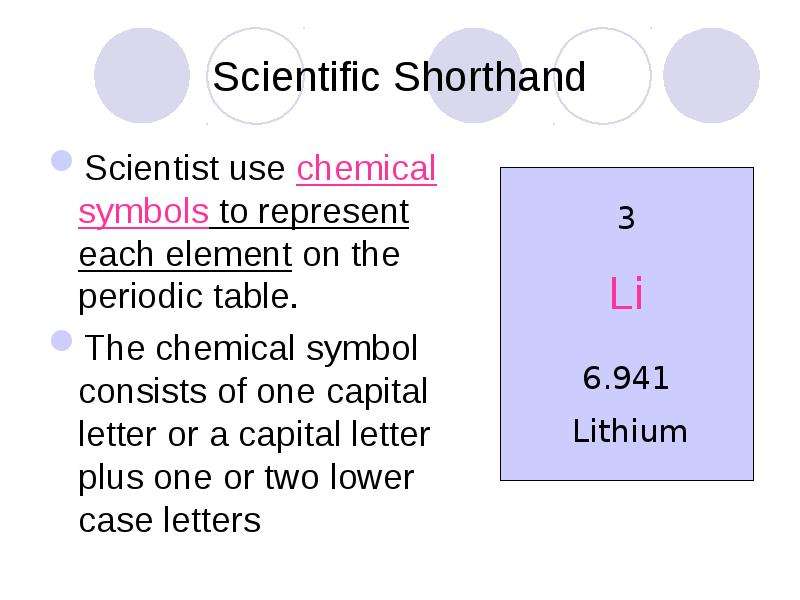
Scientific Shorthand Scientist use chemical symbols to represent each element on the periodic table. The chemical symbol consists of one capital letter or a capital letter plus one or two lower case letters

Слайд 5


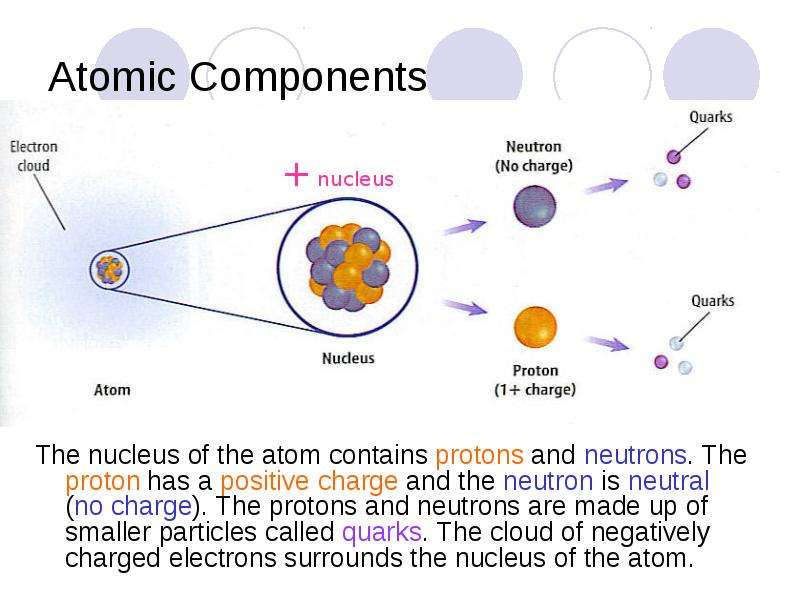
Atomic Components The nucleus of the atom contains protons and neutrons. The proton has a positive charge and the neutron is neutral (no charge). The...
Описание слайда:
Atomic Components The nucleus of the atom contains protons and neutrons. The proton has a positive charge and the neutron is neutral (no charge). The protons and neutrons are made up of smaller particles called quarks. The cloud of negatively charged electrons surrounds the nucleus of the atom.

Слайд 6


The nucleus of the atom contains protons and neutrons. The proton has a positive charge the neutron is neutral (no charge). The protons and neutrons...
Описание слайда:
The nucleus of the atom contains protons and neutrons. The proton has a positive charge the neutron is neutral (no charge). The protons and neutrons are made up of smaller particles called quarks. The cloud of negatively charged electrons surrounds the nucleus of the atom.

Слайд 7


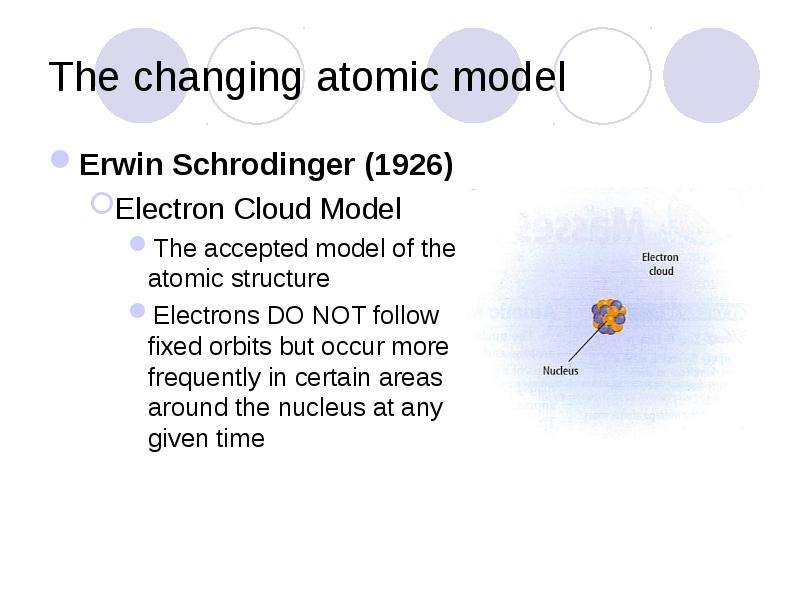
The changing atomic model Scientists use models to represent things that are difficult to visualize ---or picture in your mind. Question: Could you...
Описание слайда:
The changing atomic model Scientists use models to represent things that are difficult to visualize ---or picture in your mind. Question: Could you give me 3 examples of models?

Слайд 8


The changing atomic model RECALL…..Matter is anything that has mass and takes up space…. EVERYTHING is matter! Matter is composed of atoms…..So...
Описание слайда:
The changing atomic model RECALL…..Matter is anything that has mass and takes up space…. EVERYTHING is matter! Matter is composed of atoms…..So EVERYTHING is composed of atoms!

Слайд 9


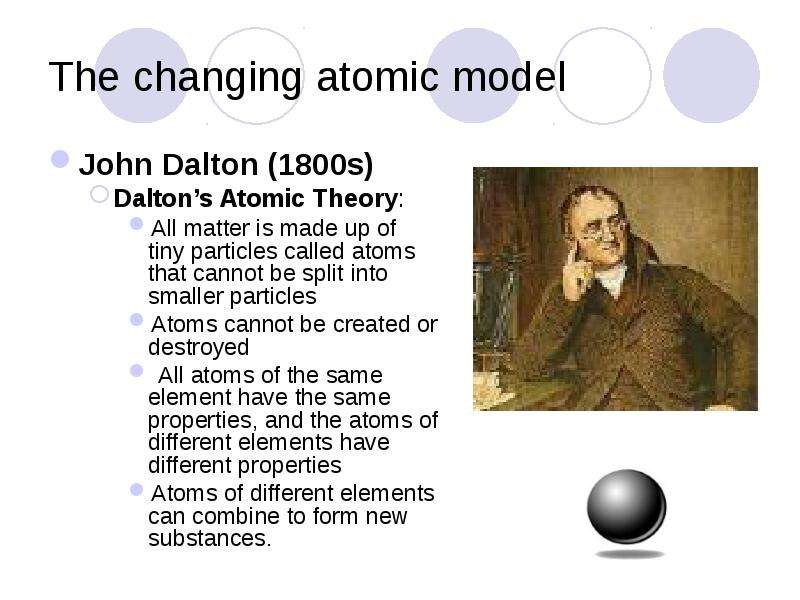
The changing atomic model John Dalton (1800s) Dalton’s Atomic Theory: All matter is made up of tiny particles called atoms that cannot be split into...
Описание слайда:
The changing atomic model John Dalton (1800s) Dalton’s Atomic Theory: All matter is made up of tiny particles called atoms that cannot be split into smaller particles Atoms cannot be created or destroyed All atoms of the same element have the same properties, and the atoms of different elements have different properties Atoms of different elements can combine to form new substances.

Слайд 10


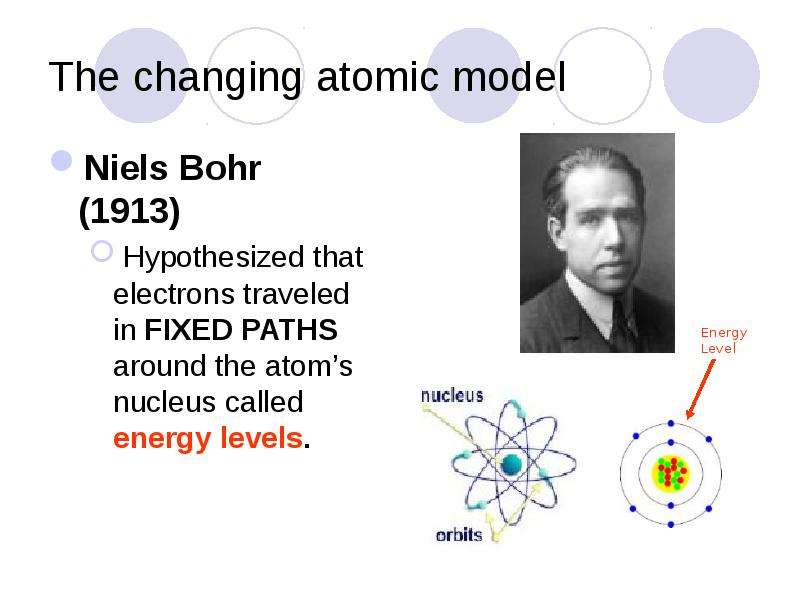
The changing atomic model Niels Bohr (1913) Hypothesized that electrons traveled in FIXED PATHS around the atom’s nucleus called energy levels.
Описание слайда:
The changing atomic model Niels Bohr (1913) Hypothesized that electrons traveled in FIXED PATHS around the atom’s nucleus called energy levels.

Слайд 11


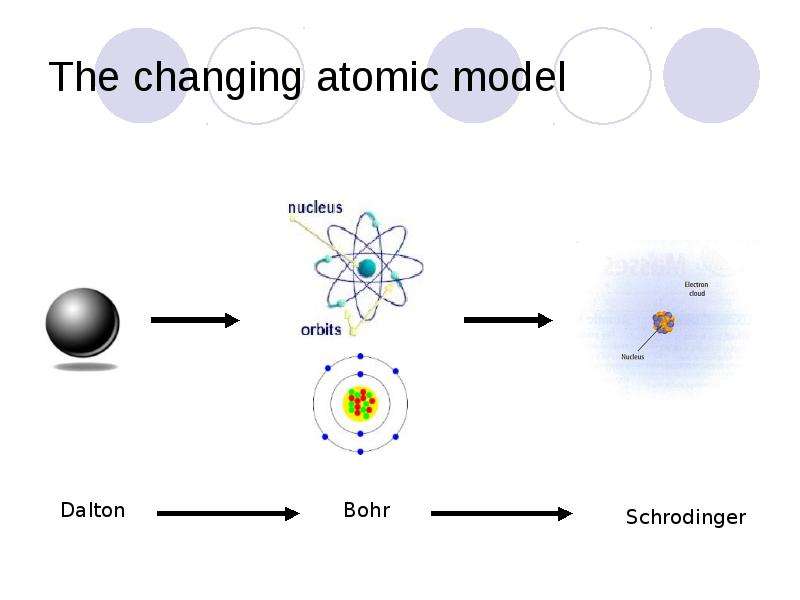
The changing atomic model
Описание слайда:
The changing atomic model

Слайд 12


The changing atomic model
Описание слайда:
The changing atomic model

Слайд 13


Chapter 18 Section 2: Masses of Atoms
Описание слайда:
Chapter 18 Section 2: Masses of Atoms

Слайд 14


You will learn how to…….. Compute the atomic mass and mass number of an atom. Identify isotopes of common elements Interpret the average atomic mass...
Описание слайда:
You will learn how to…….. Compute the atomic mass and mass number of an atom. Identify isotopes of common elements Interpret the average atomic mass of an element This is important because most elements exist in more than one form. Some are radioactive, and others are not.

Слайд 15


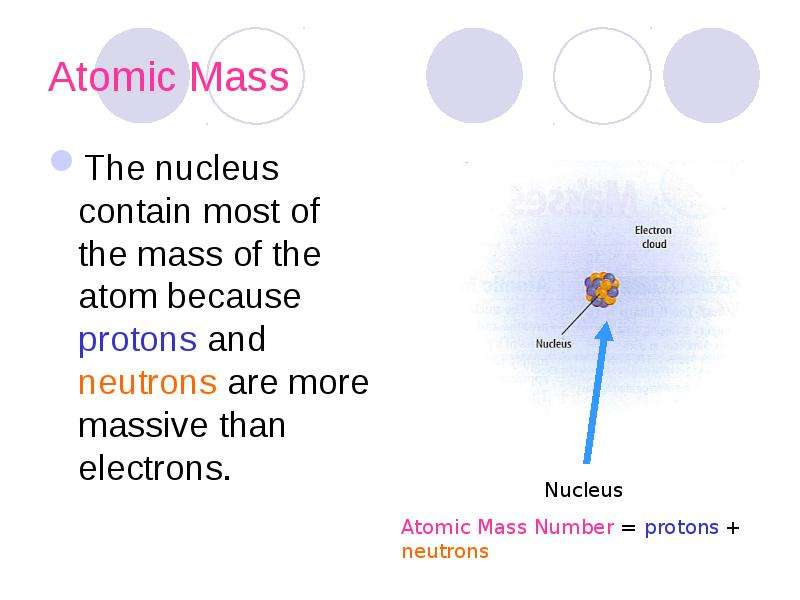
Atomic Mass The nucleus contain most of the mass of the atom because protons and neutrons are more massive than electrons.
Описание слайда:
Atomic Mass The nucleus contain most of the mass of the atom because protons and neutrons are more massive than electrons.

Слайд 16


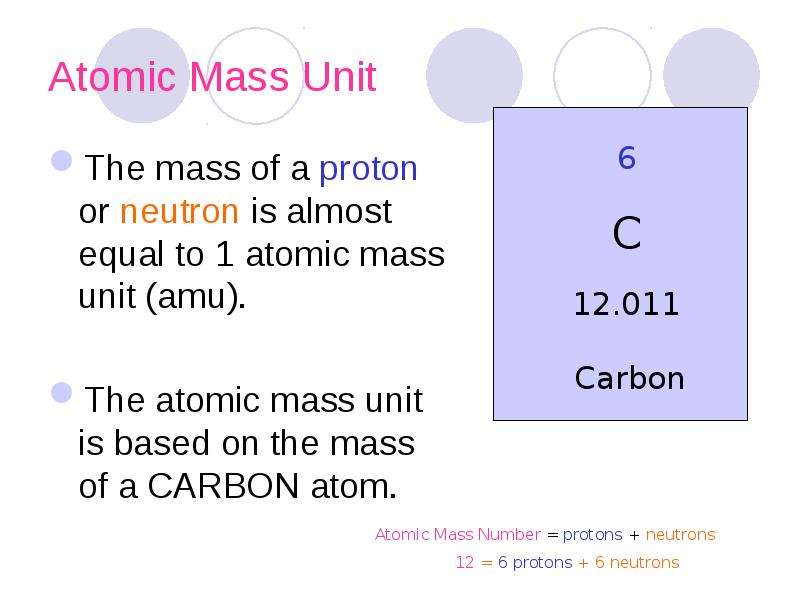
Atomic Mass Unit The mass of a proton or neutron is almost equal to 1 atomic mass unit (amu). The atomic mass unit is based on the mass of a CARBON...
Описание слайда:
Atomic Mass Unit The mass of a proton or neutron is almost equal to 1 atomic mass unit (amu). The atomic mass unit is based on the mass of a CARBON atom.

Слайд 17


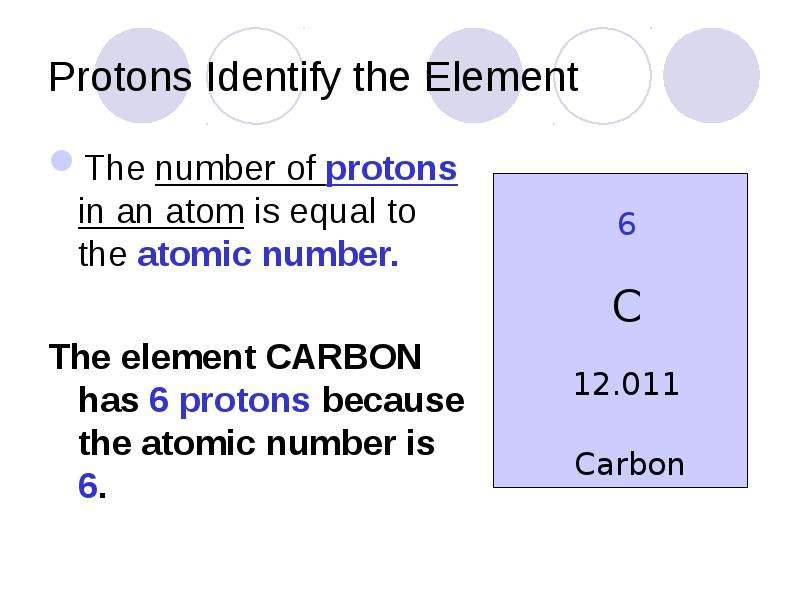
Protons Identify the Element The number of protons in an atom is equal to the atomic number. The element CARBON has 6 protons because the atomic...
Описание слайда:
Protons Identify the Element The number of protons in an atom is equal to the atomic number. The element CARBON has 6 protons because the atomic number is 6.

Слайд 18


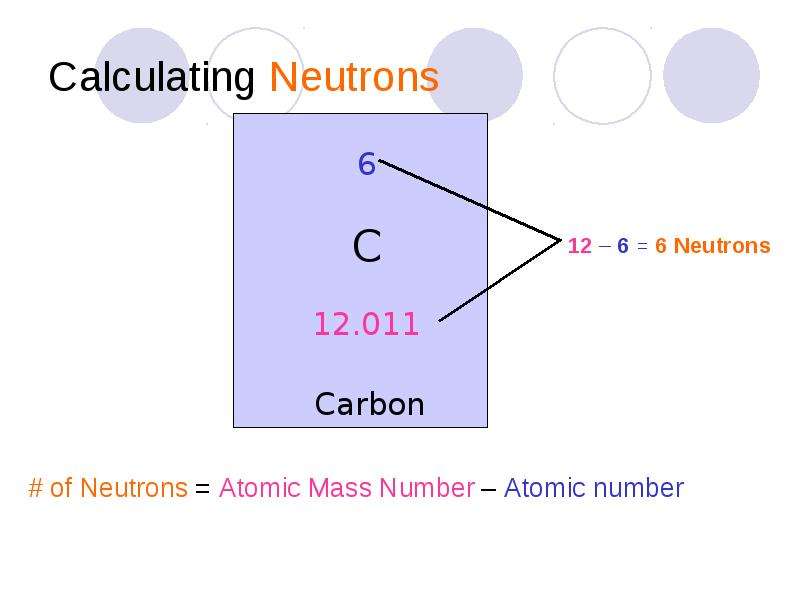
Calculating Neutrons # of Neutrons = Atomic Mass Number – Atomic number
Описание слайда:
Calculating Neutrons # of Neutrons = Atomic Mass Number – Atomic number

Слайд 19


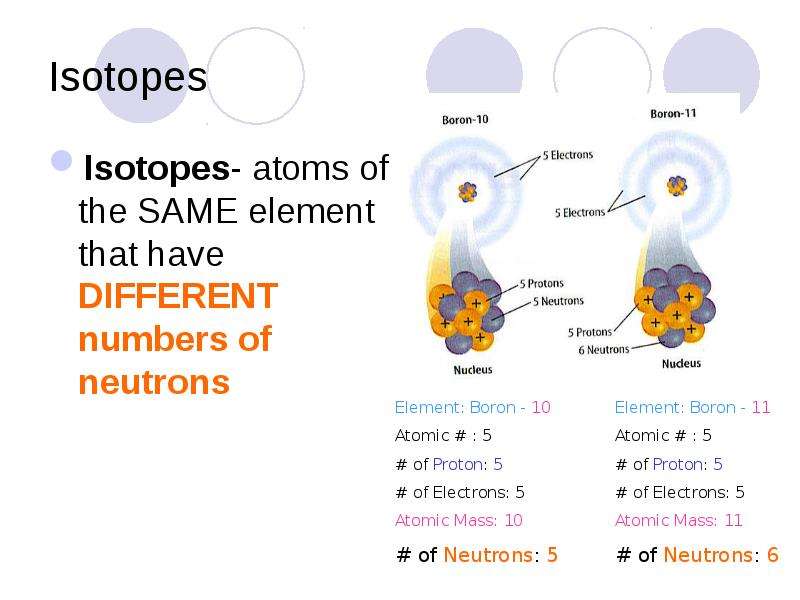
Isotopes Isotopes- atoms of the SAME element that have DIFFERENT numbers of neutrons
Описание слайда:
Isotopes Isotopes- atoms of the SAME element that have DIFFERENT numbers of neutrons

Слайд 20


Chapter 18 Section 3: The Periodic Table
Описание слайда:
Chapter 18 Section 3: The Periodic Table

Слайд 21


You will learn how to…… Explain the composition of the periodic table. Use the periodic table to obtain information. Explain what the terms metal,...
Описание слайда:
You will learn how to…… Explain the composition of the periodic table. Use the periodic table to obtain information. Explain what the terms metal, nonmetal, and metalloid mean. This is important because the periodic table is an organized list of the elements that compose all living and nonliving things that are known to exist in the universe.

Слайд 22


The Periodic Table Periodic means “repeated in a pattern” Ex. The calendar: the days repeat every 7 days, months repeat every 12 months
Описание слайда:
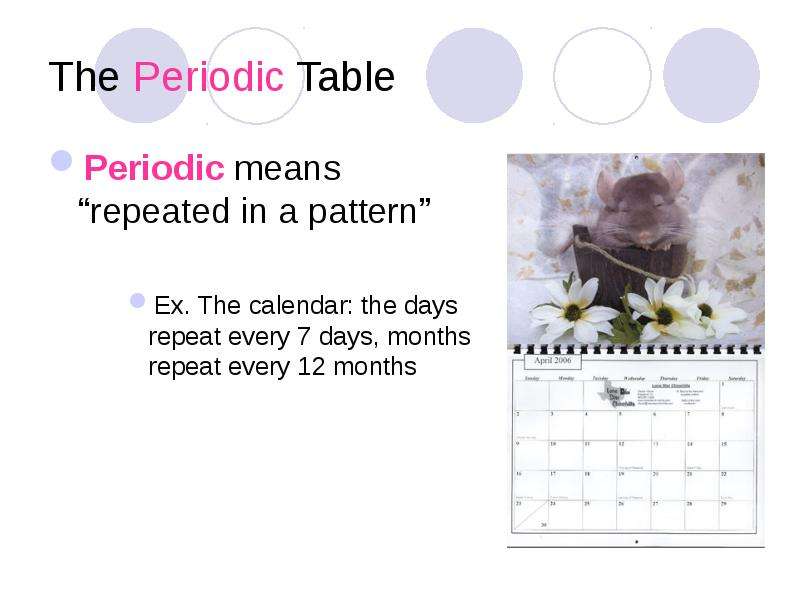
The Periodic Table Periodic means “repeated in a pattern” Ex. The calendar: the days repeat every 7 days, months repeat every 12 months

Слайд 23


Dmitri Mendeleev (1834-1907) constructed the FIRST periodic table he listed the elements in columns in order of increasing atomic mass he arranged...
Описание слайда:
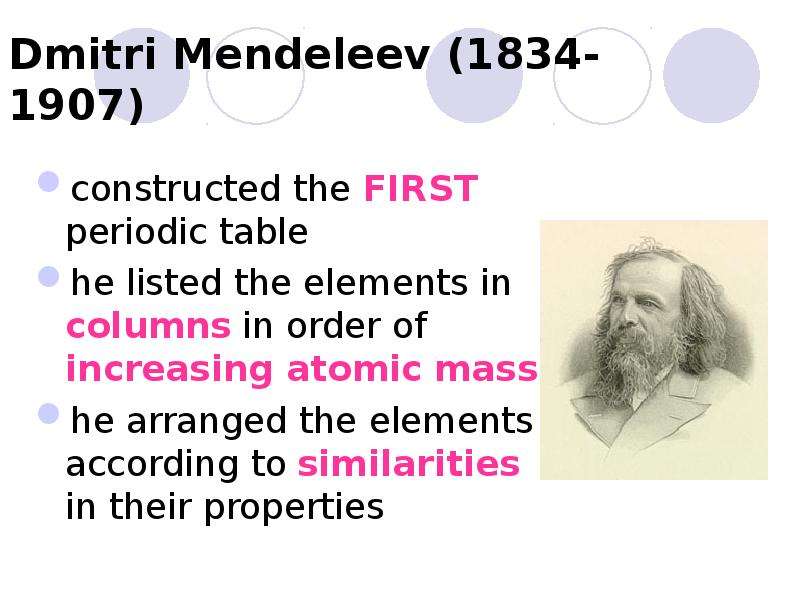
Dmitri Mendeleev (1834-1907) constructed the FIRST periodic table he listed the elements in columns in order of increasing atomic mass he arranged the elements according to similarities in their properties

Слайд 24


Henry Moseley (1913) a British physicist who determined the atomic number of the atoms of the elements he arranged the elements in a table by order...
Описание слайда:
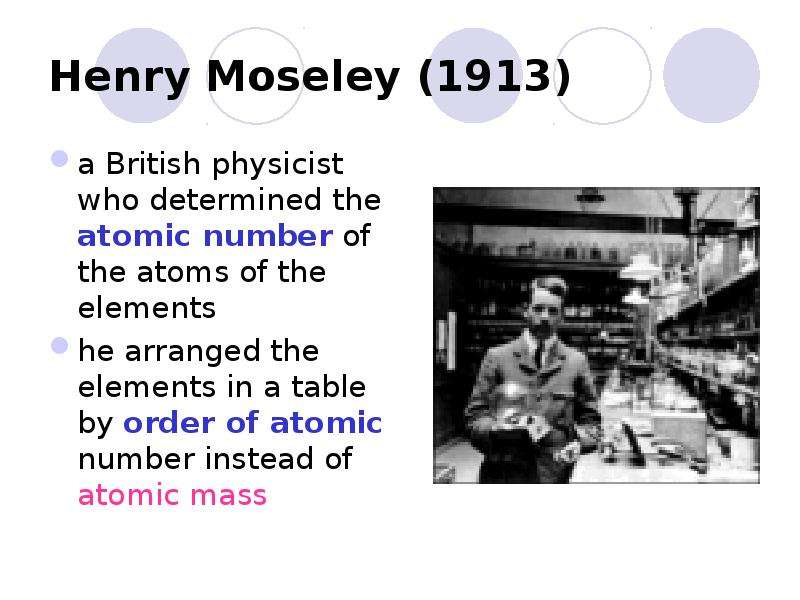
Henry Moseley (1913) a British physicist who determined the atomic number of the atoms of the elements he arranged the elements in a table by order of atomic number instead of atomic mass

Слайд 25


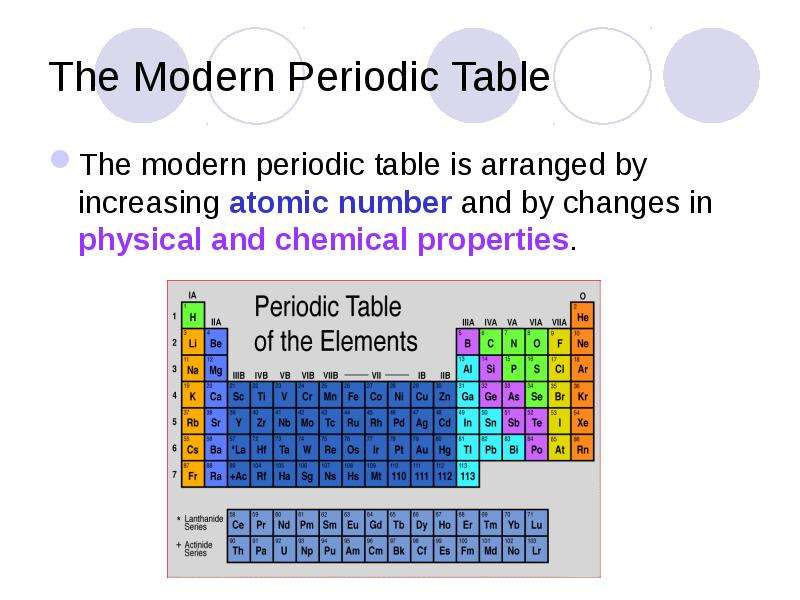
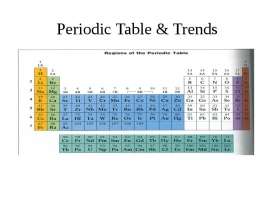
The Modern Periodic Table The modern periodic table is arranged by increasing atomic number and by changes in physical and chemical properties.
Описание слайда:
The Modern Periodic Table The modern periodic table is arranged by increasing atomic number and by changes in physical and chemical properties.

Слайд 26


Properties of Atoms and the Periodic Table, слайд №26
Описание слайда:

Слайд 27


How do I figure out how many valance electrons an element has? You look at the column number. 1A, 2A, 3A Count the boxes from left to right (skipping...
Описание слайда:
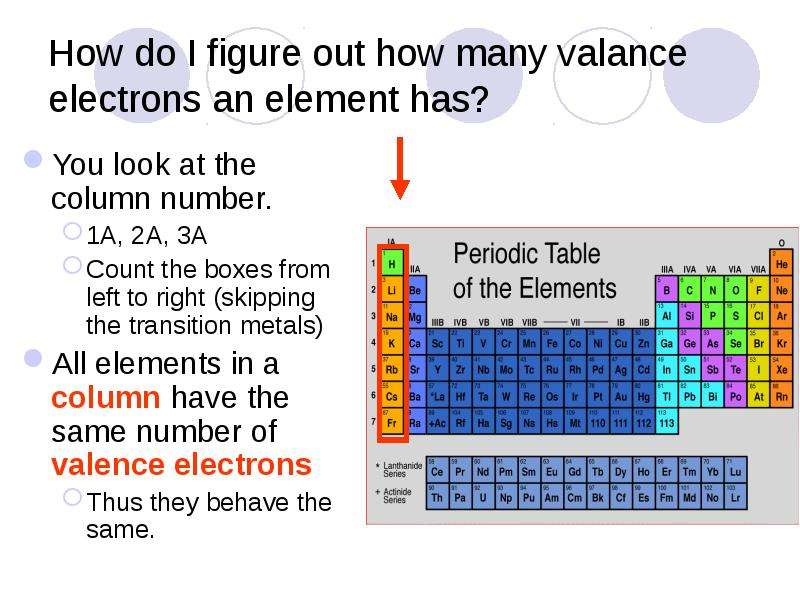
How do I figure out how many valance electrons an element has? You look at the column number. 1A, 2A, 3A Count the boxes from left to right (skipping the transition metals) All elements in a column have the same number of valence electrons Thus they behave the same.

Слайд 28


How many valance electrons do alkali metals have?
Описание слайда:
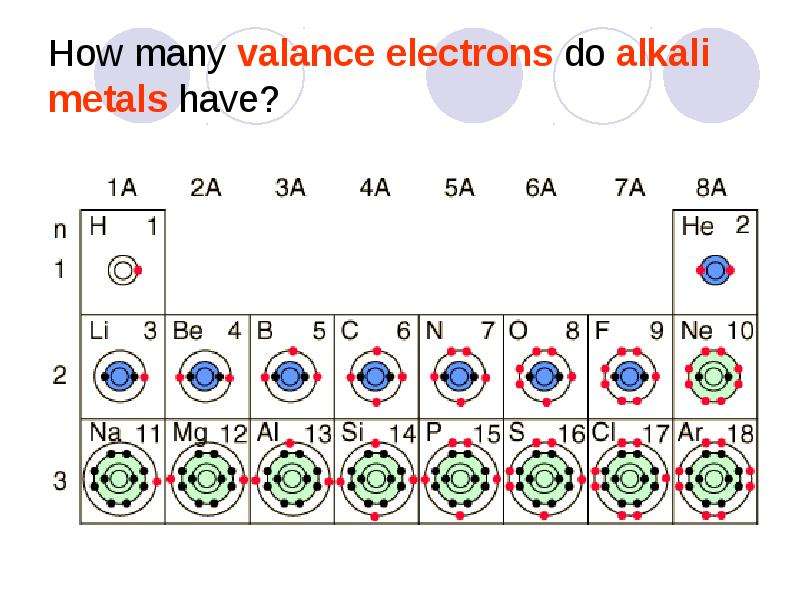
How many valance electrons do alkali metals have?

Слайд 29


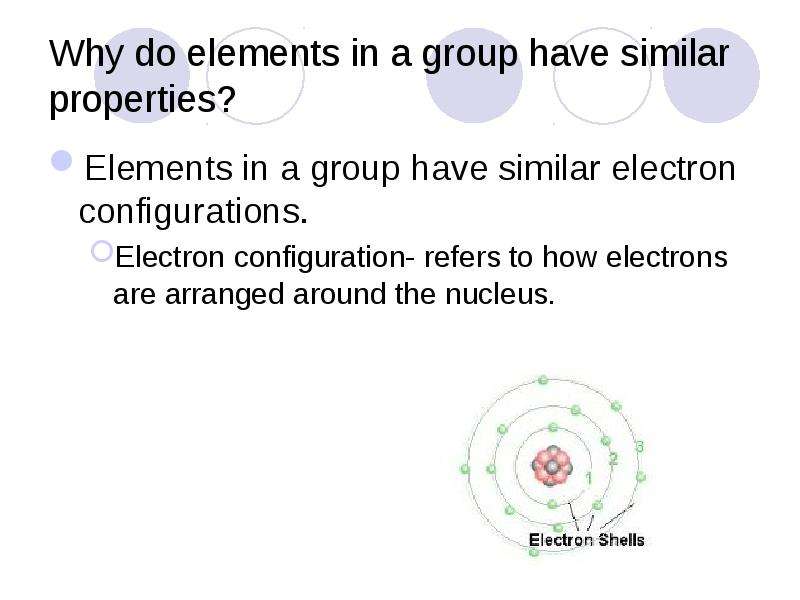
Why do elements in a group have similar properties? Elements in a group have similar electron configurations. Electron configuration- refers to how...
Описание слайда:
Why do elements in a group have similar properties? Elements in a group have similar electron configurations. Electron configuration- refers to how electrons are arranged around the nucleus.

Слайд 30


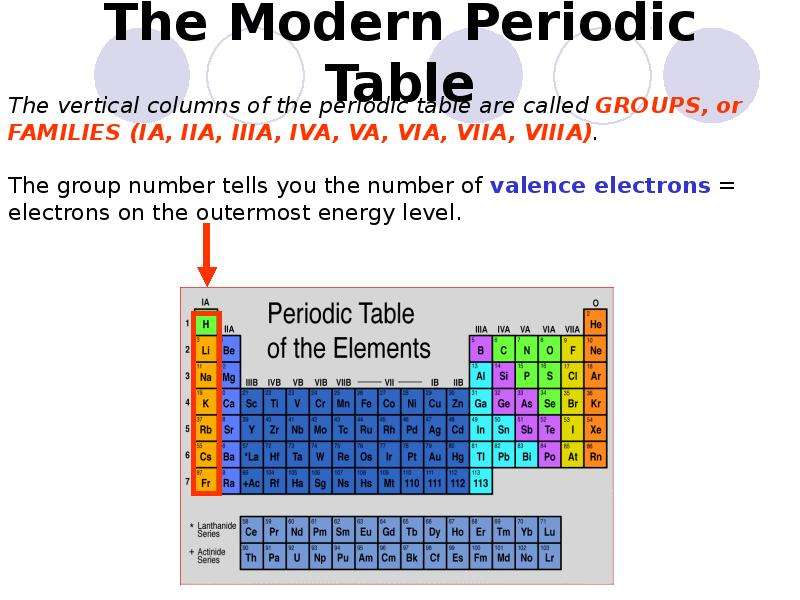
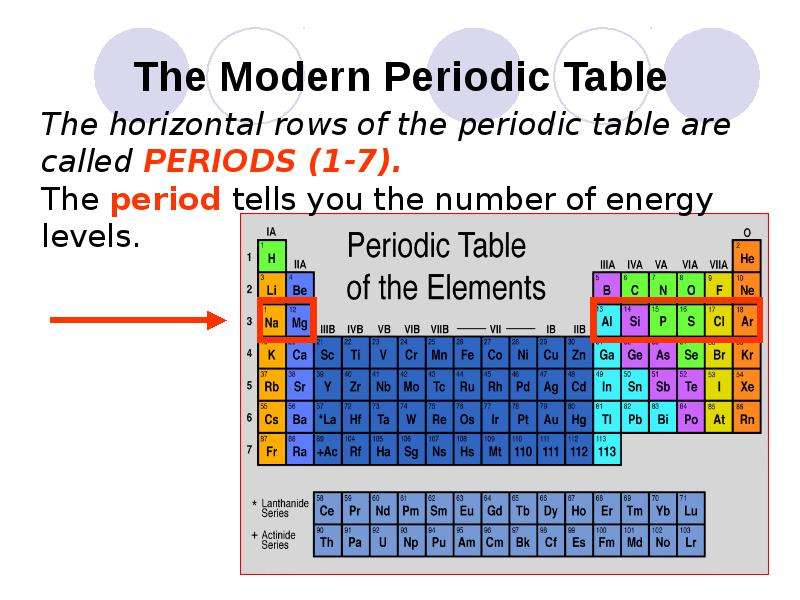
The Modern Periodic Table
Описание слайда:
The Modern Periodic Table

Слайд 31


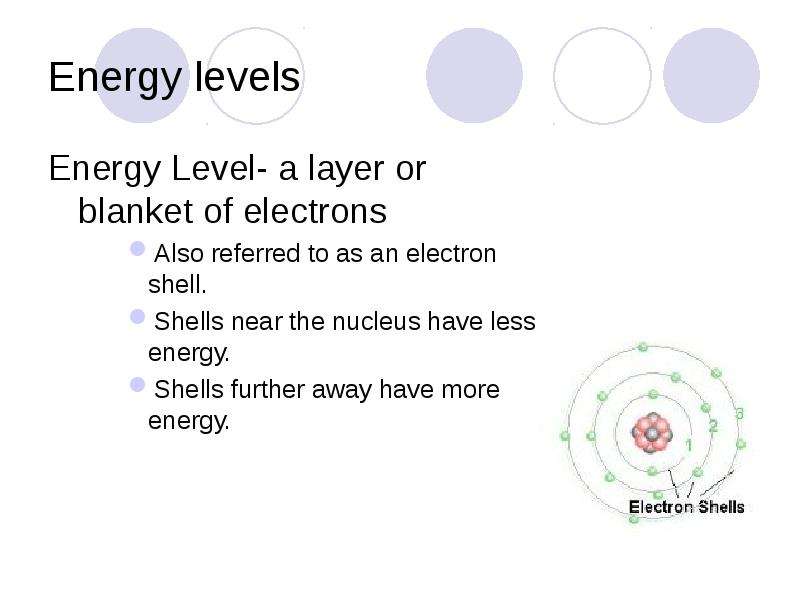
Energy levels Energy Level- a layer or blanket of electrons Also referred to as an electron shell. Shells near the nucleus have less energy. Shells...
Описание слайда:
Energy levels Energy Level- a layer or blanket of electrons Also referred to as an electron shell. Shells near the nucleus have less energy. Shells further away have more energy.

Слайд 32


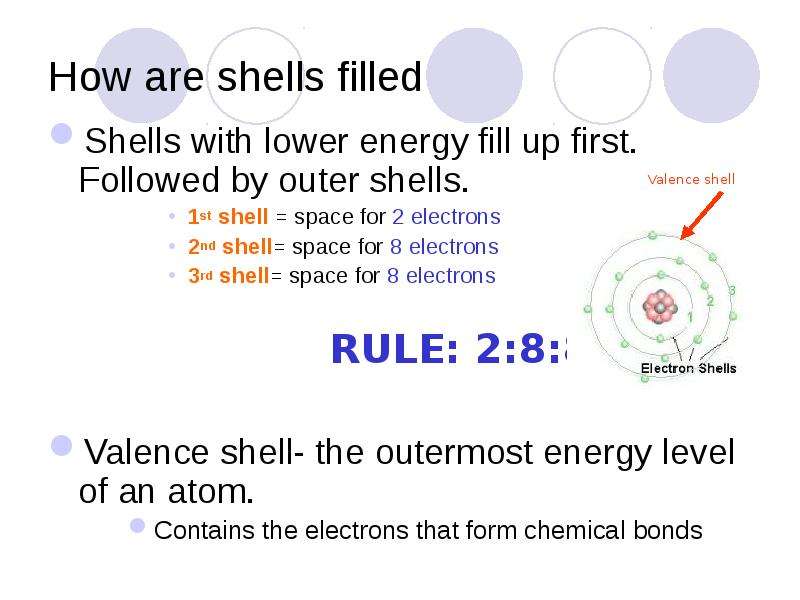
How are shells filled Shells with lower energy fill up first. Followed by outer shells. 1st shell = space for 2 electrons 2nd shell= space for 8...
Описание слайда:
How are shells filled Shells with lower energy fill up first. Followed by outer shells. 1st shell = space for 2 electrons 2nd shell= space for 8 electrons 3rd shell= space for 8 electrons RULE: 2:8:8 Valence shell- the outermost energy level of an atom. Contains the electrons that form chemical bonds

Слайд 33


How do I figure out the number of shells on an atom? Each period adds another energy level. Ex: Element in period (row) 3 have three layers of...
Описание слайда:
How do I figure out the number of shells on an atom? Each period adds another energy level. Ex: Element in period (row) 3 have three layers of electrons.

Слайд 34


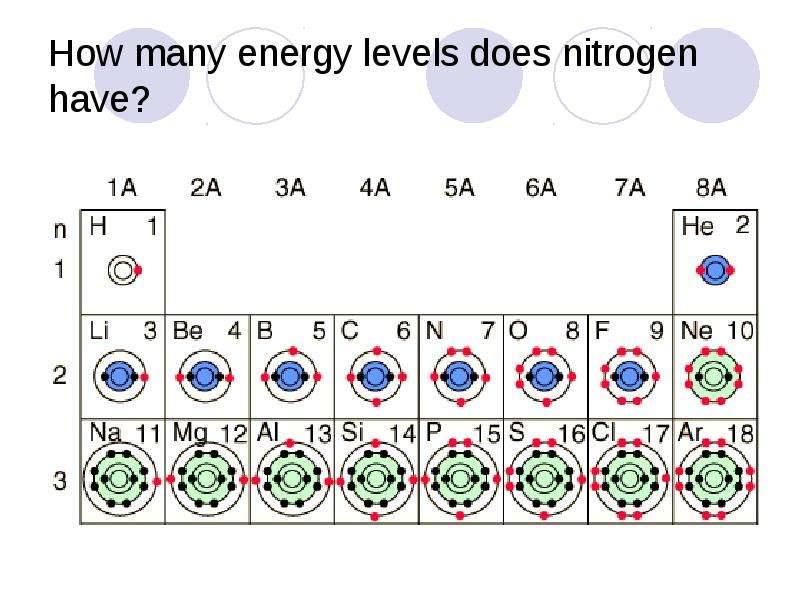
How many energy levels does nitrogen have?
Описание слайда:
How many energy levels does nitrogen have?

Слайд 35


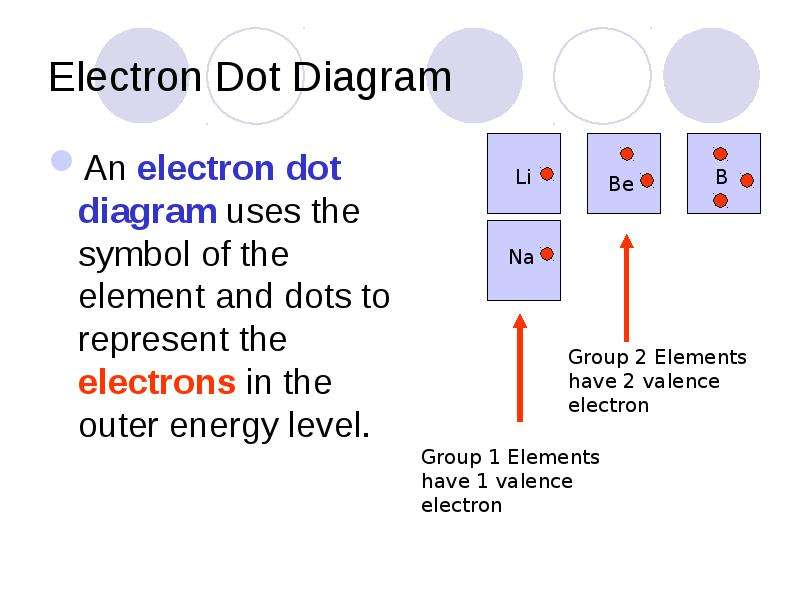
Electron Dot Diagram An electron dot diagram uses the symbol of the element and dots to represent the electrons in the outer energy level.
Описание слайда:
Electron Dot Diagram An electron dot diagram uses the symbol of the element and dots to represent the electrons in the outer energy level.

Слайд 36


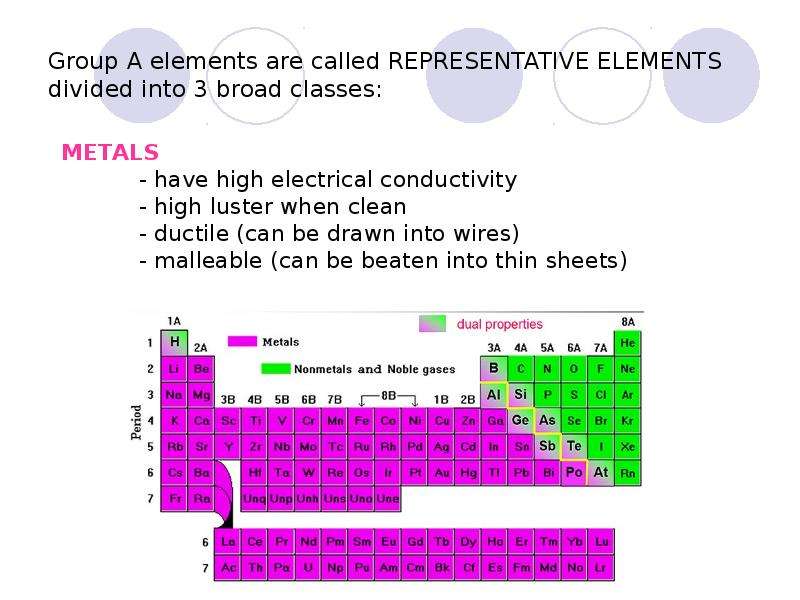
Group A elements are called REPRESENTATIVE ELEMENTS divided into 3 broad classes: METALS - have high electrical conductivity - high luster when clean...
Описание слайда:
Group A elements are called REPRESENTATIVE ELEMENTS divided into 3 broad classes: METALS - have high electrical conductivity - high luster when clean - ductile (can be drawn into wires) - malleable (can be beaten into thin sheets)

Слайд 37


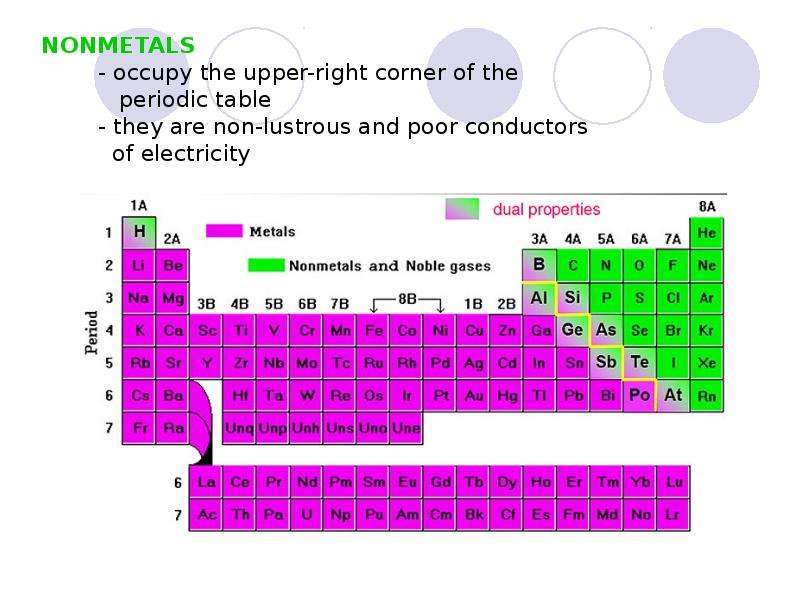
NONMETALS NONMETALS - occupy the upper-right corner of the periodic table - they are non-lustrous and poor conductors of electricity
Описание слайда:
NONMETALS NONMETALS - occupy the upper-right corner of the periodic table - they are non-lustrous and poor conductors of electricity

Слайд 38


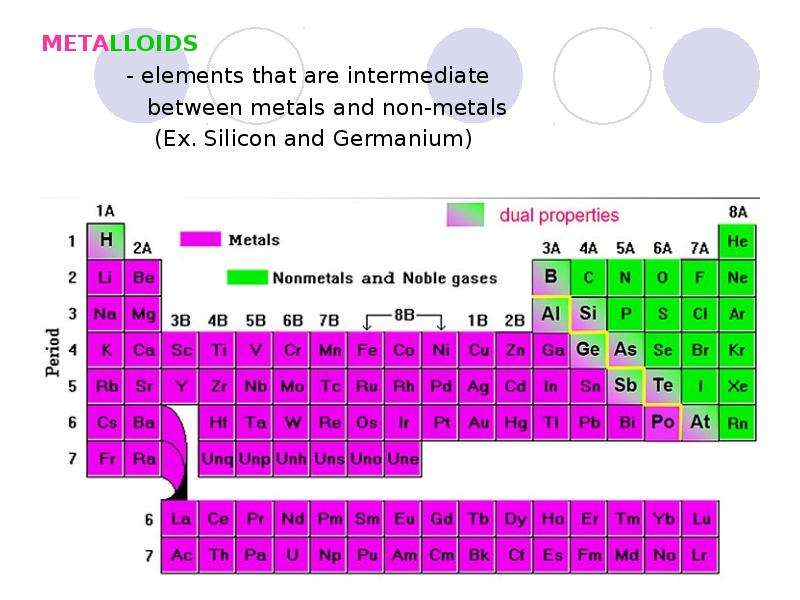
METALLOIDS METALLOIDS - elements that are intermediate between metals and non-metals (Ex. Silicon and Germanium)
Описание слайда:
METALLOIDS METALLOIDS - elements that are intermediate between metals and non-metals (Ex. Silicon and Germanium)

Слайд 39


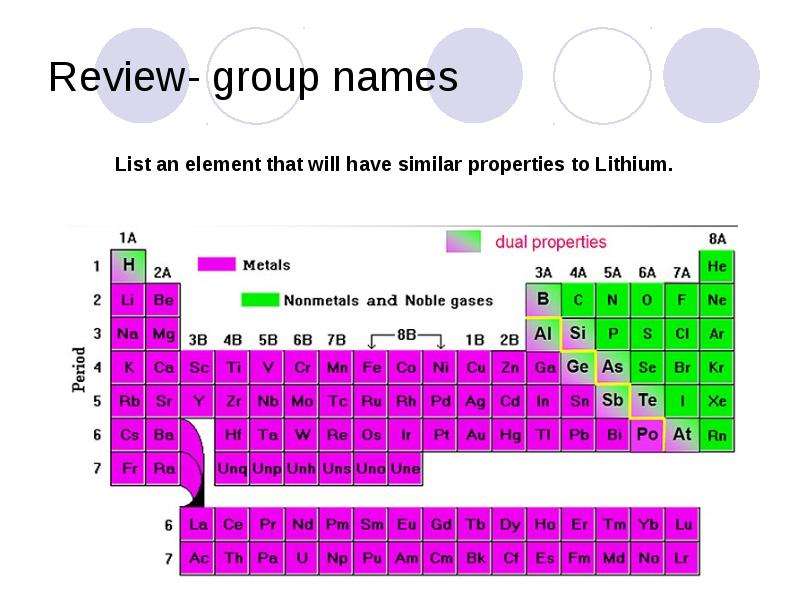
Review- group names
Описание слайда:
Review- group names

Слайд 40


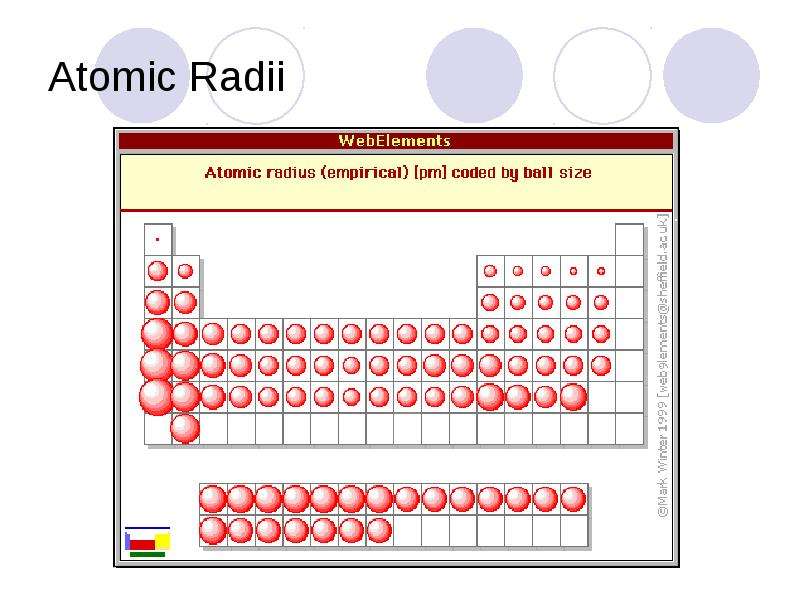
Periodic Trends Atomic radii- the size of an atom From top to bottom atoms get bigger Why? More layers of electrons From left to right- Get smaller...
Описание слайда:
Periodic Trends Atomic radii- the size of an atom From top to bottom atoms get bigger Why? More layers of electrons From left to right- Get smaller Why? More protons pull the electrons closer.

Слайд 41


Atomic Radii
Описание слайда:
Atomic Radii

Слайд 42


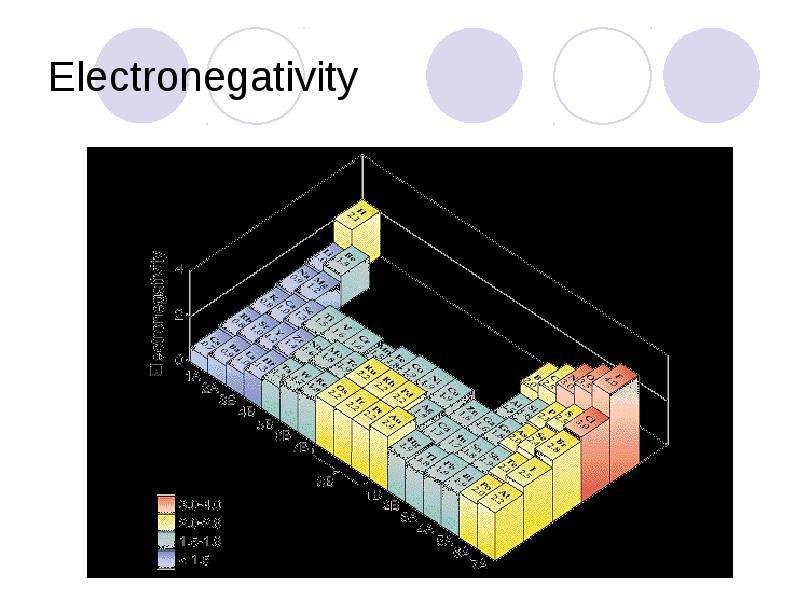
Electronegativity Electronegativity- ability to take electrons from another atom. From top to bottom- gets weaker From left to right gets stronger-
Описание слайда:
Electronegativity Electronegativity- ability to take electrons from another atom. From top to bottom- gets weaker From left to right gets stronger-

Слайд 43


Electronegativity
Описание слайда:
Electronegativity

Слайд 44


Electronegativity Why do we care? Metals lose valance electrons Nonmetals take electrons Ionic bonds Covalent bonds Atoms near each other share...
Описание слайда:
Electronegativity Why do we care? Metals lose valance electrons Nonmetals take electrons Ionic bonds Covalent bonds Atoms near each other share electrons Non-metal with nonmetal


Похожие презентации
Mypresentation.ru
Загрузить презентацию