🗊 Презентация Physical chemistry of surface phenomena. Basics of adsorptive therapy

Категория: Химия
Нажмите для полного просмотра!
Physical chemistry of surface phenomena. Basics of adsorptive therapy, слайд №1 Physical chemistry of surface phenomena. Basics of adsorptive therapy, слайд №2 Physical chemistry of surface phenomena. Basics of adsorptive therapy, слайд №3 Physical chemistry of surface phenomena. Basics of adsorptive therapy, слайд №4 Physical chemistry of surface phenomena. Basics of adsorptive therapy, слайд №5 Physical chemistry of surface phenomena. Basics of adsorptive therapy, слайд №6 Physical chemistry of surface phenomena. Basics of adsorptive therapy, слайд №7 Physical chemistry of surface phenomena. Basics of adsorptive therapy, слайд №8 Physical chemistry of surface phenomena. Basics of adsorptive therapy, слайд №9 Physical chemistry of surface phenomena. Basics of adsorptive therapy, слайд №10 Physical chemistry of surface phenomena. Basics of adsorptive therapy, слайд №11 Physical chemistry of surface phenomena. Basics of adsorptive therapy, слайд №12 Physical chemistry of surface phenomena. Basics of adsorptive therapy, слайд №13 Physical chemistry of surface phenomena. Basics of adsorptive therapy, слайд №14 Physical chemistry of surface phenomena. Basics of adsorptive therapy, слайд №15 Physical chemistry of surface phenomena. Basics of adsorptive therapy, слайд №16 Physical chemistry of surface phenomena. Basics of adsorptive therapy, слайд №17 Physical chemistry of surface phenomena. Basics of adsorptive therapy, слайд №18 Physical chemistry of surface phenomena. Basics of adsorptive therapy, слайд №19 Physical chemistry of surface phenomena. Basics of adsorptive therapy, слайд №20 Physical chemistry of surface phenomena. Basics of adsorptive therapy, слайд №21 Physical chemistry of surface phenomena. Basics of adsorptive therapy, слайд №22 Physical chemistry of surface phenomena. Basics of adsorptive therapy, слайд №23 Physical chemistry of surface phenomena. Basics of adsorptive therapy, слайд №24 Physical chemistry of surface phenomena. Basics of adsorptive therapy, слайд №25 Physical chemistry of surface phenomena. Basics of adsorptive therapy, слайд №26 Physical chemistry of surface phenomena. Basics of adsorptive therapy, слайд №27 Physical chemistry of surface phenomena. Basics of adsorptive therapy, слайд №28 Physical chemistry of surface phenomena. Basics of adsorptive therapy, слайд №29 Physical chemistry of surface phenomena. Basics of adsorptive therapy, слайд №30 Physical chemistry of surface phenomena. Basics of adsorptive therapy, слайд №31 Physical chemistry of surface phenomena. Basics of adsorptive therapy, слайд №32 Physical chemistry of surface phenomena. Basics of adsorptive therapy, слайд №33 Physical chemistry of surface phenomena. Basics of adsorptive therapy, слайд №34 Physical chemistry of surface phenomena. Basics of adsorptive therapy, слайд №35 Physical chemistry of surface phenomena. Basics of adsorptive therapy, слайд №36 Physical chemistry of surface phenomena. Basics of adsorptive therapy, слайд №37 Physical chemistry of surface phenomena. Basics of adsorptive therapy, слайд №38 Physical chemistry of surface phenomena. Basics of adsorptive therapy, слайд №39 Physical chemistry of surface phenomena. Basics of adsorptive therapy, слайд №40 Physical chemistry of surface phenomena. Basics of adsorptive therapy, слайд №41 Physical chemistry of surface phenomena. Basics of adsorptive therapy, слайд №42 Physical chemistry of surface phenomena. Basics of adsorptive therapy, слайд №43 Physical chemistry of surface phenomena. Basics of adsorptive therapy, слайд №44 Physical chemistry of surface phenomena. Basics of adsorptive therapy, слайд №45 Physical chemistry of surface phenomena. Basics of adsorptive therapy, слайд №46 Physical chemistry of surface phenomena. Basics of adsorptive therapy, слайд №47 Physical chemistry of surface phenomena. Basics of adsorptive therapy, слайд №48 Physical chemistry of surface phenomena. Basics of adsorptive therapy, слайд №49 Physical chemistry of surface phenomena. Basics of adsorptive therapy, слайд №50 Physical chemistry of surface phenomena. Basics of adsorptive therapy, слайд №51 Physical chemistry of surface phenomena. Basics of adsorptive therapy, слайд №52 Physical chemistry of surface phenomena. Basics of adsorptive therapy, слайд №53

Содержание
Вы можете ознакомиться и скачать презентацию на тему Physical chemistry of surface phenomena. Basics of adsorptive therapy. Доклад-сообщение содержит 53 слайдов. Презентации для любого класса можно скачать бесплатно. Если материал и наш сайт презентаций Mypresentation Вам понравились – поделитесь им с друзьями с помощью социальных кнопок и добавьте в закладки в своем браузере.
Слайды и текст этой презентации


Слайд 1


Physical chemistry of surface phenomena. Basics of adsorptive therapy
Описание слайда:
Physical chemistry of surface phenomena. Basics of adsorptive therapy

Слайд 2


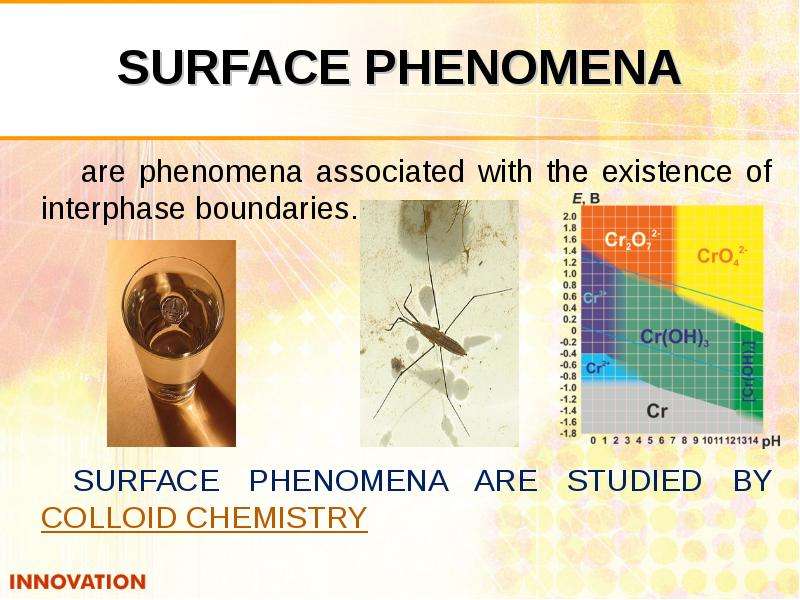
SURFACE PHENOMENA are phenomena associated with the existence of interphase boundaries. SURFACE PHENOMENA ARE STUDIED BY COLLOID CHEMISTRY
Описание слайда:
SURFACE PHENOMENA are phenomena associated with the existence of interphase boundaries. SURFACE PHENOMENA ARE STUDIED BY COLLOID CHEMISTRY

Слайд 3


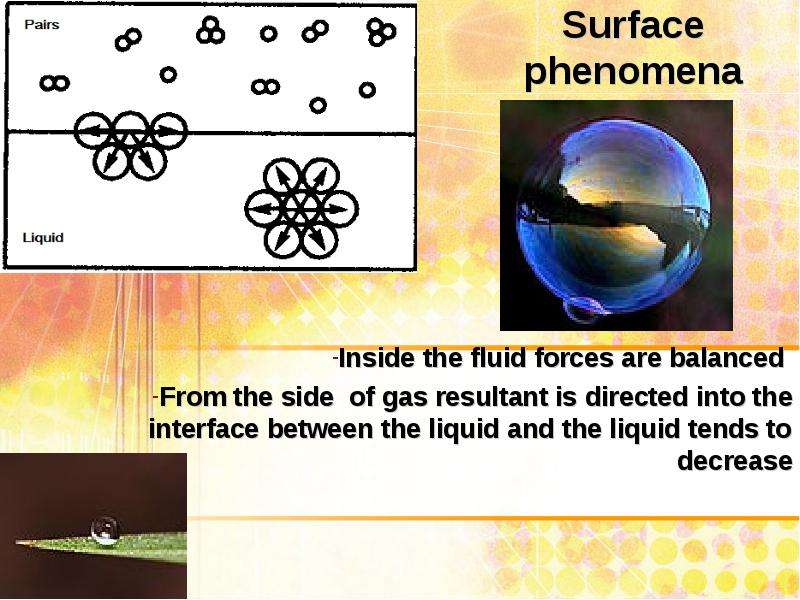
Surface phenomena Inside the fluid forces are balanced From the side of gas resultant is directed into the interface between the liquid and the...
Описание слайда:
Surface phenomena Inside the fluid forces are balanced From the side of gas resultant is directed into the interface between the liquid and the liquid tends to decrease

Слайд 4


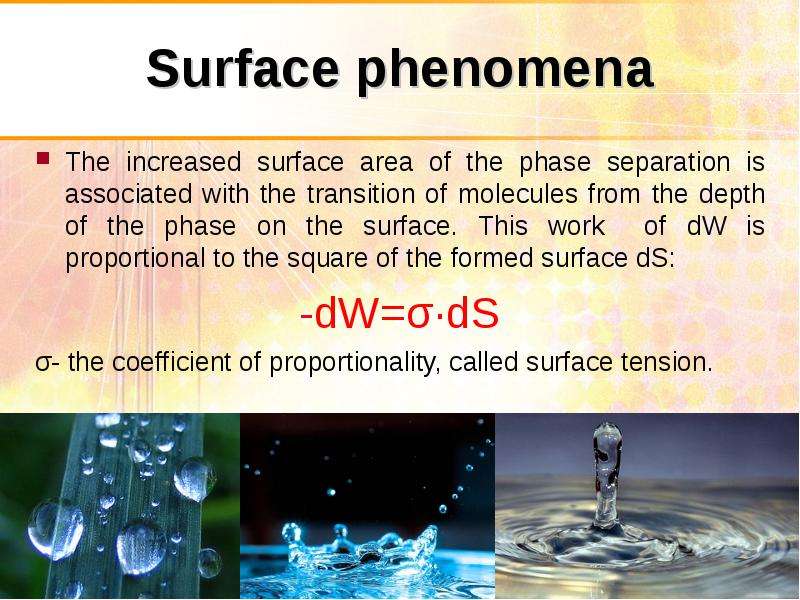
Surface phenomena The increased surface area of the phase separation is associated with the transition of molecules from the depth of the phase on...
Описание слайда:
Surface phenomena The increased surface area of the phase separation is associated with the transition of molecules from the depth of the phase on the surface. This work of dW is proportional to the square of the formed surface dS: -dW=σ·dS σ- the coefficient of proportionality, called surface tension.

Слайд 5


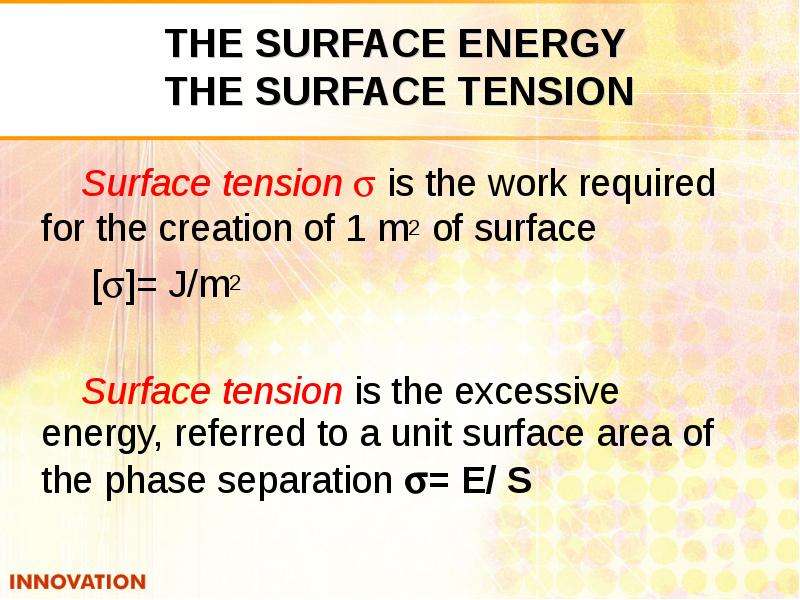
THE SURFACE ENERGY THE SURFACE TENSION Surface tension  is the work required for the creation of 1 m2 of surface []= J/m2 Surface tension is the...
Описание слайда:
THE SURFACE ENERGY THE SURFACE TENSION Surface tension  is the work required for the creation of 1 m2 of surface []= J/m2 Surface tension is the excessive energy, referred to a unit surface area of the phase separation = Е/ S

Слайд 6


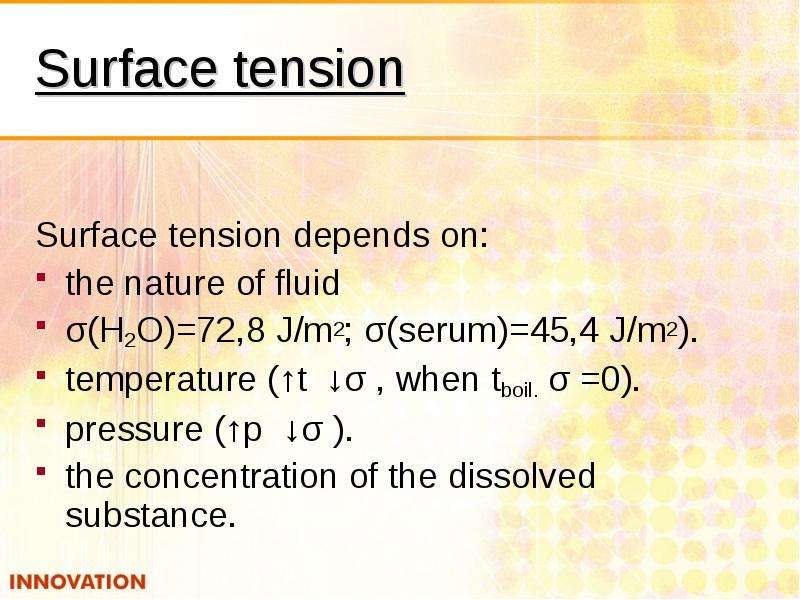
Surface tension Surface tension depends on: the nature of fluid σ(Н2О)=72,8 J/m2; σ(serum)=45,4 J/m2). temperature (↑t ↓σ , when tboil. σ =0)....
Описание слайда:
Surface tension Surface tension depends on: the nature of fluid σ(Н2О)=72,8 J/m2; σ(serum)=45,4 J/m2). temperature (↑t ↓σ , when tboil. σ =0). pressure (↑p ↓σ ). the concentration of the dissolved substance.

Слайд 7


SORPTION
Описание слайда:
SORPTION

Слайд 8


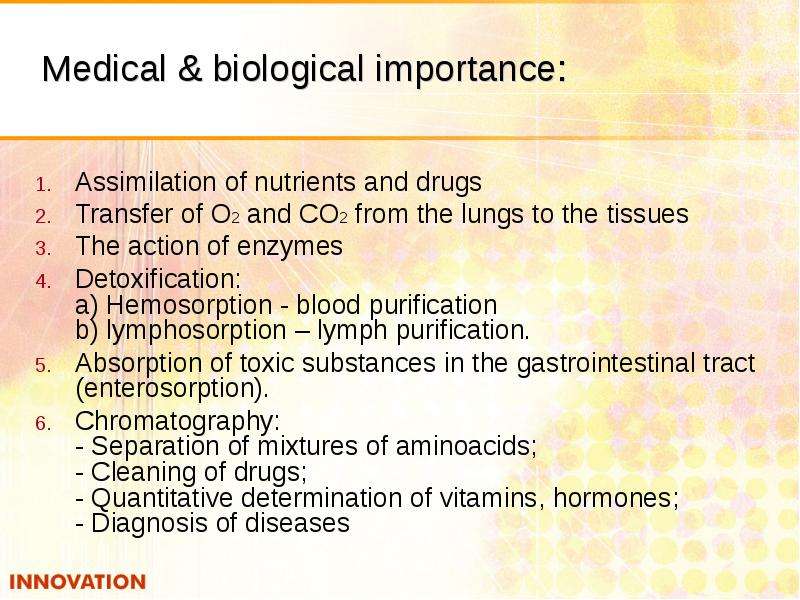
Medical & biological importance: Assimilation of nutrients and drugs Transfer of O2 and CO2 from the lungs to the tissues The action of enzymes...
Описание слайда:
Medical & biological importance: Assimilation of nutrients and drugs Transfer of O2 and CO2 from the lungs to the tissues The action of enzymes Detoxification: a) Hemosorption - blood purification b) lymphosorption – lymph purification. Absorption of toxic substances in the gastrointestinal tract (enterosorption). Chromatography: - Separation of mixtures of aminoacids; - Cleaning of drugs; - Quantitative determination of vitamins, hormones; - Diagnosis of diseases

Слайд 9


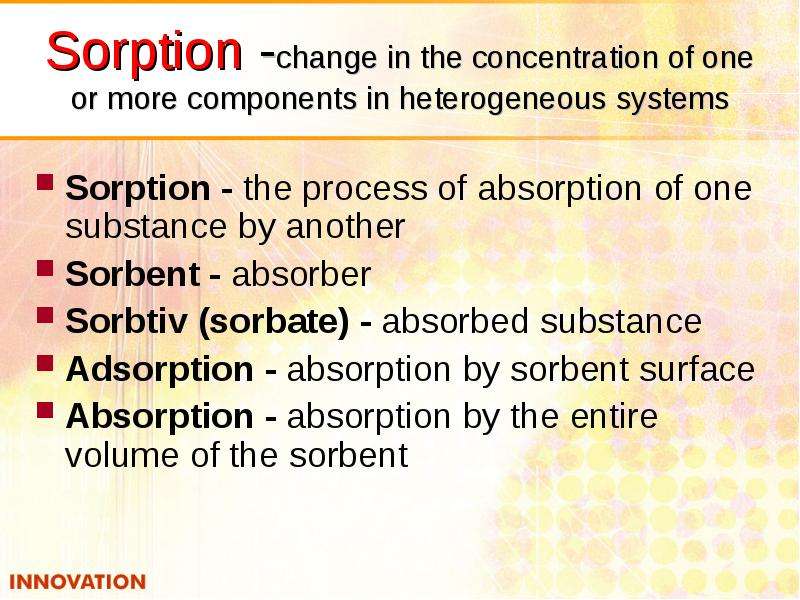
Sorption -change in the concentration of one or more components in heterogeneous systems Sorption - the process of absorption of one substance by...
Описание слайда:
Sorption -change in the concentration of one or more components in heterogeneous systems Sorption - the process of absorption of one substance by another Sorbent - absorber Sorbtiv (sorbate) - absorbed substance Adsorption - absorption by sorbent surface Absorption - absorption by the entire volume of the sorbent

Слайд 10


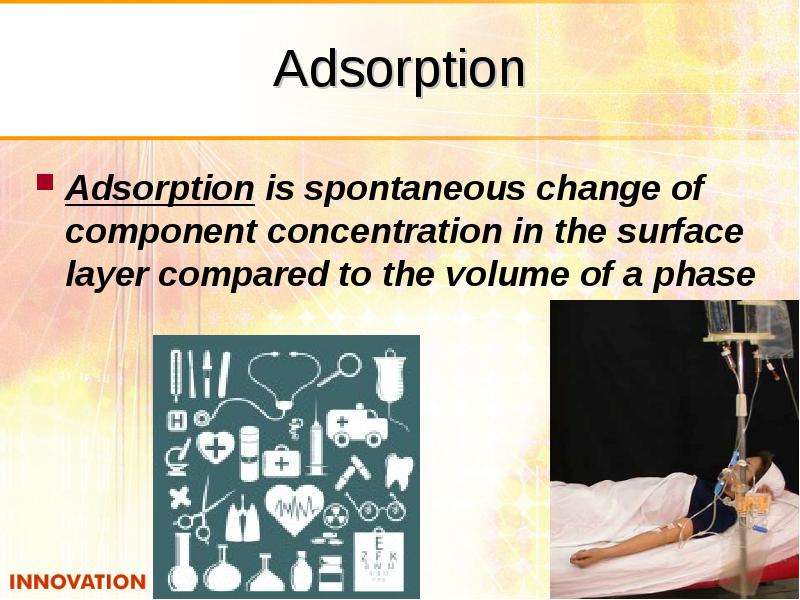
Adsorption Adsorption is spontaneous change of component concentration in the surface layer compared to the volume of a phase
Описание слайда:
Adsorption Adsorption is spontaneous change of component concentration in the surface layer compared to the volume of a phase

Слайд 11


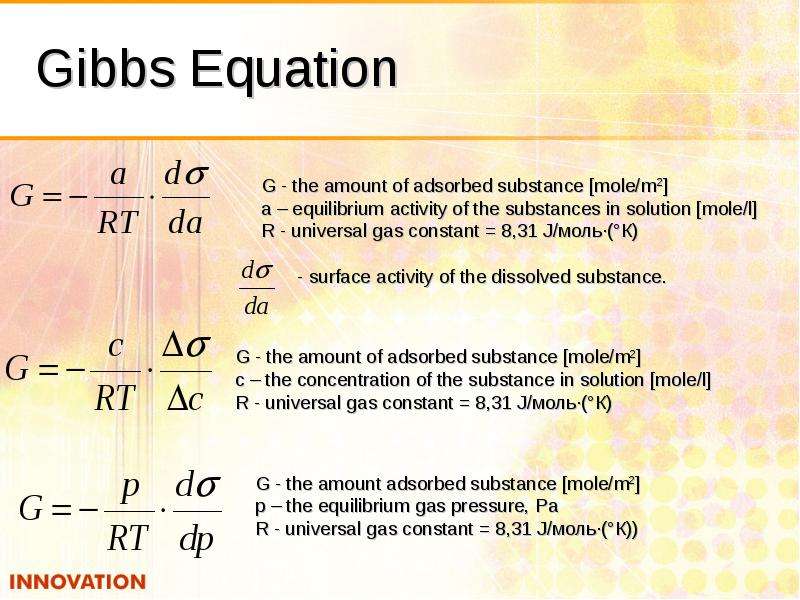
Gibbs Equation
Описание слайда:
Gibbs Equation

Слайд 12


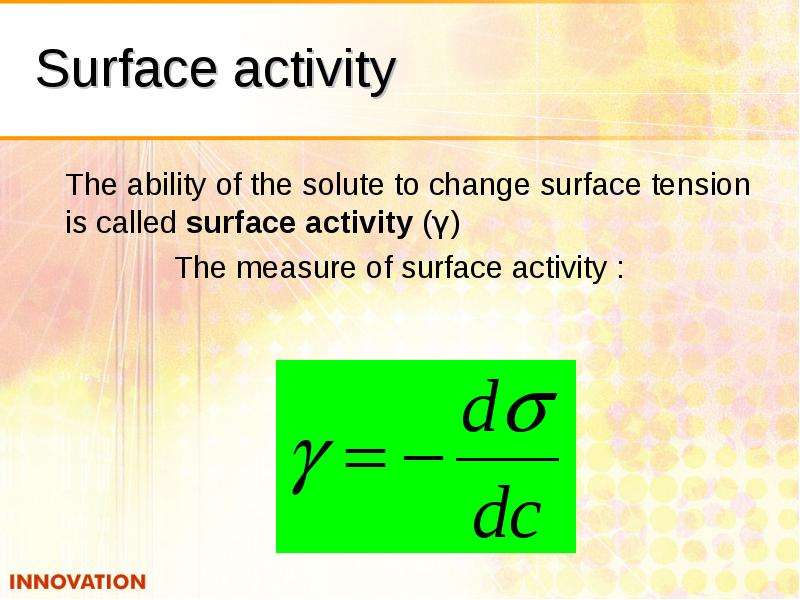
Surface activity The ability of the solute to change surface tension is called surface activity (γ) The measure of surface activity :
Описание слайда:
Surface activity The ability of the solute to change surface tension is called surface activity (γ) The measure of surface activity :

Слайд 13


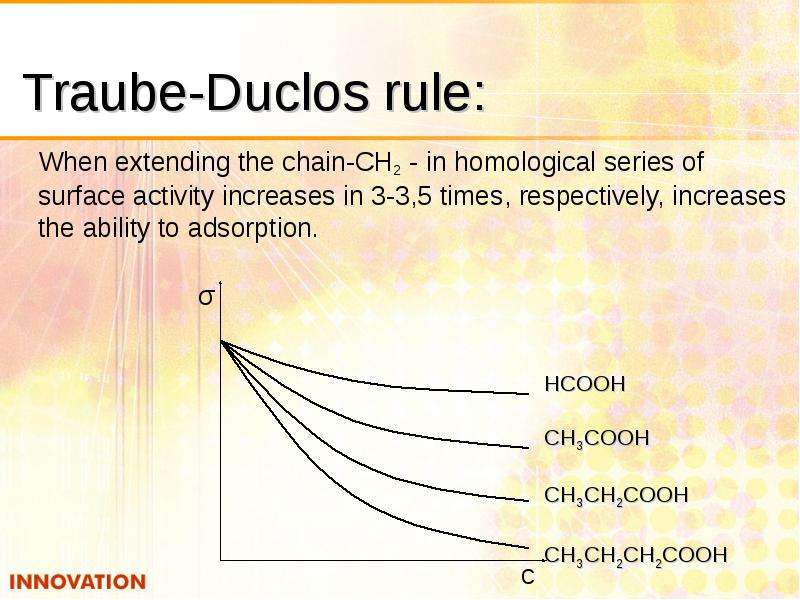
Traube-Duclos rule: When extending the chain-CH2 - in homological series of surface activity increases in 3-3,5 times, respectively, increases the...
Описание слайда:
Traube-Duclos rule: When extending the chain-CH2 - in homological series of surface activity increases in 3-3,5 times, respectively, increases the ability to adsorption.

Слайд 14


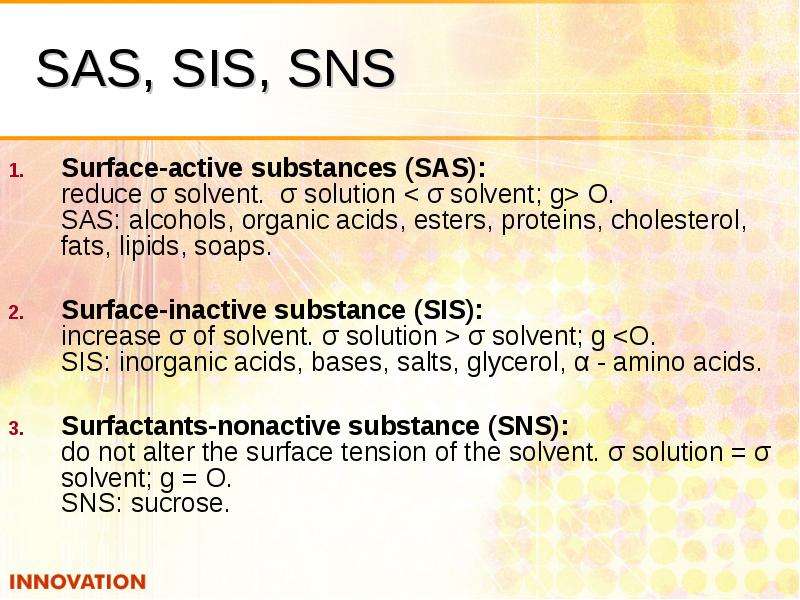
SAS, SIS, SNS Surface-active substances (SAS): reduce σ solvent. σ solution < σ solvent; g> O. SAS: alcohols, organic acids, esters, proteins,...
Описание слайда:
SAS, SIS, SNS Surface-active substances (SAS): reduce σ solvent. σ solution < σ solvent; g> O. SAS: alcohols, organic acids, esters, proteins, cholesterol, fats, lipids, soaps. Surface-inactive substance (SIS): increase σ of solvent. σ solution > σ solvent; g

Слайд 15


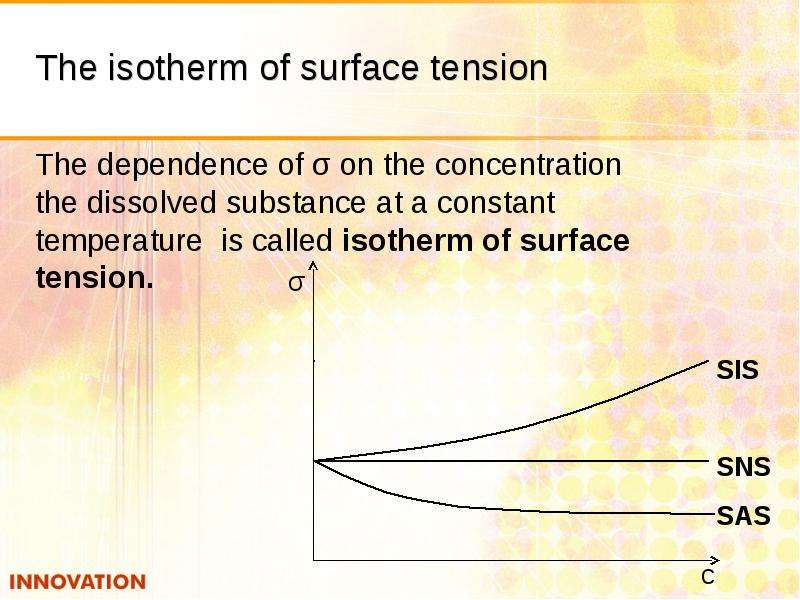
The isotherm of surface tension The dependence of σ on the concentration the dissolved substance at a constant temperature is called isotherm of...
Описание слайда:
The isotherm of surface tension The dependence of σ on the concentration the dissolved substance at a constant temperature is called isotherm of surface tension.

Слайд 16


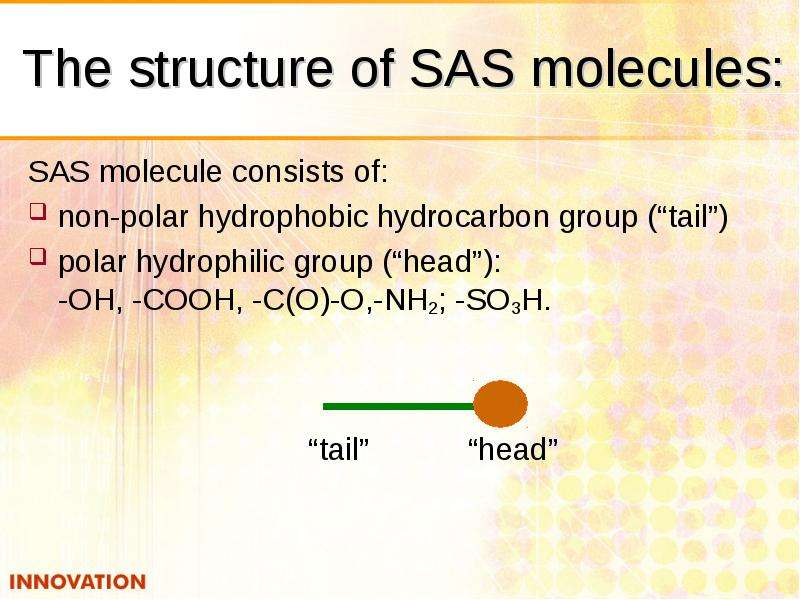
The structure of SAS molecules: SAS molecule consists of: non-polar hydrophobic hydrocarbon group (“tail”) polar hydrophilic group (“head”): -ОН,...
Описание слайда:
The structure of SAS molecules: SAS molecule consists of: non-polar hydrophobic hydrocarbon group (“tail”) polar hydrophilic group (“head”): -ОН, -СООН, -С(О)-О,-NН2; -SО3H. “tail” “head”

Слайд 17


ADSORPTION ON THE SOLUTION-GAS ADSORPTION ON THE SOLUTION-GAS BORDER
Описание слайда:
ADSORPTION ON THE SOLUTION-GAS ADSORPTION ON THE SOLUTION-GAS BORDER

Слайд 18


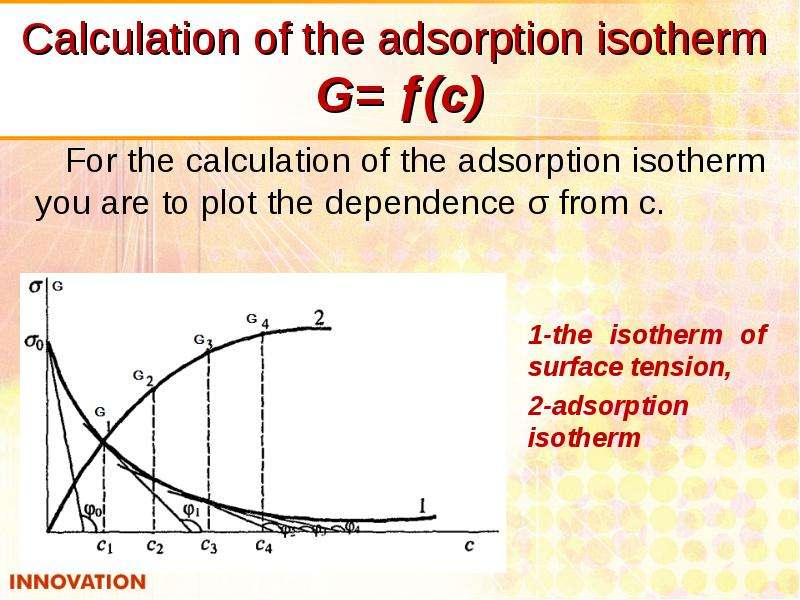
Calculation of the adsorption isotherm G= ƒ(с) For the calculation of the adsorption isotherm you are to plot the dependence σ from c.
Описание слайда:
Calculation of the adsorption isotherm G= ƒ(с) For the calculation of the adsorption isotherm you are to plot the dependence σ from c.

Слайд 19


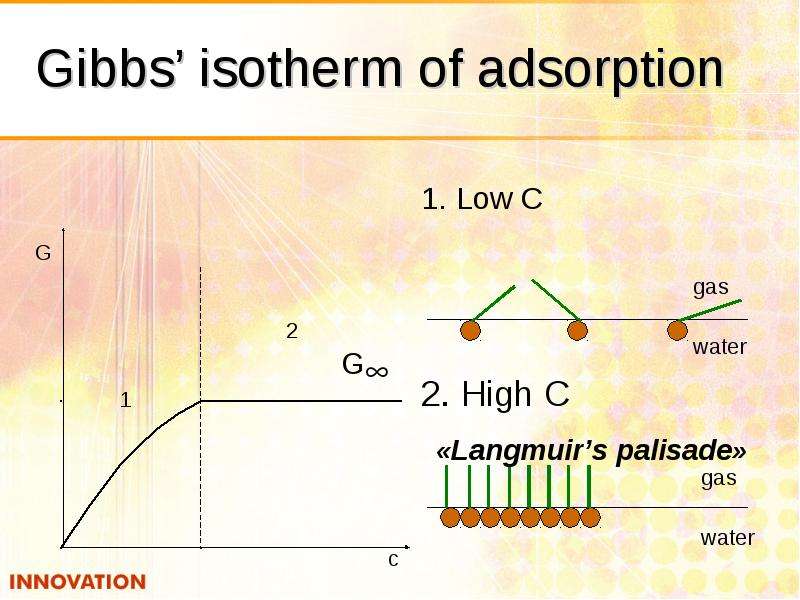
Gibbs’ isotherm of adsorption 1. Low С
Описание слайда:
Gibbs’ isotherm of adsorption 1. Low С

Слайд 20


ADSORPTION ON THE SOLID-GAS ADSORPTION ON THE SOLID-GAS BORDER
Описание слайда:
ADSORPTION ON THE SOLID-GAS ADSORPTION ON THE SOLID-GAS BORDER

Слайд 21


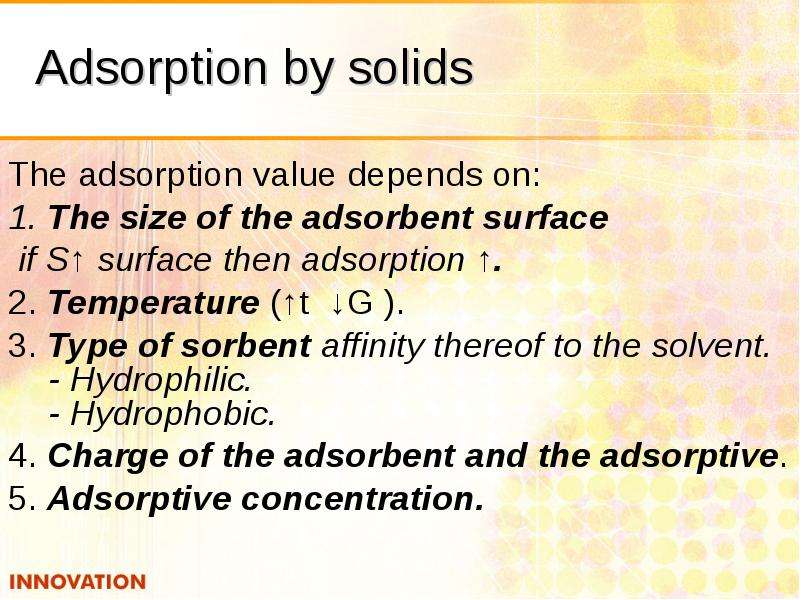
Adsorption by solids The adsorption value depends on: 1. The size of the adsorbent surface if S↑ surface then adsorption ↑. 2. Temperature (↑t ↓G )....
Описание слайда:
Adsorption by solids The adsorption value depends on: 1. The size of the adsorbent surface if S↑ surface then adsorption ↑. 2. Temperature (↑t ↓G ). 3. Type of sorbent affinity thereof to the solvent. - Hydrophilic. - Hydrophobic. 4. Charge of the adsorbent and the adsorptive. 5. Adsorptive concentration.

Слайд 22


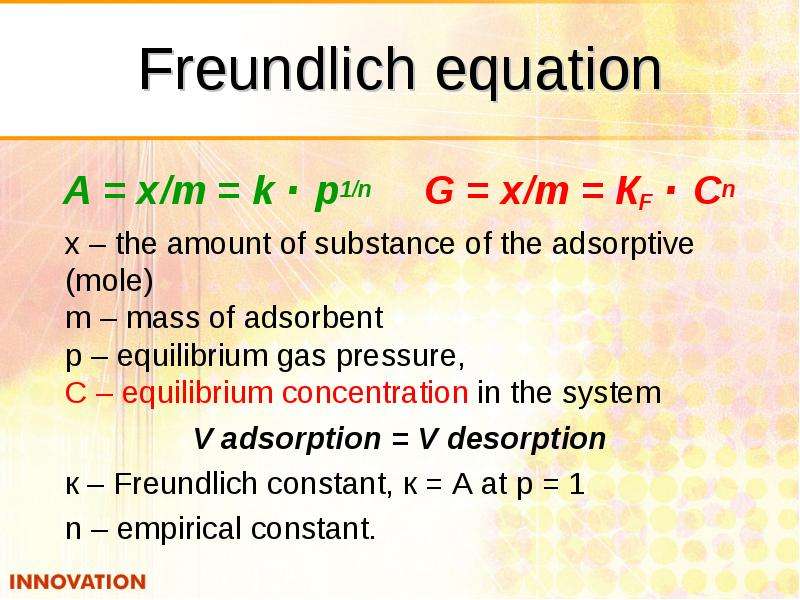
Freundlich equation А = x/m = k · p1/n G = x/m = КF · Cn х – the amount of substance of the adsorptive (mole) m – mass of adsorbent p – equilibrium...
Описание слайда:
Freundlich equation А = x/m = k · p1/n G = x/m = КF · Cn х – the amount of substance of the adsorptive (mole) m – mass of adsorbent p – equilibrium gas pressure, С – equilibrium concentration in the system V adsorption = V desorption к – Freundlich constant, к = А at р = 1 n – empirical constant.

Слайд 23


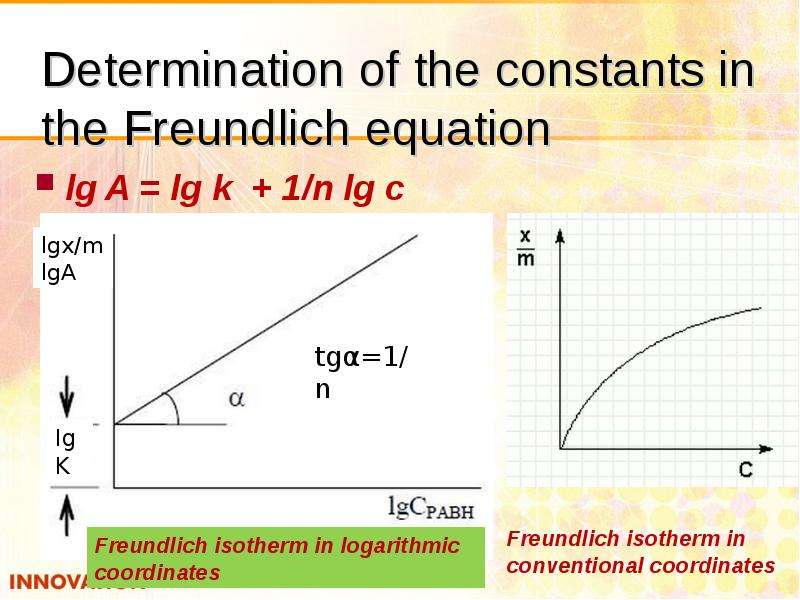
Determination of the constants in the Freundlich equation lg A = lg k + 1/n lg c
Описание слайда:
Determination of the constants in the Freundlich equation lg A = lg k + 1/n lg c

Слайд 24


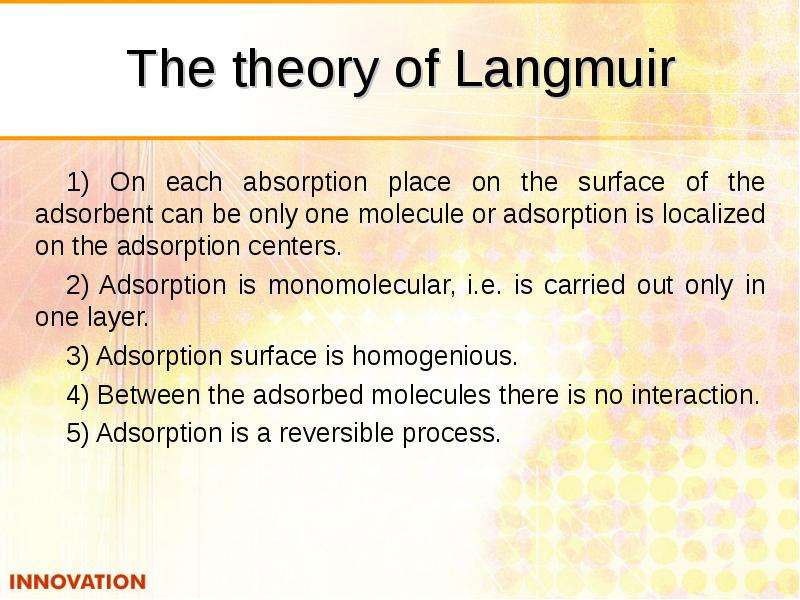
The theory of Langmuir 1) On each absorption place on the surface of the adsorbent can be only one molecule or adsorption is localized on the...
Описание слайда:
The theory of Langmuir 1) On each absorption place on the surface of the adsorbent can be only one molecule or adsorption is localized on the adsorption centers. 2) Adsorption is monomolecular, i.e. is carried out only in one layer. 3) Adsorption surface is homogenious. 4) Between the adsorbed molecules there is no interaction. 5) Adsorption is a reversible process.

Слайд 25


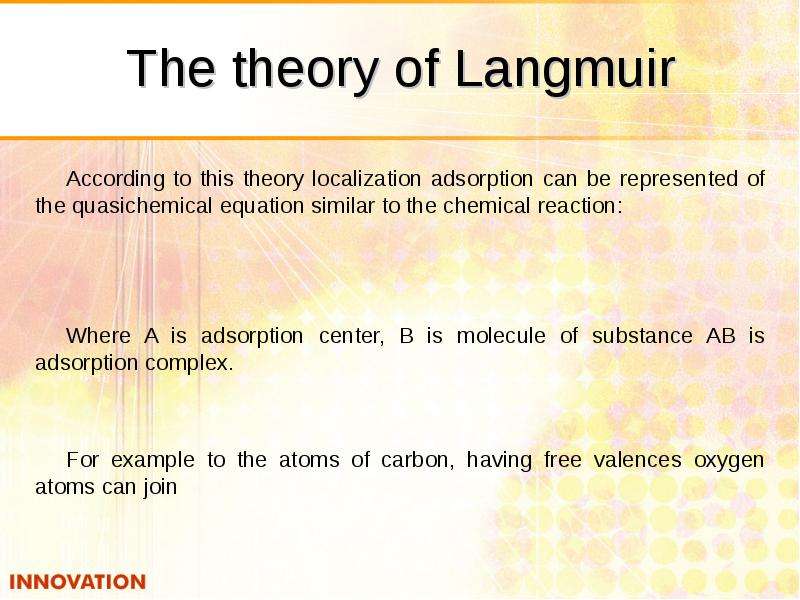
The theory of Langmuir According to this theory localization adsorption can be represented of the quasichemical equation similar to the chemical...
Описание слайда:
The theory of Langmuir According to this theory localization adsorption can be represented of the quasichemical equation similar to the chemical reaction: Where A is adsorption center, B is molecule of substance AB is adsorption complex. For example to the atoms of carbon, having free valences oxygen atoms can join

Слайд 26


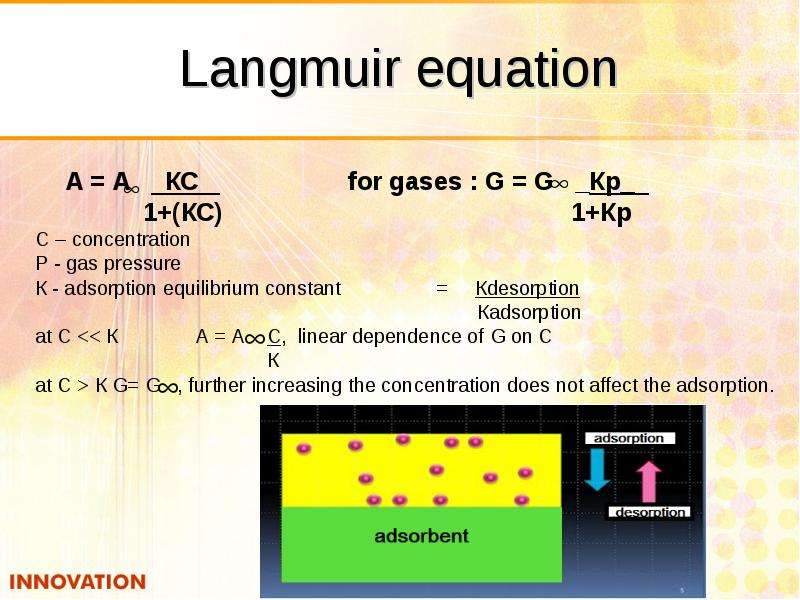
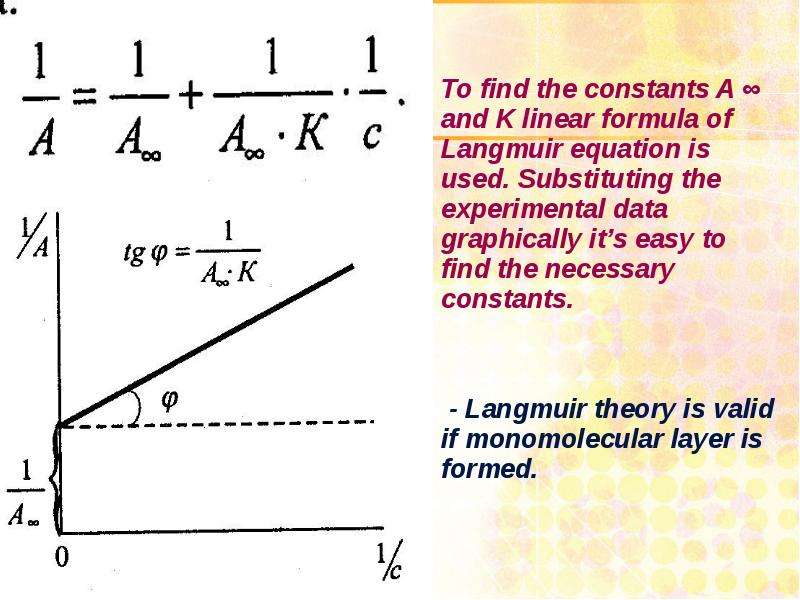
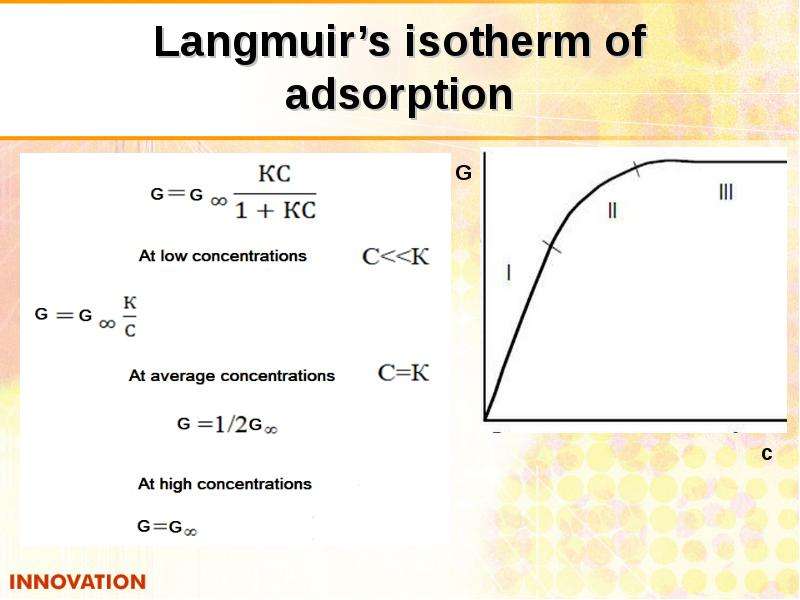
Langmuir equation А = А КС for gases : G = G _Кр_ 1+(КС) 1+Кр С – concentration Р - gas pressure К - adsorption equilibrium constant = Кdesorption...
Описание слайда:
Langmuir equation А = А КС for gases : G = G _Кр_ 1+(КС) 1+Кр С – concentration Р - gas pressure К - adsorption equilibrium constant = Кdesorption Кadsorption at С К G= G , further increasing the concentration does not affect the adsorption.

Слайд 27


Physical chemistry of surface phenomena. Basics of adsorptive therapy, слайд №27
Описание слайда:

Слайд 28


Langmuir’s isotherm of adsorption
Описание слайда:
Langmuir’s isotherm of adsorption

Слайд 29


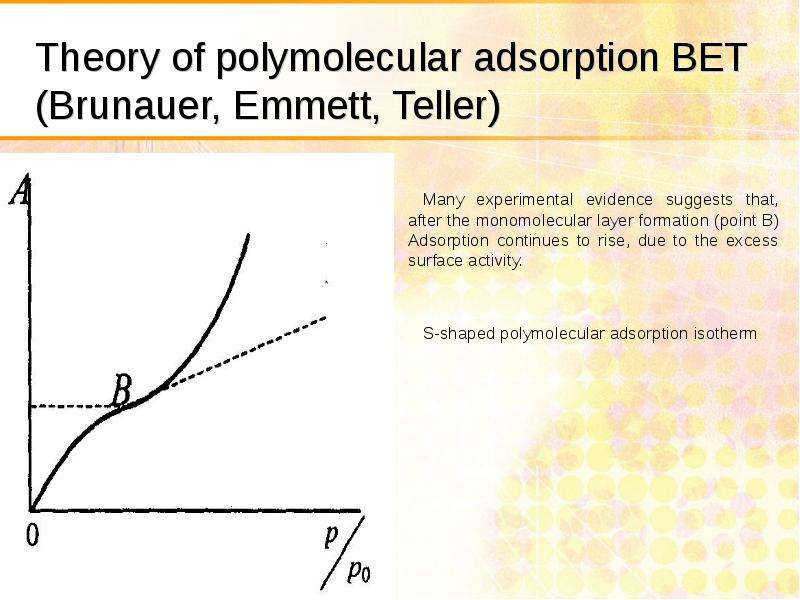
Theory of polymolecular adsorption BET (Brunauer, Emmett, Teller)
Описание слайда:
Theory of polymolecular adsorption BET (Brunauer, Emmett, Teller)

Слайд 30


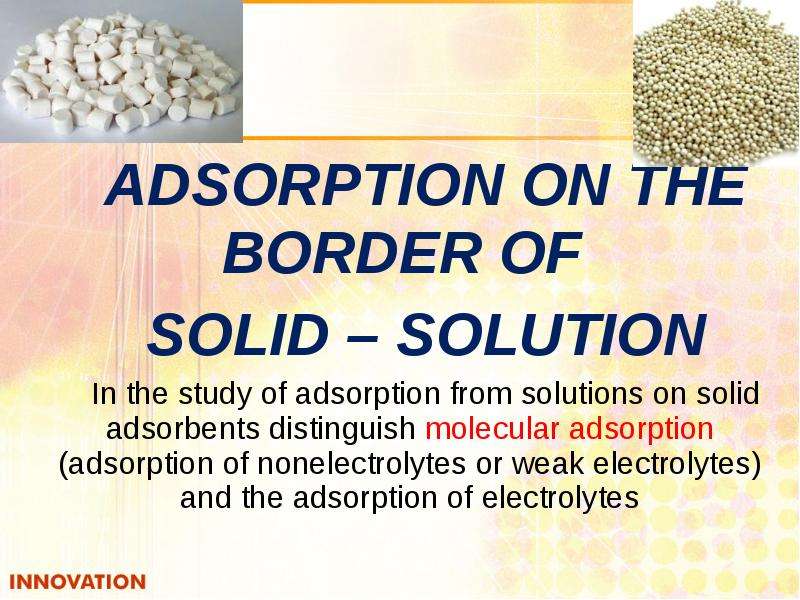
ADSORPTION ON THE BORDER OF ADSORPTION ON THE BORDER OF SOLID – SOLUTION In the study of adsorption from solutions on solid adsorbents distinguish...
Описание слайда:
ADSORPTION ON THE BORDER OF ADSORPTION ON THE BORDER OF SOLID – SOLUTION In the study of adsorption from solutions on solid adsorbents distinguish molecular adsorption (adsorption of nonelectrolytes or weak electrolytes) and the adsorption of electrolytes

Слайд 31


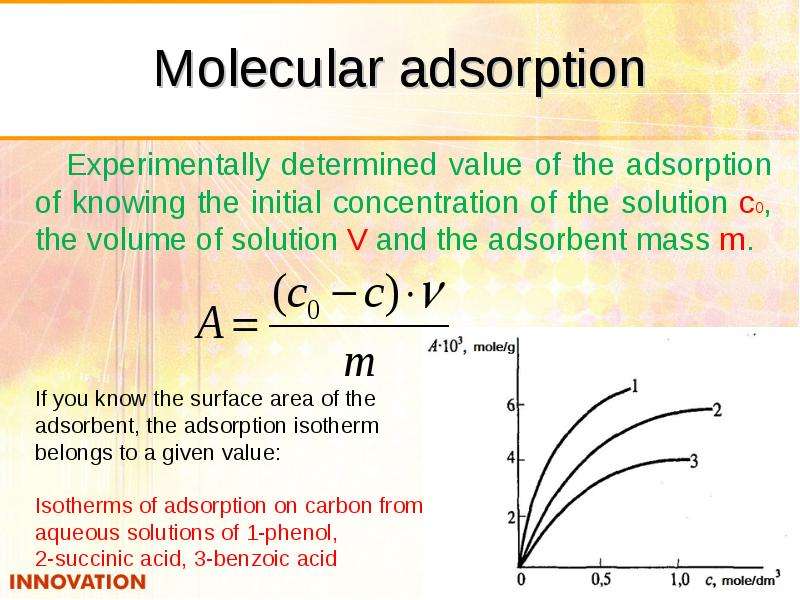
Molecular adsorption Experimentally determined value of the adsorption of knowing the initial concentration of the solution c0, the volume of...
Описание слайда:
Molecular adsorption Experimentally determined value of the adsorption of knowing the initial concentration of the solution c0, the volume of solution V and the adsorbent mass m.

Слайд 32


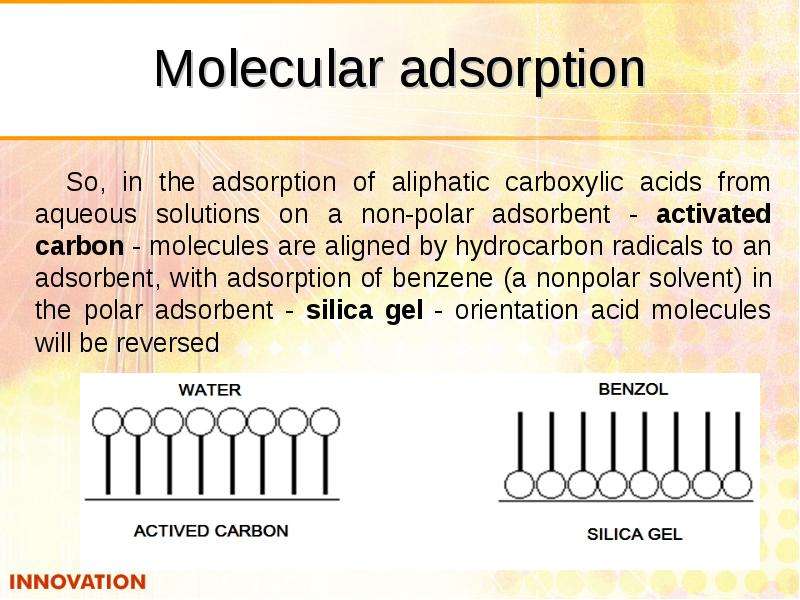
Molecular adsorption So, in the adsorption of aliphatic carboxylic acids from aqueous solutions on a non-polar adsorbent - activated carbon -...
Описание слайда:
Molecular adsorption So, in the adsorption of aliphatic carboxylic acids from aqueous solutions on a non-polar adsorbent - activated carbon - molecules are aligned by hydrocarbon radicals to an adsorbent, with adsorption of benzene (a nonpolar solvent) in the polar adsorbent - silica gel - orientation acid molecules will be reversed

Слайд 33


Conclusion From the above that is confirmed, that: For adsorption SAS from the nonpolar or low-polar solvents hydrophilic substances (silica, clays);...
Описание слайда:
Conclusion From the above that is confirmed, that: For adsorption SAS from the nonpolar or low-polar solvents hydrophilic substances (silica, clays); must be used On the surfaces of hydrophobic (coal, graphite, talc) from aqueous solutions of SAS should be better adsorbed.

Слайд 34


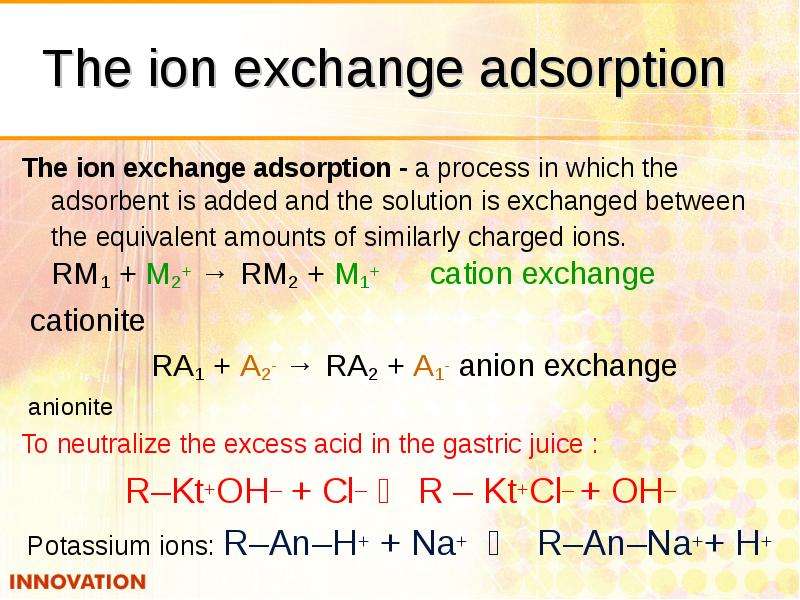
The ion exchange adsorption The ion exchange adsorption - a process in which the adsorbent is added and the solution is exchanged between the...
Описание слайда:
The ion exchange adsorption The ion exchange adsorption - a process in which the adsorbent is added and the solution is exchanged between the equivalent amounts of similarly charged ions. RM1 + М2+ → RM2 + M1+ cation exchange cationite RА1 + А2- → RА2 + А1- anion exchange anionite To neutralize the excess acid in the gastric juice : R–Kt+OH– + Cl– ⇄ R – Kt+Cl– + OH– Potassium ions: R–An–H+ + Na+ ⇄ R–An–Na++ H+

Слайд 35


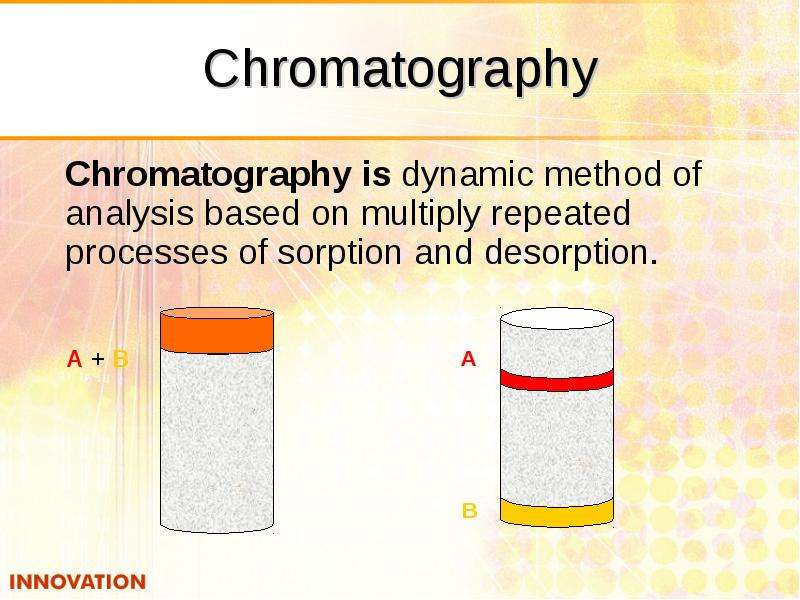
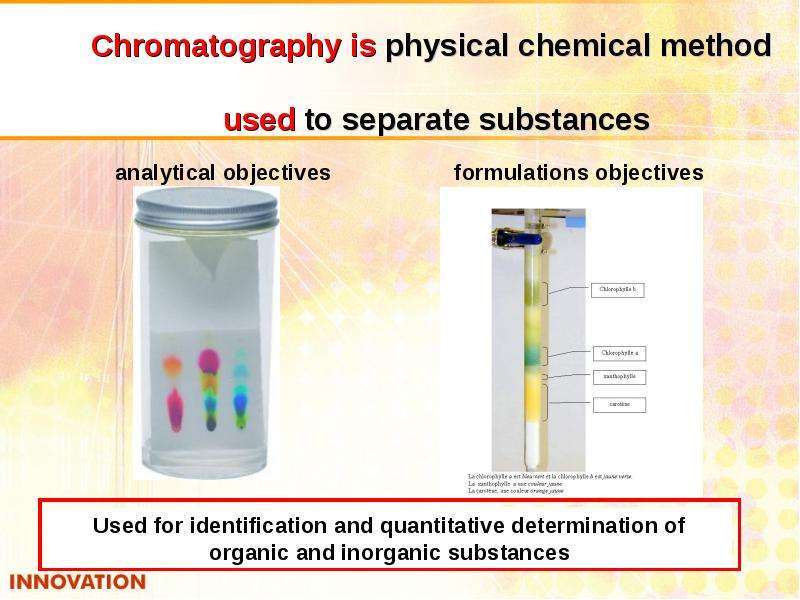
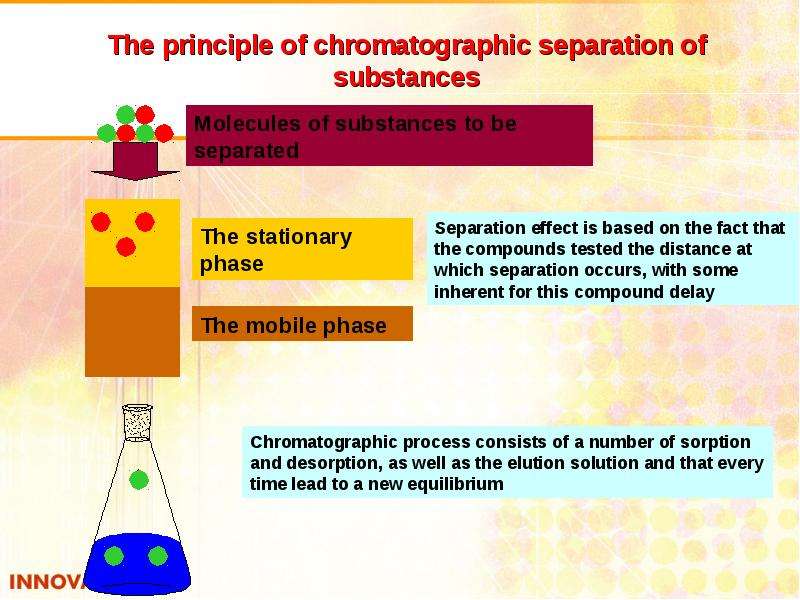
Chromatography Chromatography is dynamic method of analysis based on multiply repeated processes of sorption and desorption.
Описание слайда:
Chromatography Chromatography is dynamic method of analysis based on multiply repeated processes of sorption and desorption.

Слайд 36


Physical chemistry of surface phenomena. Basics of adsorptive therapy, слайд №36
Описание слайда:

Слайд 37


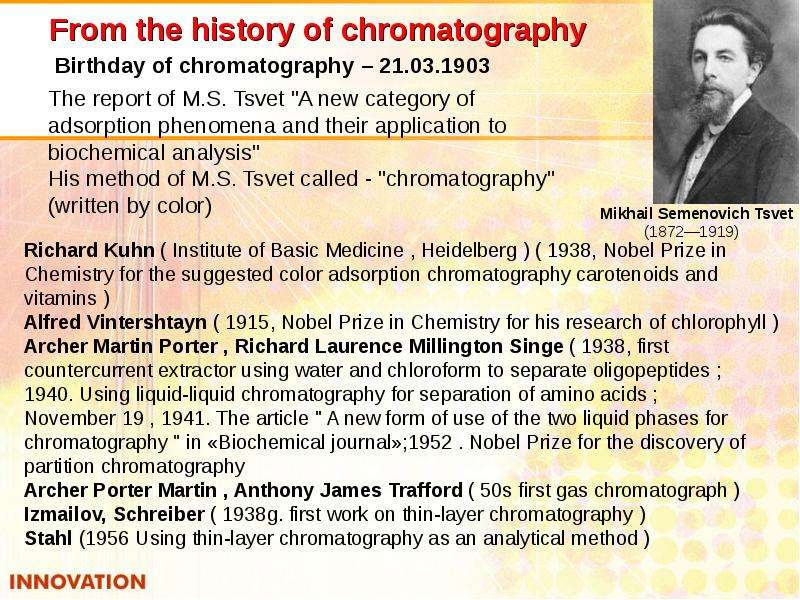
From the history of chromatography
Описание слайда:
From the history of chromatography

Слайд 38


Physical chemistry of surface phenomena. Basics of adsorptive therapy, слайд №38
Описание слайда:

Слайд 39


Physical chemistry of surface phenomena. Basics of adsorptive therapy, слайд №39
Описание слайда:

Слайд 40


Physical chemistry of surface phenomena. Basics of adsorptive therapy, слайд №40
Описание слайда:

Слайд 41


Physical chemistry of surface phenomena. Basics of adsorptive therapy, слайд №41
Описание слайда:

Слайд 42


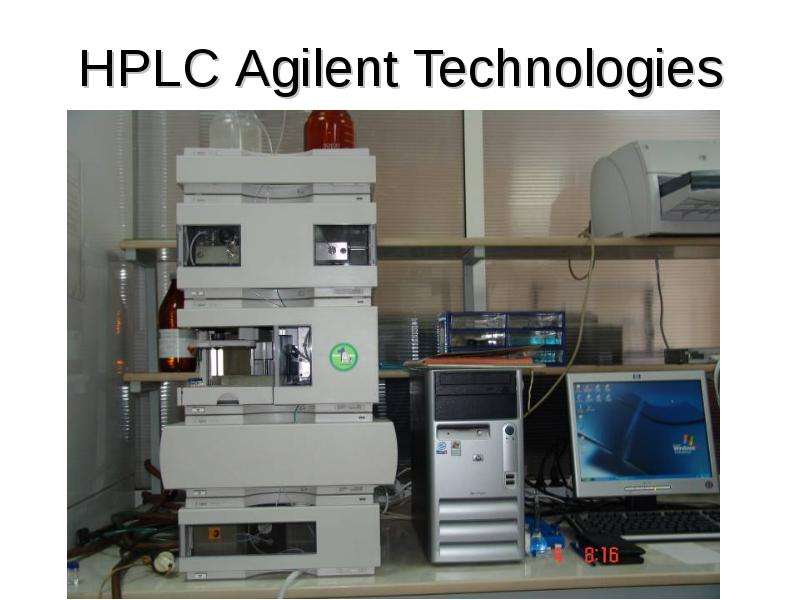
HPLC Agilent Technologies
Описание слайда:
HPLC Agilent Technologies

Слайд 43


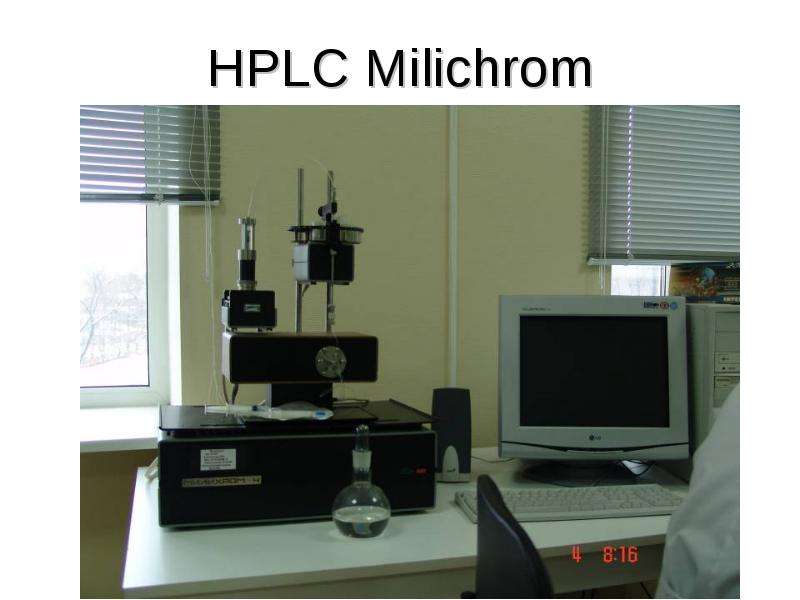
HPLC Milichrom
Описание слайда:
HPLC Milichrom

Слайд 44


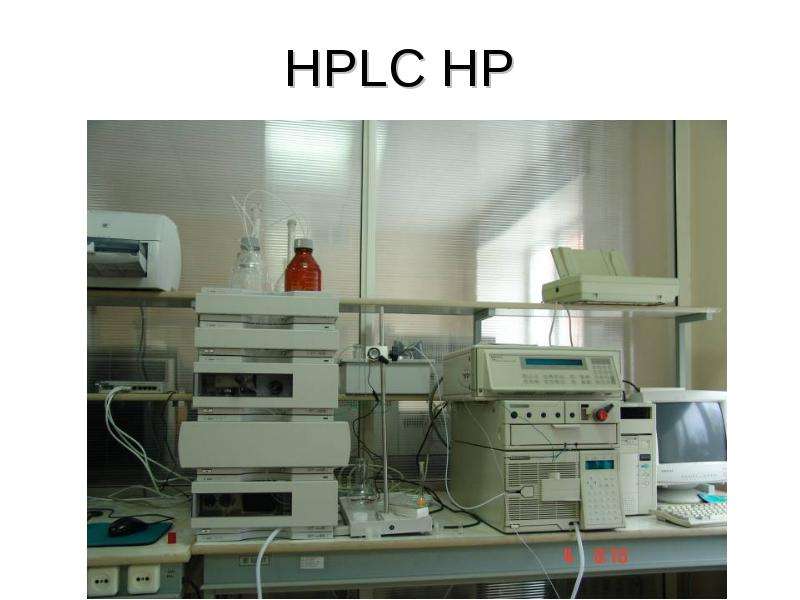
HPLC HP
Описание слайда:
HPLC HP

Слайд 45


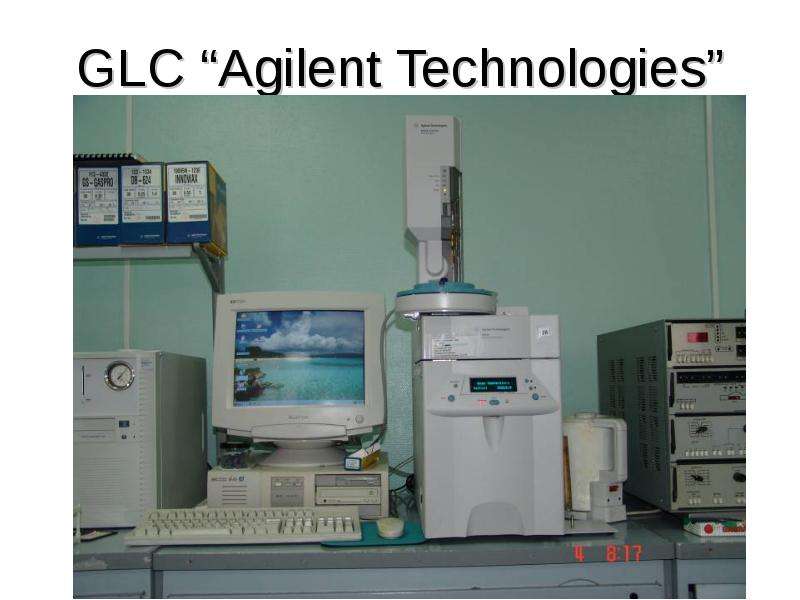
GLC “Agilent Technologies”
Описание слайда:
GLC “Agilent Technologies”

Слайд 46


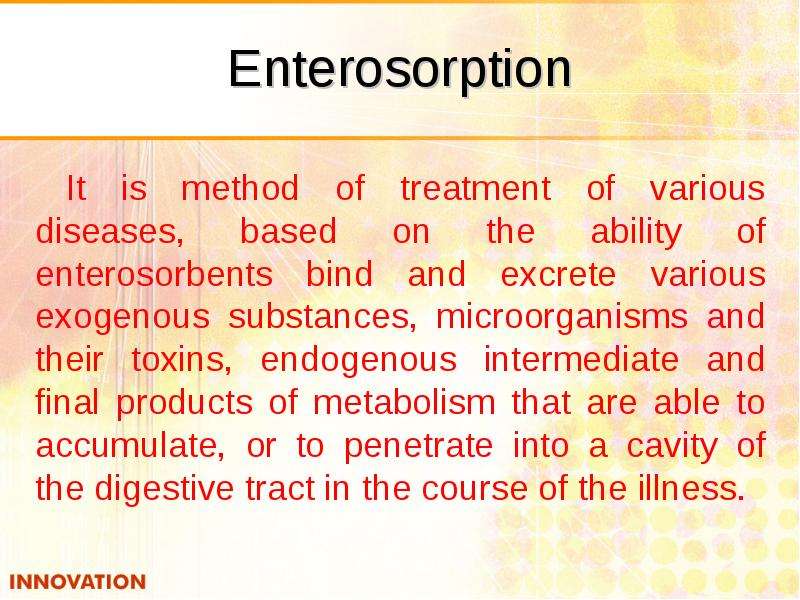
Enterosorption It is method of treatment of various diseases, based on the ability of enterosorbents bind and excrete various exogenous substances,...
Описание слайда:
Enterosorption It is method of treatment of various diseases, based on the ability of enterosorbents bind and excrete various exogenous substances, microorganisms and their toxins, endogenous intermediate and final products of metabolism that are able to accumulate, or to penetrate into a cavity of the digestive tract in the course of the illness.

Слайд 47


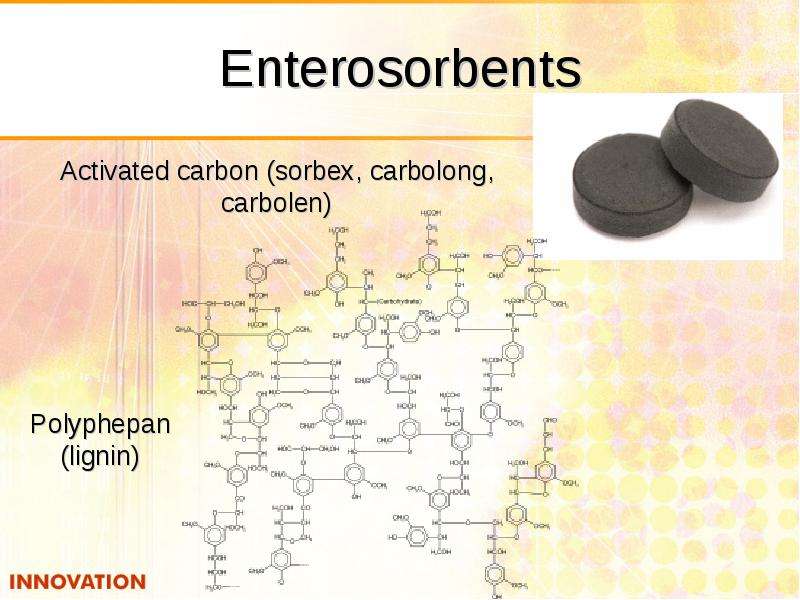
Enterosorbents
Описание слайда:
Enterosorbents

Слайд 48


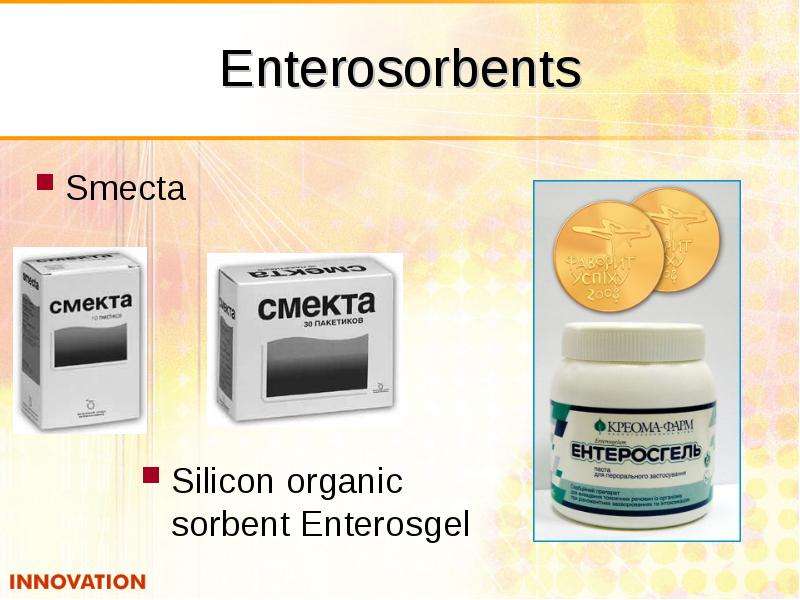
Enterosorbents Smecta
Описание слайда:
Enterosorbents Smecta

Слайд 49


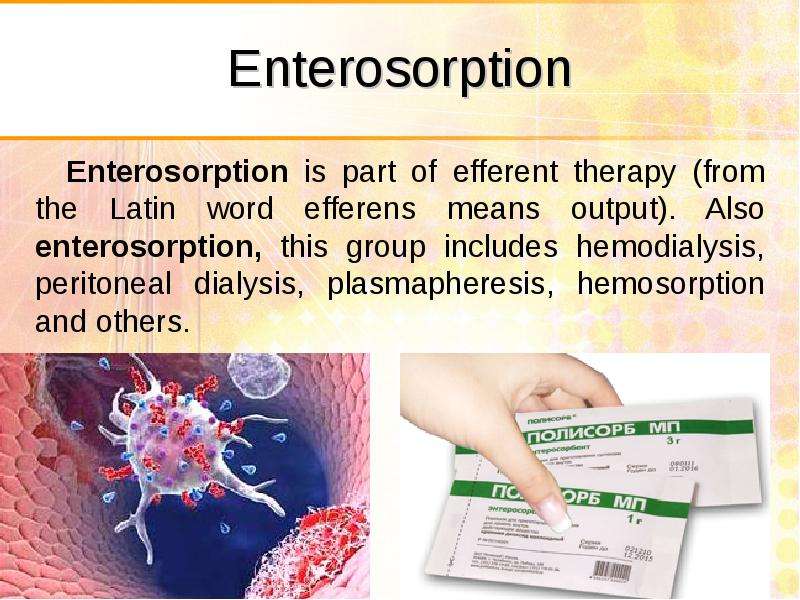
Enterosorption Enterosorption is part of efferent therapy (from the Latin word efferens means output). Also enterosorption, this group includes...
Описание слайда:
Enterosorption Enterosorption is part of efferent therapy (from the Latin word efferens means output). Also enterosorption, this group includes hemodialysis, peritoneal dialysis, plasmapheresis, hemosorption and others.

Слайд 50


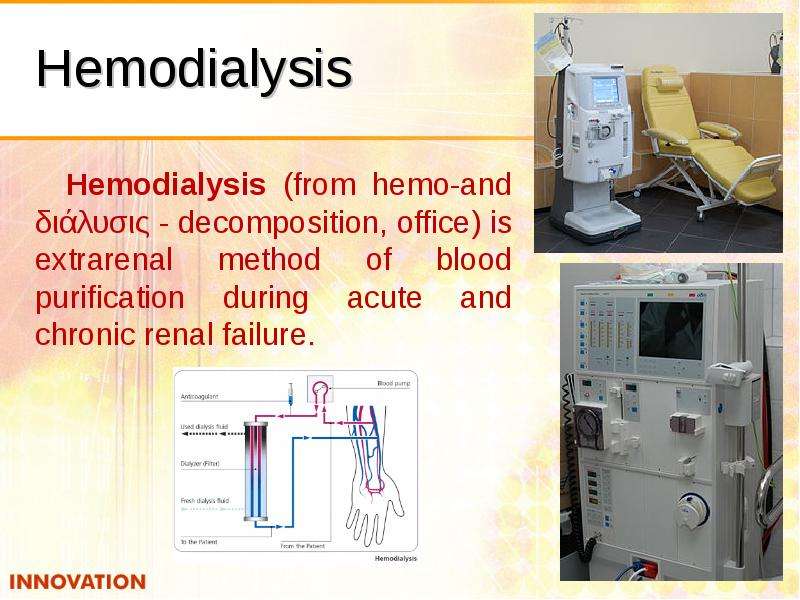
Hemodialysis Hemodialysis (from hemo-and διάλυσις - decomposition, office) is extrarenal method of blood purification during acute and chronic renal...
Описание слайда:
Hemodialysis Hemodialysis (from hemo-and διάλυσις - decomposition, office) is extrarenal method of blood purification during acute and chronic renal failure.

Слайд 51


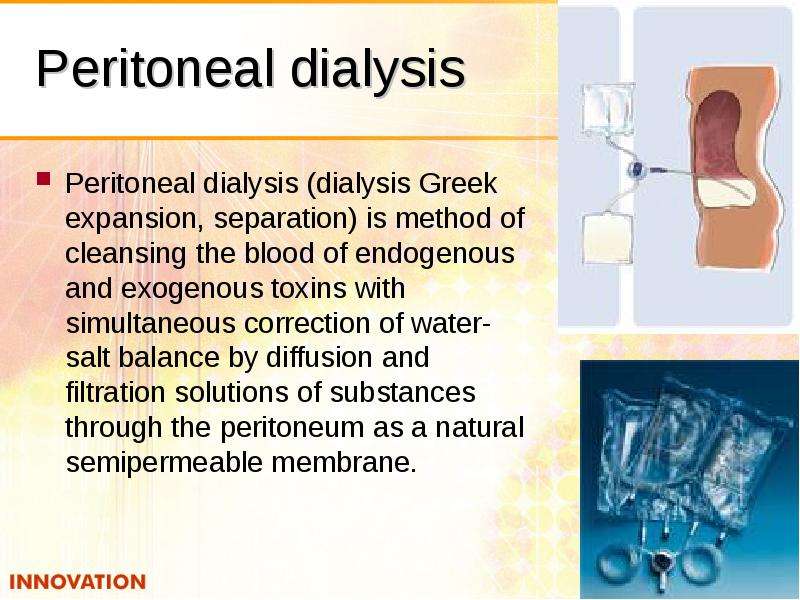
Peritoneal dialysis Peritoneal dialysis (dialysis Greek expansion, separation) is method of cleansing the blood of endogenous and exogenous toxins...
Описание слайда:
Peritoneal dialysis Peritoneal dialysis (dialysis Greek expansion, separation) is method of cleansing the blood of endogenous and exogenous toxins with simultaneous correction of water-salt balance by diffusion and filtration solutions of substances through the peritoneum as a natural semipermeable membrane.

Слайд 52


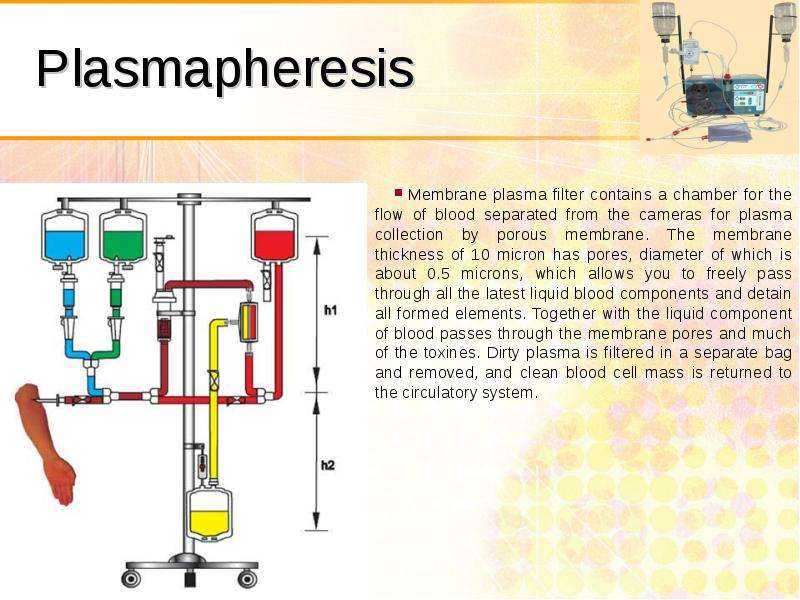
Plasmapheresis Membrane plasma filter contains a chamber for the flow of blood separated from the cameras for plasma collection by porous membrane....
Описание слайда:
Plasmapheresis Membrane plasma filter contains a chamber for the flow of blood separated from the cameras for plasma collection by porous membrane. The membrane thickness of 10 micron has pores, diameter of which is about 0.5 microns, which allows you to freely pass through all the latest liquid blood components and detain all formed elements. Together with the liquid component of blood passes through the membrane pores and much of the toxines. Dirty plasma is filtered in a separate bag and removed, and clean blood cell mass is returned to the circulatory system.

Слайд 53


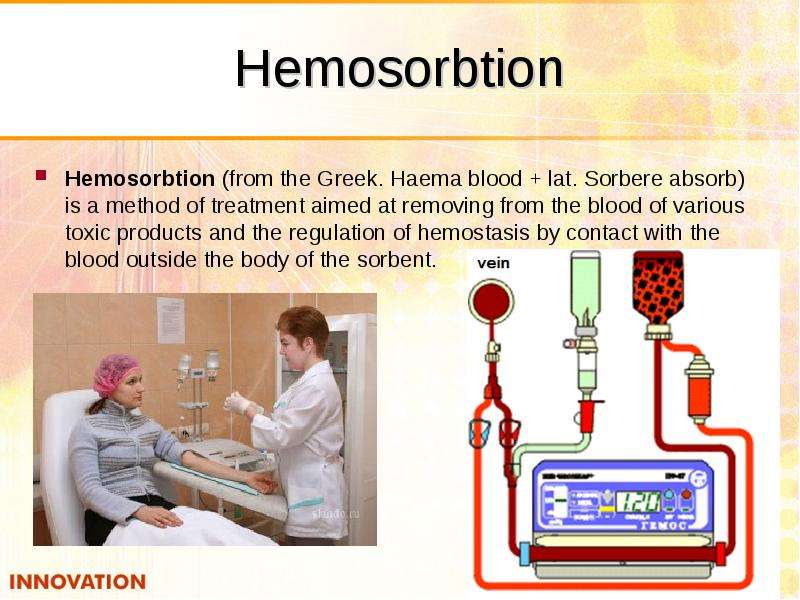
Hemosorbtion Hemosorbtion (from the Greek. Haema blood + lat. Sorbere absorb) is a method of treatment aimed at removing from the blood of various...
Описание слайда:
Hemosorbtion Hemosorbtion (from the Greek. Haema blood + lat. Sorbere absorb) is a method of treatment aimed at removing from the blood of various toxic products and the regulation of hemostasis by contact with the blood outside the body of the sorbent.


Похожие презентации
Mypresentation.ru
Загрузить презентацию