🗊 Презентация Modal Verbs

Категория: Образование
Нажмите для полного просмотра!
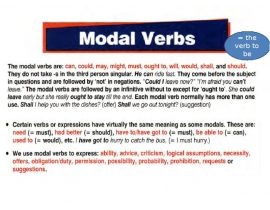
Modal Verbs, слайд №1 Modal Verbs, слайд №2 Modal Verbs, слайд №3 Modal Verbs, слайд №4 Modal Verbs, слайд №5 Modal Verbs, слайд №6 Modal Verbs, слайд №7 Modal Verbs, слайд №8 Modal Verbs, слайд №9 Modal Verbs, слайд №10 Modal Verbs, слайд №11 Modal Verbs, слайд №12 Modal Verbs, слайд №13 Modal Verbs, слайд №14 Modal Verbs, слайд №15 Modal Verbs, слайд №16 Modal Verbs, слайд №17 Modal Verbs, слайд №18 Modal Verbs, слайд №19

Вы можете ознакомиться и скачать презентацию на тему Modal Verbs. Доклад-сообщение содержит 19 слайдов. Презентации для любого класса можно скачать бесплатно. Если материал и наш сайт презентаций Mypresentation Вам понравились – поделитесь им с друзьями с помощью социальных кнопок и добавьте в закладки в своем браузере.

Слайды и текст этой презентации


Слайд 1


MODAL VERBS
Описание слайда:
MODAL VERBS

Слайд 2


Can/ Be able to / Can’t CAN Different uses: Abilities or capacities (to know or to be able to). Mary can swim very fast. Request, ask or give...
Описание слайда:
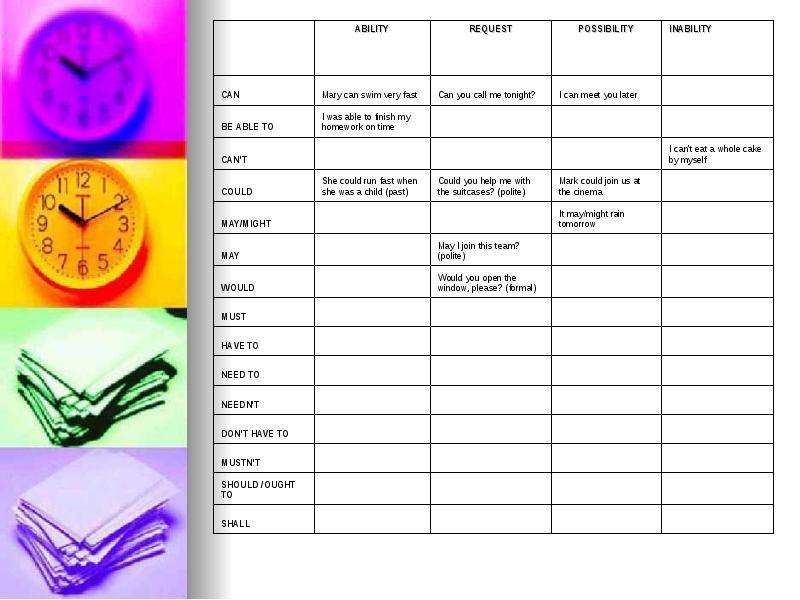
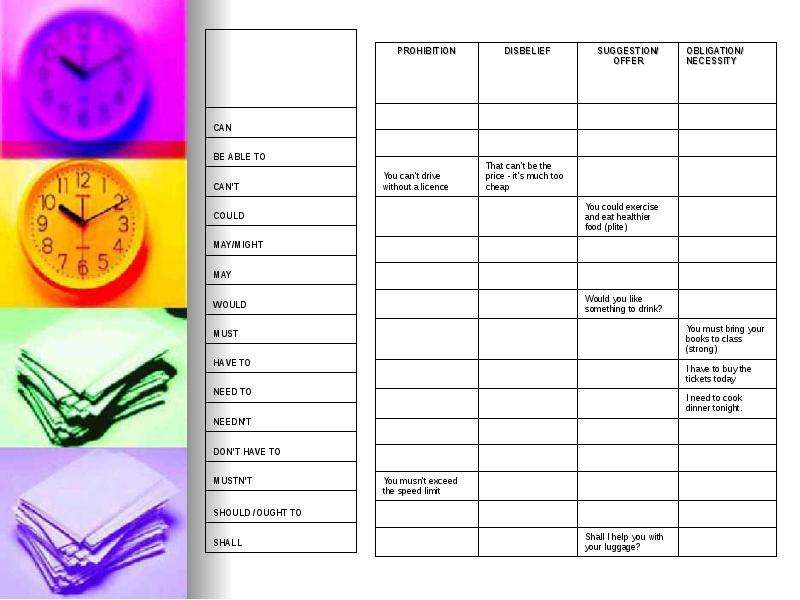
Can/ Be able to / Can’t CAN Different uses: Abilities or capacities (to know or to be able to). Mary can swim very fast. Request, ask or give permission Can you call me tonight. Possibility I can meet you later. It can also be used for suggestions. You can eat ravioli if you like pasta.

Слайд 3


Be able to Be able to It expresses abilities like can and it is used in all the verbal tenses where can is not used. I was able to finish my homework...
Описание слайда:
Be able to Be able to It expresses abilities like can and it is used in all the verbal tenses where can is not used. I was able to finish my homework on time Can’t Different uses: Impossibility in the present Mary can’t swim very fast Lack of ability (not to know) or capacity (not to be able to): I can’t eat a whole cake by myself Prohibition You can’t drive without a licence Disbelief That can’t be the price – it’s much too cheap.

Слайд 4


Could It is the past of can and it is used to express: Ability or capacity in the past She could run fast when she was a child Polite request Could...
Описание слайда:
Could It is the past of can and it is used to express: Ability or capacity in the past She could run fast when she was a child Polite request Could you help me with these suitcases? Polite suggestion You could exercise and eat healthier food Possibility –less probable than with can- Mark could join us the cinema.

Слайд 5


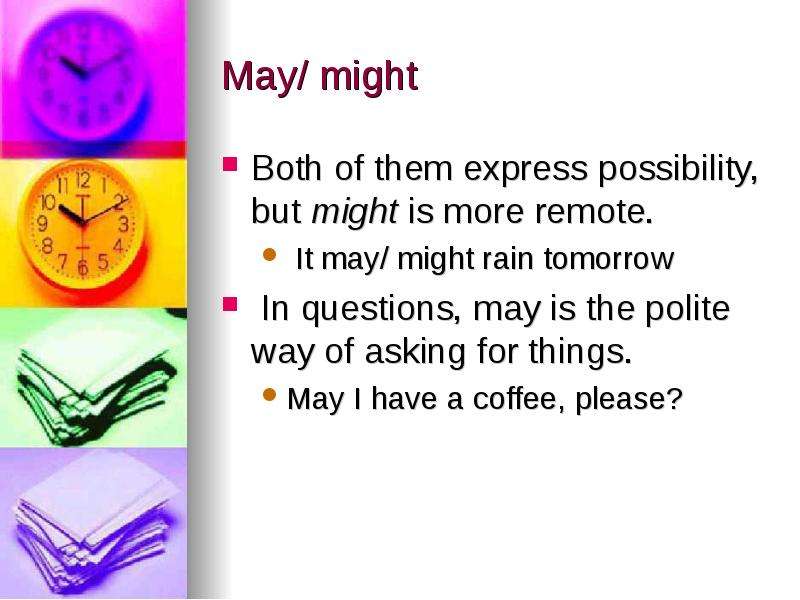
May/ might Both of them express possibility, but might is more remote. It may/ might rain tomorrow In questions, may is the polite way of asking for...
Описание слайда:
May/ might Both of them express possibility, but might is more remote. It may/ might rain tomorrow In questions, may is the polite way of asking for things. May I have a coffee, please?

Слайд 6


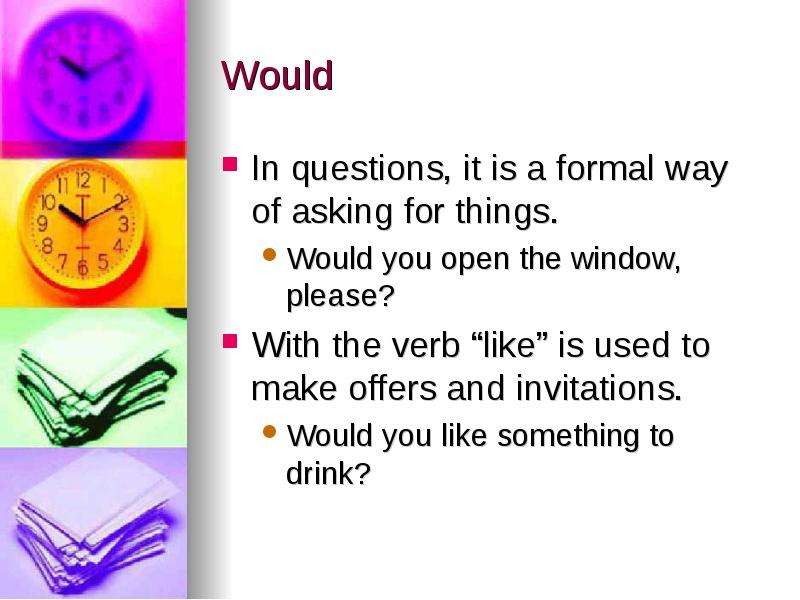
Would In questions, it is a formal way of asking for things. Would you open the window, please? With the verb “like” is used to make offers and...
Описание слайда:
Would In questions, it is a formal way of asking for things. Would you open the window, please? With the verb “like” is used to make offers and invitations. Would you like something to drink?

Слайд 7


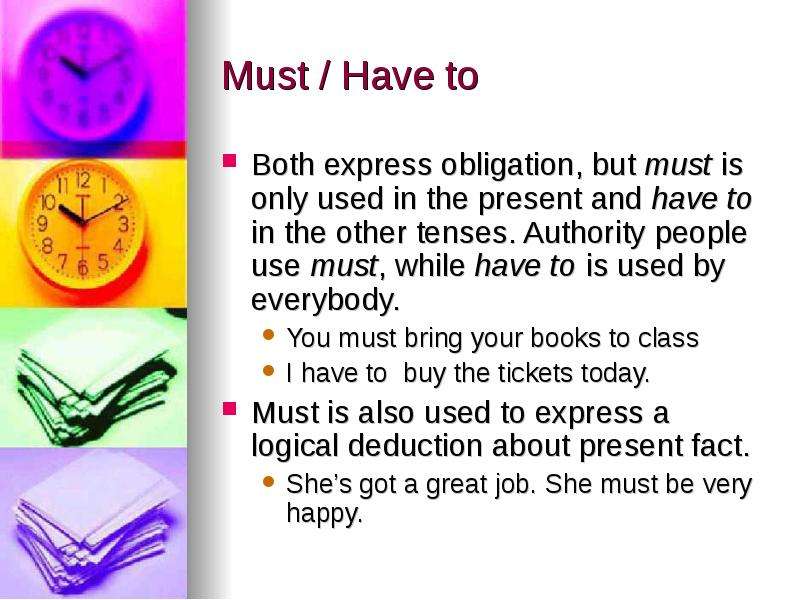
Must / Have to Both express obligation, but must is only used in the present and have to in the other tenses. Authority people use must, while have...
Описание слайда:
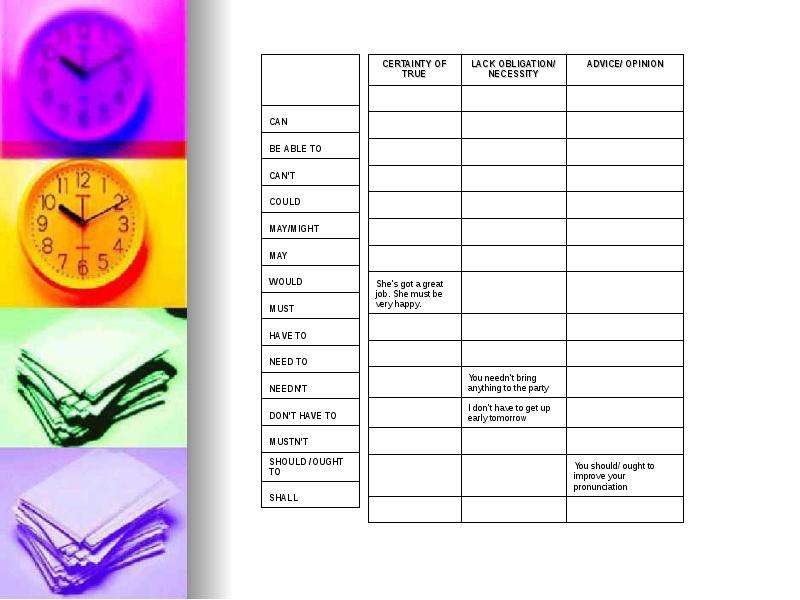
Must / Have to Both express obligation, but must is only used in the present and have to in the other tenses. Authority people use must, while have to is used by everybody. You must bring your books to class I have to buy the tickets today. Must is also used to express a logical deduction about present fact. She’s got a great job. She must be very happy.

Слайд 8


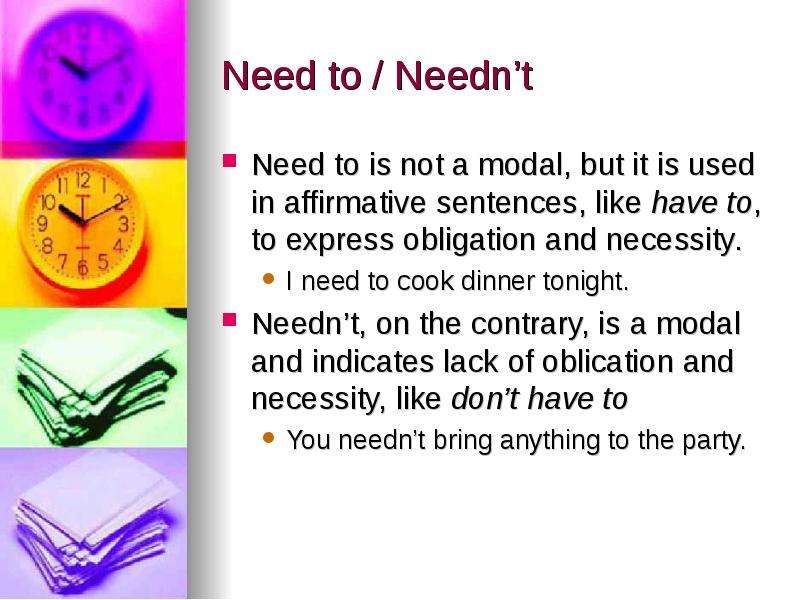
Need to / Needn’t Need to is not a modal, but it is used in affirmative sentences, like have to, to express obligation and necessity. I need to cook...
Описание слайда:
Need to / Needn’t Need to is not a modal, but it is used in affirmative sentences, like have to, to express obligation and necessity. I need to cook dinner tonight. Needn’t, on the contrary, is a modal and indicates lack of oblication and necessity, like don’t have to You needn’t bring anything to the party.

Слайд 9


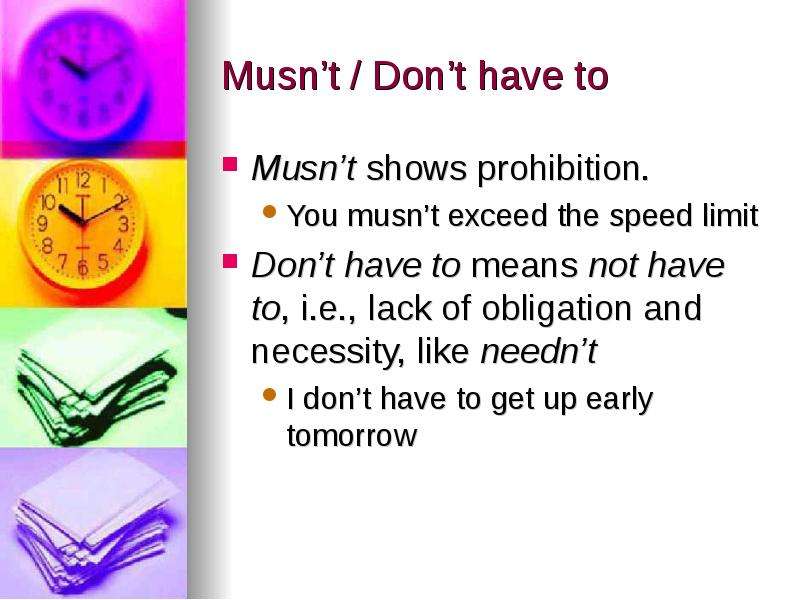
Musn’t / Don’t have to Musn’t shows prohibition. You musn’t exceed the speed limit Don’t have to means not have to, i.e., lack of obligation and...
Описание слайда:
Musn’t / Don’t have to Musn’t shows prohibition. You musn’t exceed the speed limit Don’t have to means not have to, i.e., lack of obligation and necessity, like needn’t I don’t have to get up early tomorrow

Слайд 10


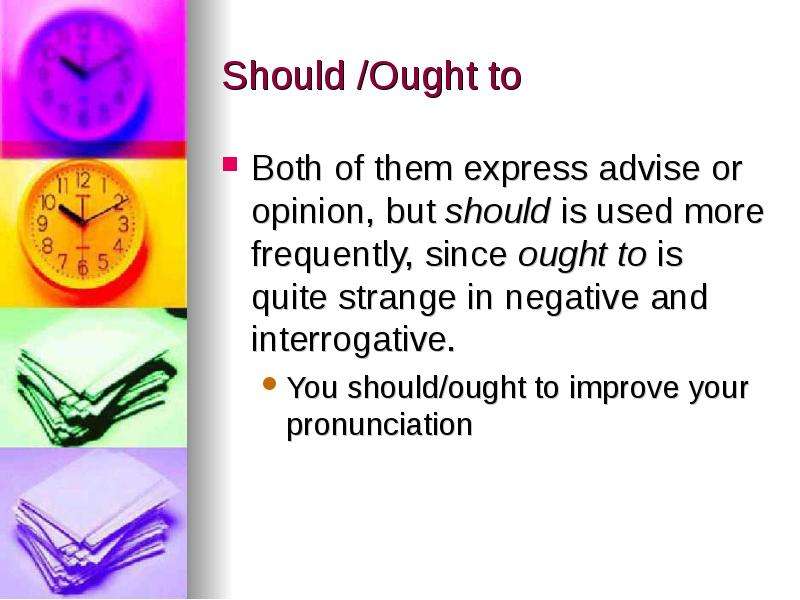
Should /Ought to Both of them express advise or opinion, but should is used more frequently, since ought to is quite strange in negative and...
Описание слайда:
Should /Ought to Both of them express advise or opinion, but should is used more frequently, since ought to is quite strange in negative and interrogative. You should/ought to improve your pronunciation

Слайд 11


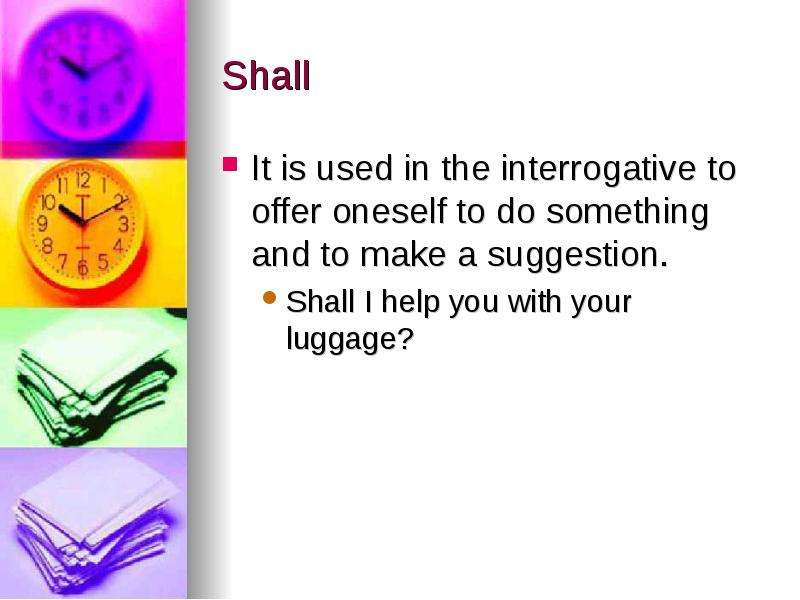
Shall It is used in the interrogative to offer oneself to do something and to make a suggestion. Shall I help you with your luggage?
Описание слайда:
Shall It is used in the interrogative to offer oneself to do something and to make a suggestion. Shall I help you with your luggage?

Слайд 12


Modal Verbs, слайд №12
Описание слайда:

Слайд 13


Modal Verbs, слайд №13
Описание слайда:

Слайд 14


Modal Verbs, слайд №14
Описание слайда:

Слайд 15


MODAL PERFECTS Must have + participle It expresses a logical conclusion about a past fact. Rob has arrived late. He must have been in a traffic jam....
Описание слайда:
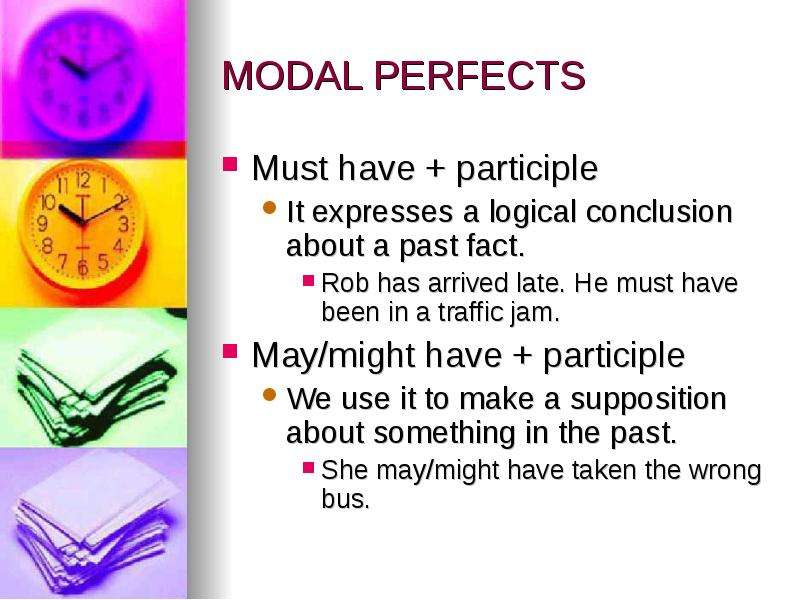
MODAL PERFECTS Must have + participle It expresses a logical conclusion about a past fact. Rob has arrived late. He must have been in a traffic jam. May/might have + participle We use it to make a supposition about something in the past. She may/might have taken the wrong bus.

Слайд 16


Could have + participle Could have + participle Ability to do something in the past which in the end was not done You could have asked the doctor...
Описание слайда:
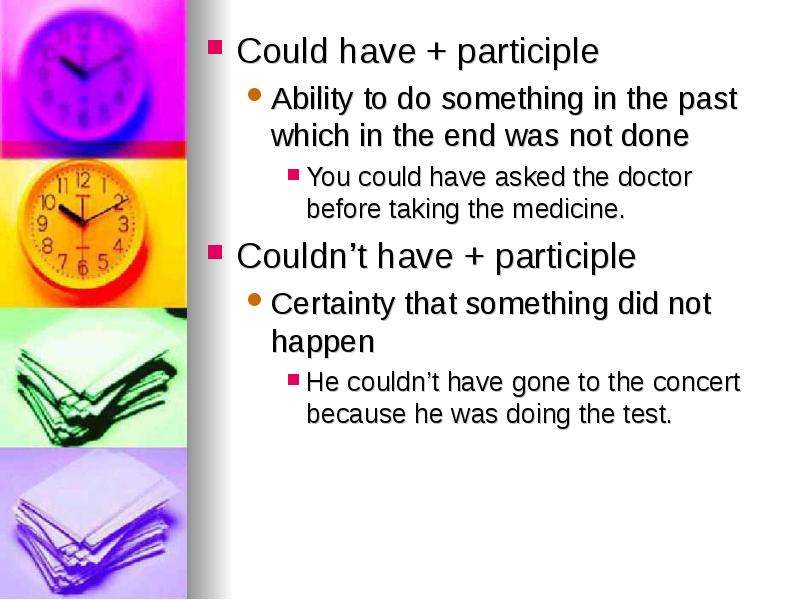
Could have + participle Could have + participle Ability to do something in the past which in the end was not done You could have asked the doctor before taking the medicine. Couldn’t have + participle Certainty that something did not happen He couldn’t have gone to the concert because he was doing the test.

Слайд 17


Would have + participle Would have + participle Desire to do something in the past which in fact could not be done. I would have gone to the party,...
Описание слайда:
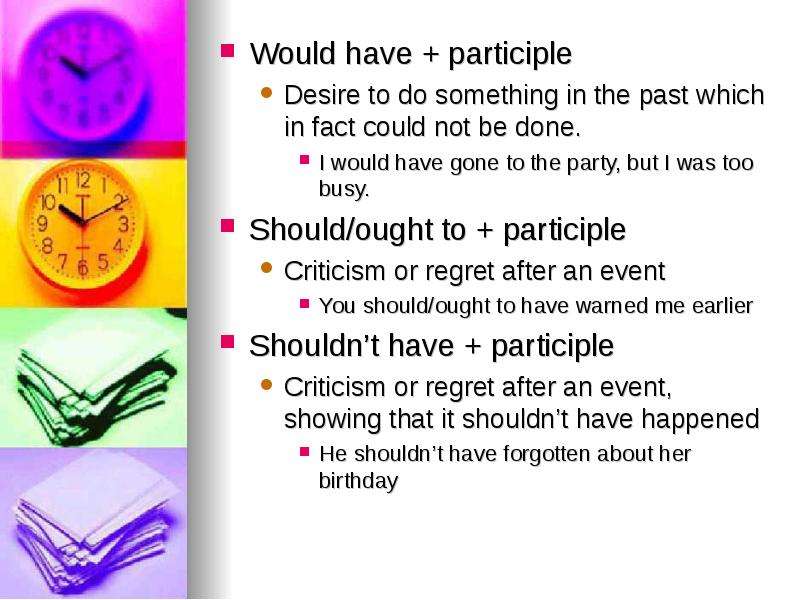
Would have + participle Would have + participle Desire to do something in the past which in fact could not be done. I would have gone to the party, but I was too busy. Should/ought to + participle Criticism or regret after an event You should/ought to have warned me earlier Shouldn’t have + participle Criticism or regret after an event, showing that it shouldn’t have happened He shouldn’t have forgotten about her birthday

Слайд 18


Needn’t have + participle An unnecessary past action You needn’t have brought anything to my party.
Описание слайда:
Needn’t have + participle An unnecessary past action You needn’t have brought anything to my party.

Слайд 19


Should /Had better Should/had better Had better is used in a more colloquial way of expressing what someone has to do, to give advise or opinions....
Описание слайда:
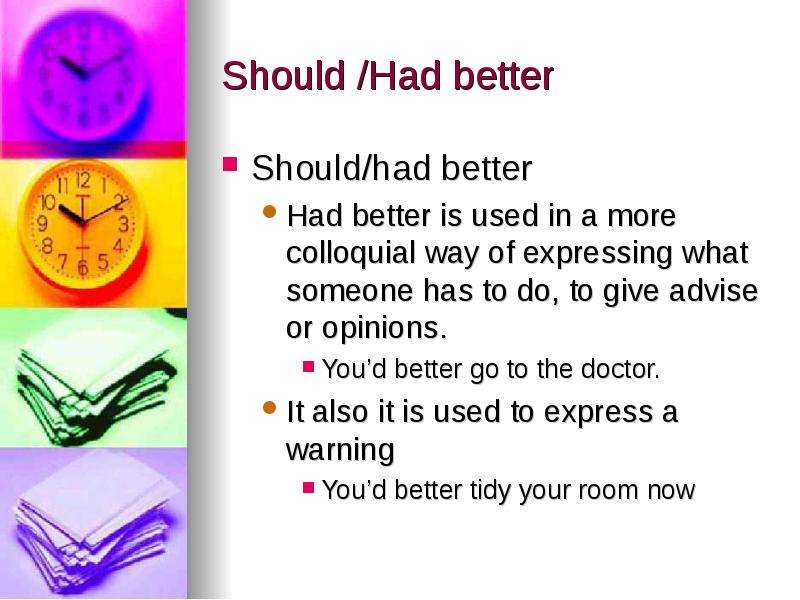
Should /Had better Should/had better Had better is used in a more colloquial way of expressing what someone has to do, to give advise or opinions. You’d better go to the doctor. It also it is used to express a warning You’d better tidy your room now


Теги Modal Verbs
Похожие презентации
Mypresentation.ru
Загрузить презентацию