🗊 Презентация Inflation. The rate of inflation measures the annual percentage increase in prices

Нажмите для полного просмотра!
Inflation. The rate of inflation measures the annual percentage increase in prices, слайд №1 Inflation. The rate of inflation measures the annual percentage increase in prices, слайд №2 Inflation. The rate of inflation measures the annual percentage increase in prices, слайд №3 Inflation. The rate of inflation measures the annual percentage increase in prices, слайд №4 Inflation. The rate of inflation measures the annual percentage increase in prices, слайд №5 Inflation. The rate of inflation measures the annual percentage increase in prices, слайд №6 Inflation. The rate of inflation measures the annual percentage increase in prices, слайд №7 Inflation. The rate of inflation measures the annual percentage increase in prices, слайд №8 Inflation. The rate of inflation measures the annual percentage increase in prices, слайд №9 Inflation. The rate of inflation measures the annual percentage increase in prices, слайд №10 Inflation. The rate of inflation measures the annual percentage increase in prices, слайд №11 Inflation. The rate of inflation measures the annual percentage increase in prices, слайд №12 Inflation. The rate of inflation measures the annual percentage increase in prices, слайд №13 Inflation. The rate of inflation measures the annual percentage increase in prices, слайд №14 Inflation. The rate of inflation measures the annual percentage increase in prices, слайд №15 Inflation. The rate of inflation measures the annual percentage increase in prices, слайд №16 Inflation. The rate of inflation measures the annual percentage increase in prices, слайд №17 Inflation. The rate of inflation measures the annual percentage increase in prices, слайд №18 Inflation. The rate of inflation measures the annual percentage increase in prices, слайд №19 Inflation. The rate of inflation measures the annual percentage increase in prices, слайд №20 Inflation. The rate of inflation measures the annual percentage increase in prices, слайд №21 Inflation. The rate of inflation measures the annual percentage increase in prices, слайд №22 Inflation. The rate of inflation measures the annual percentage increase in prices, слайд №23 Inflation. The rate of inflation measures the annual percentage increase in prices, слайд №24 Inflation. The rate of inflation measures the annual percentage increase in prices, слайд №25 Inflation. The rate of inflation measures the annual percentage increase in prices, слайд №26 Inflation. The rate of inflation measures the annual percentage increase in prices, слайд №27 Inflation. The rate of inflation measures the annual percentage increase in prices, слайд №28 Inflation. The rate of inflation measures the annual percentage increase in prices, слайд №29 Inflation. The rate of inflation measures the annual percentage increase in prices, слайд №30 Inflation. The rate of inflation measures the annual percentage increase in prices, слайд №31 Inflation. The rate of inflation measures the annual percentage increase in prices, слайд №32 Inflation. The rate of inflation measures the annual percentage increase in prices, слайд №33 Inflation. The rate of inflation measures the annual percentage increase in prices, слайд №34 Inflation. The rate of inflation measures the annual percentage increase in prices, слайд №35 Inflation. The rate of inflation measures the annual percentage increase in prices, слайд №36 Inflation. The rate of inflation measures the annual percentage increase in prices, слайд №37 Inflation. The rate of inflation measures the annual percentage increase in prices, слайд №38 Inflation. The rate of inflation measures the annual percentage increase in prices, слайд №39 Inflation. The rate of inflation measures the annual percentage increase in prices, слайд №40 Inflation. The rate of inflation measures the annual percentage increase in prices, слайд №41 Inflation. The rate of inflation measures the annual percentage increase in prices, слайд №42 Inflation. The rate of inflation measures the annual percentage increase in prices, слайд №43 Inflation. The rate of inflation measures the annual percentage increase in prices, слайд №44

Содержание
Вы можете ознакомиться и скачать презентацию на тему Inflation. The rate of inflation measures the annual percentage increase in prices. Доклад-сообщение содержит 44 слайдов. Презентации для любого класса можно скачать бесплатно. Если материал и наш сайт презентаций Mypresentation Вам понравились – поделитесь им с друзьями с помощью социальных кнопок и добавьте в закладки в своем браузере.
Слайды и текст этой презентации


Слайд 1


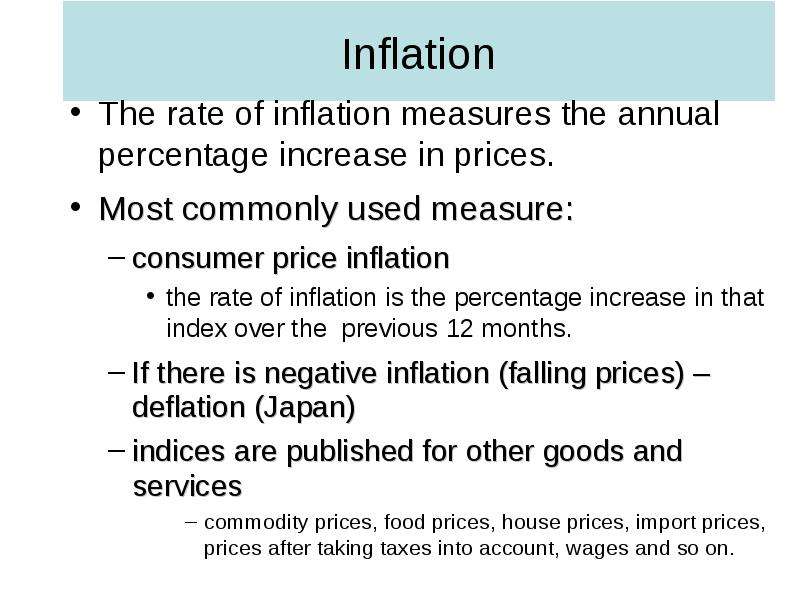
Inflation The rate of inflation measures the annual percentage increase in prices. Most commonly used measure: consumer price inflation the rate of...
Описание слайда:
Inflation The rate of inflation measures the annual percentage increase in prices. Most commonly used measure: consumer price inflation the rate of inflation is the percentage increase in that index over the previous 12 months. If there is negative inflation (falling prices) – deflation (Japan) indices are published for other goods and services commodity prices, food prices, house prices, import prices, prices after taking taxes into account, wages and so on.

Слайд 2


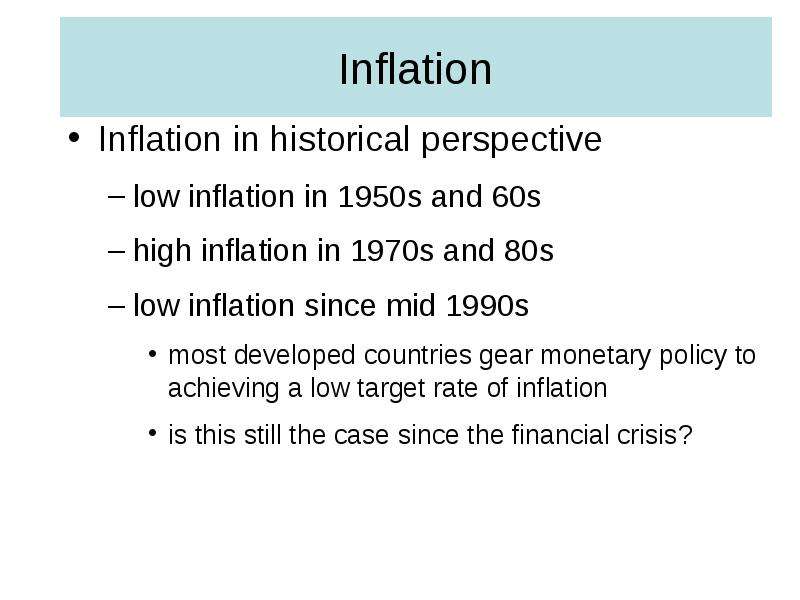
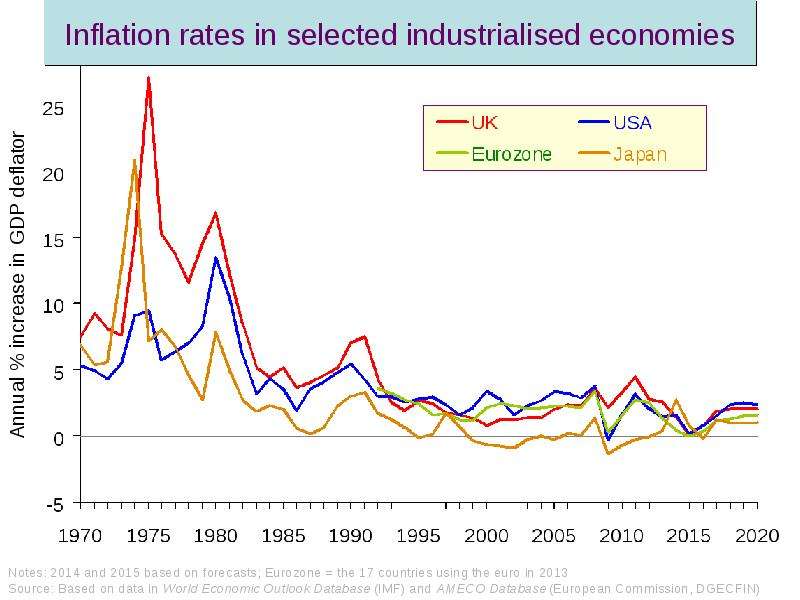
Inflation Inflation in historical perspective low inflation in 1950s and 60s high inflation in 1970s and 80s low inflation since mid 1990s most...
Описание слайда:
Inflation Inflation in historical perspective low inflation in 1950s and 60s high inflation in 1970s and 80s low inflation since mid 1990s most developed countries gear monetary policy to achieving a low target rate of inflation is this still the case since the financial crisis?

Слайд 3


Inflation rates in selected industrialised economies
Описание слайда:
Inflation rates in selected industrialised economies

Слайд 4


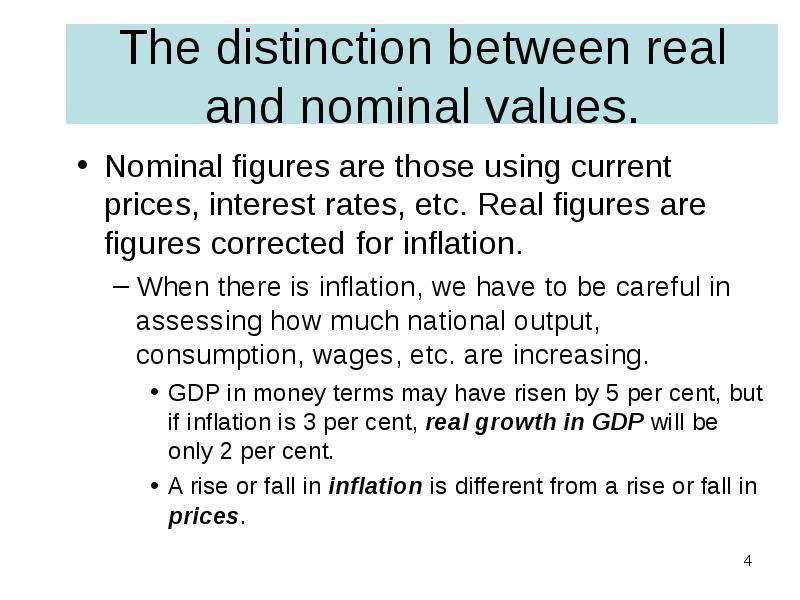
The distinction between real and nominal values. Nominal figures are those using current prices, interest rates, etc. Real figures are figures...
Описание слайда:
The distinction between real and nominal values. Nominal figures are those using current prices, interest rates, etc. Real figures are figures corrected for inflation. When there is inflation, we have to be careful in assessing how much national output, consumption, wages, etc. are increasing. GDP in money terms may have risen by 5 per cent, but if inflation is 3 per cent, real growth in GDP will be only 2 per cent. A rise or fall in inflation is different from a rise or fall in prices.

Слайд 5


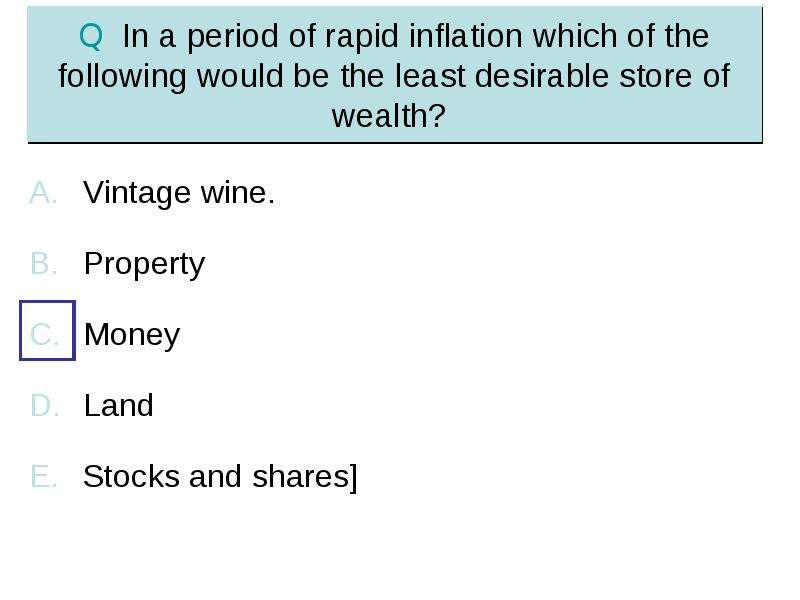
Q In a period of rapid inflation which of the following would be the least desirable store of wealth? Vintage wine. Property Money Land Stocks and...
Описание слайда:
Q In a period of rapid inflation which of the following would be the least desirable store of wealth? Vintage wine. Property Money Land Stocks and shares]

Слайд 6


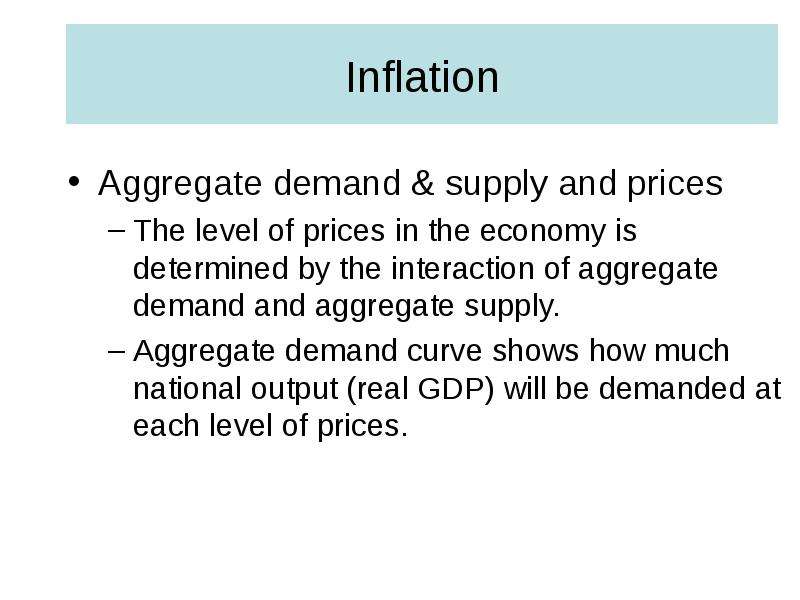
Inflation Aggregate demand & supply and prices The level of prices in the economy is determined by the interaction of aggregate demand and aggregate...
Описание слайда:
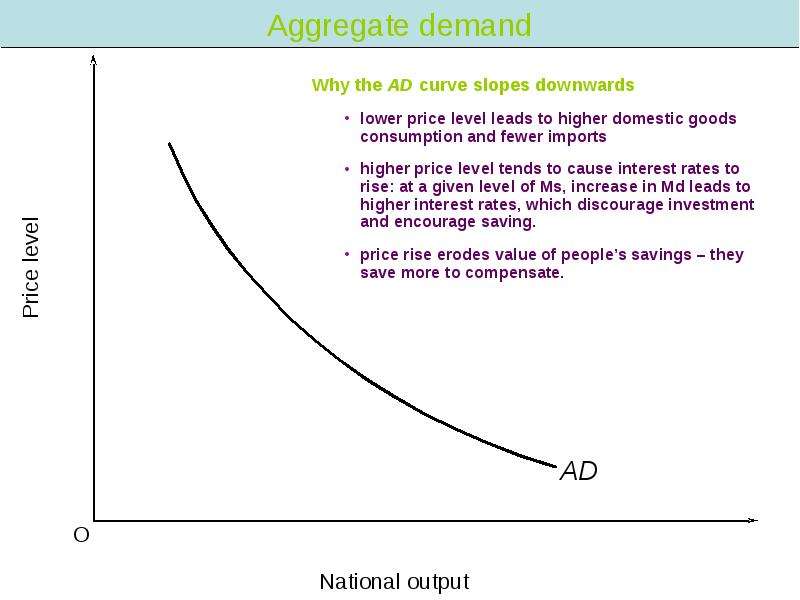
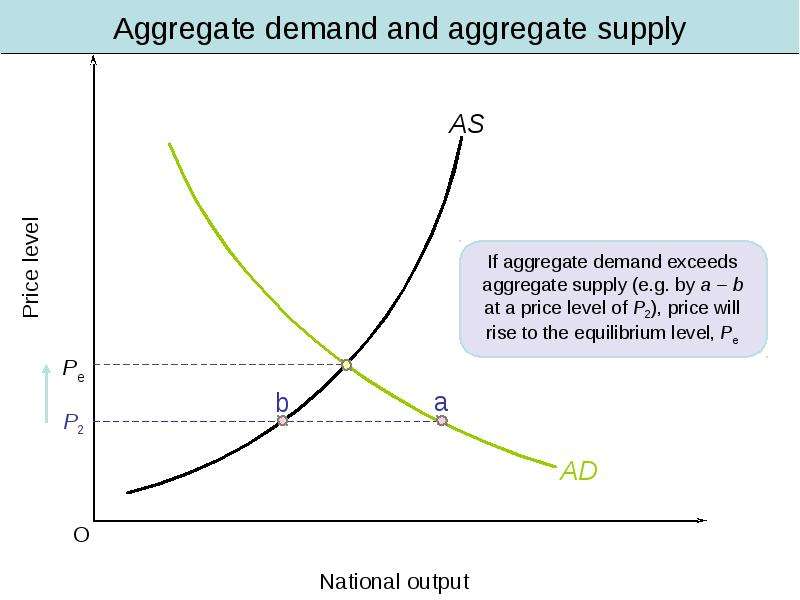
Inflation Aggregate demand & supply and prices The level of prices in the economy is determined by the interaction of aggregate demand and aggregate supply. Aggregate demand curve shows how much national output (real GDP) will be demanded at each level of prices.

Слайд 7


Aggregate demand
Описание слайда:
Aggregate demand

Слайд 8


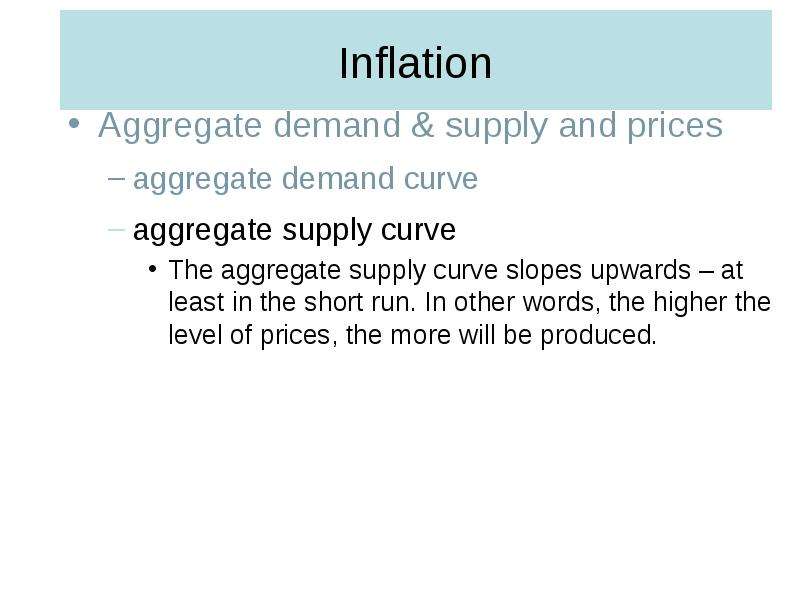
Inflation Aggregate demand & supply and prices aggregate demand curve aggregate supply curve The aggregate supply curve slopes upwards – at least in...
Описание слайда:
Inflation Aggregate demand & supply and prices aggregate demand curve aggregate supply curve The aggregate supply curve slopes upwards – at least in the short run. In other words, the higher the level of prices, the more will be produced.

Слайд 9


Aggregate demand and aggregate supply
Описание слайда:
Aggregate demand and aggregate supply

Слайд 10


Inflation Aggregate demand & supply and prices aggregate demand curve aggregate supply curve why AS curves generally slope upwards equilibrium shifts...
Описание слайда:
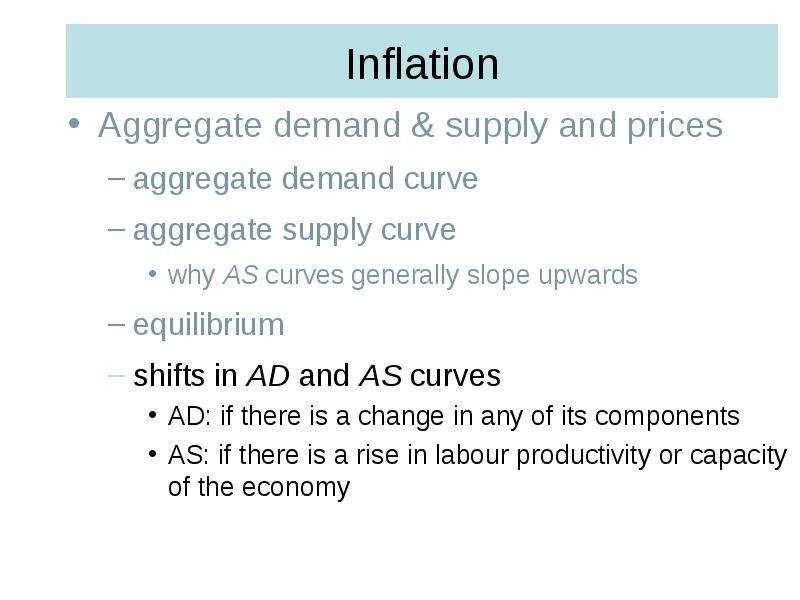
Inflation Aggregate demand & supply and prices aggregate demand curve aggregate supply curve why AS curves generally slope upwards equilibrium shifts in AD and AS curves AD: if there is a change in any of its components AS: if there is a rise in labour productivity or capacity of the economy

Слайд 11


Q As the price level in the economy rises, which of the following occurs? (i) The quantity of ‘real money’ decreases; (ii) Real aggregate demand...
Описание слайда:
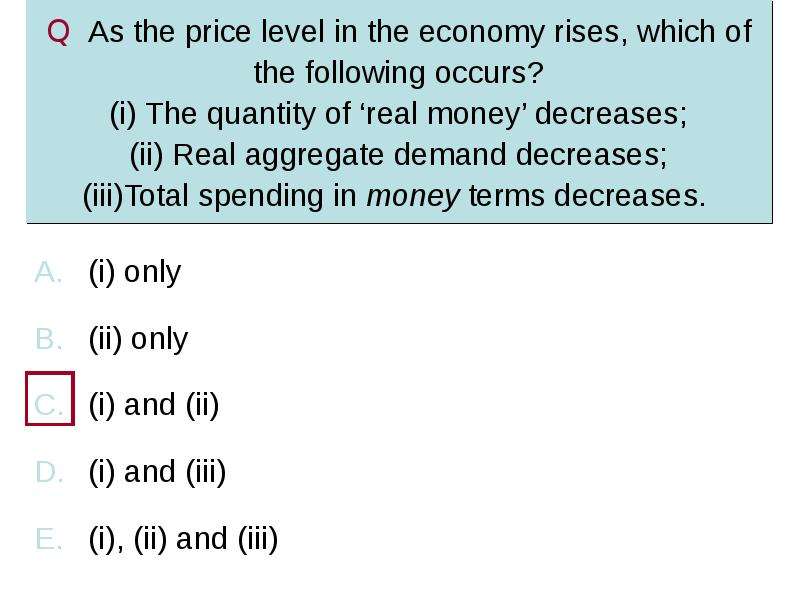
Q As the price level in the economy rises, which of the following occurs? (i) The quantity of ‘real money’ decreases; (ii) Real aggregate demand decreases; (iii)Total spending in money terms decreases. (i) only (ii) only (i) and (ii) (i) and (iii) (i), (ii) and (iii)

Слайд 12


Inflation Causes of inflation demand pull When the AD curve shifts to the right, output will rise and unemployment may fall as a result. However, at...
Описание слайда:
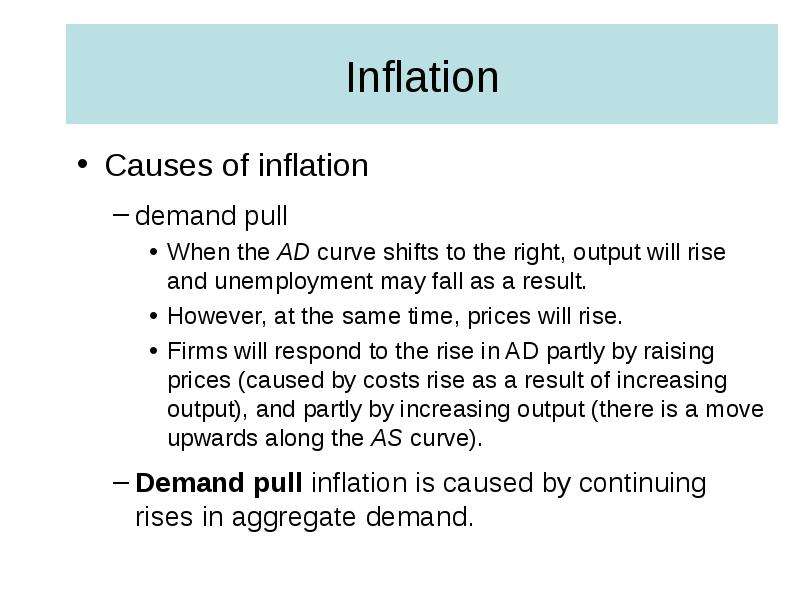
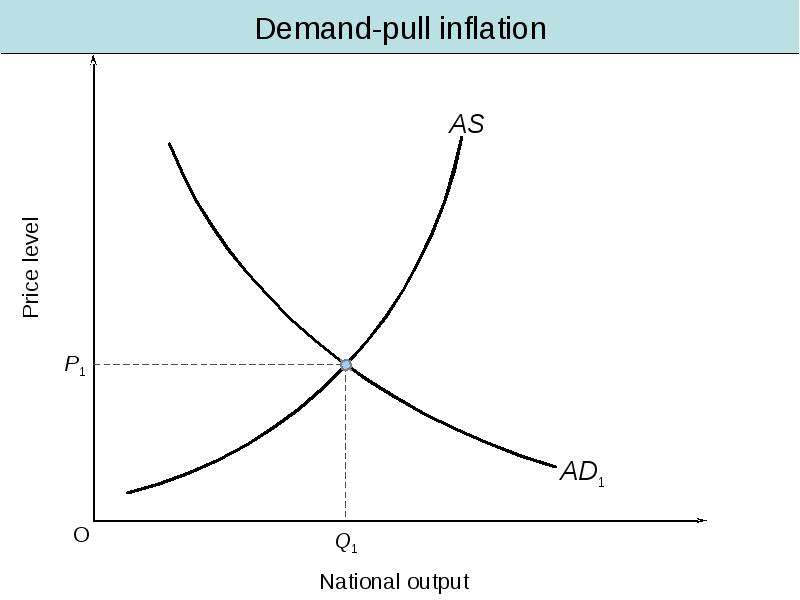
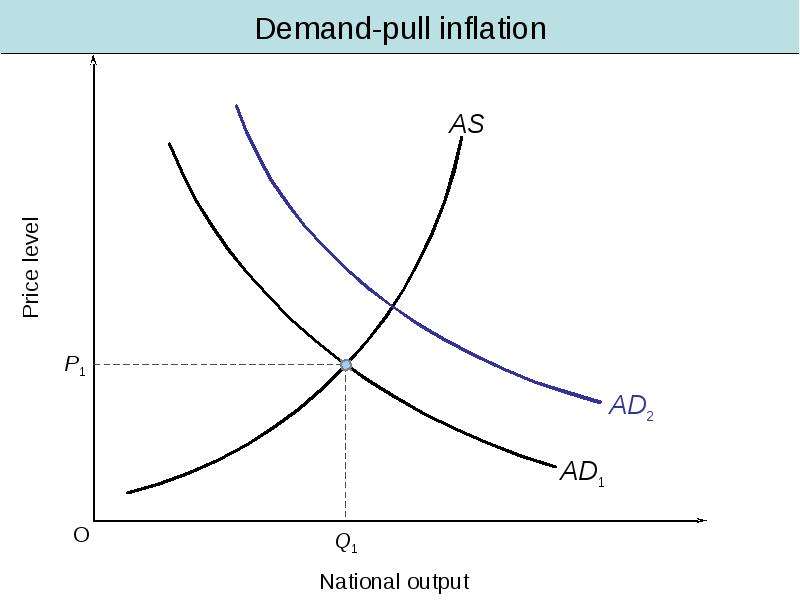
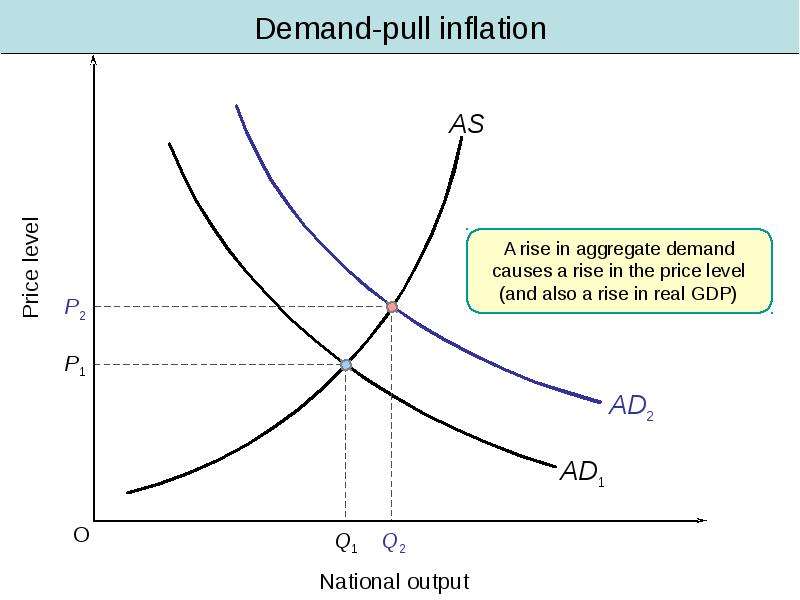
Inflation Causes of inflation demand pull When the AD curve shifts to the right, output will rise and unemployment may fall as a result. However, at the same time, prices will rise. Firms will respond to the rise in AD partly by raising prices (caused by costs rise as a result of increasing output), and partly by increasing output (there is a move upwards along the AS curve). Demand pull inflation is caused by continuing rises in aggregate demand.

Слайд 13


Demand-pull inflation
Описание слайда:
Demand-pull inflation

Слайд 14


Demand-pull inflation
Описание слайда:
Demand-pull inflation

Слайд 15


Demand-pull inflation
Описание слайда:
Demand-pull inflation

Слайд 16


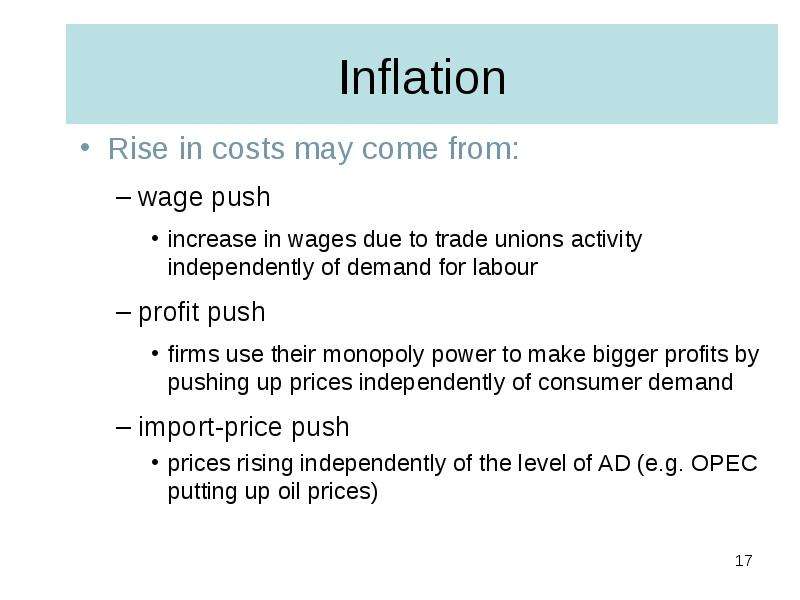
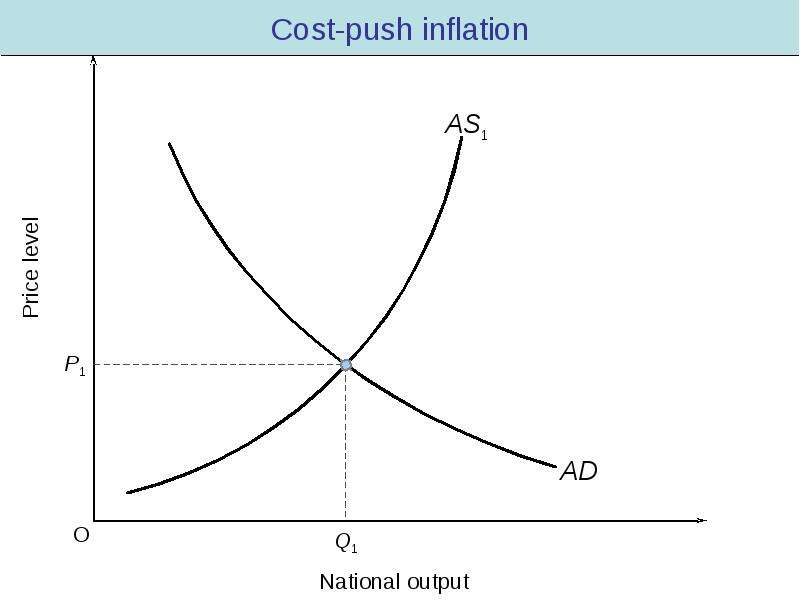
Inflation Causes of inflation cost push inflation is associated with continuing rises in costs and hence continuing leftward (upward) shifts in the...
Описание слайда:
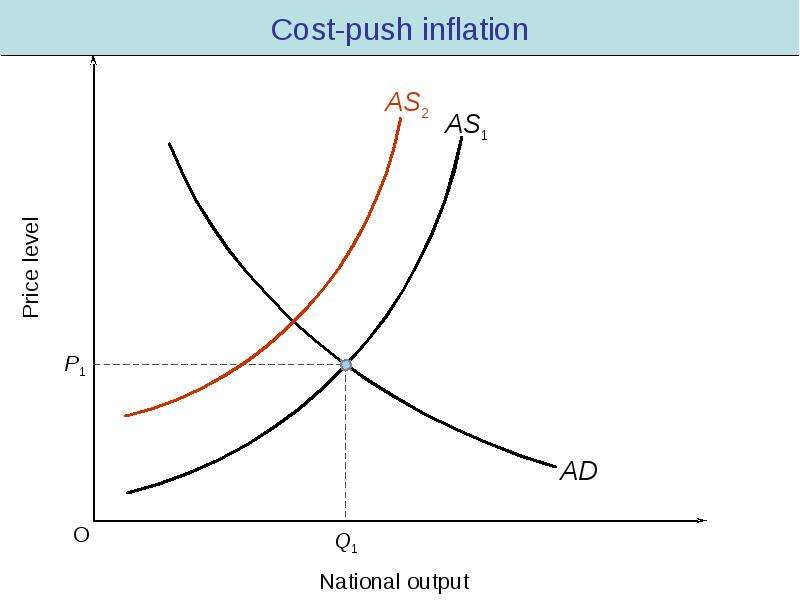
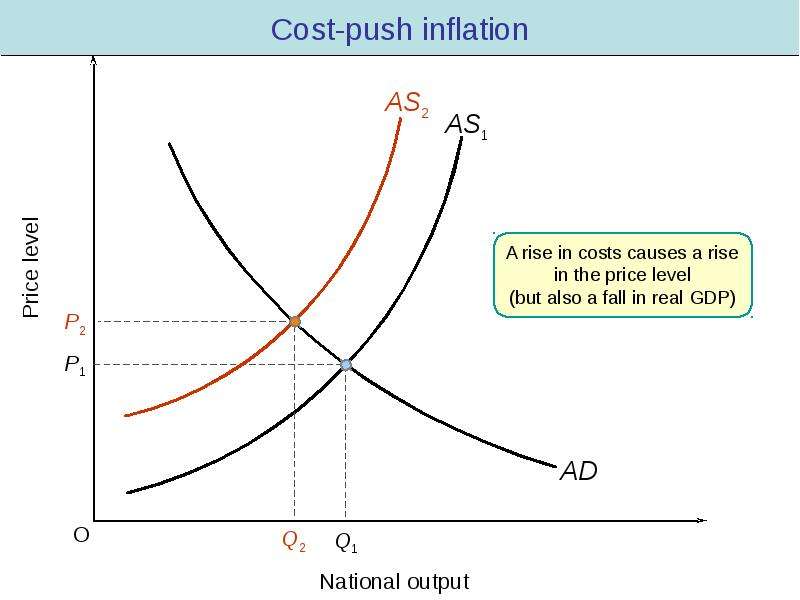
Inflation Causes of inflation cost push inflation is associated with continuing rises in costs and hence continuing leftward (upward) shifts in the AS curve. Such shifts occur when costs of production rise independently of aggregate demand. If firms face a rise in costs, they will respond partly by raising prices and passing the costs on to the consumer, and partly by cutting back on production.

Слайд 17


Inflation Rise in costs may come from: wage push increase in wages due to trade unions activity independently of demand for labour profit push firms...
Описание слайда:
Inflation Rise in costs may come from: wage push increase in wages due to trade unions activity independently of demand for labour profit push firms use their monopoly power to make bigger profits by pushing up prices independently of consumer demand import-price push prices rising independently of the level of AD (e.g. OPEC putting up oil prices)

Слайд 18


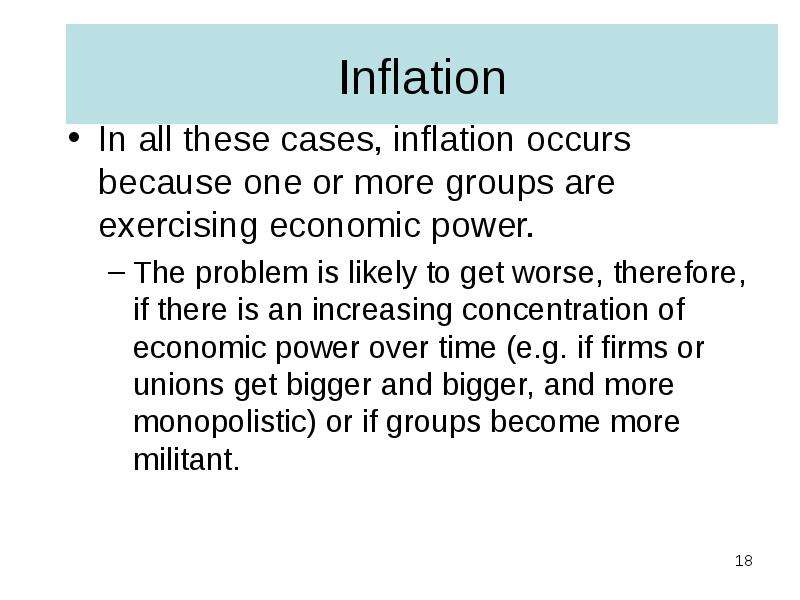
Inflation In all these cases, inflation occurs because one or more groups are exercising economic power. The problem is likely to get worse,...
Описание слайда:
Inflation In all these cases, inflation occurs because one or more groups are exercising economic power. The problem is likely to get worse, therefore, if there is an increasing concentration of economic power over time (e.g. if firms or unions get bigger and bigger, and more monopolistic) or if groups become more militant.

Слайд 19


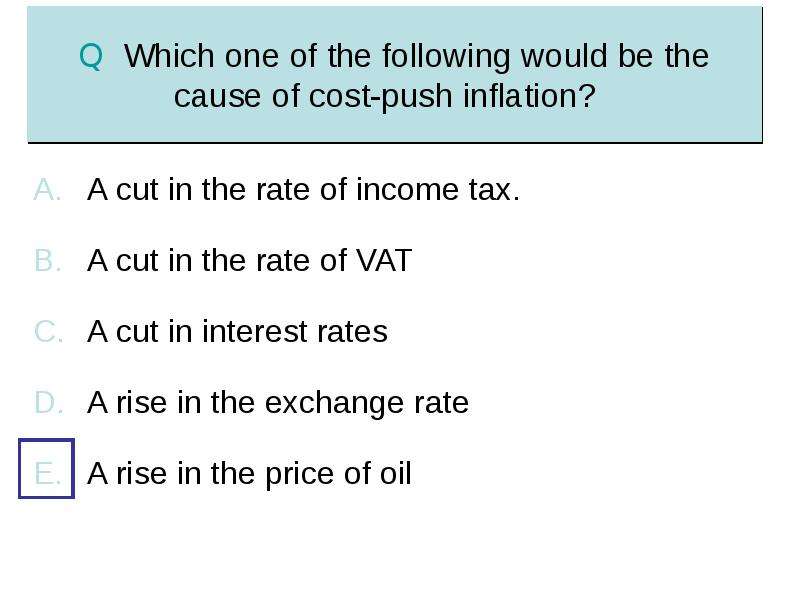
Q Which one of the following would be the cause of cost-push inflation? A cut in the rate of income tax. A cut in the rate of VAT A cut in interest...
Описание слайда:
Q Which one of the following would be the cause of cost-push inflation? A cut in the rate of income tax. A cut in the rate of VAT A cut in interest rates A rise in the exchange rate A rise in the price of oil

Слайд 20


Cost-push inflation
Описание слайда:
Cost-push inflation

Слайд 21


Cost-push inflation
Описание слайда:
Cost-push inflation

Слайд 22


Cost-push inflation
Описание слайда:
Cost-push inflation

Слайд 23


Inflation With the growth in demand for raw materials and food (China, India, Brazil) rising costs became more of a problem Thus, what starts with a...
Описание слайда:
Inflation With the growth in demand for raw materials and food (China, India, Brazil) rising costs became more of a problem Thus, what starts with a rise in aggregate demand in these countries (demand-pull inflation), becomes cost-push inflation for other countries due to globalisation, having to pay higher prices for the commodities they import.

Слайд 24


Inflation Demand-pull and cost-push inflation can occur together since wage and price rises can be caused both by increases in aggregate demand as...
Описание слайда:
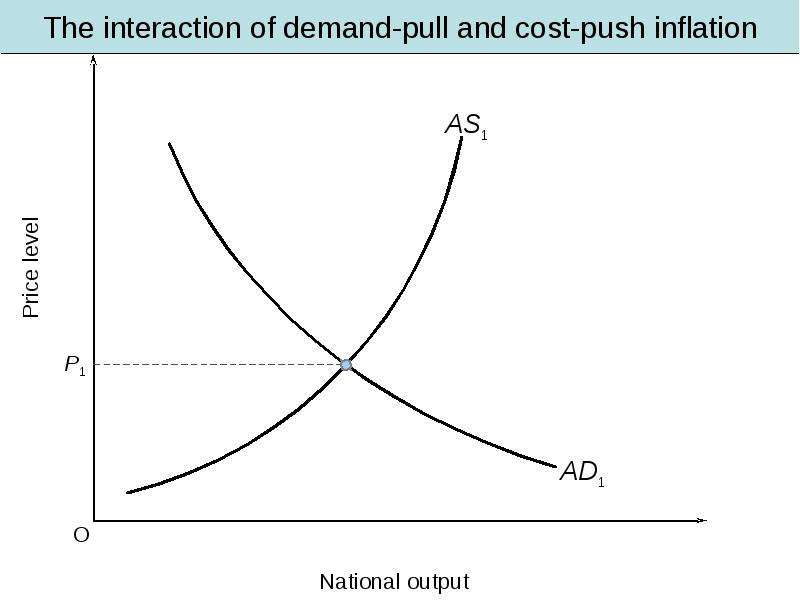
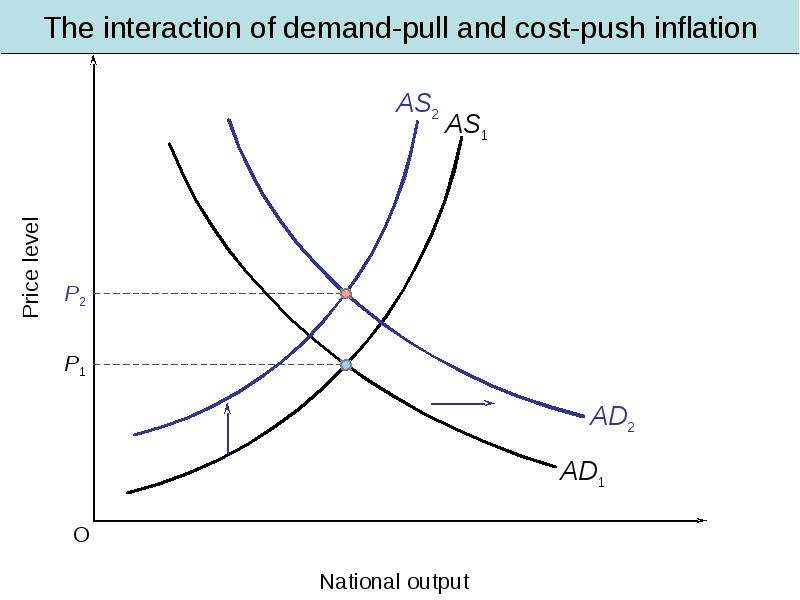
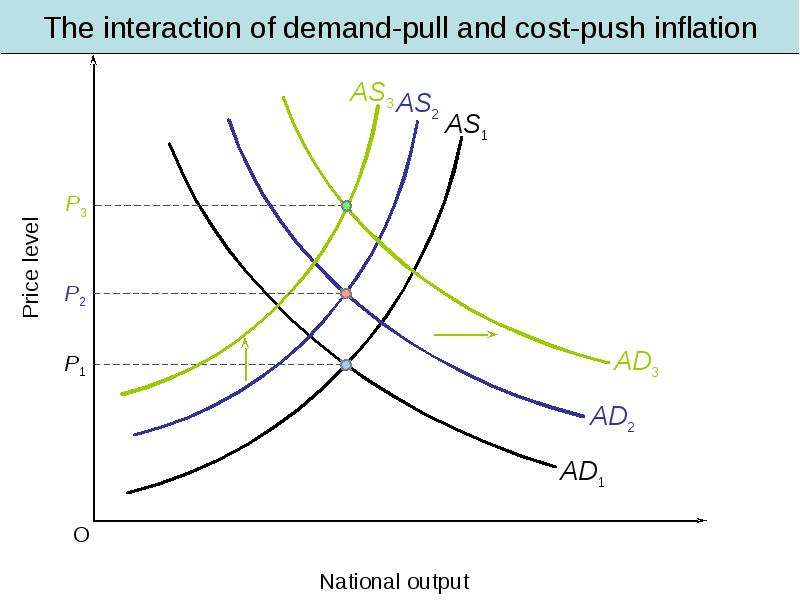
Inflation Demand-pull and cost-push inflation can occur together since wage and price rises can be caused both by increases in aggregate demand as well as by independent causes pushing up costs. Even when an inflationary process starts as either demand-pull or cost-push, it is often difficult to separate the two.

Слайд 25


The interaction of demand-pull and cost-push inflation
Описание слайда:
The interaction of demand-pull and cost-push inflation

Слайд 26


The interaction of demand-pull and cost-push inflation
Описание слайда:
The interaction of demand-pull and cost-push inflation

Слайд 27


The interaction of demand-pull and cost-push inflation
Описание слайда:
The interaction of demand-pull and cost-push inflation

Слайд 28


Inflation
Описание слайда:
Inflation

Слайд 29


Lecture 4.1 Fiscal and Monetary Policy
Описание слайда:
Lecture 4.1 Fiscal and Monetary Policy

Слайд 30


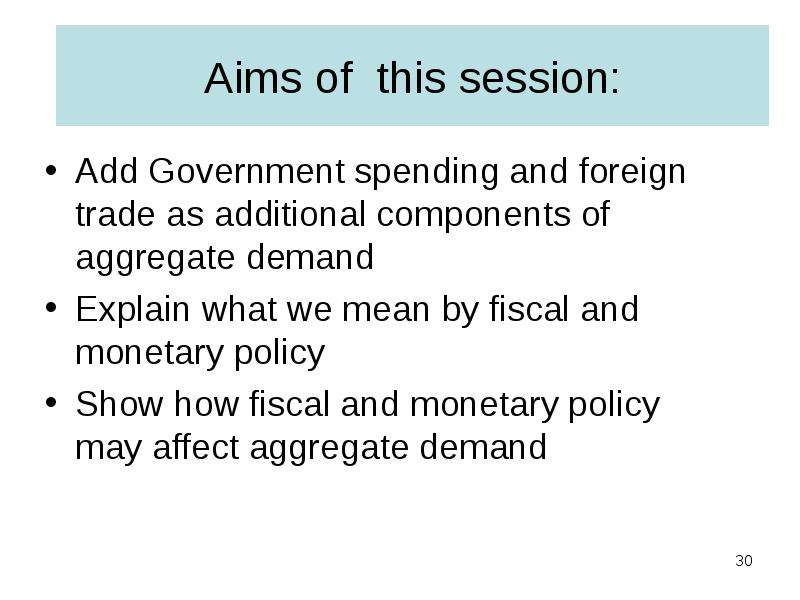
Aims of this session: Add Government spending and foreign trade as additional components of aggregate demand Explain what we mean by fiscal and...
Описание слайда:
Aims of this session: Add Government spending and foreign trade as additional components of aggregate demand Explain what we mean by fiscal and monetary policy Show how fiscal and monetary policy may affect aggregate demand

Слайд 31


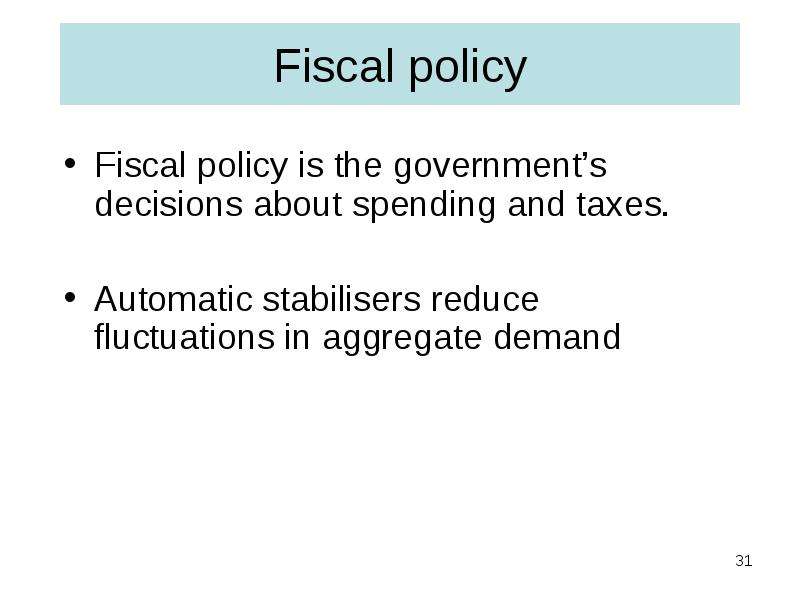
Fiscal policy Fiscal policy is the government’s decisions about spending and taxes. Automatic stabilisers reduce fluctuations in aggregate demand
Описание слайда:
Fiscal policy Fiscal policy is the government’s decisions about spending and taxes. Automatic stabilisers reduce fluctuations in aggregate demand

Слайд 32


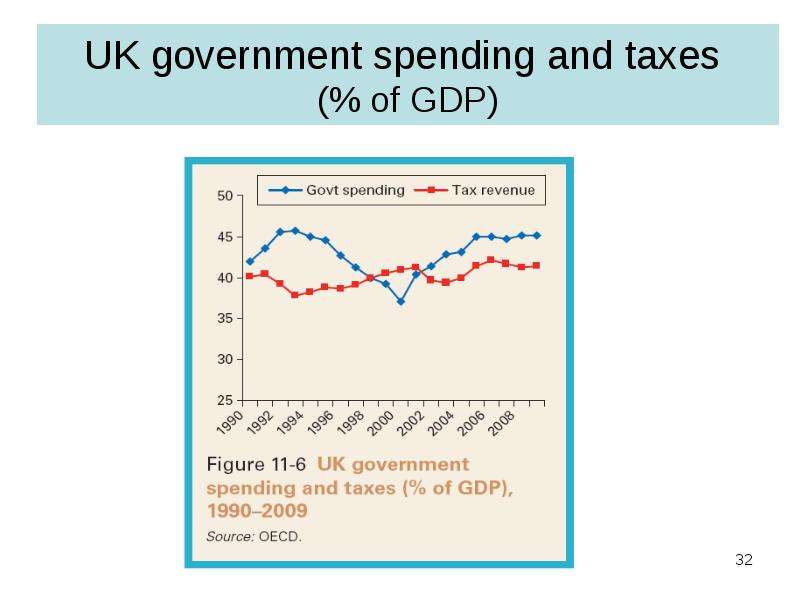
UK government spending and taxes (% of GDP)
Описание слайда:
UK government spending and taxes (% of GDP)

Слайд 33


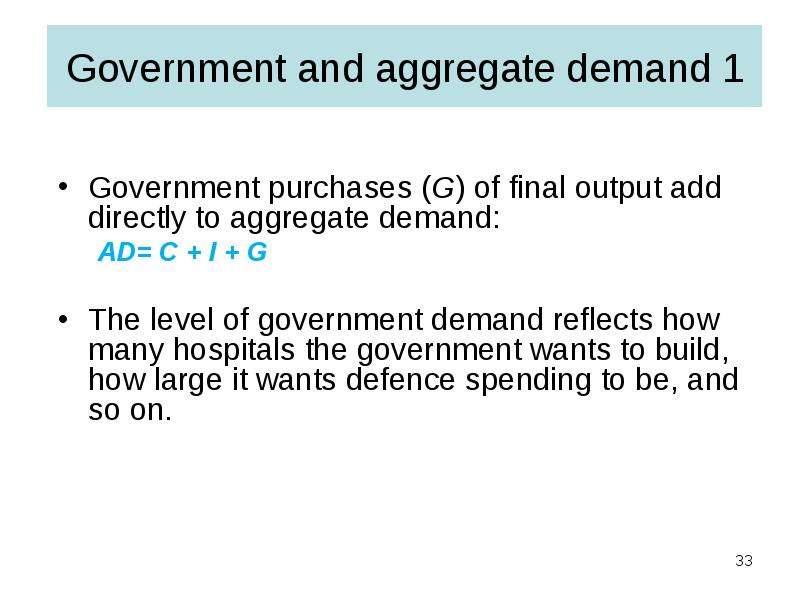
Government and aggregate demand 1 Government purchases (G) of final output add directly to aggregate demand: AD= C + I + G The level of government...
Описание слайда:
Government and aggregate demand 1 Government purchases (G) of final output add directly to aggregate demand: AD= C + I + G The level of government demand reflects how many hospitals the government wants to build, how large it wants defence spending to be, and so on.

Слайд 34


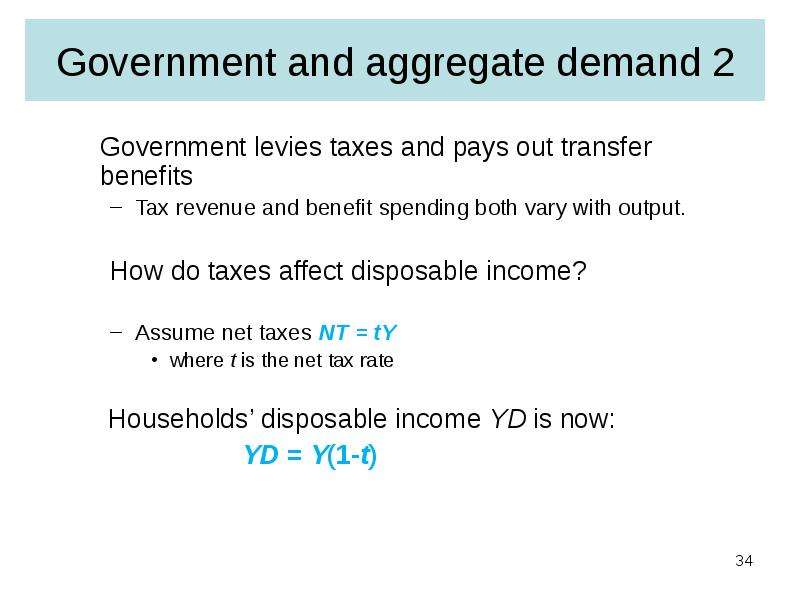
Government and aggregate demand 2 Government levies taxes and pays out transfer benefits Tax revenue and benefit spending both vary with output. How...
Описание слайда:
Government and aggregate demand 2 Government levies taxes and pays out transfer benefits Tax revenue and benefit spending both vary with output. How do taxes affect disposable income? Assume net taxes NT = tY where t is the net tax rate Households’ disposable income YD is now: YD = Y(1-t)

Слайд 35


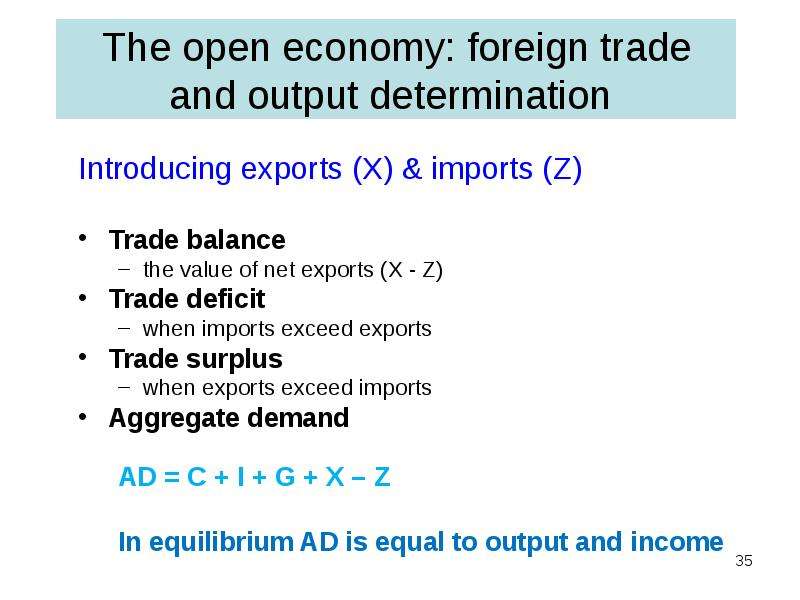
The open economy: foreign trade and output determination Introducing exports (X) & imports (Z) Trade balance the value of net exports (X - Z) Trade...
Описание слайда:
The open economy: foreign trade and output determination Introducing exports (X) & imports (Z) Trade balance the value of net exports (X - Z) Trade deficit when imports exceed exports Trade surplus when exports exceed imports Aggregate demand AD = C + I + G + X – Z In equilibrium AD is equal to output and income

Слайд 36


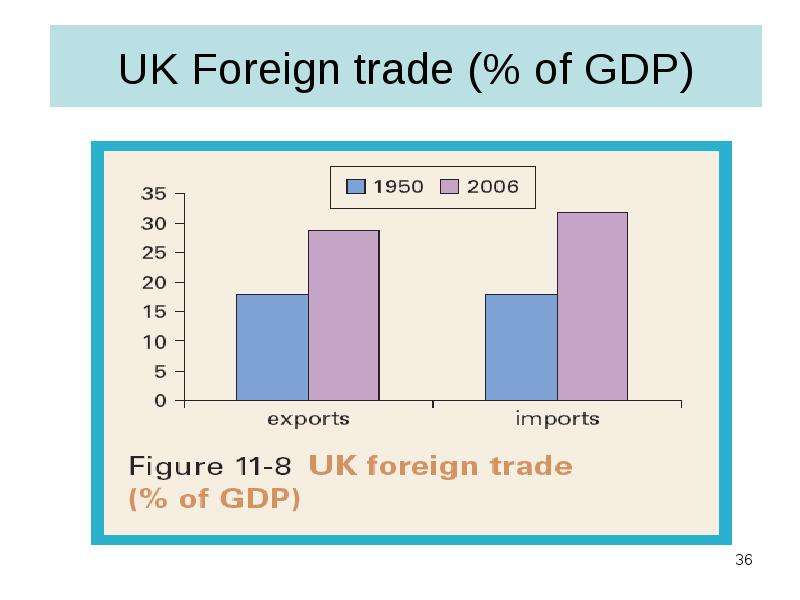
UK Foreign trade (% of GDP)
Описание слайда:
UK Foreign trade (% of GDP)

Слайд 37


Monetary Policy I Interest rates are the instrument of monetary policy The monetary instrument is the variable over which a central bank exercises...
Описание слайда:
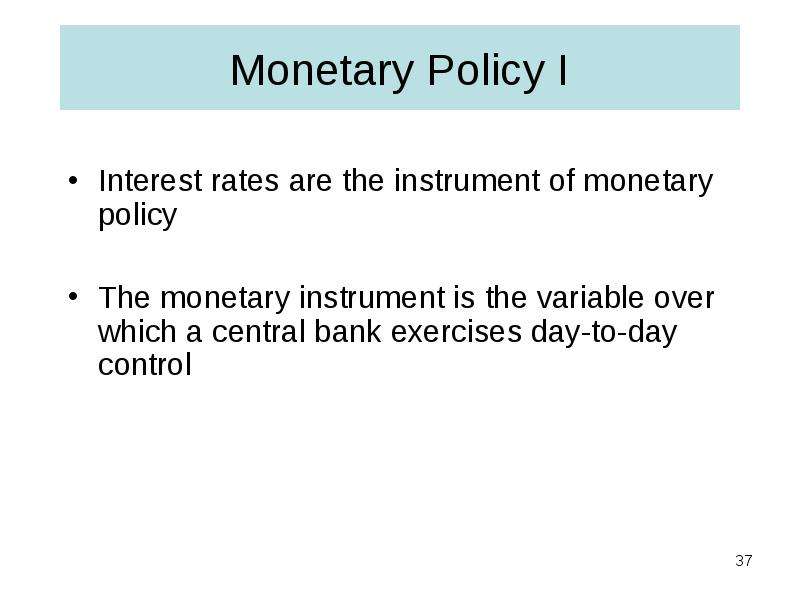
Monetary Policy I Interest rates are the instrument of monetary policy The monetary instrument is the variable over which a central bank exercises day-to-day control

Слайд 38


Monetary Policy II Monetary policy is the decision by the Central Bank about what the interest rate to set. In the UK, the central bank is the Bank...
Описание слайда:
Monetary Policy II Monetary policy is the decision by the Central Bank about what the interest rate to set. In the UK, the central bank is the Bank of England, which acts on behalf of the government. It has operational independence from the government to set interest rates. But the Chancellor has decided the Bank’s ultimate objective is to set interest rates to try to keep inflation close to 2 per cent a year

Слайд 39


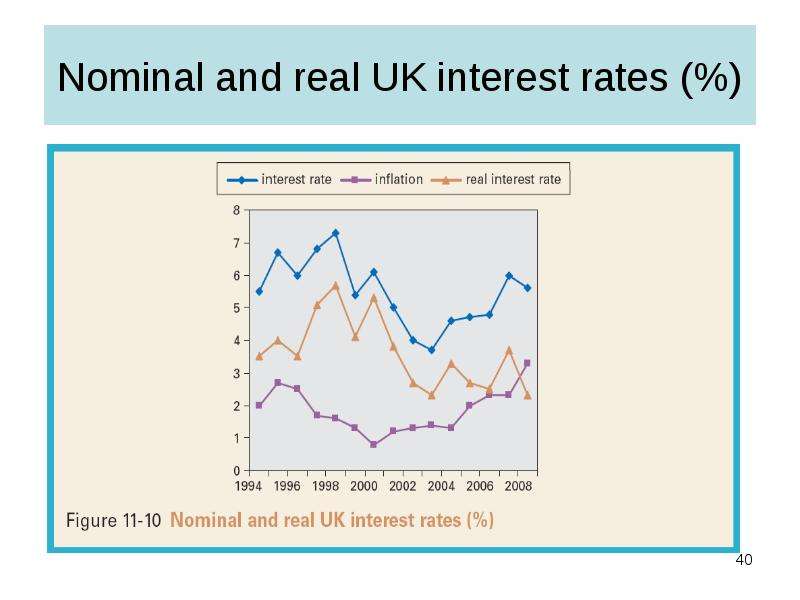
Nominal vs Real Interest Rates The real interest rate is the difference between the nominal interest rate and inflation
Описание слайда:
Nominal vs Real Interest Rates The real interest rate is the difference between the nominal interest rate and inflation

Слайд 40


Nominal and real UK interest rates (%)
Описание слайда:
Nominal and real UK interest rates (%)

Слайд 41


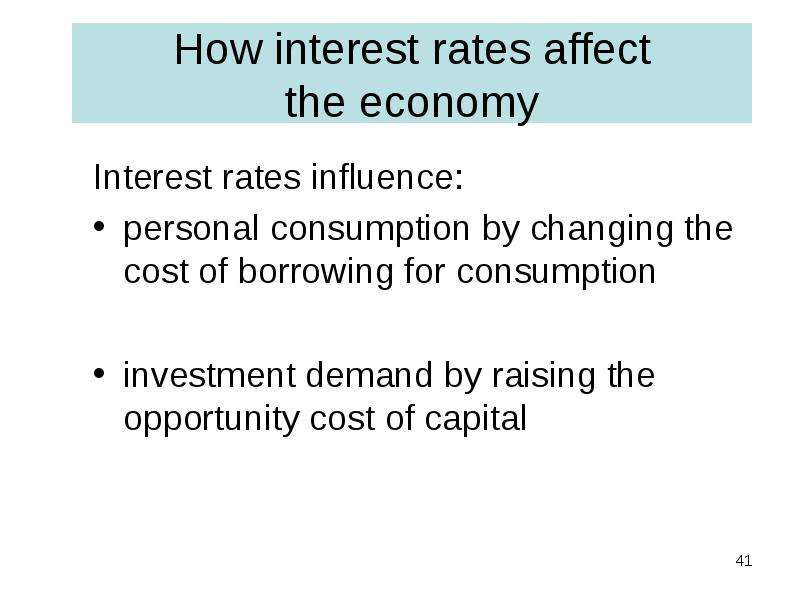
How interest rates affect the economy Interest rates influence: personal consumption by changing the cost of borrowing for consumption investment...
Описание слайда:
How interest rates affect the economy Interest rates influence: personal consumption by changing the cost of borrowing for consumption investment demand by raising the opportunity cost of capital

Слайд 42


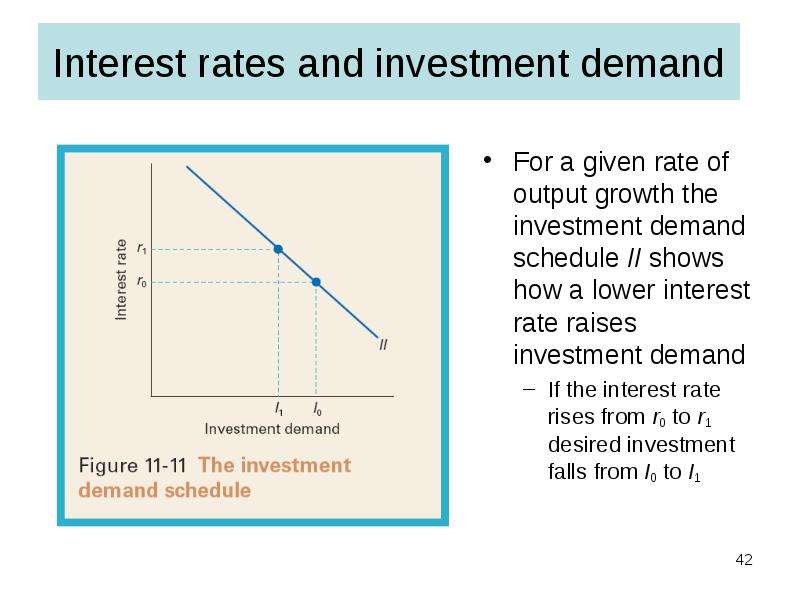
Interest rates and investment demand For a given rate of output growth the investment demand schedule II shows how a lower interest rate raises...
Описание слайда:
Interest rates and investment demand For a given rate of output growth the investment demand schedule II shows how a lower interest rate raises investment demand If the interest rate rises from r0 to r1 desired investment falls from I0 to I1

Слайд 43


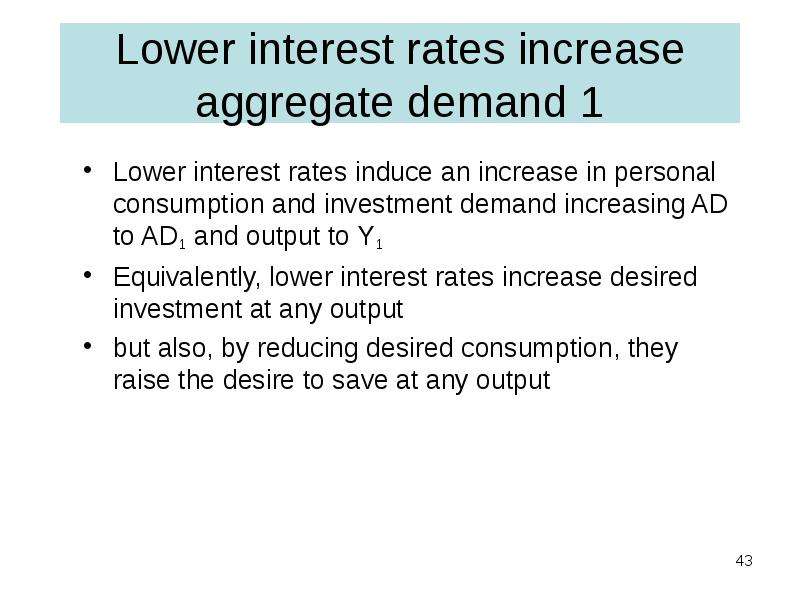
Lower interest rates increase aggregate demand 1
Описание слайда:
Lower interest rates increase aggregate demand 1

Слайд 44


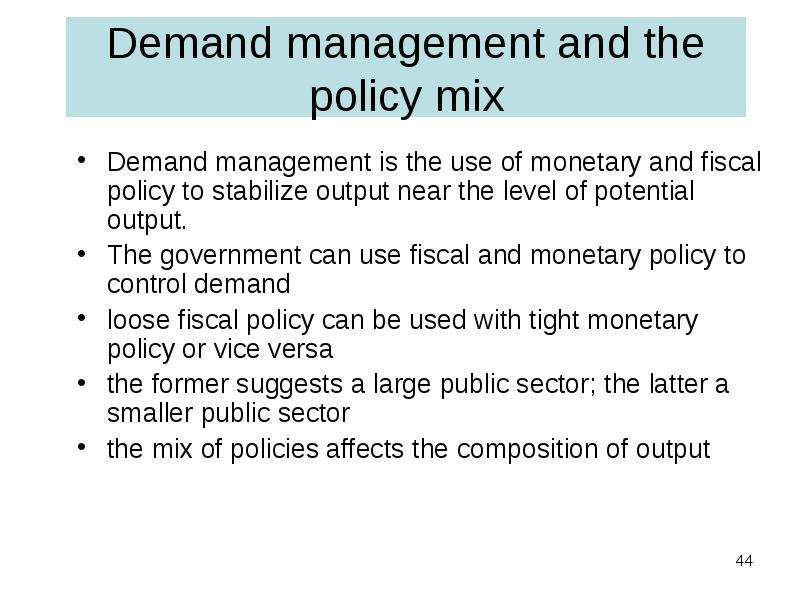
Demand management and the policy mix Demand management is the use of monetary and fiscal policy to stabilize output near the level of potential...
Описание слайда:
Demand management and the policy mix Demand management is the use of monetary and fiscal policy to stabilize output near the level of potential output. The government can use fiscal and monetary policy to control demand loose fiscal policy can be used with tight monetary policy or vice versa the former suggests a large public sector; the latter a smaller public sector the mix of policies affects the composition of output


Похожие презентации
Mypresentation.ru
Загрузить презентацию