🗊 Презентация Russian tea culture

Категория: Образование
Нажмите для полного просмотра!
Russian tea culture, слайд №1 Russian tea culture, слайд №2 Russian tea culture, слайд №3 Russian tea culture, слайд №4 Russian tea culture, слайд №5 Russian tea culture, слайд №6 Russian tea culture, слайд №7 Russian tea culture, слайд №8

Вы можете ознакомиться и скачать презентацию на тему Russian tea culture. Доклад-сообщение содержит 8 слайдов. Презентации для любого класса можно скачать бесплатно. Если материал и наш сайт презентаций Mypresentation Вам понравились – поделитесь им с друзьями с помощью социальных кнопок и добавьте в закладки в своем браузере.

Слайды и текст этой презентации


Слайд 1


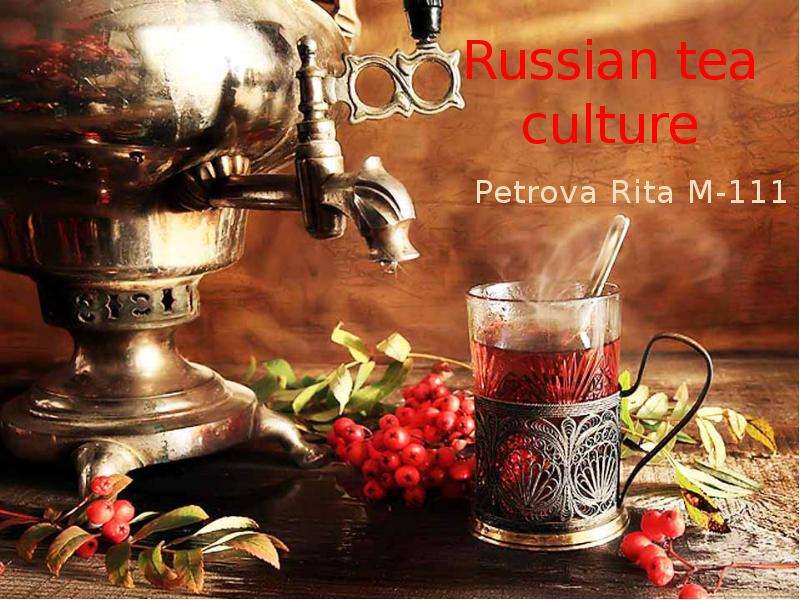
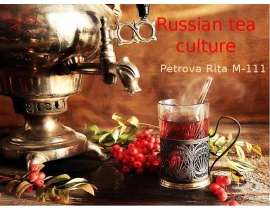
Russian tea culture Petrova Rita M-111
Описание слайда:
Russian tea culture Petrova Rita M-111

Слайд 2


Tea is part of Russian culture. According to a 2005 study, some 82% of Russians consume tea daily. Tea is part of Russian culture. According to a...
Описание слайда:

Tea is part of Russian culture. According to a 2005 study, some 82% of Russians consume tea daily. Tea is part of Russian culture. According to a 2005 study, some 82% of Russians consume tea daily. Russians took up tea drinking long before the Dutch began trading with China for it. No surprise. Russia spans two continents — Europe and Asia — and borders China, the source of the tea. Caravans reached them easily on the “Great Tea Road” (part of the famous “Silk Road”), carrying that special cargo.

Слайд 3


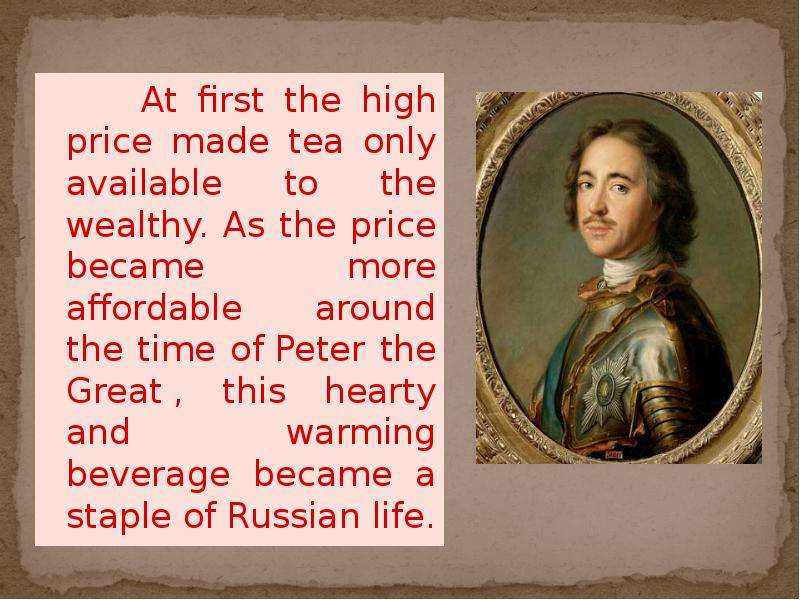
At first the high price made tea only available to the wealthy. As the price became more affordable around the time of Peter the Great , this hearty...
Описание слайда:

At first the high price made tea only available to the wealthy. As the price became more affordable around the time of Peter the Great , this hearty and warming beverage became a staple of Russian life. At first the high price made tea only available to the wealthy. As the price became more affordable around the time of Peter the Great , this hearty and warming beverage became a staple of Russian life.

Слайд 4


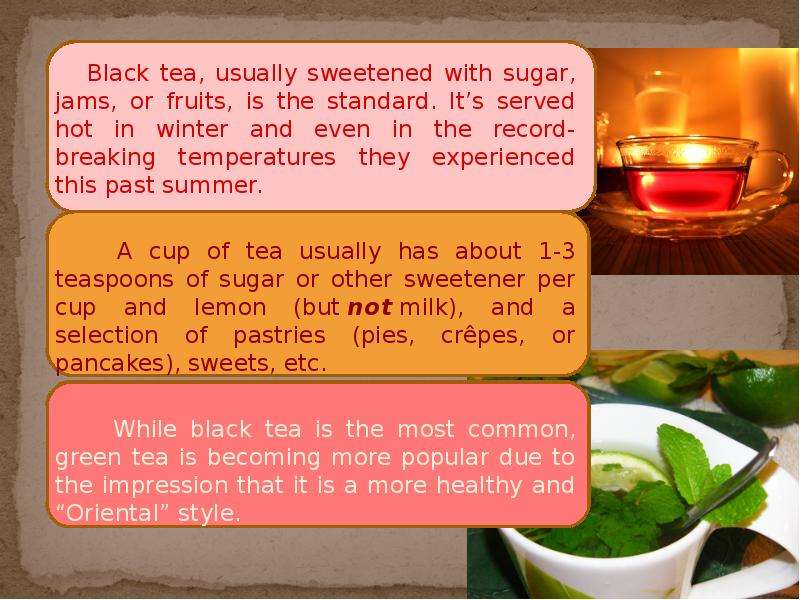
Black tea, usually sweetened with sugar, jams, or fruits, is the standard. It’s served hot in winter and even in the record-breaking temperatures...
Описание слайда:
Black tea, usually sweetened with sugar, jams, or fruits, is the standard. It’s served hot in winter and even in the record-breaking temperatures they experienced this past summer. Black tea, usually sweetened with sugar, jams, or fruits, is the standard. It’s served hot in winter and even in the record-breaking temperatures they experienced this past summer. A cup of tea usually has about 1-3 teaspoons of sugar or other sweetener per cup and lemon (but not milk), and a selection of pastries (pies, crêpes, or pancakes), sweets, etc. While black tea is the most common, green tea is becoming more popular due to the impression that it is a more healthy and “Oriental” style.

Слайд 5


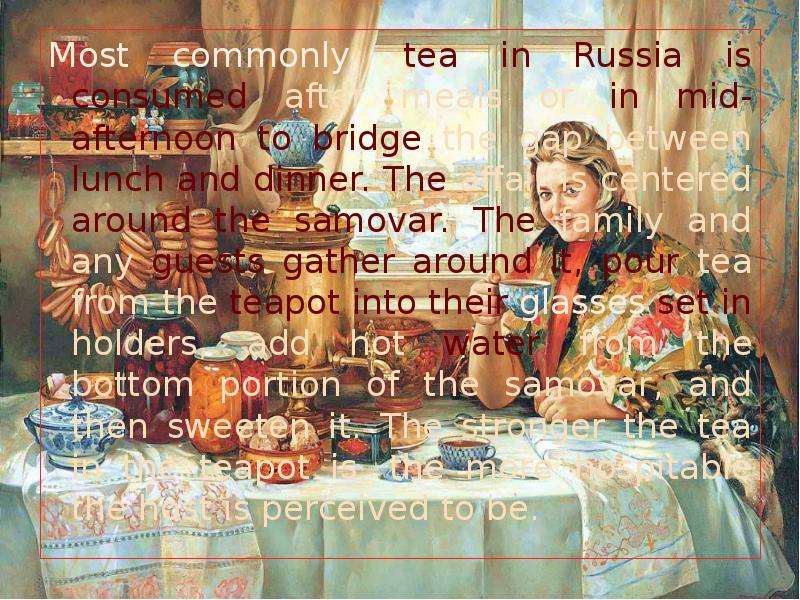
Most commonly, tea in Russia is consumed after meals or in mid-afternoon to bridge the gap between lunch and dinner. The affair is centered around...
Описание слайда:
Most commonly, tea in Russia is consumed after meals or in mid-afternoon to bridge the gap between lunch and dinner. The affair is centered around the samovar. The family and any guests gather around it, pour tea from the teapot into their glasses set in holders, add hot water from the bottom portion of the samovar, and then sweeten it. The stronger the tea in the teapot is, the more hospitable the host is perceived to be. Most commonly, tea in Russia is consumed after meals or in mid-afternoon to bridge the gap between lunch and dinner. The affair is centered around the samovar. The family and any guests gather around it, pour tea from the teapot into their glasses set in holders, add hot water from the bottom portion of the samovar, and then sweeten it. The stronger the tea in the teapot is, the more hospitable the host is perceived to be.

Слайд 6


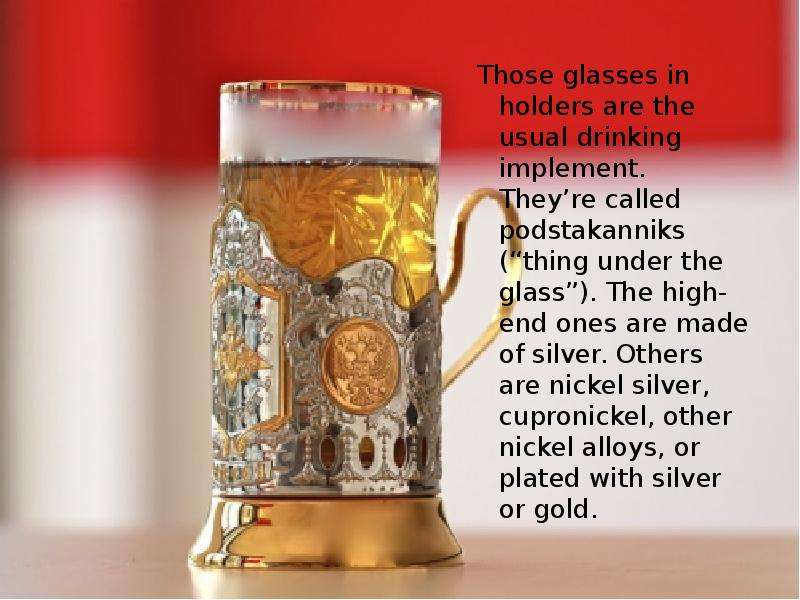
Those glasses in holders are the usual drinking implement. They’re called podstakanniks (“thing under the glass”). The high-end ones are made of...
Описание слайда:
Those glasses in holders are the usual drinking implement. They’re called podstakanniks (“thing under the glass”). The high-end ones are made of silver. Others are nickel silver, cupronickel, other nickel alloys, or plated with silver or gold. Those glasses in holders are the usual drinking implement. They’re called podstakanniks (“thing under the glass”). The high-end ones are made of silver. Others are nickel silver, cupronickel, other nickel alloys, or plated with silver or gold.

Слайд 7


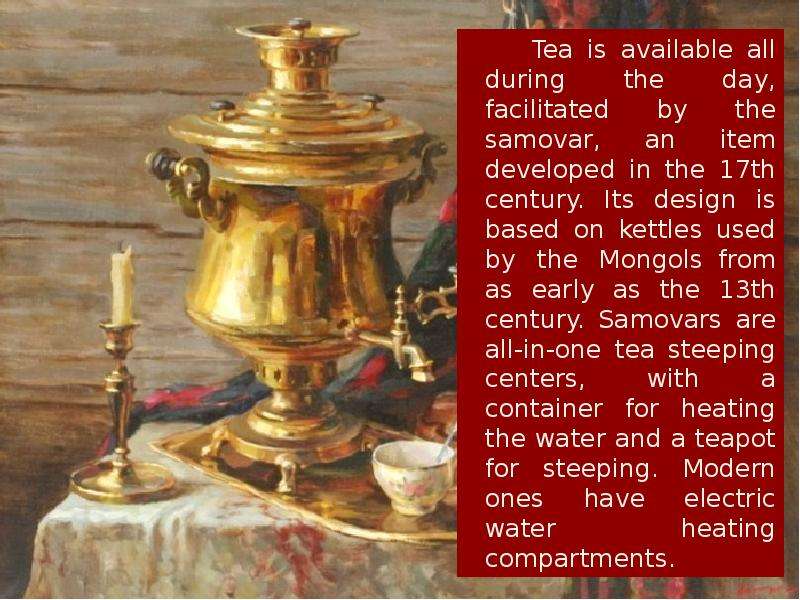
Tea is available all during the day, facilitated by the samovar, an item developed in the 17th century. Its design is based on kettles used by the...
Описание слайда:
Tea is available all during the day, facilitated by the samovar, an item developed in the 17th century. Its design is based on kettles used by the Mongols from as early as the 13th century. Samovars are all-in-one tea steeping centers, with a container for heating the water and a teapot for steeping. Modern ones have electric water heating compartments. Tea is available all during the day, facilitated by the samovar, an item developed in the 17th century. Its design is based on kettles used by the Mongols from as early as the 13th century. Samovars are all-in-one tea steeping centers, with a container for heating the water and a teapot for steeping. Modern ones have electric water heating compartments.

Слайд 8


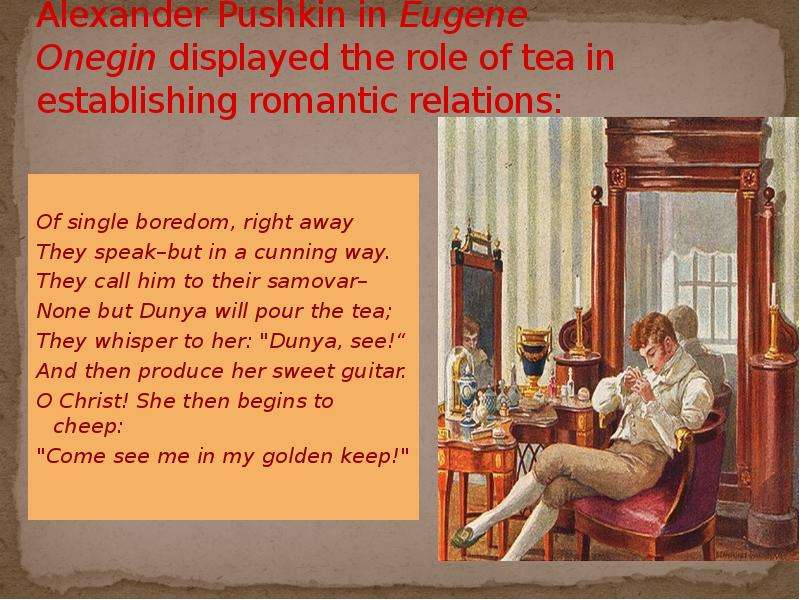
Alexander Pushkin in Eugene Onegin displayed the role of tea in establishing romantic relations: Of single boredom, right away They speak–but in a...
Описание слайда:
Alexander Pushkin in Eugene Onegin displayed the role of tea in establishing romantic relations: Of single boredom, right away They speak–but in a cunning way. They call him to their samovar– None but Dunya will pour the tea; They whisper to her: "Dunya, see!“ And then produce her sweet guitar. O Christ! She then begins to cheep: "Come see me in my golden keep!"


Теги Russian culture
Похожие презентации
Mypresentation.ru
Загрузить презентацию