🗊 Презентация Animal law

Категория: Окружающий мир
Нажмите для полного просмотра!
Animal law, слайд №1 Animal law, слайд №2 Animal law, слайд №3 Animal law, слайд №4 Animal law, слайд №5 Animal law, слайд №6 Animal law, слайд №7 Animal law, слайд №8 Animal law, слайд №9 Animal law, слайд №10 Animal law, слайд №11 Animal law, слайд №12 Animal law, слайд №13 Animal law, слайд №14 Animal law, слайд №15 Animal law, слайд №16 Animal law, слайд №17 Animal law, слайд №18 Animal law, слайд №19 Animal law, слайд №20 Animal law, слайд №21

Вы можете ознакомиться и скачать презентацию на тему Animal law. Доклад-сообщение содержит 21 слайдов. Презентации для любого класса можно скачать бесплатно. Если материал и наш сайт презентаций Mypresentation Вам понравились – поделитесь им с друзьями с помощью социальных кнопок и добавьте в закладки в своем браузере.

Слайды и текст этой презентации


Слайд 1


Animal Law Animals and Ethics
Описание слайда:

Animal Law Animals and Ethics

Слайд 2


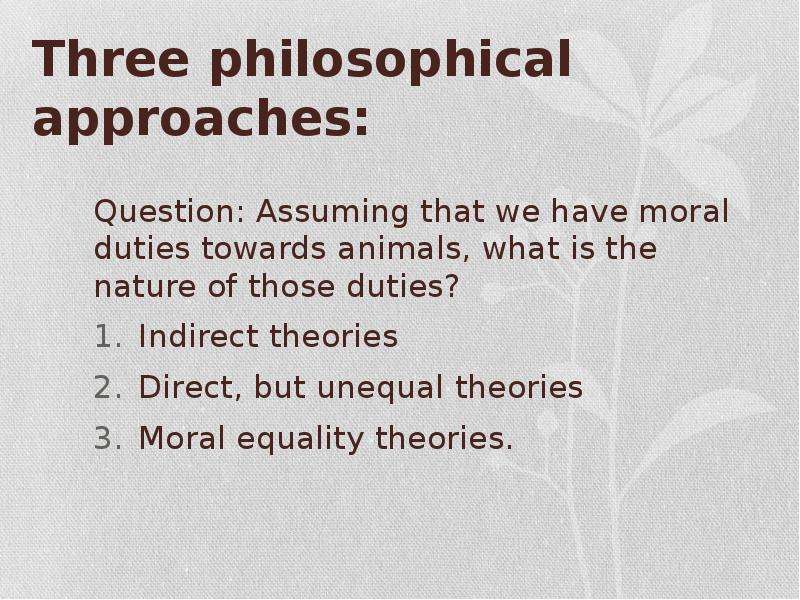
Three philosophical approaches: Question: Assuming that we have moral duties towards animals, what is the nature of those duties? Indirect theories...
Описание слайда:

Three philosophical approaches: Question: Assuming that we have moral duties towards animals, what is the nature of those duties? Indirect theories Direct, but unequal theories Moral equality theories.

Слайд 3


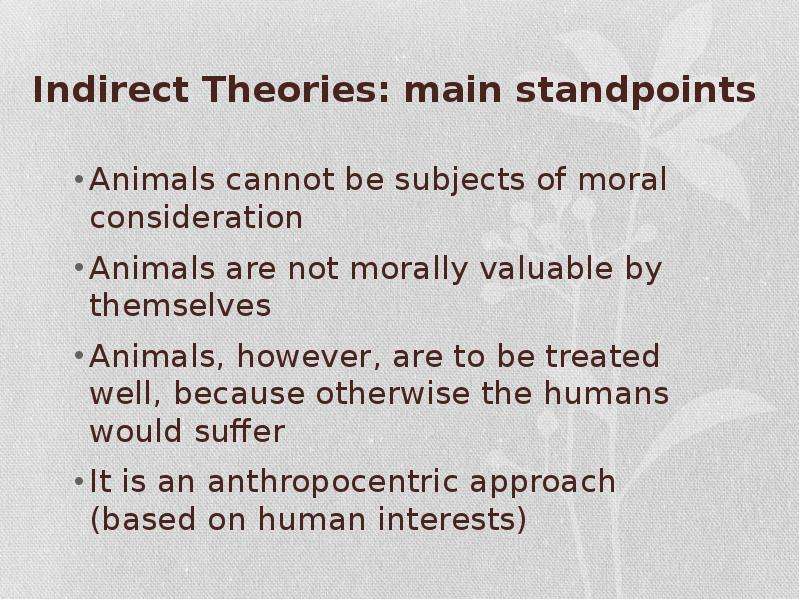
Indirect Theories: main standpoints Animals cannot be subjects of moral consideration Animals are not morally valuable by themselves Animals,...
Описание слайда:

Indirect Theories: main standpoints Animals cannot be subjects of moral consideration Animals are not morally valuable by themselves Animals, however, are to be treated well, because otherwise the humans would suffer It is an anthropocentric approach (based on human interests)

Слайд 4


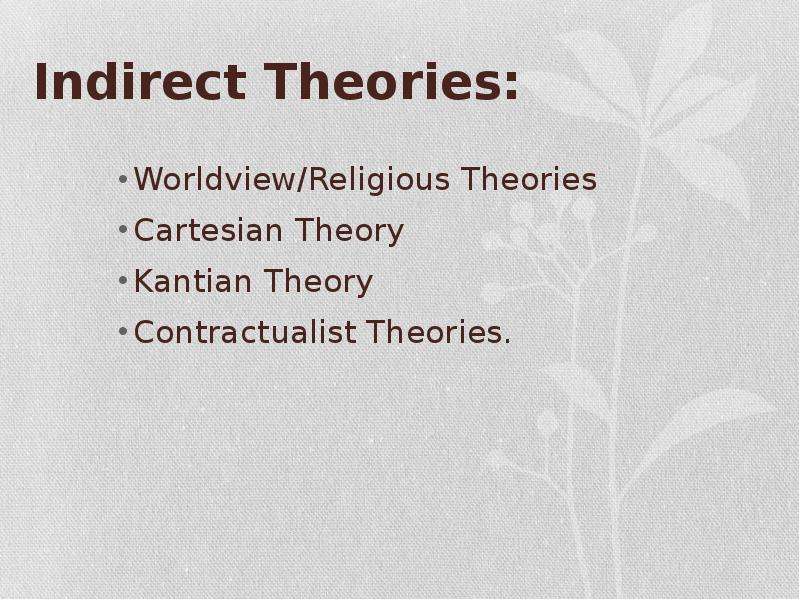
Indirect Theories: Worldview/Religious Theories Cartesian Theory Kantian Theory Contractualist Theories.
Описание слайда:

Indirect Theories: Worldview/Religious Theories Cartesian Theory Kantian Theory Contractualist Theories.

Слайд 5


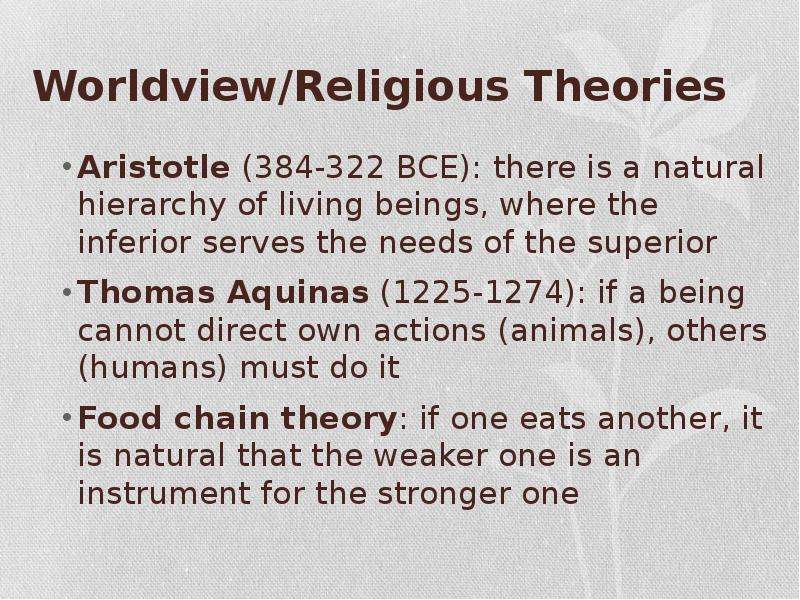
Worldview/Religious Theories Aristotle (384-322 BCE): there is a natural hierarchy of living beings, where the inferior serves the needs of the...
Описание слайда:
Worldview/Religious Theories Aristotle (384-322 BCE): there is a natural hierarchy of living beings, where the inferior serves the needs of the superior Thomas Aquinas (1225-1274): if a being cannot direct own actions (animals), others (humans) must do it Food chain theory: if one eats another, it is natural that the weaker one is an instrument for the stronger one

Слайд 6


Aristotle "Plants exist for the sake of animals, and brute beasts for the sake of man" Aristotle, Politics
Описание слайда:
Aristotle "Plants exist for the sake of animals, and brute beasts for the sake of man" Aristotle, Politics

Слайд 7


Thomas Aquinas "It matters not how man behaves to animals, because God has subjected all things to man's power" Thomas Aquinas, Summa...
Описание слайда:
Thomas Aquinas "It matters not how man behaves to animals, because God has subjected all things to man's power" Thomas Aquinas, Summa Theologica

Слайд 8


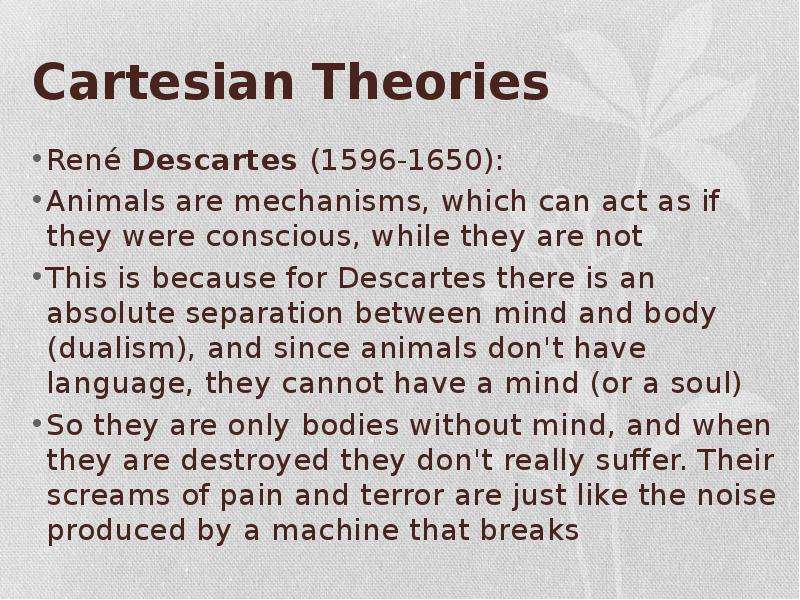
Cartesian Theories René Descartes (1596-1650): Animals are mechanisms, which can act as if they were conscious, while they are not This is because...
Описание слайда:
Cartesian Theories René Descartes (1596-1650): Animals are mechanisms, which can act as if they were conscious, while they are not This is because for Descartes there is an absolute separation between mind and body (dualism), and since animals don't have language, they cannot have a mind (or a soul) So they are only bodies without mind, and when they are destroyed they don't really suffer. Their screams of pain and terror are just like the noise produced by a machine that breaks

Слайд 9


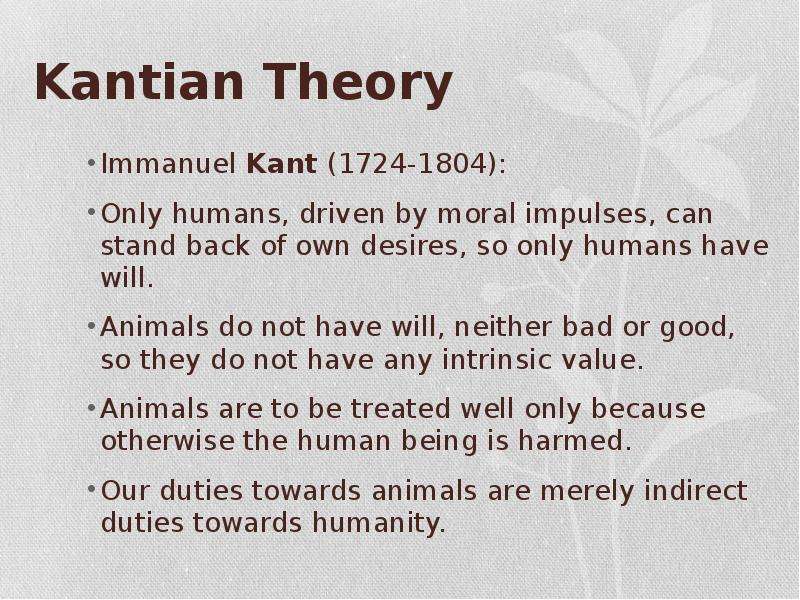
Kantian Theory Immanuel Kant (1724-1804): Only humans, driven by moral impulses, can stand back of own desires, so only humans have will. Animals do...
Описание слайда:
Kantian Theory Immanuel Kant (1724-1804): Only humans, driven by moral impulses, can stand back of own desires, so only humans have will. Animals do not have will, neither bad or good, so they do not have any intrinsic value. Animals are to be treated well only because otherwise the human being is harmed. Our duties towards animals are merely indirect duties towards humanity.

Слайд 10


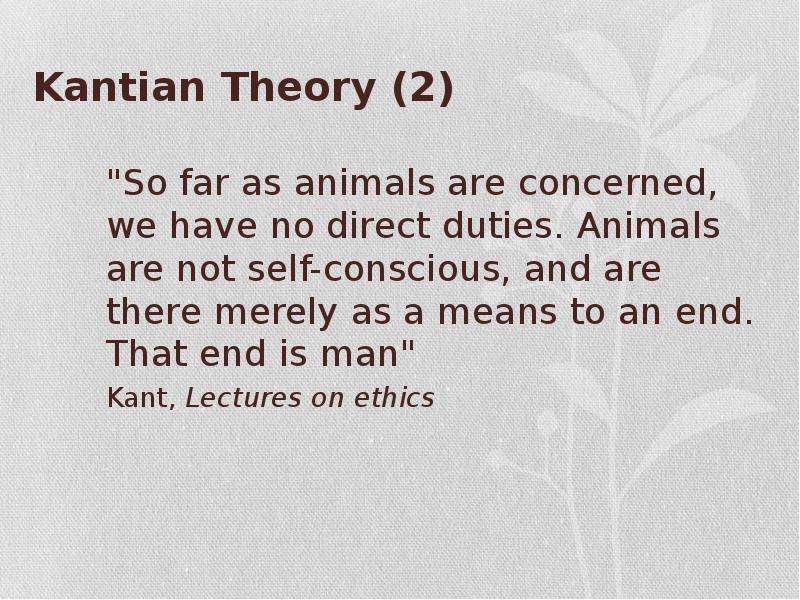
Kantian Theory (2) "So far as animals are concerned, we have no direct duties. Animals are not self-conscious, and are there merely as a means...
Описание слайда:
Kantian Theory (2) "So far as animals are concerned, we have no direct duties. Animals are not self-conscious, and are there merely as a means to an end. That end is man" Kant, Lectures on ethics

Слайд 11


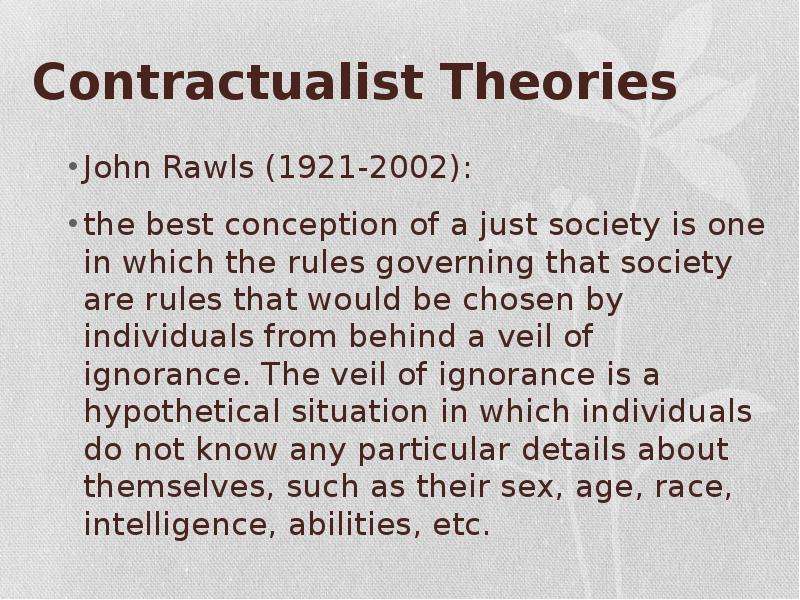
Contractualist Theories John Rawls (1921-2002): the best conception of a just society is one in which the rules governing that society are rules that...
Описание слайда:
Contractualist Theories John Rawls (1921-2002): the best conception of a just society is one in which the rules governing that society are rules that would be chosen by individuals from behind a veil of ignorance. The veil of ignorance is a hypothetical situation in which individuals do not know any particular details about themselves, such as their sex, age, race, intelligence, abilities, etc.

Слайд 12


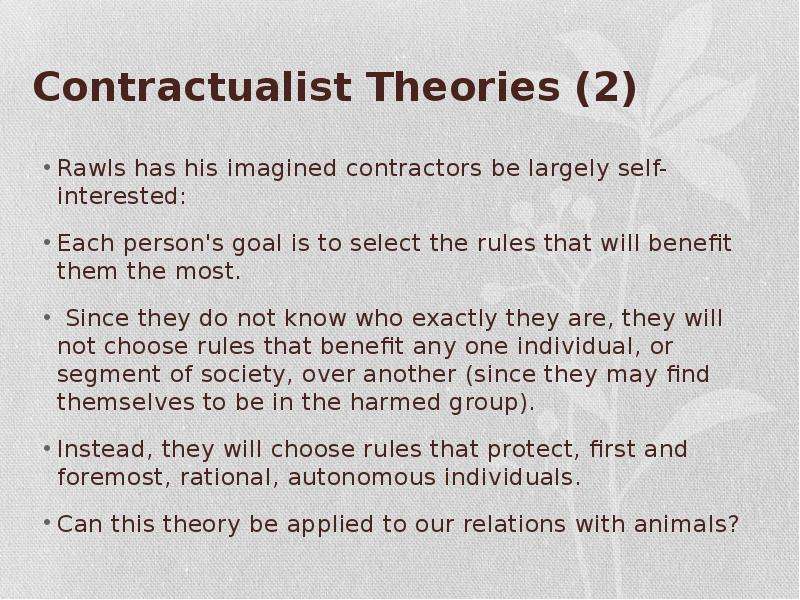
Contractualist Theories (2) Rawls has his imagined contractors be largely self-interested: Each person's goal is to select the rules that will...
Описание слайда:
Contractualist Theories (2) Rawls has his imagined contractors be largely self-interested: Each person's goal is to select the rules that will benefit them the most. Since they do not know who exactly they are, they will not choose rules that benefit any one individual, or segment of society, over another (since they may find themselves to be in the harmed group). Instead, they will choose rules that protect, first and foremost, rational, autonomous individuals. Can this theory be applied to our relations with animals?

Слайд 13


Contractualist Theories (3) Peter Carruthers has observed that the application of Rawls’ contractualist theory to animals has an important...
Описание слайда:
Contractualist Theories (3) Peter Carruthers has observed that the application of Rawls’ contractualist theory to animals has an important limitation: The contractors are self-interested, but do not know who they are: so they will accept rules that protect rational individuals. However, the contractors know enough about themselves to know that they are not animals. They will not adopt rules that give special protection to animals, therefore, since this would not further their self-interest. The result is that rational human beings will be directly protected, while animals will not.

Слайд 14


Direct but Unequal Theories Why animals have direct moral status Why animals are not equal to human beings: Only human beings have rights Only human...
Описание слайда:
Direct but Unequal Theories Why animals have direct moral status Why animals are not equal to human beings: Only human beings have rights Only human beings are rational, autonomous and self-conscious Only human beings can act morally Only human beings are part of moral community

Слайд 15


Why animals have direct moral status If a being is sentient then it has moral status (Most) animals are sentient Therefore (most) animals have direct...
Описание слайда:
Why animals have direct moral status If a being is sentient then it has moral status (Most) animals are sentient Therefore (most) animals have direct moral status

Слайд 16


Why animals are not equal to human beings Only human beings have rights Only human beings are rational, autonomous and self-conscious Only human...
Описание слайда:
Why animals are not equal to human beings Only human beings have rights Only human beings are rational, autonomous and self-conscious Only human beings can act morally Only human beings are part of moral community

Слайд 17


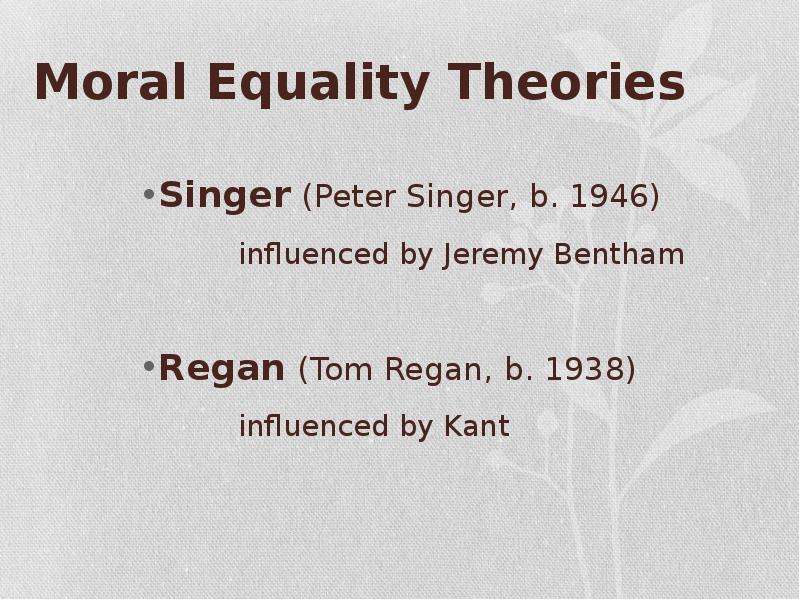
Moral Equality Theories Singer (Peter Singer, b. 1946) influenced by Jeremy Bentham Regan (Tom Regan, b. 1938) influenced by Kant
Описание слайда:
Moral Equality Theories Singer (Peter Singer, b. 1946) influenced by Jeremy Bentham Regan (Tom Regan, b. 1938) influenced by Kant

Слайд 18


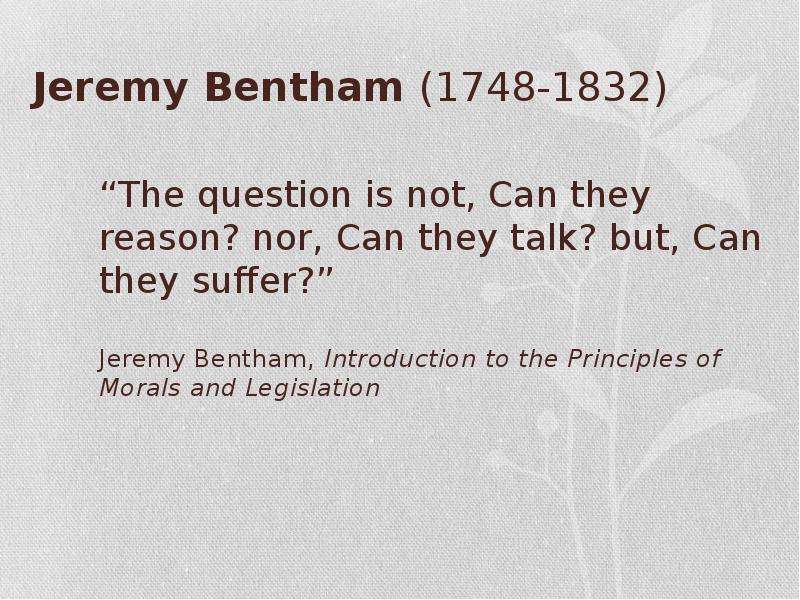
Jeremy Bentham (1748-1832) “The question is not, Can they reason? nor, Can they talk? but, Can they suffer?” Jeremy Bentham, Introduction to the...
Описание слайда:
Jeremy Bentham (1748-1832) “The question is not, Can they reason? nor, Can they talk? but, Can they suffer?” Jeremy Bentham, Introduction to the Principles of Morals and Legislation

Слайд 19


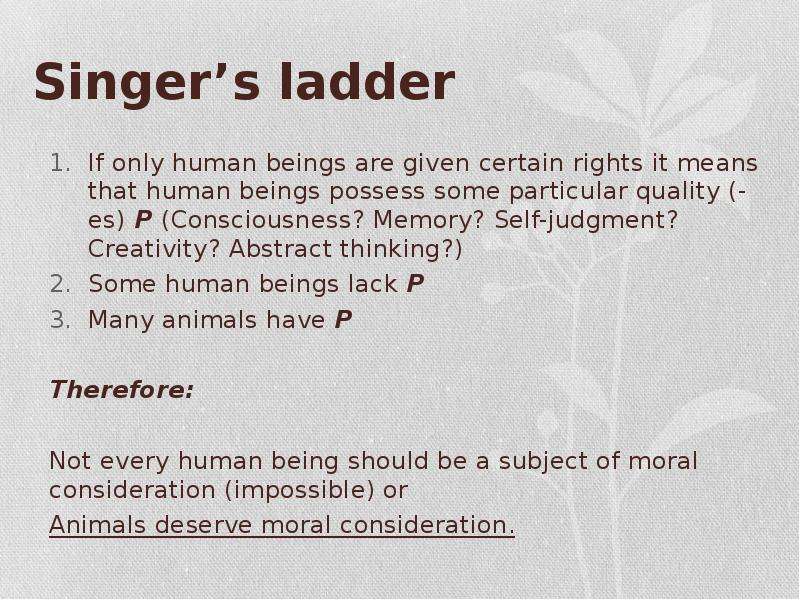
Singer’s ladder If only human beings are given certain rights it means that human beings possess some particular quality (-es) P (Consciousness?...
Описание слайда:
Singer’s ladder If only human beings are given certain rights it means that human beings possess some particular quality (-es) P (Consciousness? Memory? Self-judgment? Creativity? Abstract thinking?) Some human beings lack P Many animals have P Therefore: Not every human being should be a subject of moral consideration (impossible) or Animals deserve moral consideration.

Слайд 20


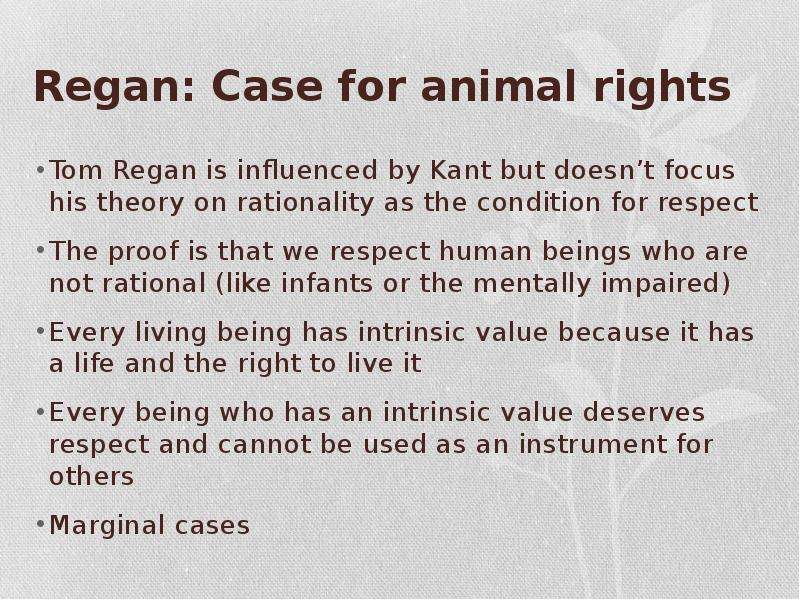
Regan: Case for animal rights Tom Regan is influenced by Kant but doesn’t focus his theory on rationality as the condition for respect The proof is...
Описание слайда:
Regan: Case for animal rights Tom Regan is influenced by Kant but doesn’t focus his theory on rationality as the condition for respect The proof is that we respect human beings who are not rational (like infants or the mentally impaired) Every living being has intrinsic value because it has a life and the right to live it Every being who has an intrinsic value deserves respect and cannot be used as an instrument for others Marginal cases

Слайд 21


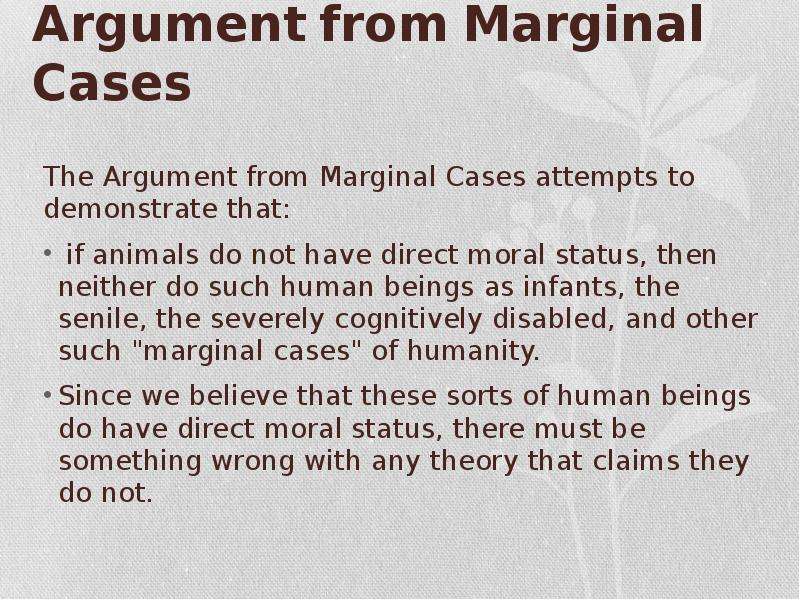
Argument from Marginal Cases The Argument from Marginal Cases attempts to demonstrate that: if animals do not have direct moral status, then neither...
Описание слайда:
Argument from Marginal Cases The Argument from Marginal Cases attempts to demonstrate that: if animals do not have direct moral status, then neither do such human beings as infants, the senile, the severely cognitively disabled, and other such "marginal cases" of humanity. Since we believe that these sorts of human beings do have direct moral status, there must be something wrong with any theory that claims they do not.


Теги Animal
Похожие презентации
Mypresentation.ru
Загрузить презентацию