🗊 Презентация Diabetic counceling

Нажмите для полного просмотра!
Diabetic counceling, слайд №1 Diabetic counceling, слайд №2 Diabetic counceling, слайд №3 Diabetic counceling, слайд №4 Diabetic counceling, слайд №5 Diabetic counceling, слайд №6 Diabetic counceling, слайд №7 Diabetic counceling, слайд №8 Diabetic counceling, слайд №9 Diabetic counceling, слайд №10 Diabetic counceling, слайд №11 Diabetic counceling, слайд №12 Diabetic counceling, слайд №13 Diabetic counceling, слайд №14 Diabetic counceling, слайд №15 Diabetic counceling, слайд №16 Diabetic counceling, слайд №17 Diabetic counceling, слайд №18 Diabetic counceling, слайд №19 Diabetic counceling, слайд №20 Diabetic counceling, слайд №21 Diabetic counceling, слайд №22 Diabetic counceling, слайд №23 Diabetic counceling, слайд №24

Вы можете ознакомиться и скачать презентацию на тему Diabetic counceling. Доклад-сообщение содержит 24 слайдов. Презентации для любого класса можно скачать бесплатно. Если материал и наш сайт презентаций Mypresentation Вам понравились – поделитесь им с друзьями с помощью социальных кнопок и добавьте в закладки в своем браузере.

Слайды и текст этой презентации


Слайд 1


Diabetic counseling
Описание слайда:
Diabetic counseling

Слайд 2


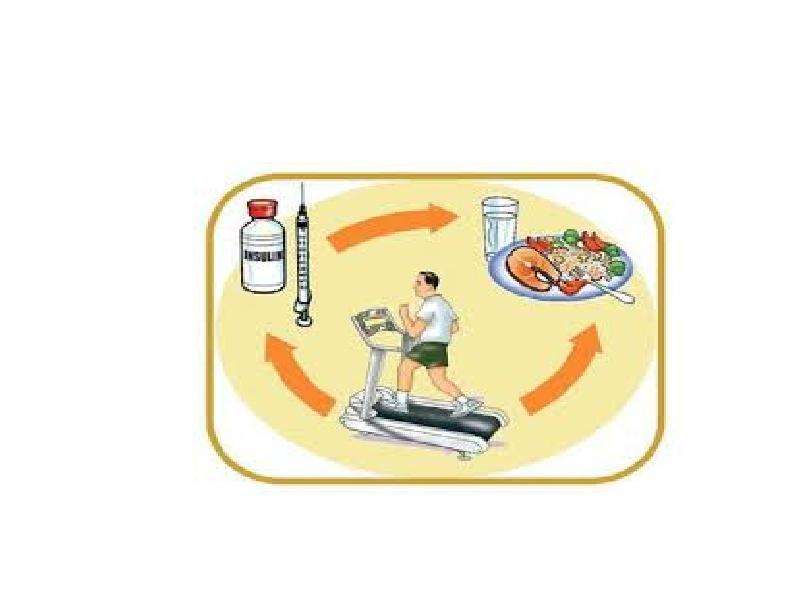
Diabetes is a chronic, life long disease and could be controlled by insulin replacement therapy for life
Описание слайда:
Diabetes is a chronic, life long disease and could be controlled by insulin replacement therapy for life

Слайд 3


Diabetic counceling, слайд №3
Описание слайда:
Слайд 4


Lines of treatment of type Insulin therapy Nutrition Exercise Pychological aspect and health education Monitoring and follow up
Описание слайда:
Lines of treatment of type Insulin therapy Nutrition Exercise Pychological aspect and health education Monitoring and follow up

Слайд 5


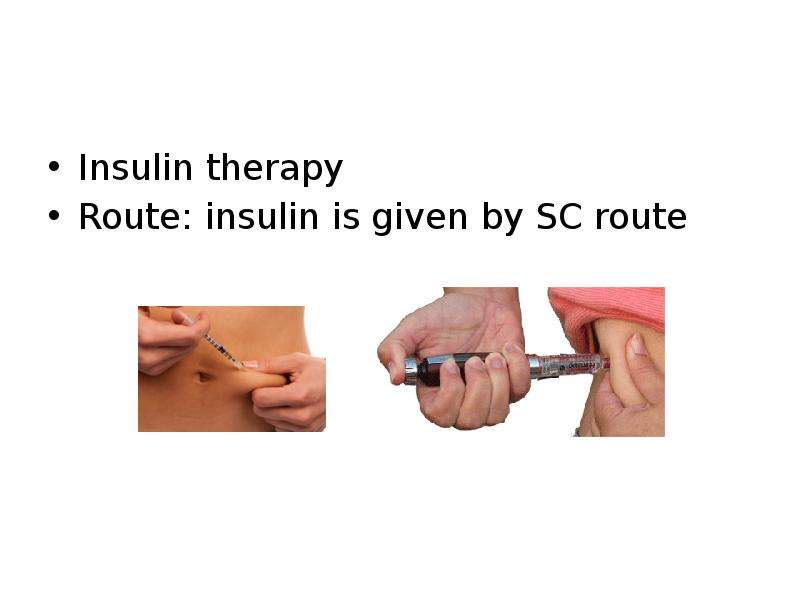
Insulin therapy Route: insulin is given by SC route
Описание слайда:
Insulin therapy Route: insulin is given by SC route

Слайд 6


Diabetic counceling, слайд №6
Описание слайда:

Слайд 7


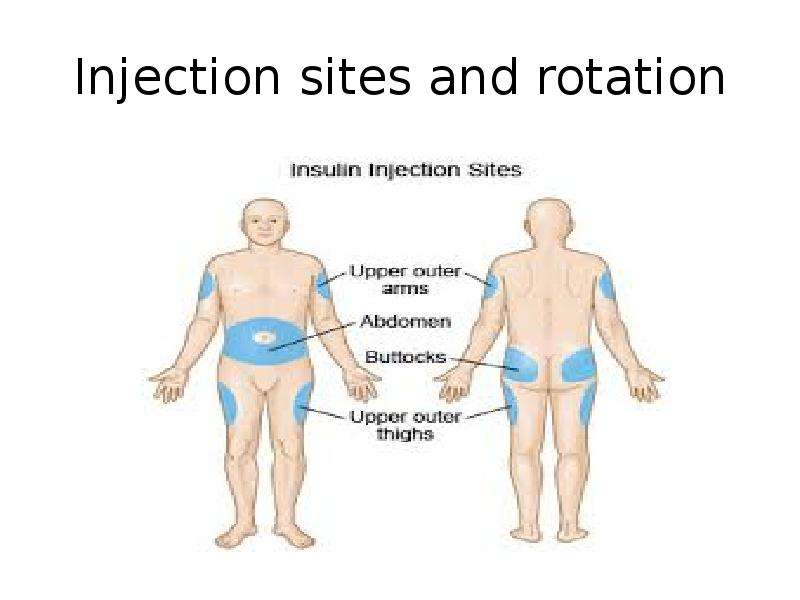
Injection sites and rotation
Описание слайда:
Injection sites and rotation

Слайд 8


Insulin storage Insulin should be stored in room temperature in winter and in refrigerator in summer
Описание слайда:
Insulin storage Insulin should be stored in room temperature in winter and in refrigerator in summer

Слайд 9


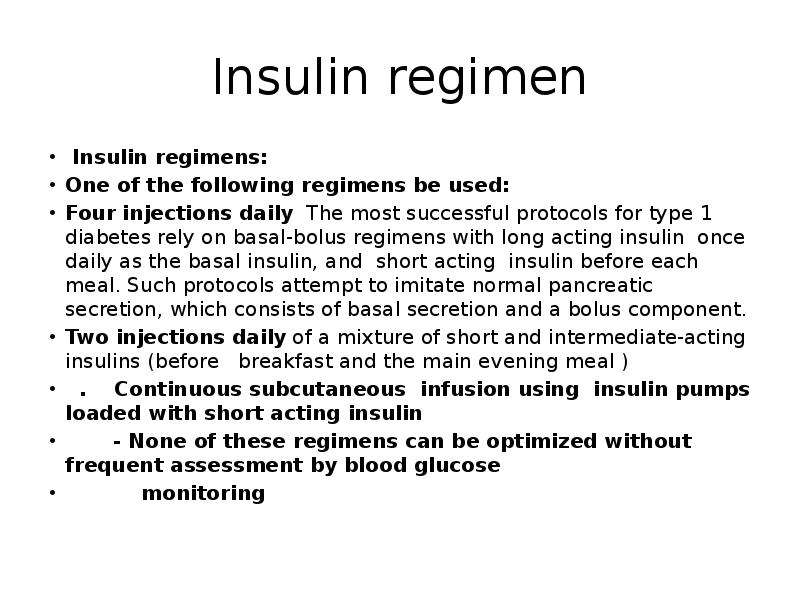
Insulin regimen Insulin regimens: One of the following regimens be used: Four injections daily The most successful protocols for type 1 diabetes rely...
Описание слайда:
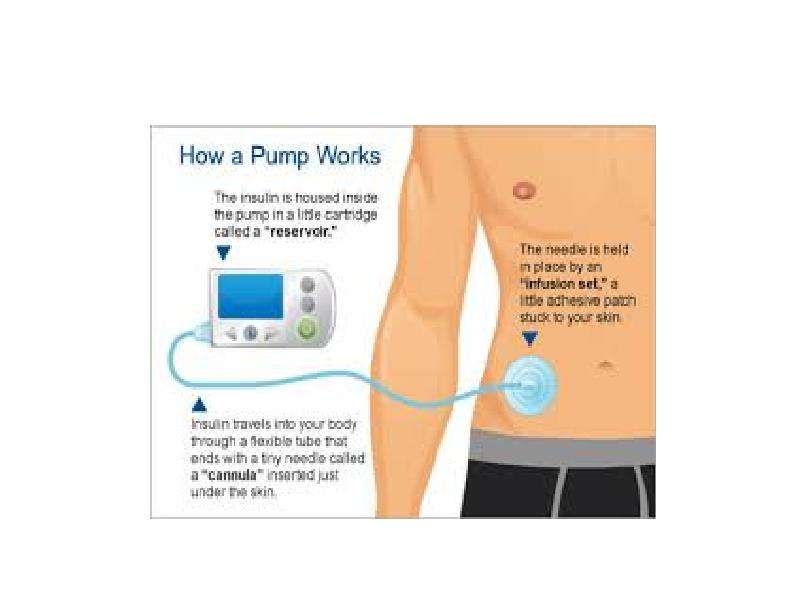
Insulin regimen Insulin regimens: One of the following regimens be used: Four injections daily The most successful protocols for type 1 diabetes rely on basal-bolus regimens with long acting insulin once daily as the basal insulin, and short acting insulin before each meal. Such protocols attempt to imitate normal pancreatic secretion, which consists of basal secretion and a bolus component. Two injections daily of a mixture of short and intermediate-acting insulins (before breakfast and the main evening meal ) . Continuous subcutaneous infusion using insulin pumps loaded with short acting insulin - None of these regimens can be optimized without frequent assessment by blood glucose monitoring

Слайд 10


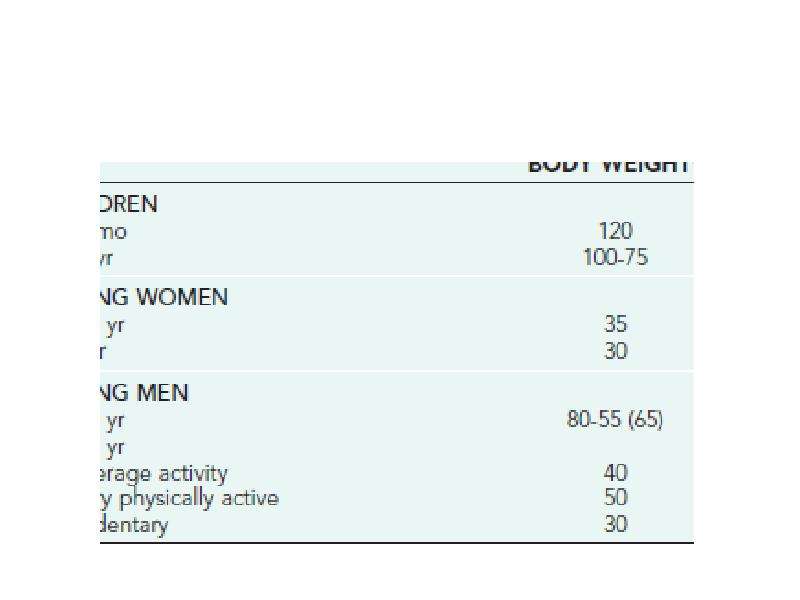
nutrition There are no special nutritional requirements for the diabetic child other than those for optimal growth and development. In outlining...
Описание слайда:
nutrition There are no special nutritional requirements for the diabetic child other than those for optimal growth and development. In outlining nutritional requirements for the child on the basis of age, sex, weight, and activity,food preferences

Слайд 11


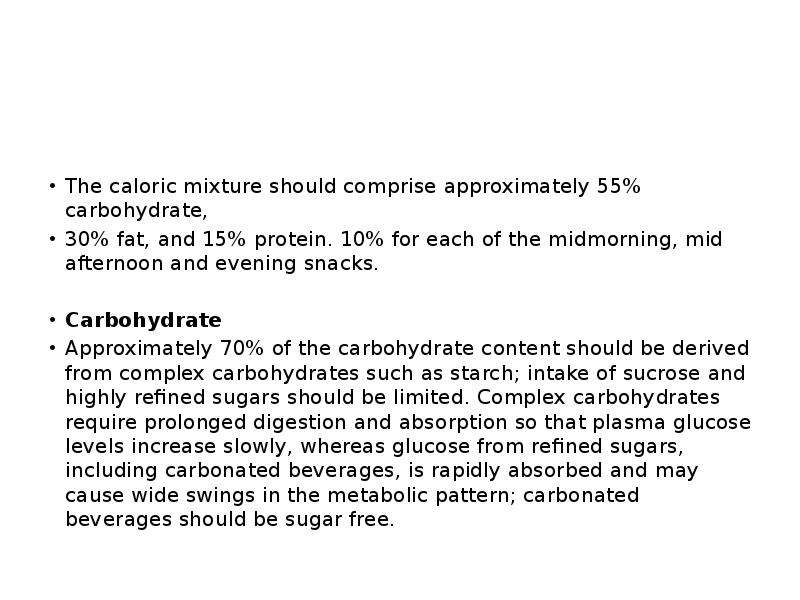
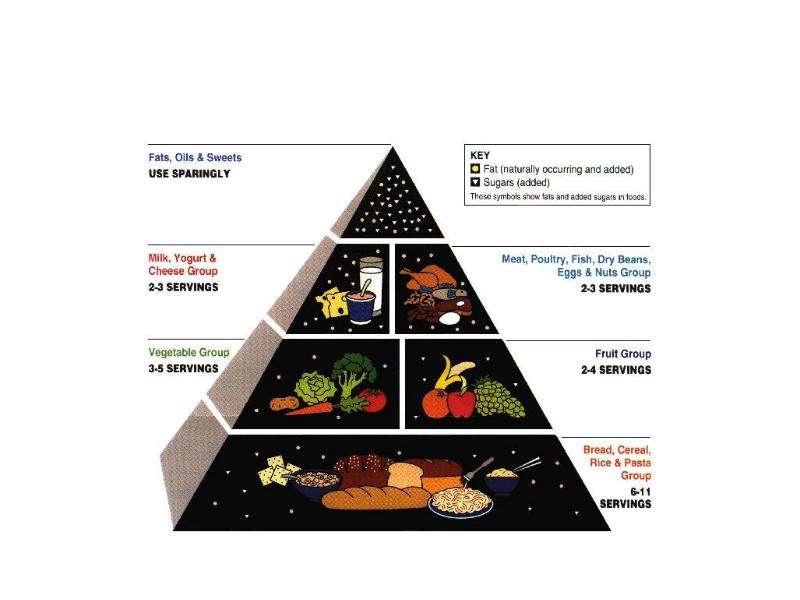
The caloric mixture should comprise approximately 55% carbohydrate, 30% fat, and 15% protein. 10% for each of the midmorning, mid afternoon and...
Описание слайда:
The caloric mixture should comprise approximately 55% carbohydrate, 30% fat, and 15% protein. 10% for each of the midmorning, mid afternoon and evening snacks. Carbohydrate Approximately 70% of the carbohydrate content should be derived from complex carbohydrates such as starch; intake of sucrose and highly refined sugars should be limited. Complex carbohydrates require prolonged digestion and absorption so that plasma glucose levels increase slowly, whereas glucose from refined sugars, including carbonated beverages, is rapidly absorbed and may cause wide swings in the metabolic pattern; carbonated beverages should be sugar free.

Слайд 12


Fiber: Diets with high fiber content are useful in improving control of blood glucose. Moderate amounts of sucrose consumed with fiber-rich foods...
Описание слайда:
Fiber: Diets with high fiber content are useful in improving control of blood glucose. Moderate amounts of sucrose consumed with fiber-rich foods such as whole-grain bread may have no more glycemic effect than their low-fiber, sugar-free equivalents.

Слайд 13


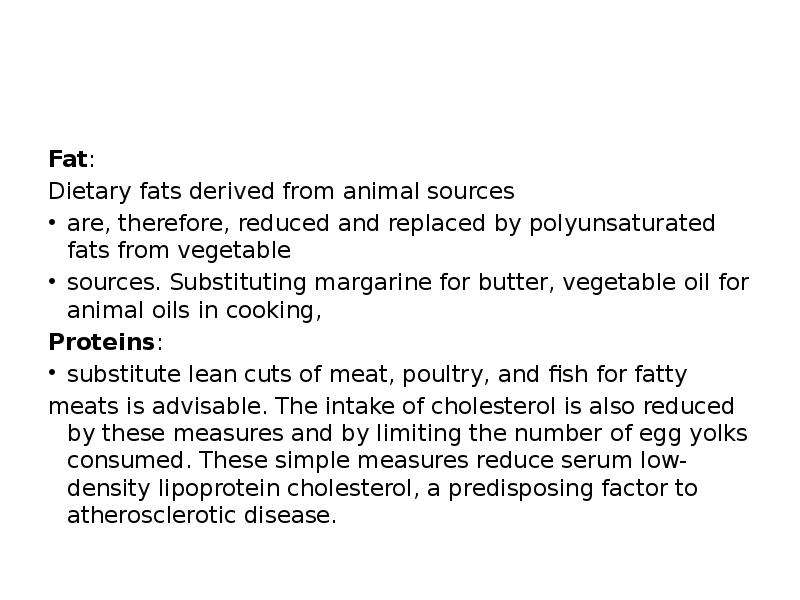
Fat: Dietary fats derived from animal sources are, therefore, reduced and replaced by polyunsaturated fats from vegetable sources. Substituting...
Описание слайда:
Fat: Dietary fats derived from animal sources are, therefore, reduced and replaced by polyunsaturated fats from vegetable sources. Substituting margarine for butter, vegetable oil for animal oils in cooking, Proteins: substitute lean cuts of meat, poultry, and fish for fatty meats is advisable. The intake of cholesterol is also reduced by these measures and by limiting the number of egg yolks consumed. These simple measures reduce serum low-density lipoprotein cholesterol, a predisposing factor to atherosclerotic disease.

Слайд 14


Diabetic counceling, слайд №14
Описание слайда:

Слайд 15


Diabetic counceling, слайд №15
Описание слайда:

Слайд 16


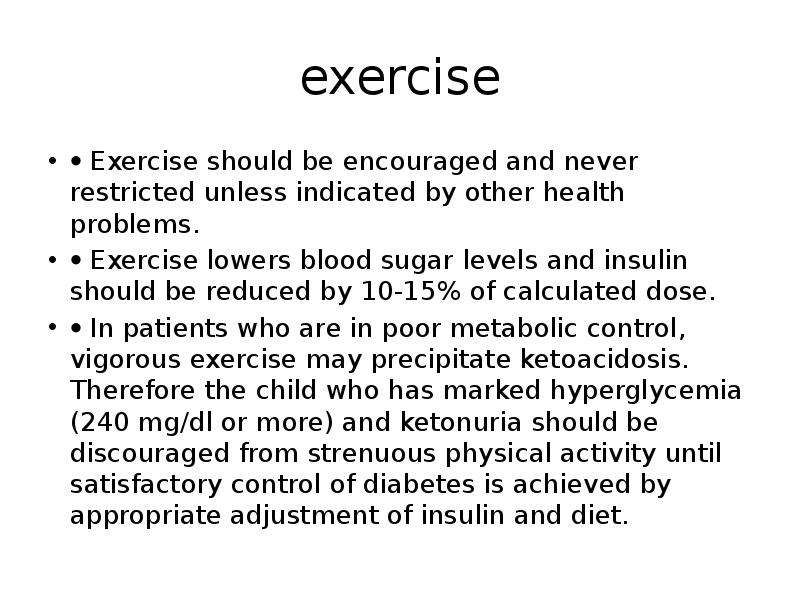
exercise  Exercise should be encouraged and never restricted unless indicated by other health problems.  Exercise lowers blood sugar levels and...
Описание слайда:
exercise  Exercise should be encouraged and never restricted unless indicated by other health problems.  Exercise lowers blood sugar levels and insulin should be reduced by 10-15% of calculated dose.  In patients who are in poor metabolic control, vigorous exercise may precipitate ketoacidosis. Therefore the child who has marked hyperglycemia (240 mg/dl or more) and ketonuria should be discouraged from strenuous physical activity until satisfactory control of diabetes is achieved by appropriate adjustment of insulin and diet.

Слайд 17


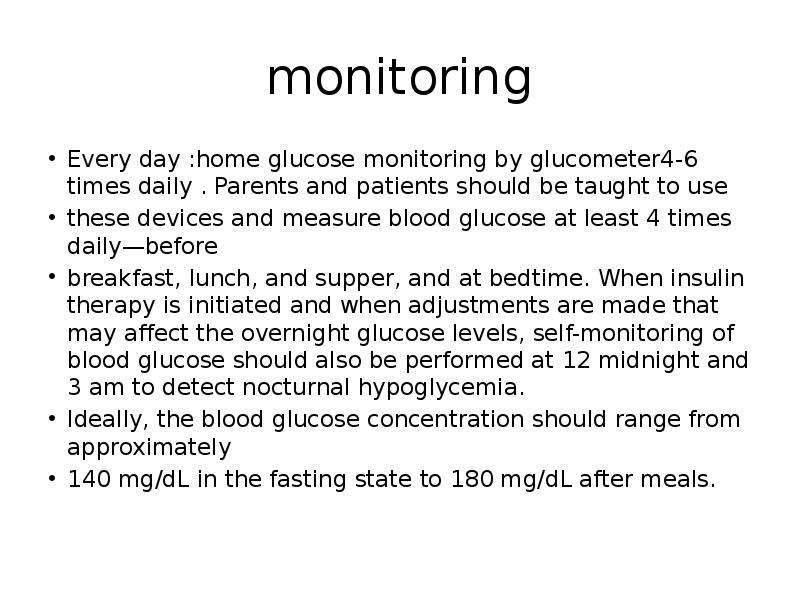
monitoring Every day :home glucose monitoring by glucometer4-6 times daily . Parents and patients should be taught to use these devices and measure...
Описание слайда:
monitoring Every day :home glucose monitoring by glucometer4-6 times daily . Parents and patients should be taught to use these devices and measure blood glucose at least 4 times daily—before breakfast, lunch, and supper, and at bedtime. When insulin therapy is initiated and when adjustments are made that may affect the overnight glucose levels, self-monitoring of blood glucose should also be performed at 12 midnight and 3 am to detect nocturnal hypoglycemia. Ideally, the blood glucose concentration should range from approximately 140 mg/dL in the fasting state to 180 mg/dL after meals.

Слайд 18


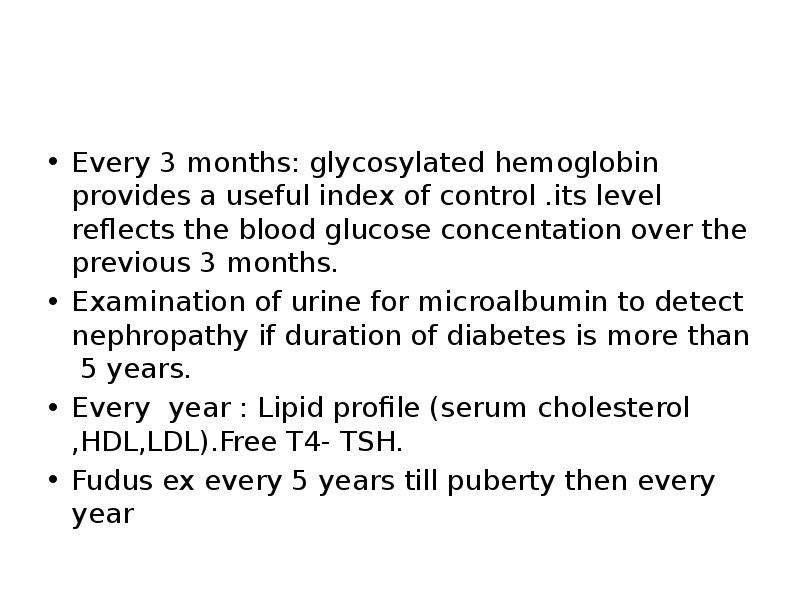
Every 3 months: glycosylated hemoglobin provides a useful index of control .its level reflects the blood glucose concentation over the previous 3...
Описание слайда:
Every 3 months: glycosylated hemoglobin provides a useful index of control .its level reflects the blood glucose concentation over the previous 3 months. Examination of urine for microalbumin to detect nephropathy if duration of diabetes is more than 5 years. Every year : Lipid profile (serum cholesterol ,HDL,LDL).Free T4- TSH. Fudus ex every 5 years till puberty then every year

Слайд 19


Pychological aspect Sharing responsibilities Camps for diabetic children Balance between love and limits
Описание слайда:
Pychological aspect Sharing responsibilities Camps for diabetic children Balance between love and limits

Слайд 20


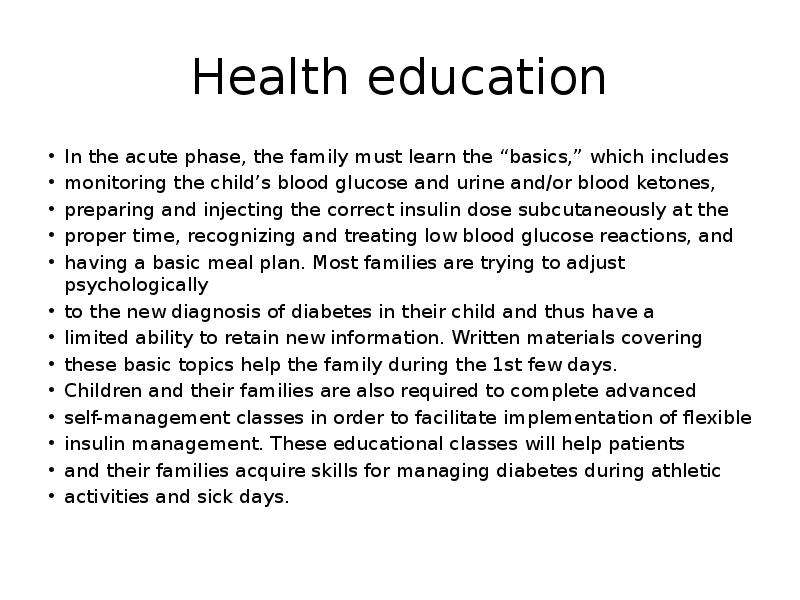
Health education In the acute phase, the family must learn the “basics,” which includes monitoring the child’s blood glucose and urine and/or blood...
Описание слайда:
Health education In the acute phase, the family must learn the “basics,” which includes monitoring the child’s blood glucose and urine and/or blood ketones, preparing and injecting the correct insulin dose subcutaneously at the proper time, recognizing and treating low blood glucose reactions, and having a basic meal plan. Most families are trying to adjust psychologically to the new diagnosis of diabetes in their child and thus have a limited ability to retain new information. Written materials covering these basic topics help the family during the 1st few days. Children and their families are also required to complete advanced self-management classes in order to facilitate implementation of flexible insulin management. These educational classes will help patients and their families acquire skills for managing diabetes during athletic activities and sick days.

Слайд 21


Hypoglycemic reactions Most children with T1DM can expect mild hypoglycemia each week, moderate hypoglycemia a few times each year, and severe...
Описание слайда:
Hypoglycemic reactions Most children with T1DM can expect mild hypoglycemia each week, moderate hypoglycemia a few times each year, and severe hypoglycemia every few years. These episodes are usually not predictable, although exercise, delayed meals or snacks, and wide swings in glucose levels increase the risk. Infants and toddlers are at higher risk for hypoglycemia because they have more variable meals and activity levels, are unable to recognize early signs of hypoglycemia, and are limited in their ability to seek a source of oral glucose to reverse the hypoglycemia. The very young have an increased risk of permanently reduced cognitive function as a long-term sequela of severe hypoglycemia. For this reason, a more relaxed degree of glucose control is necessary until the child matures

Слайд 22


Hypoglycemia can occur at any time of day or night. Early symptoms and signs (mild hypoglycemia) may occur with a sudden decrease in blood glucose to...
Описание слайда:
Hypoglycemia can occur at any time of day or night. Early symptoms and signs (mild hypoglycemia) may occur with a sudden decrease in blood glucose to levels that do not meet standard criteria for hypoglycemia in children without diabetes. The child may show pallor, sweating, apprehension or fussiness, hunger, tremor, and tachycardia, all as a result of the surge in catecholamines as the body attempts to counter the excessive insulin effect.

Слайд 23


glucose should be available at all times and places, including at school and during visits to friends. If possible, it is important to document the...
Описание слайда:
glucose should be available at all times and places, including at school and during visits to friends. If possible, it is important to document the hypoglycemia before treating, because some symptoms may not always be from hypoglycemia. Any child suspected of having a moderate to severe hypoglycemic episode should be treated before testing. It is important not to give too much glucose; 5-10 g should be given as juice or a sugar-containing carbonated beverage or candy, and the blood glucose checked 15-20 min later. Patients, parents, and teachers should also be instructed in the administration of glucagon when the child cannot take glucose orally. An injection kit should be kept at home and school. The intramuscular dose is 0.5 mg if the child weighs less than 20 kg and 1.0 mg if more than 20 kg. This produces a brief release of glucose from the liver.

Слайд 24


Minidose glucagon (10 μg/yr of age up to a maximum of 150 μg subcutaneously) is effective in treating hypoglycemia in children with blood glucose...
Описание слайда:
Minidose glucagon (10 μg/yr of age up to a maximum of 150 μg subcutaneously) is effective in treating hypoglycemia in children with blood glucose less than 60 mg/dL who fail to respond to oral glucose and remain symptomatic.


Теги Diabetic counceling
Похожие презентации
Mypresentation.ru
Загрузить презентацию