🗊 Презентация RUBELLA

Категория: Образование

Нажмите для полного просмотра!
RUBELLA, слайд №1 RUBELLA, слайд №2 RUBELLA, слайд №3 RUBELLA, слайд №4 RUBELLA, слайд №5 RUBELLA, слайд №6 RUBELLA, слайд №7 RUBELLA, слайд №8 RUBELLA, слайд №9 RUBELLA, слайд №10 RUBELLA, слайд №11 RUBELLA, слайд №12 RUBELLA, слайд №13 RUBELLA, слайд №14 RUBELLA, слайд №15 RUBELLA, слайд №16 RUBELLA, слайд №17

Вы можете ознакомиться и скачать презентацию на тему RUBELLA. Доклад-сообщение содержит 17 слайдов. Презентации для любого класса можно скачать бесплатно. Если материал и наш сайт презентаций Mypresentation Вам понравились – поделитесь им с друзьями с помощью социальных кнопок и добавьте в закладки в своем браузере.

Слайды и текст этой презентации


Слайд 1


RUBELLA
Описание слайда:

RUBELLA

Слайд 2


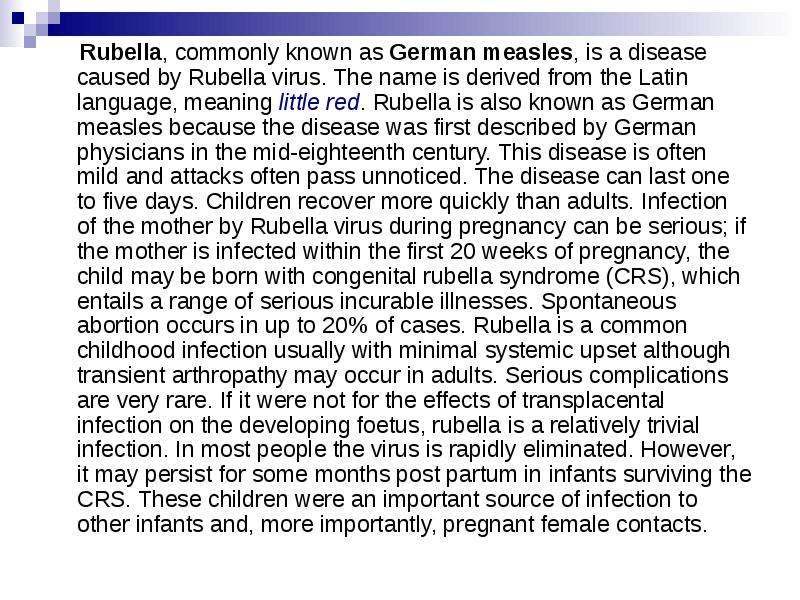
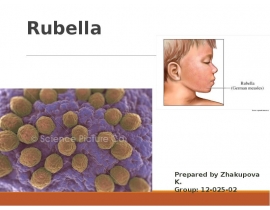
Rubella, commonly known as German measles, is a disease caused by Rubella virus. The name is derived from the Latin language, meaning little red....
Описание слайда:
Rubella, commonly known as German measles, is a disease caused by Rubella virus. The name is derived from the Latin language, meaning little red. Rubella is also known as German measles because the disease was first described by German physicians in the mid-eighteenth century. This disease is often mild and attacks often pass unnoticed. The disease can last one to five days. Children recover more quickly than adults. Infection of the mother by Rubella virus during pregnancy can be serious; if the mother is infected within the first 20 weeks of pregnancy, the child may be born with congenital rubella syndrome (CRS), which entails a range of serious incurable illnesses. Spontaneous abortion occurs in up to 20% of cases. Rubella is a common childhood infection usually with minimal systemic upset although transient arthropathy may occur in adults. Serious complications are very rare. If it were not for the effects of transplacental infection on the developing foetus, rubella is a relatively trivial infection. In most people the virus is rapidly eliminated. However, it may persist for some months post partum in infants surviving the CRS. These children were an important source of infection to other infants and, more importantly, pregnant female contacts. Rubella, commonly known as German measles, is a disease caused by Rubella virus. The name is derived from the Latin language, meaning little red. Rubella is also known as German measles because the disease was first described by German physicians in the mid-eighteenth century. This disease is often mild and attacks often pass unnoticed. The disease can last one to five days. Children recover more quickly than adults. Infection of the mother by Rubella virus during pregnancy can be serious; if the mother is infected within the first 20 weeks of pregnancy, the child may be born with congenital rubella syndrome (CRS), which entails a range of serious incurable illnesses. Spontaneous abortion occurs in up to 20% of cases. Rubella is a common childhood infection usually with minimal systemic upset although transient arthropathy may occur in adults. Serious complications are very rare. If it were not for the effects of transplacental infection on the developing foetus, rubella is a relatively trivial infection. In most people the virus is rapidly eliminated. However, it may persist for some months post partum in infants surviving the CRS. These children were an important source of infection to other infants and, more importantly, pregnant female contacts.

Слайд 3


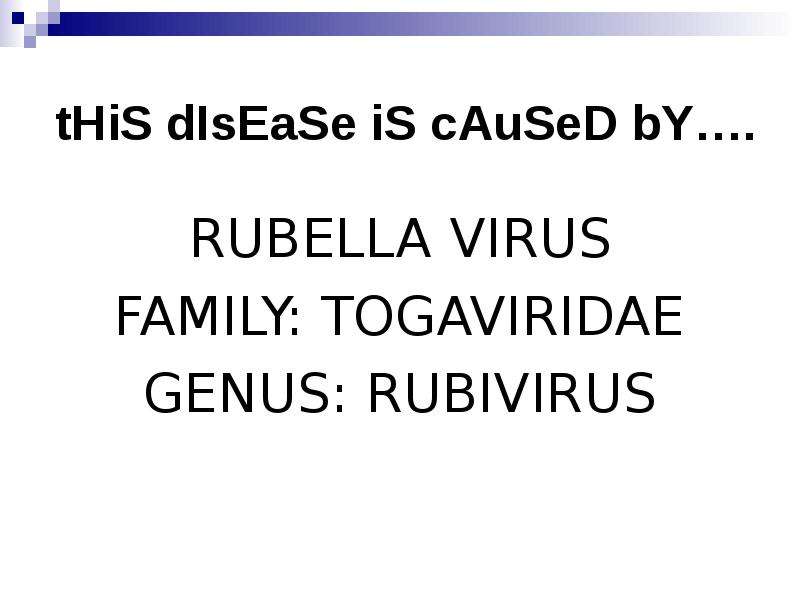
tHiS dIsEaSe iS cAuSeD bY…. RUBELLA VIRUS FAMILY: TOGAVIRIDAE GENUS: RUBIVIRUS
Описание слайда:

tHiS dIsEaSe iS cAuSeD bY…. RUBELLA VIRUS FAMILY: TOGAVIRIDAE GENUS: RUBIVIRUS

Слайд 4


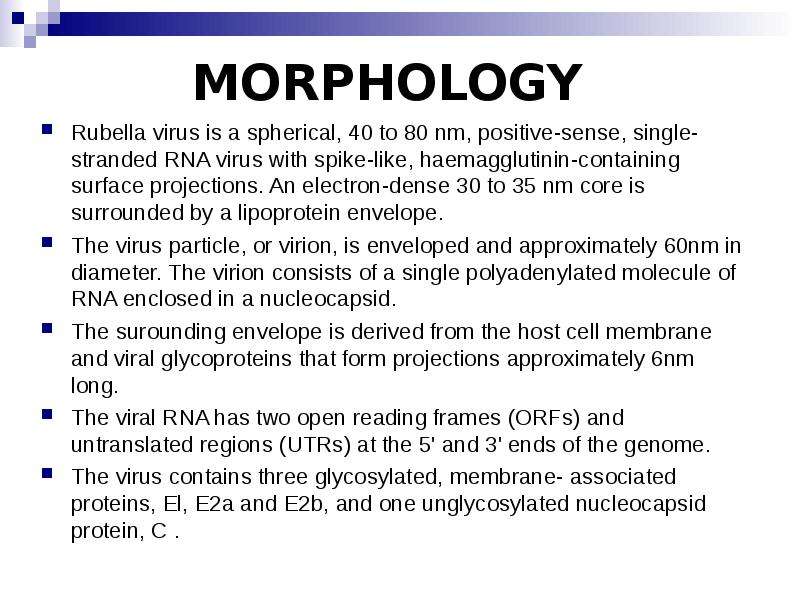
MORPHOLOGY Rubella virus is a spherical, 40 to 80 nm, positive-sense, single-stranded RNA virus with spike-like, haemagglutinin-containing surface...
Описание слайда:
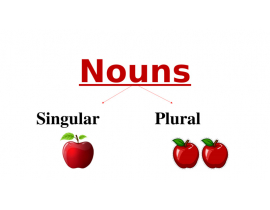
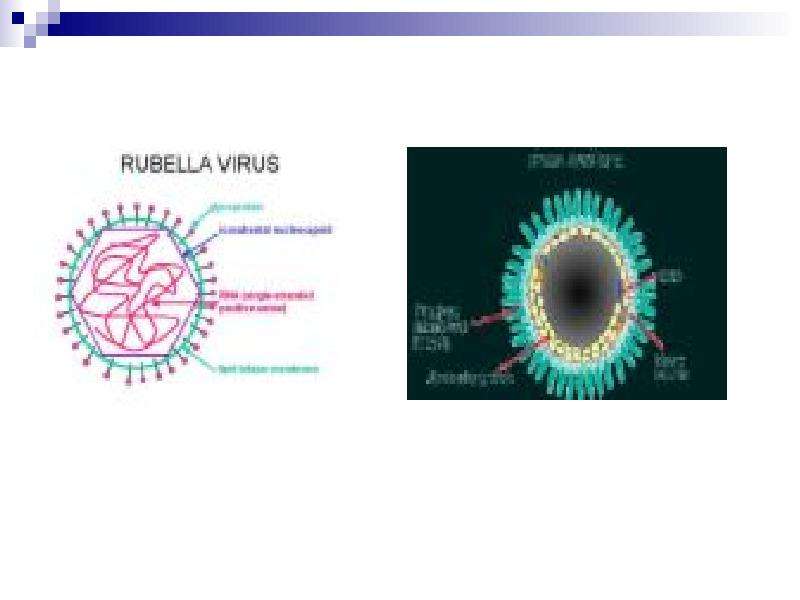
MORPHOLOGY Rubella virus is a spherical, 40 to 80 nm, positive-sense, single-stranded RNA virus with spike-like, haemagglutinin-containing surface projections. An electron-dense 30 to 35 nm core is surrounded by a lipoprotein envelope. The virus particle, or virion, is enveloped and approximately 60nm in diameter. The virion consists of a single polyadenylated molecule of RNA enclosed in a nucleocapsid. The surounding envelope is derived from the host cell membrane and viral glycoproteins that form projections approximately 6nm long. The viral RNA has two open reading frames (ORFs) and untranslated regions (UTRs) at the 5' and 3' ends of the genome. The virus contains three glycosylated, membrane- associated proteins, El, E2a and E2b, and one unglycosylated nucleocapsid protein, C .

Слайд 5


RUBELLA, слайд №5
Описание слайда:

Слайд 6


REPLICATION Rubella virus replicates in the cytoplasm of host cells. The viral genomic RNA serves as a template for the synthesis of negative sense...
Описание слайда:
REPLICATION Rubella virus replicates in the cytoplasm of host cells. The viral genomic RNA serves as a template for the synthesis of negative sense RNAs which are used to produce cytoplasmic messenger RNA (mRNA). The mRNAs direct the production of viral proteins and are also packaged as genomic RNA in virions. The steps are similar to other togoviruses but with the expection that nucleocapsids do not accumulate in the cytoplasm, Continuous carrier cultures are not uncommon and frequently show many chromosomal breaks and abnormalities,

Слайд 7


EPIDEMIOLOGY Rubella is a disease that occurs worldwide. The virus tends to peak during the spring in countries with temperate climates. Before the...
Описание слайда:
EPIDEMIOLOGY Rubella is a disease that occurs worldwide. The virus tends to peak during the spring in countries with temperate climates. Before the vaccine to rubella was introduced in 1969, widespread outbreaks usually occurred every 6-9 years in the United States and 3-5 years in Europe, mostly affecting children in the 5-9 year old age group. Since the introduction of vaccine, occurrences have become rare in those countries with high uptake rates. However, in the UK there remains a large population of men susceptible to rubella who have not been vaccinated. Outbreaks of rubella occurred amongst many young men in the UK in 1993 and in 1996 the infection was transmitted to pregnant women, many of whom were immigrants and were susceptible. Outbreaks still arise, usually in developing countries where the vaccine is not as accessible. During the epidemic in the US between 1962-1965, Rubella virus infections during pregnancy were estimated to have caused 30,000 still births and 20,000 children to be born impaired or disabled as a result of CRS. Universal immunisation producing a high level of herd immunity is important in the control of epidemics of rubella.

Слайд 8


RUBELLA, слайд №8
Описание слайда:

Слайд 9


PATHOGENESIS & CLINICAL SYNDROMES Rubella is highly contagious disease spread by nasal secretions. Because infection often is inapparent, viral...
Описание слайда:
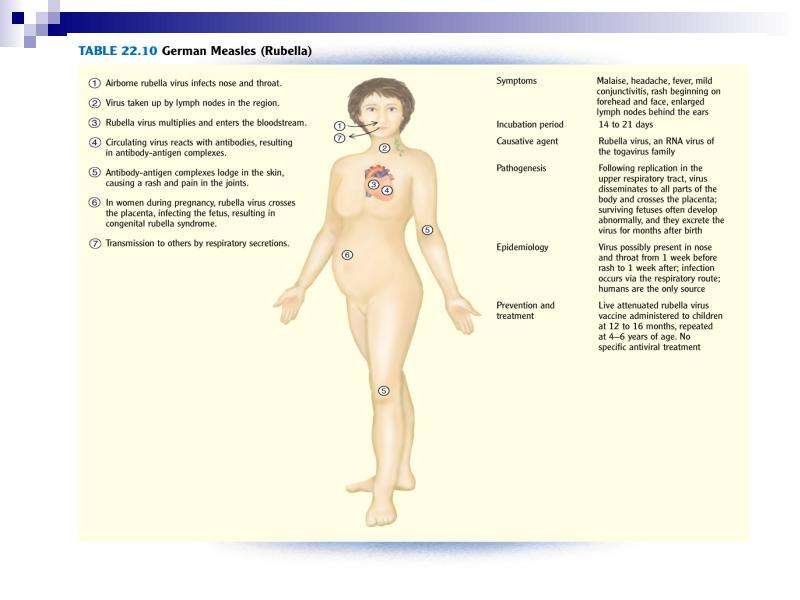
PATHOGENESIS & CLINICAL SYNDROMES Rubella is highly contagious disease spread by nasal secretions. Because infection often is inapparent, viral dissemination maybe widespread before it is recognized. Rubella virus infects the upper respiratory tract & then spread to local lymph nodes, which coincides with a period of lymphadenopathy. This is followed by establishment of viremia, which spreads the virus throughout the body. Infection of other tissues and the characteristic mild rash result. The prodromal period lasts approximately 2 weeks. The person can shed virus in respiratory droplet during the prodromall period and for as long as 2 weeks after the onset of the rash.

Слайд 10


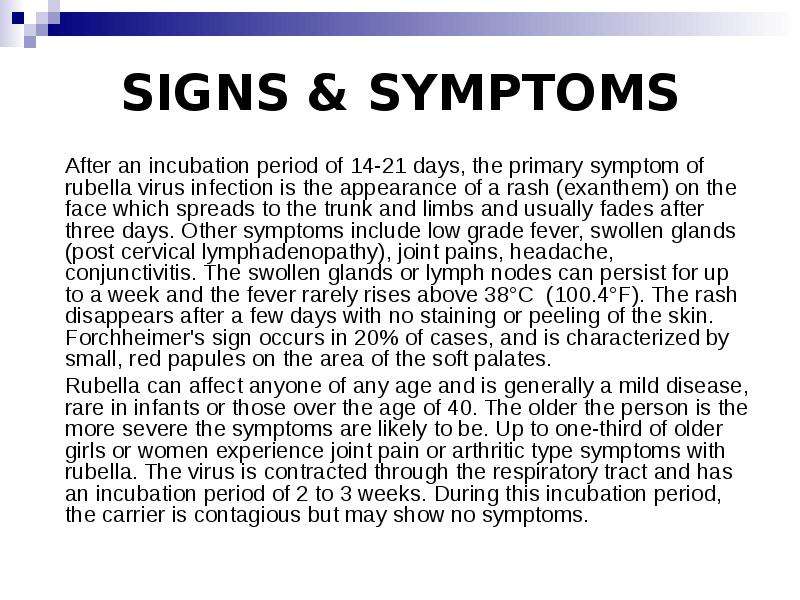
SIGNS & SYMPTOMS After an incubation period of 14-21 days, the primary symptom of rubella virus infection is the appearance of a rash (exanthem) on...
Описание слайда:
SIGNS & SYMPTOMS After an incubation period of 14-21 days, the primary symptom of rubella virus infection is the appearance of a rash (exanthem) on the face which spreads to the trunk and limbs and usually fades after three days. Other symptoms include low grade fever, swollen glands (post cervical lymphadenopathy), joint pains, headache, conjunctivitis. The swollen glands or lymph nodes can persist for up to a week and the fever rarely rises above 38°C (100.4°F). The rash disappears after a few days with no staining or peeling of the skin. Forchheimer's sign occurs in 20% of cases, and is characterized by small, red papules on the area of the soft palates. Rubella can affect anyone of any age and is generally a mild disease, rare in infants or those over the age of 40. The older the person is the more severe the symptoms are likely to be. Up to one-third of older girls or women experience joint pain or arthritic type symptoms with rubella. The virus is contracted through the respiratory tract and has an incubation period of 2 to 3 weeks. During this incubation period, the carrier is contagious but may show no symptoms.

Слайд 11


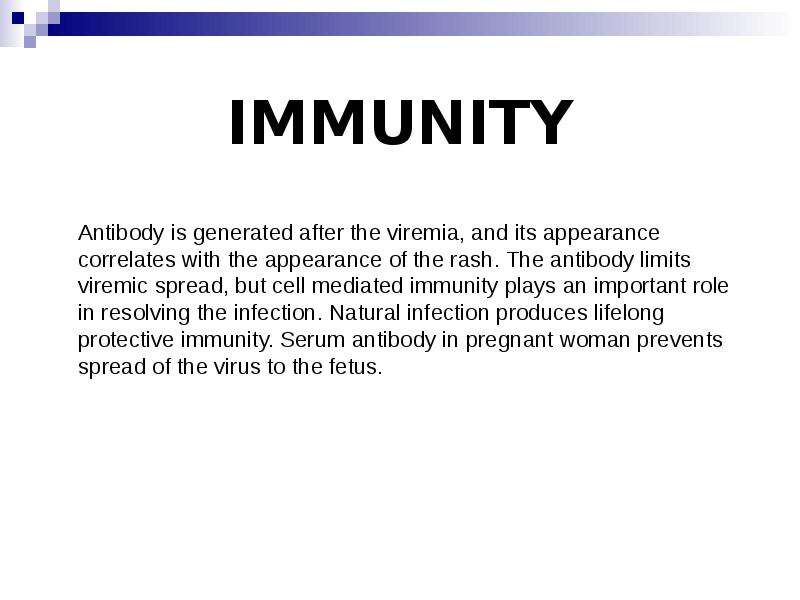
IMMUNITY Antibody is generated after the viremia, and its appearance correlates with the appearance of the rash. The antibody limits viremic spread,...
Описание слайда:
IMMUNITY Antibody is generated after the viremia, and its appearance correlates with the appearance of the rash. The antibody limits viremic spread, but cell mediated immunity plays an important role in resolving the infection. Natural infection produces lifelong protective immunity. Serum antibody in pregnant woman prevents spread of the virus to the fetus.

Слайд 12


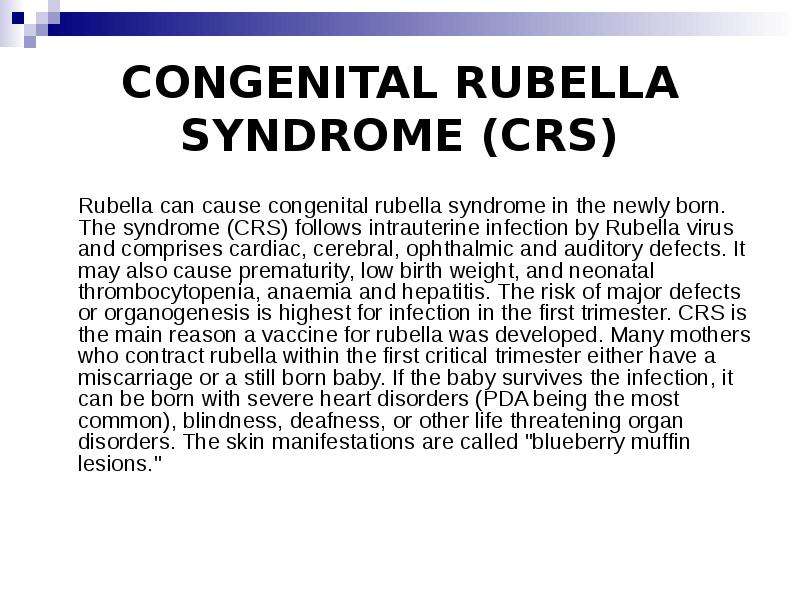
CONGENITAL RUBELLA SYNDROME (CRS) Rubella can cause congenital rubella syndrome in the newly born. The syndrome (CRS) follows intrauterine infection...
Описание слайда:
CONGENITAL RUBELLA SYNDROME (CRS) Rubella can cause congenital rubella syndrome in the newly born. The syndrome (CRS) follows intrauterine infection by Rubella virus and comprises cardiac, cerebral, ophthalmic and auditory defects. It may also cause prematurity, low birth weight, and neonatal thrombocytopenia, anaemia and hepatitis. The risk of major defects or organogenesis is highest for infection in the first trimester. CRS is the main reason a vaccine for rubella was developed. Many mothers who contract rubella within the first critical trimester either have a miscarriage or a still born baby. If the baby survives the infection, it can be born with severe heart disorders (PDA being the most common), blindness, deafness, or other life threatening organ disorders. The skin manifestations are called "blueberry muffin lesions."

Слайд 13


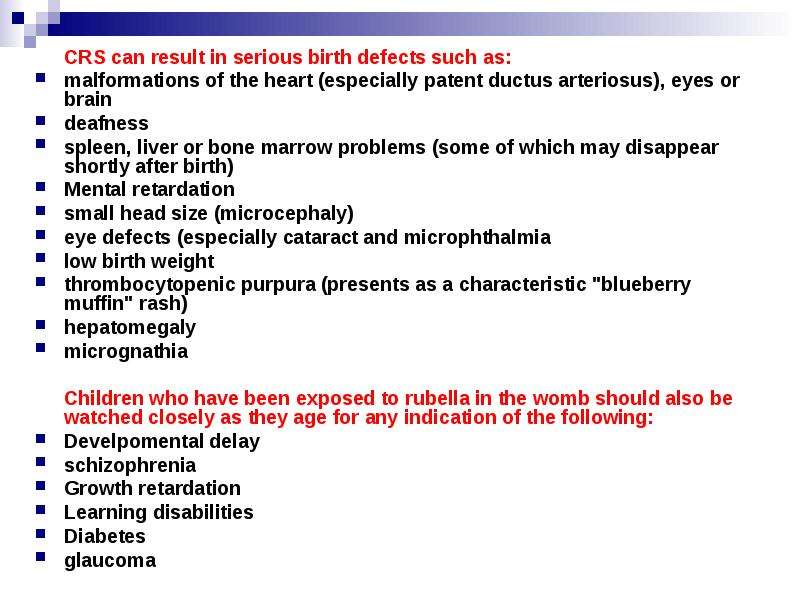
CRS can result in serious birth defects such as: CRS can result in serious birth defects such as: malformations of the heart (especially patent...
Описание слайда:
CRS can result in serious birth defects such as: CRS can result in serious birth defects such as: malformations of the heart (especially patent ductus arteriosus), eyes or brain deafness spleen, liver or bone marrow problems (some of which may disappear shortly after birth) Mental retardation small head size (microcephaly) eye defects (especially cataract and microphthalmia low birth weight thrombocytopenic purpura (presents as a characteristic "blueberry muffin" rash) hepatomegaly micrognathia Children who have been exposed to rubella in the womb should also be watched closely as they age for any indication of the following: Develpomental delay schizophrenia Growth retardation Learning disabilities Diabetes glaucoma

Слайд 14


LABORATORY DIAGNOSIS Serological method – used for detection of anti-rubella-specific IgM. A fourfold increase on specific IgG antibody titer between...
Описание слайда:
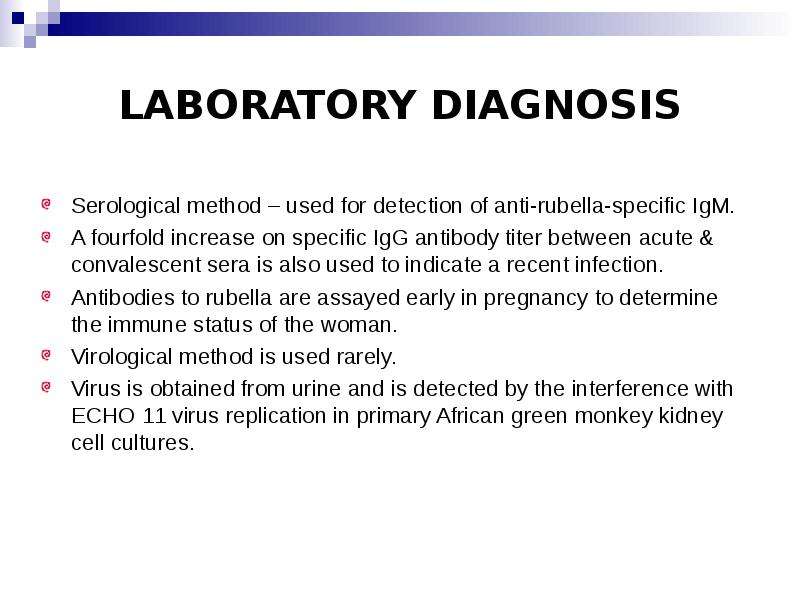
LABORATORY DIAGNOSIS Serological method – used for detection of anti-rubella-specific IgM. A fourfold increase on specific IgG antibody titer between acute & convalescent sera is also used to indicate a recent infection. Antibodies to rubella are assayed early in pregnancy to determine the immune status of the woman. Virological method is used rarely. Virus is obtained from urine and is detected by the interference with ECHO 11 virus replication in primary African green monkey kidney cell cultures.

Слайд 15


PREVENTION Rubella infections are prevented by active immunisation programs using live, disabled virus vaccines. Two live attenuated virus vaccines,...
Описание слайда:
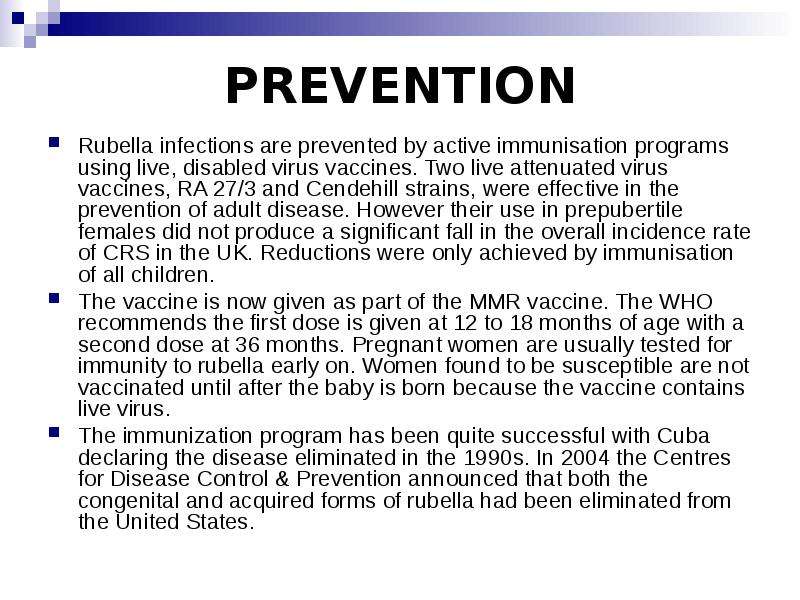
PREVENTION Rubella infections are prevented by active immunisation programs using live, disabled virus vaccines. Two live attenuated virus vaccines, RA 27/3 and Cendehill strains, were effective in the prevention of adult disease. However their use in prepubertile females did not produce a significant fall in the overall incidence rate of CRS in the UK. Reductions were only achieved by immunisation of all children. The vaccine is now given as part of the MMR vaccine. The WHO recommends the first dose is given at 12 to 18 months of age with a second dose at 36 months. Pregnant women are usually tested for immunity to rubella early on. Women found to be susceptible are not vaccinated until after the baby is born because the vaccine contains live virus. The immunization program has been quite successful with Cuba declaring the disease eliminated in the 1990s. In 2004 the Centres for Disease Control & Prevention announced that both the congenital and acquired forms of rubella had been eliminated from the United States.

Слайд 16


TREATMENT & PROPHYLAXIS Symptoms are usually treated with paracetamol until the disease has run its course. Treatment of newly born babies is focused...
Описание слайда:
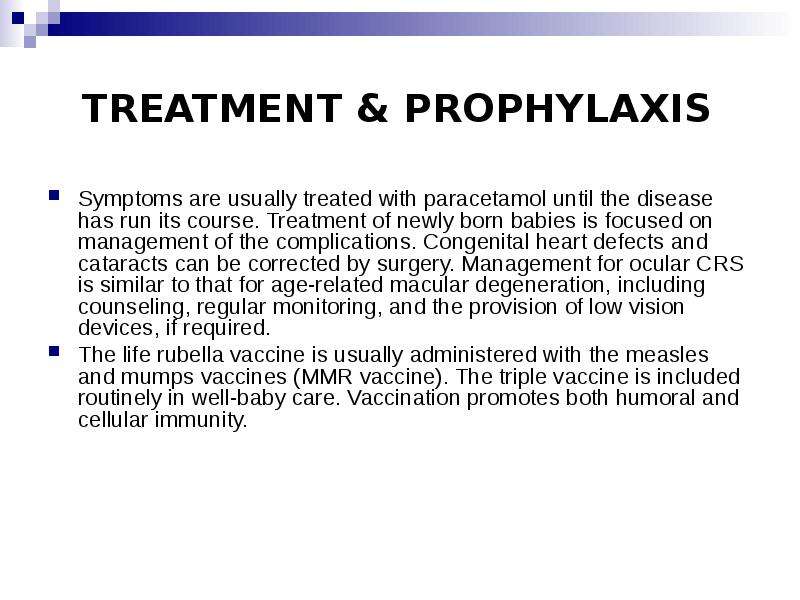
TREATMENT & PROPHYLAXIS Symptoms are usually treated with paracetamol until the disease has run its course. Treatment of newly born babies is focused on management of the complications. Congenital heart defects and cataracts can be corrected by surgery. Management for ocular CRS is similar to that for age-related macular degeneration, including counseling, regular monitoring, and the provision of low vision devices, if required. The life rubella vaccine is usually administered with the measles and mumps vaccines (MMR vaccine). The triple vaccine is included routinely in well-baby care. Vaccination promotes both humoral and cellular immunity.

Слайд 17


RUBELLA, слайд №17
Описание слайда:


Теги RUBELLA
Похожие презентации
Mypresentation.ru
Загрузить презентацию