🗊 Презентация Diurnal temperature variation in the boundary layer

Категория: Образование

Нажмите для полного просмотра!
Diurnal temperature variation in the boundary layer, слайд №1 Diurnal temperature variation in the boundary layer, слайд №2 Diurnal temperature variation in the boundary layer, слайд №3 Diurnal temperature variation in the boundary layer, слайд №4 Diurnal temperature variation in the boundary layer, слайд №5 Diurnal temperature variation in the boundary layer, слайд №6 Diurnal temperature variation in the boundary layer, слайд №7 Diurnal temperature variation in the boundary layer, слайд №8 Diurnal temperature variation in the boundary layer, слайд №9 Diurnal temperature variation in the boundary layer, слайд №10 Diurnal temperature variation in the boundary layer, слайд №11 Diurnal temperature variation in the boundary layer, слайд №12 Diurnal temperature variation in the boundary layer, слайд №13 Diurnal temperature variation in the boundary layer, слайд №14

Вы можете ознакомиться и скачать презентацию на тему Diurnal temperature variation in the boundary layer. Доклад-сообщение содержит 14 слайдов. Презентации для любого класса можно скачать бесплатно. Если материал и наш сайт презентаций Mypresentation Вам понравились – поделитесь им с друзьями с помощью социальных кнопок и добавьте в закладки в своем браузере.

Слайды и текст этой презентации


Слайд 1


Diurnal temperature variation in the boundary layer The diurnal temperature variation is defined by the variation of the heat influx to the earth’s...
Описание слайда:

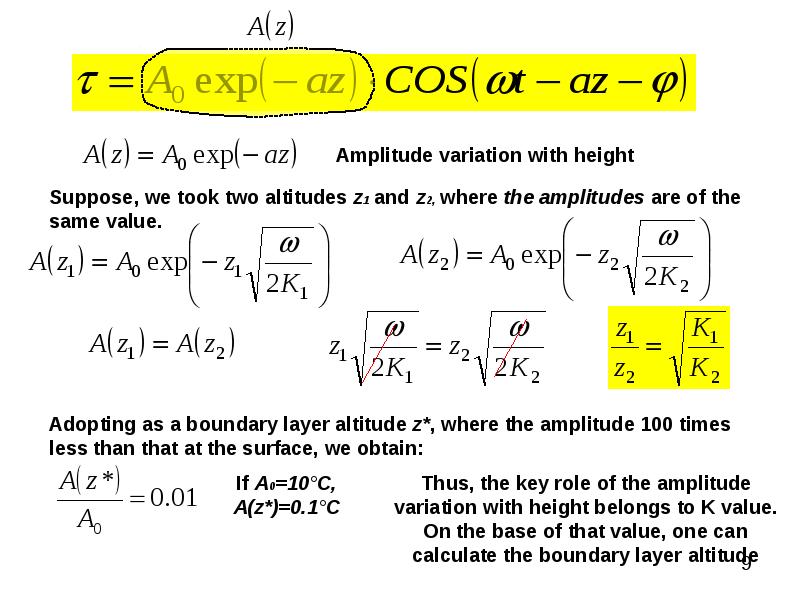
Diurnal temperature variation in the boundary layer The diurnal temperature variation is defined by the variation of the heat influx to the earth’s surface during 24 hour period. During daytime the earth’s surface is getting heat due to solar radiation influx, and its temperature grows up. During night hours it looses energy due to effective radiation and its temperature grows down. Recall, that the atmosphere does not directly absorb the solar radiation. The air’s own radiation at night hasn’t significant impact on the air temperature. Therefore, the main reason for temperature variation is the eddy exchange with the underlying surface. This process is responsible for the diurnal temperature variation within whole boundary layer up to 1 - 1,5 km altitude.

Слайд 2


Definition of the boundary layer
Описание слайда:

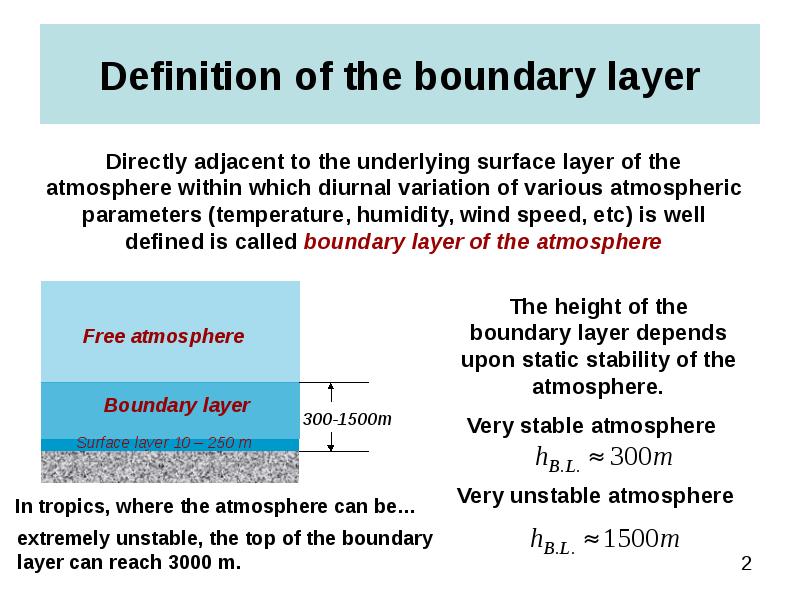
Definition of the boundary layer

Слайд 3


Mechanism of the heat spreading up
Описание слайда:

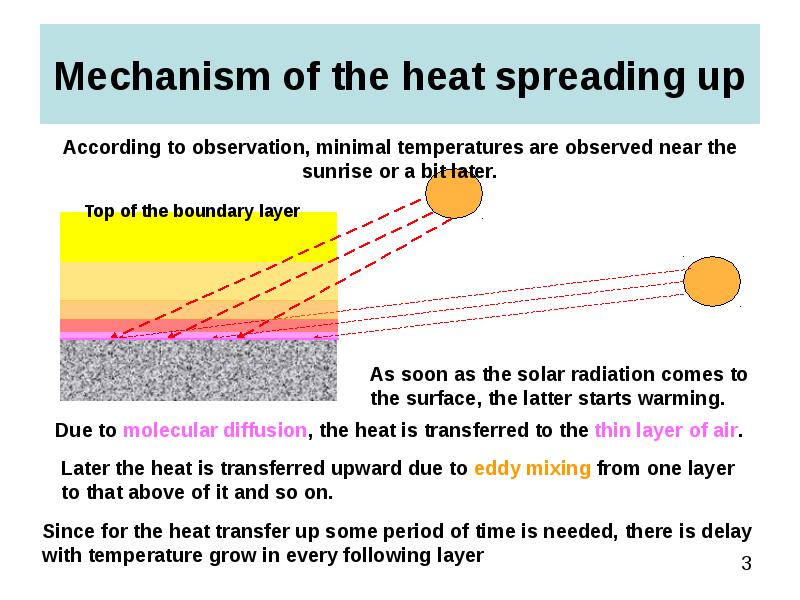
Mechanism of the heat spreading up

Слайд 4


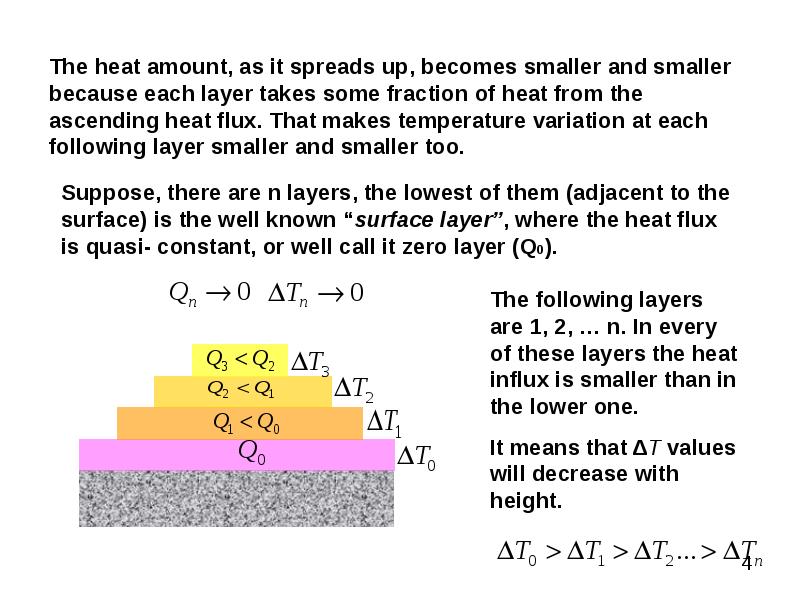
Diurnal temperature variation in the boundary layer, слайд №4
Описание слайда:

Слайд 5


An example of the diurnal temperature variation
Описание слайда:
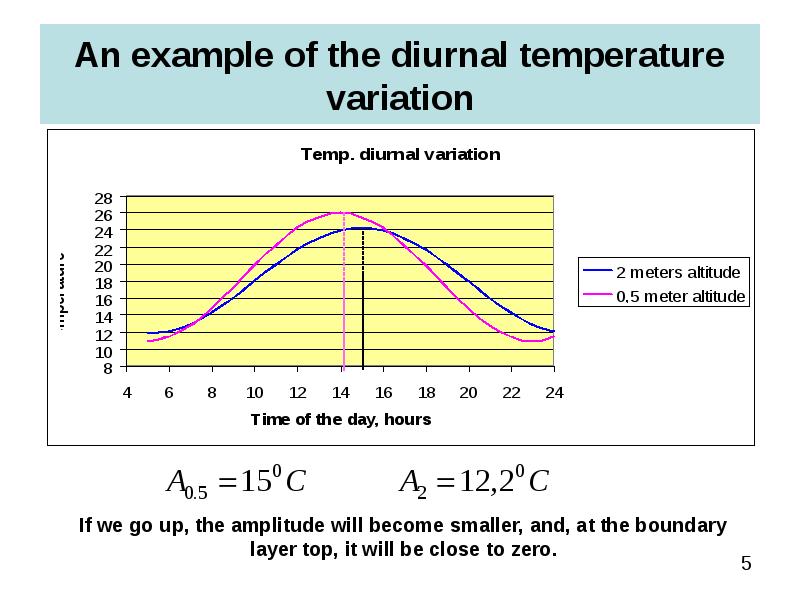
An example of the diurnal temperature variation

Слайд 6


Diurnal temperature variation at different altitudes The amplitude of the variation decreases with height. At the altitude of about 1.5 km it is 6 –...
Описание слайда:
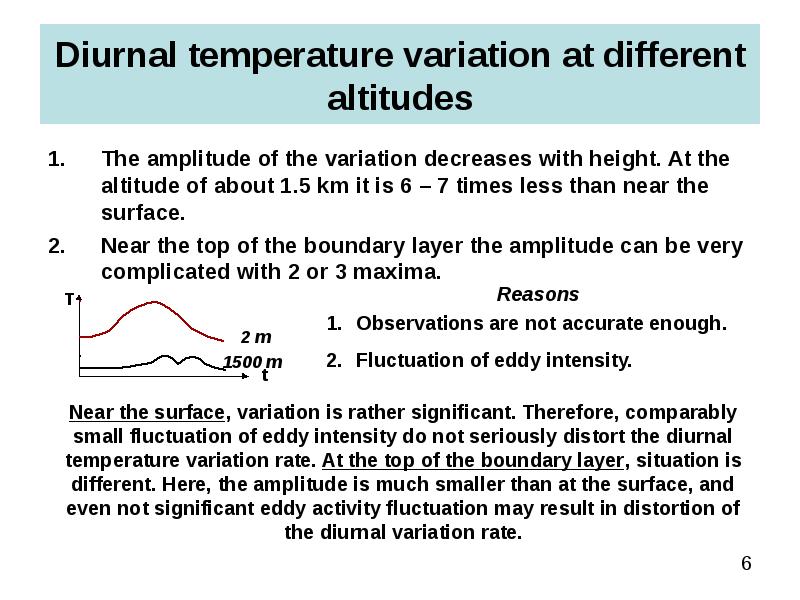
Diurnal temperature variation at different altitudes The amplitude of the variation decreases with height. At the altitude of about 1.5 km it is 6 – 7 times less than near the surface. Near the top of the boundary layer the amplitude can be very complicated with 2 or 3 maxima.

Слайд 7


Cloudiness and wind impact on the diurnal temperature variation
Описание слайда:
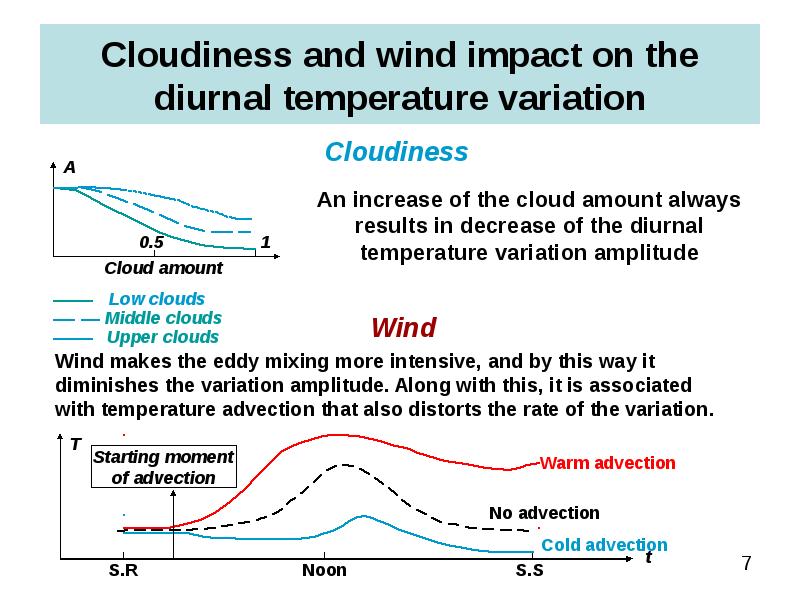
Cloudiness and wind impact on the diurnal temperature variation

Слайд 8


Simplified theory of the diurnal temperature variation
Описание слайда:
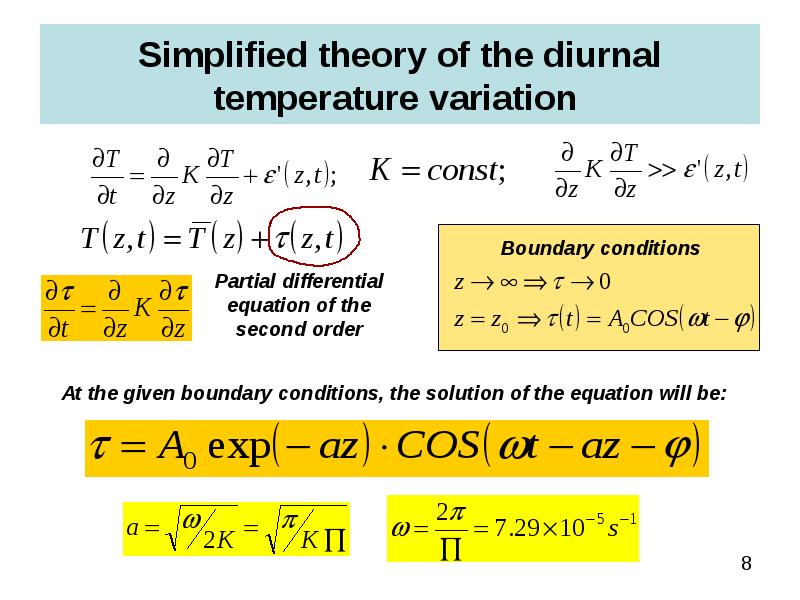
Simplified theory of the diurnal temperature variation

Слайд 9


Diurnal temperature variation in the boundary layer, слайд №9
Описание слайда:

Слайд 10


Diurnal temperature variation in the boundary layer, слайд №10
Описание слайда:

Слайд 11


Annual temperature variation In the Northern Hemisphere maximal temperature is usually observed in July, and minimal temperature in January or...
Описание слайда:
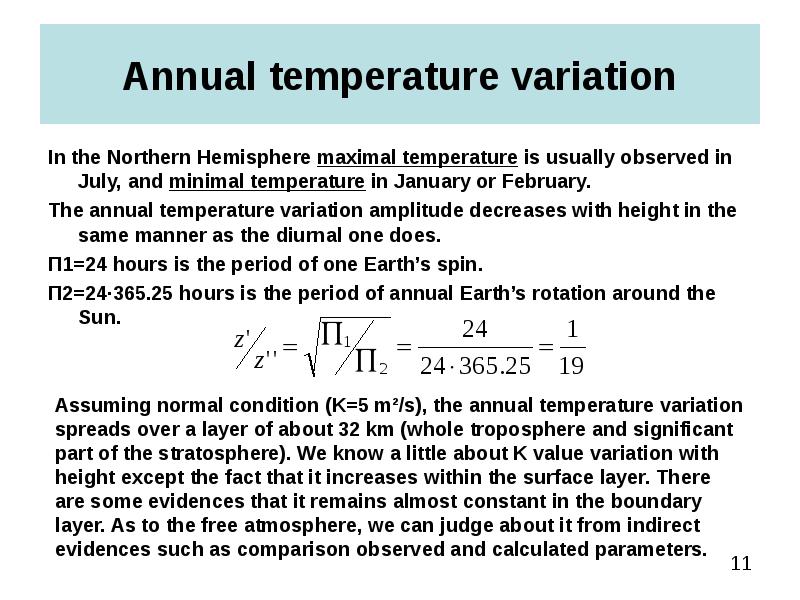
Annual temperature variation In the Northern Hemisphere maximal temperature is usually observed in July, and minimal temperature in January or February. The annual temperature variation amplitude decreases with height in the same manner as the diurnal one does. Π1=24 hours is the period of one Earth’s spin. Π2=24·365.25 hours is the period of annual Earth’s rotation around the Sun.

Слайд 12


Rate of heat wave propagation and lag time We have known: Air temperature variation, above else, depends on Earth's surface temperature variation....
Описание слайда:
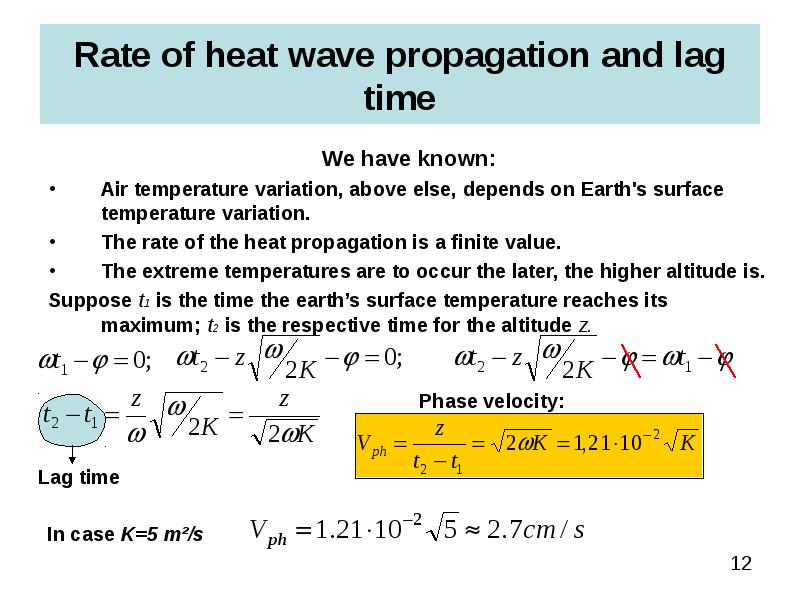
Rate of heat wave propagation and lag time We have known: Air temperature variation, above else, depends on Earth's surface temperature variation. The rate of the heat propagation is a finite value. The extreme temperatures are to occur the later, the higher altitude is. Suppose t1 is the time the earth’s surface temperature reaches its maximum; t2 is the respective time for the altitude z.

Слайд 13


Nocturnal temperature decrease
Описание слайда:
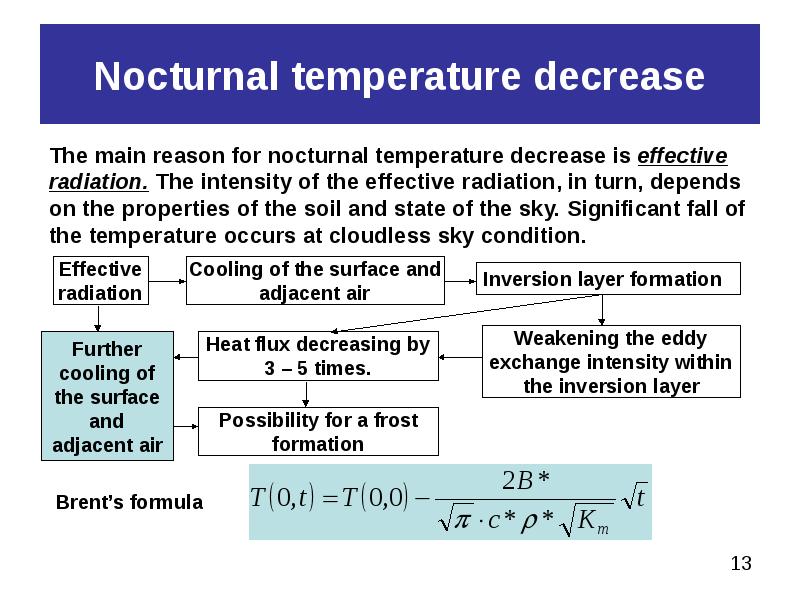
Nocturnal temperature decrease

Слайд 14


Frosts Temperature fall below 0°C on a positive temperature background is called FROST. There are two types of the frosts; Radiative frosts Advective...
Описание слайда:
Frosts Temperature fall below 0°C on a positive temperature background is called FROST. There are two types of the frosts; Radiative frosts Advective frosts Favorable conditions for radiative frosts Low air humidity Weak wind (1 – 2 m/s) Cloud free sky Favorable conditions for advective frost Low air humidity Strong cold wind Small cloud amount


Похожие презентации
Mypresentation.ru
Загрузить презентацию