🗊 Презентация The molecular basis of inheritance. (Chapter 16)

Категория: Химия
Нажмите для полного просмотра!
The molecular basis of inheritance. (Chapter 16), слайд №1 The molecular basis of inheritance. (Chapter 16), слайд №2 The molecular basis of inheritance. (Chapter 16), слайд №3 The molecular basis of inheritance. (Chapter 16), слайд №4 The molecular basis of inheritance. (Chapter 16), слайд №5 The molecular basis of inheritance. (Chapter 16), слайд №6 The molecular basis of inheritance. (Chapter 16), слайд №7 The molecular basis of inheritance. (Chapter 16), слайд №8 The molecular basis of inheritance. (Chapter 16), слайд №9 The molecular basis of inheritance. (Chapter 16), слайд №10 The molecular basis of inheritance. (Chapter 16), слайд №11 The molecular basis of inheritance. (Chapter 16), слайд №12 The molecular basis of inheritance. (Chapter 16), слайд №13 The molecular basis of inheritance. (Chapter 16), слайд №14 The molecular basis of inheritance. (Chapter 16), слайд №15 The molecular basis of inheritance. (Chapter 16), слайд №16 The molecular basis of inheritance. (Chapter 16), слайд №17 The molecular basis of inheritance. (Chapter 16), слайд №18 The molecular basis of inheritance. (Chapter 16), слайд №19 The molecular basis of inheritance. (Chapter 16), слайд №20 The molecular basis of inheritance. (Chapter 16), слайд №21 The molecular basis of inheritance. (Chapter 16), слайд №22 The molecular basis of inheritance. (Chapter 16), слайд №23 The molecular basis of inheritance. (Chapter 16), слайд №24 The molecular basis of inheritance. (Chapter 16), слайд №25 The molecular basis of inheritance. (Chapter 16), слайд №26 The molecular basis of inheritance. (Chapter 16), слайд №27 The molecular basis of inheritance. (Chapter 16), слайд №28 The molecular basis of inheritance. (Chapter 16), слайд №29 The molecular basis of inheritance. (Chapter 16), слайд №30 The molecular basis of inheritance. (Chapter 16), слайд №31 The molecular basis of inheritance. (Chapter 16), слайд №32 The molecular basis of inheritance. (Chapter 16), слайд №33 The molecular basis of inheritance. (Chapter 16), слайд №34 The molecular basis of inheritance. (Chapter 16), слайд №35 The molecular basis of inheritance. (Chapter 16), слайд №36 The molecular basis of inheritance. (Chapter 16), слайд №37 The molecular basis of inheritance. (Chapter 16), слайд №38 The molecular basis of inheritance. (Chapter 16), слайд №39 The molecular basis of inheritance. (Chapter 16), слайд №40 The molecular basis of inheritance. (Chapter 16), слайд №41 The molecular basis of inheritance. (Chapter 16), слайд №42 The molecular basis of inheritance. (Chapter 16), слайд №43 The molecular basis of inheritance. (Chapter 16), слайд №44 The molecular basis of inheritance. (Chapter 16), слайд №45 The molecular basis of inheritance. (Chapter 16), слайд №46 The molecular basis of inheritance. (Chapter 16), слайд №47 The molecular basis of inheritance. (Chapter 16), слайд №48 The molecular basis of inheritance. (Chapter 16), слайд №49 The molecular basis of inheritance. (Chapter 16), слайд №50 The molecular basis of inheritance. (Chapter 16), слайд №51 The molecular basis of inheritance. (Chapter 16), слайд №52 The molecular basis of inheritance. (Chapter 16), слайд №53 The molecular basis of inheritance. (Chapter 16), слайд №54 The molecular basis of inheritance. (Chapter 16), слайд №55 The molecular basis of inheritance. (Chapter 16), слайд №56 The molecular basis of inheritance. (Chapter 16), слайд №57 The molecular basis of inheritance. (Chapter 16), слайд №58 The molecular basis of inheritance. (Chapter 16), слайд №59 The molecular basis of inheritance. (Chapter 16), слайд №60 The molecular basis of inheritance. (Chapter 16), слайд №61 The molecular basis of inheritance. (Chapter 16), слайд №62 The molecular basis of inheritance. (Chapter 16), слайд №63 The molecular basis of inheritance. (Chapter 16), слайд №64 The molecular basis of inheritance. (Chapter 16), слайд №65 The molecular basis of inheritance. (Chapter 16), слайд №66 The molecular basis of inheritance. (Chapter 16), слайд №67 The molecular basis of inheritance. (Chapter 16), слайд №68 The molecular basis of inheritance. (Chapter 16), слайд №69 The molecular basis of inheritance. (Chapter 16), слайд №70 The molecular basis of inheritance. (Chapter 16), слайд №71 The molecular basis of inheritance. (Chapter 16), слайд №72 The molecular basis of inheritance. (Chapter 16), слайд №73 The molecular basis of inheritance. (Chapter 16), слайд №74 The molecular basis of inheritance. (Chapter 16), слайд №75 The molecular basis of inheritance. (Chapter 16), слайд №76 The molecular basis of inheritance. (Chapter 16), слайд №77 The molecular basis of inheritance. (Chapter 16), слайд №78 The molecular basis of inheritance. (Chapter 16), слайд №79 The molecular basis of inheritance. (Chapter 16), слайд №80 The molecular basis of inheritance. (Chapter 16), слайд №81 The molecular basis of inheritance. (Chapter 16), слайд №82 The molecular basis of inheritance. (Chapter 16), слайд №83 The molecular basis of inheritance. (Chapter 16), слайд №84 The molecular basis of inheritance. (Chapter 16), слайд №85 The molecular basis of inheritance. (Chapter 16), слайд №86 The molecular basis of inheritance. (Chapter 16), слайд №87 The molecular basis of inheritance. (Chapter 16), слайд №88 The molecular basis of inheritance. (Chapter 16), слайд №89 The molecular basis of inheritance. (Chapter 16), слайд №90 The molecular basis of inheritance. (Chapter 16), слайд №91 The molecular basis of inheritance. (Chapter 16), слайд №92 The molecular basis of inheritance. (Chapter 16), слайд №93 The molecular basis of inheritance. (Chapter 16), слайд №94 The molecular basis of inheritance. (Chapter 16), слайд №95 The molecular basis of inheritance. (Chapter 16), слайд №96 The molecular basis of inheritance. (Chapter 16), слайд №97 The molecular basis of inheritance. (Chapter 16), слайд №98 The molecular basis of inheritance. (Chapter 16), слайд №99 The molecular basis of inheritance. (Chapter 16), слайд №100 The molecular basis of inheritance. (Chapter 16), слайд №101 The molecular basis of inheritance. (Chapter 16), слайд №102 The molecular basis of inheritance. (Chapter 16), слайд №103 The molecular basis of inheritance. (Chapter 16), слайд №104 The molecular basis of inheritance. (Chapter 16), слайд №105 The molecular basis of inheritance. (Chapter 16), слайд №106 The molecular basis of inheritance. (Chapter 16), слайд №107 The molecular basis of inheritance. (Chapter 16), слайд №108 The molecular basis of inheritance. (Chapter 16), слайд №109 The molecular basis of inheritance. (Chapter 16), слайд №110 The molecular basis of inheritance. (Chapter 16), слайд №111 The molecular basis of inheritance. (Chapter 16), слайд №112 The molecular basis of inheritance. (Chapter 16), слайд №113 The molecular basis of inheritance. (Chapter 16), слайд №114 The molecular basis of inheritance. (Chapter 16), слайд №115 The molecular basis of inheritance. (Chapter 16), слайд №116 The molecular basis of inheritance. (Chapter 16), слайд №117 The molecular basis of inheritance. (Chapter 16), слайд №118 The molecular basis of inheritance. (Chapter 16), слайд №119

Содержание
Вы можете ознакомиться и скачать презентацию на тему The molecular basis of inheritance. (Chapter 16). Доклад-сообщение содержит 119 слайдов. Презентации для любого класса можно скачать бесплатно. Если материал и наш сайт презентаций Mypresentation Вам понравились – поделитесь им с друзьями с помощью социальных кнопок и добавьте в закладки в своем браузере.
Слайды и текст этой презентации


Слайд 1


The molecular basis of inheritance. (Chapter 16), слайд №1
Описание слайда:
Слайд 2


Overview: Life’s Operating Instructions In 1953, James Watson and Francis Crick introduced an elegant double-helical model for the structure of...
Описание слайда:
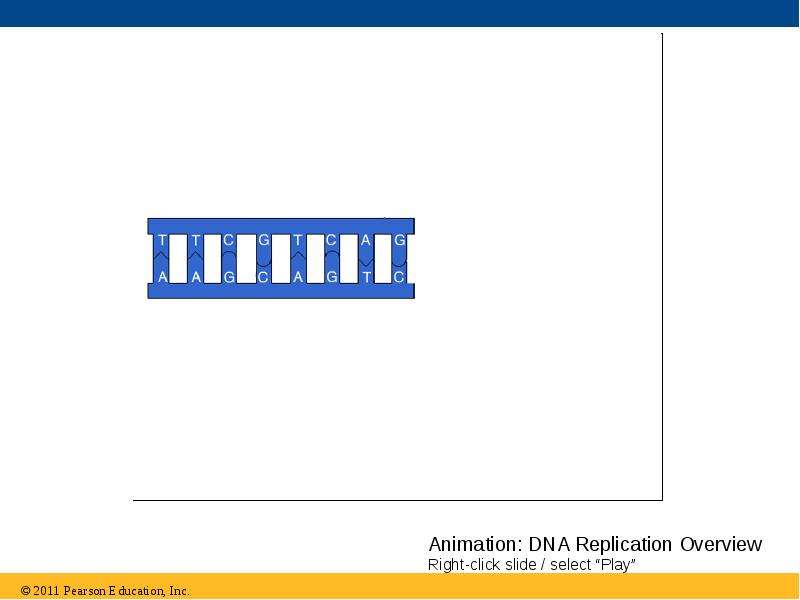
Overview: Life’s Operating Instructions In 1953, James Watson and Francis Crick introduced an elegant double-helical model for the structure of deoxyribonucleic acid, or DNA DNA, the substance of inheritance, is the most celebrated molecule of our time Hereditary information is encoded in DNA and reproduced in all cells of the body This DNA program directs the development of biochemical, anatomical, physiological, and (to some extent) behavioral traits

Слайд 3


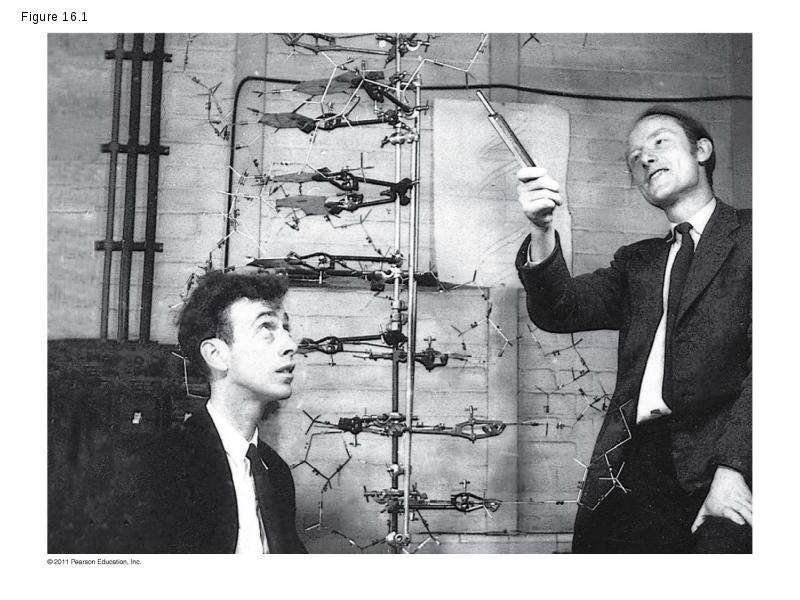
Figure 16.1
Описание слайда:
Figure 16.1

Слайд 4


Concept 16.1: DNA is the genetic material Early in the 20th century, the identification of the molecules of inheritance loomed as a major challenge...
Описание слайда:
Concept 16.1: DNA is the genetic material Early in the 20th century, the identification of the molecules of inheritance loomed as a major challenge to biologists

Слайд 5


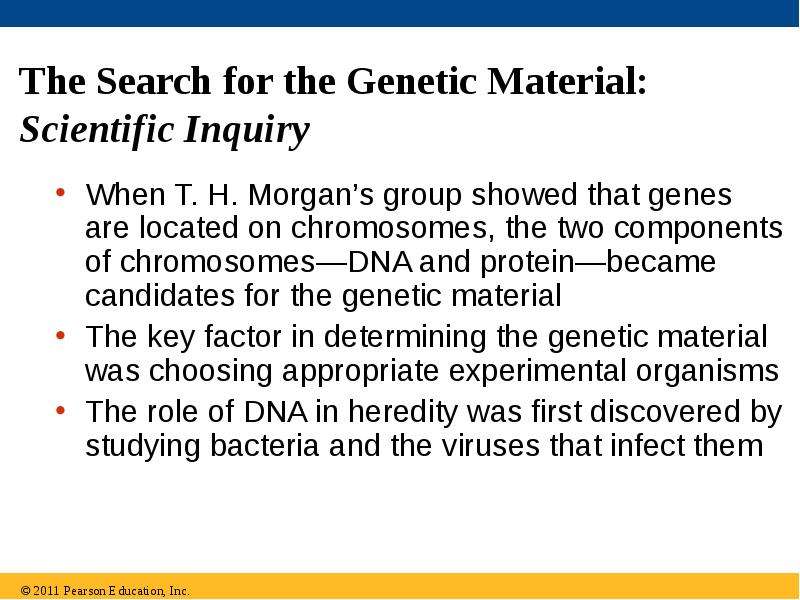
The Search for the Genetic Material: Scientific Inquiry When T. H. Morgan’s group showed that genes are located on chromosomes, the two components of...
Описание слайда:
The Search for the Genetic Material: Scientific Inquiry When T. H. Morgan’s group showed that genes are located on chromosomes, the two components of chromosomes—DNA and protein—became candidates for the genetic material The key factor in determining the genetic material was choosing appropriate experimental organisms The role of DNA in heredity was first discovered by studying bacteria and the viruses that infect them

Слайд 6


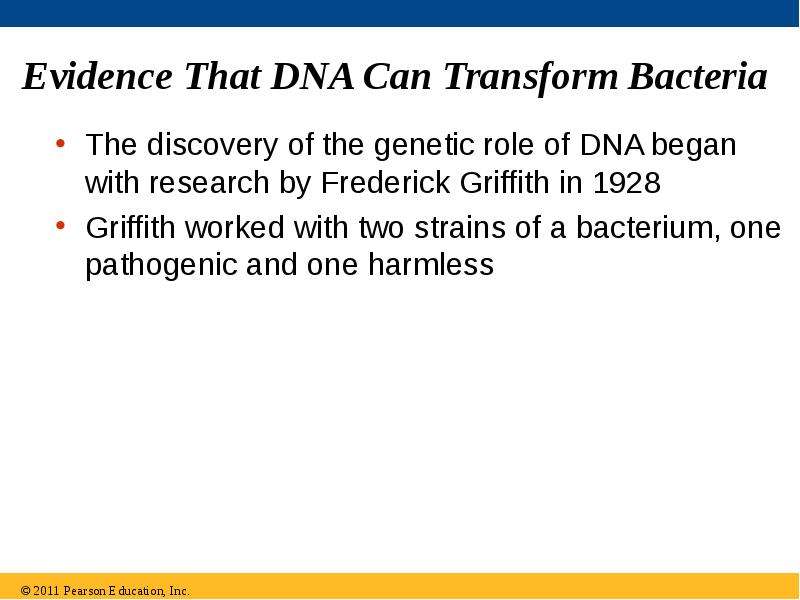
Evidence That DNA Can Transform Bacteria The discovery of the genetic role of DNA began with research by Frederick Griffith in 1928 Griffith worked...
Описание слайда:
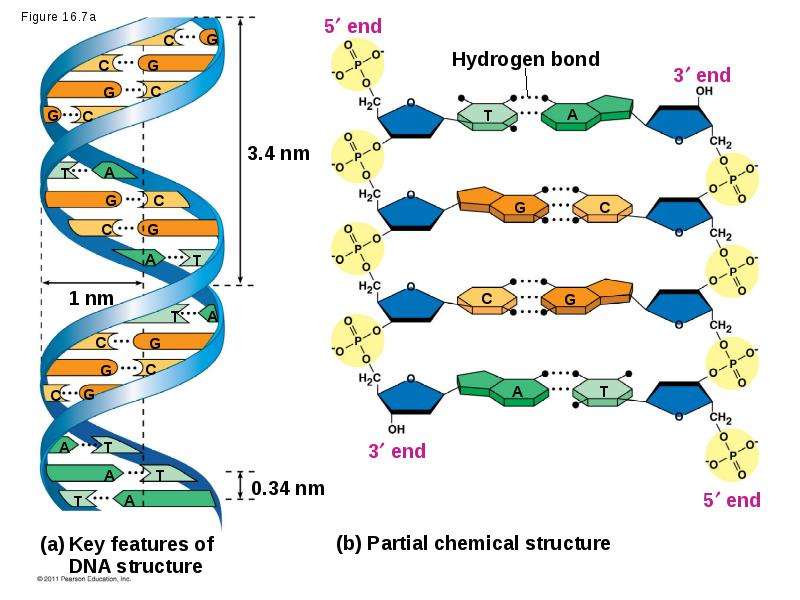
Evidence That DNA Can Transform Bacteria The discovery of the genetic role of DNA began with research by Frederick Griffith in 1928 Griffith worked with two strains of a bacterium, one pathogenic and one harmless

Слайд 7


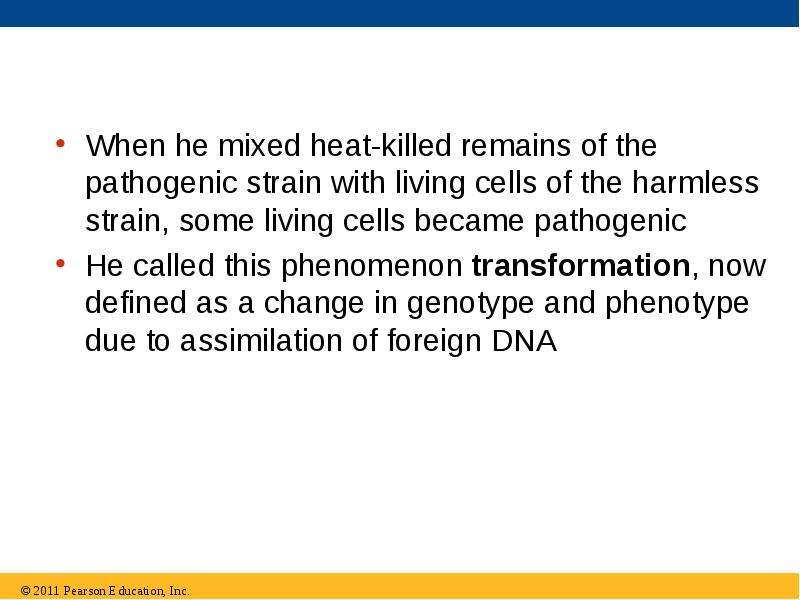
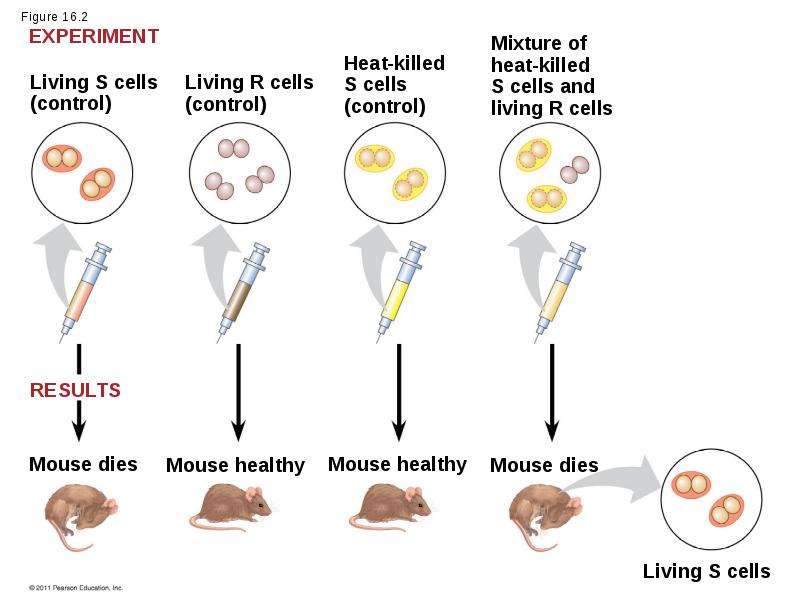
When he mixed heat-killed remains of the pathogenic strain with living cells of the harmless strain, some living cells became pathogenic He called...
Описание слайда:
When he mixed heat-killed remains of the pathogenic strain with living cells of the harmless strain, some living cells became pathogenic He called this phenomenon transformation, now defined as a change in genotype and phenotype due to assimilation of foreign DNA

Слайд 8


Figure 16.2
Описание слайда:
Figure 16.2

Слайд 9


In 1944, Oswald Avery, Maclyn McCarty, and Colin MacLeod announced that the transforming substance was DNA In 1944, Oswald Avery, Maclyn McCarty, and...
Описание слайда:
In 1944, Oswald Avery, Maclyn McCarty, and Colin MacLeod announced that the transforming substance was DNA In 1944, Oswald Avery, Maclyn McCarty, and Colin MacLeod announced that the transforming substance was DNA Their conclusion was based on experimental evidence that only DNA worked in transforming harmless bacteria into pathogenic bacteria Many biologists remained skeptical, mainly because little was known about DNA

Слайд 10


Evidence That Viral DNA Can Program Cells More evidence for DNA as the genetic material came from studies of viruses that infect bacteria Such...
Описание слайда:
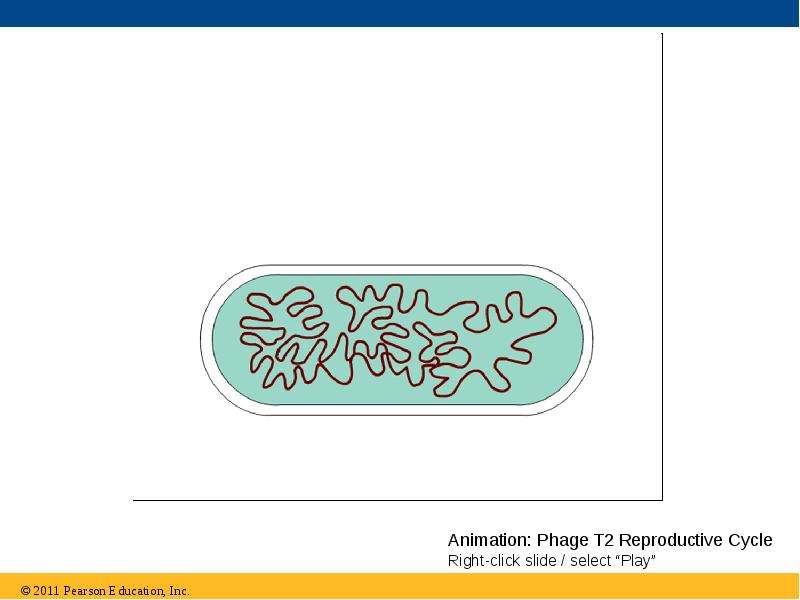
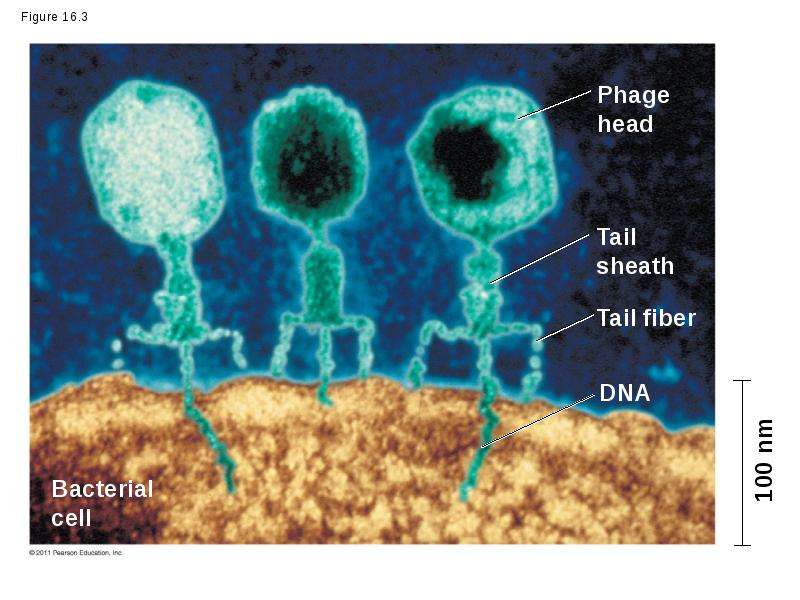
Evidence That Viral DNA Can Program Cells More evidence for DNA as the genetic material came from studies of viruses that infect bacteria Such viruses, called bacteriophages (or phages), are widely used in molecular genetics research

Слайд 11


The molecular basis of inheritance. (Chapter 16), слайд №11
Описание слайда:

Слайд 12


Figure 16.3
Описание слайда:
Figure 16.3

Слайд 13


In 1952, Alfred Hershey and Martha Chase performed experiments showing that DNA is the genetic material of a phage known as T2 In 1952, Alfred...
Описание слайда:
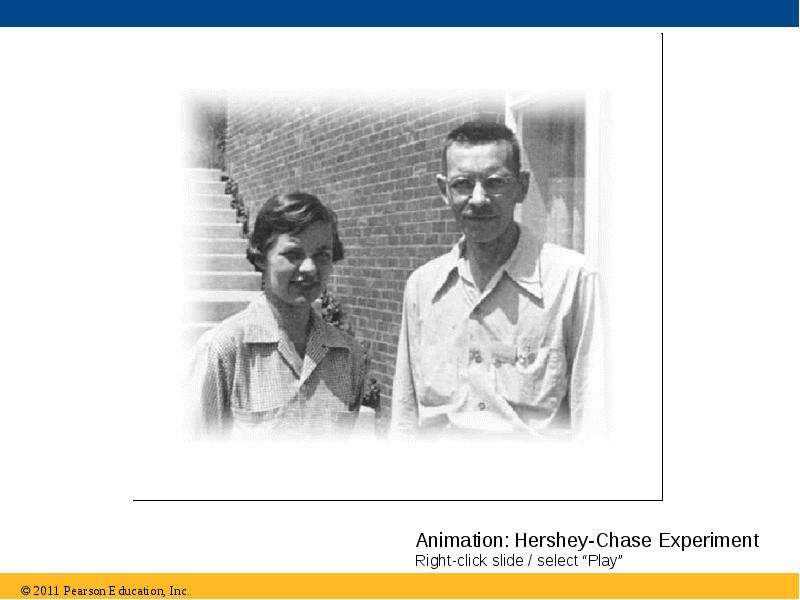
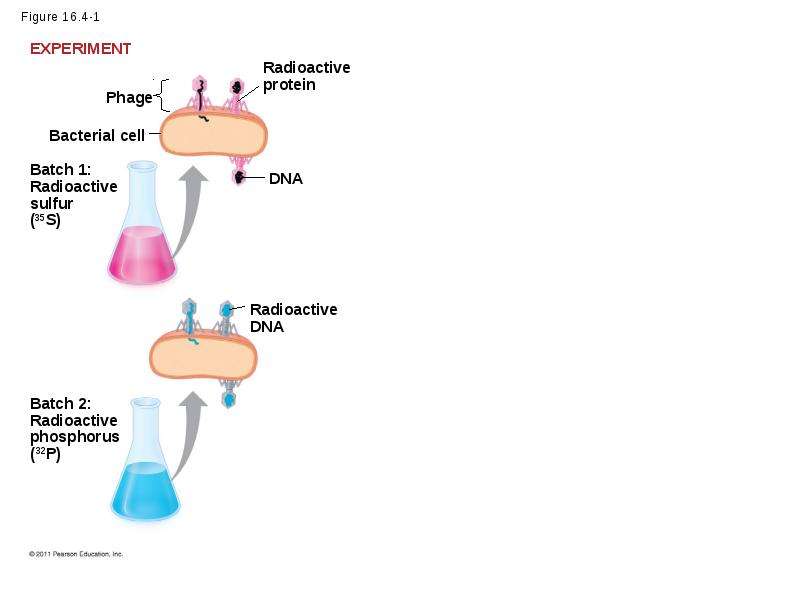
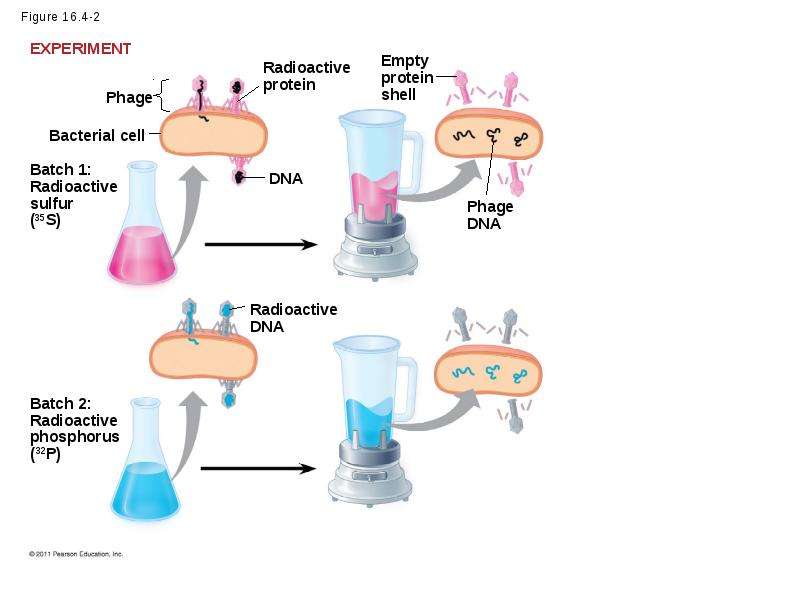
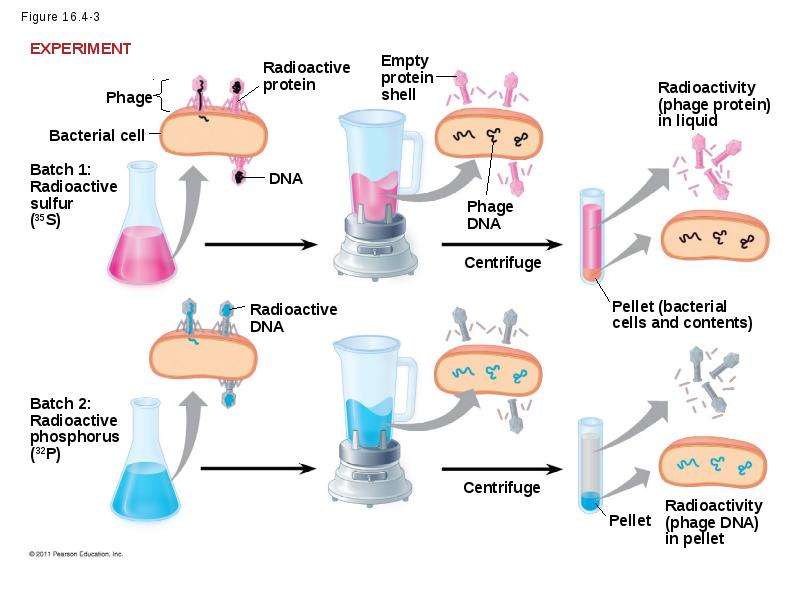
In 1952, Alfred Hershey and Martha Chase performed experiments showing that DNA is the genetic material of a phage known as T2 In 1952, Alfred Hershey and Martha Chase performed experiments showing that DNA is the genetic material of a phage known as T2 To determine this, they designed an experiment showing that only one of the two components of T2 (DNA or protein) enters an E. coli cell during infection They concluded that the injected DNA of the phage provides the genetic information

Слайд 14


The molecular basis of inheritance. (Chapter 16), слайд №14
Описание слайда:

Слайд 15


Figure 16.4-1
Описание слайда:
Figure 16.4-1

Слайд 16


Figure 16.4-2
Описание слайда:
Figure 16.4-2

Слайд 17


Figure 16.4-3
Описание слайда:
Figure 16.4-3

Слайд 18


Additional Evidence That DNA Is the Genetic Material
Описание слайда:
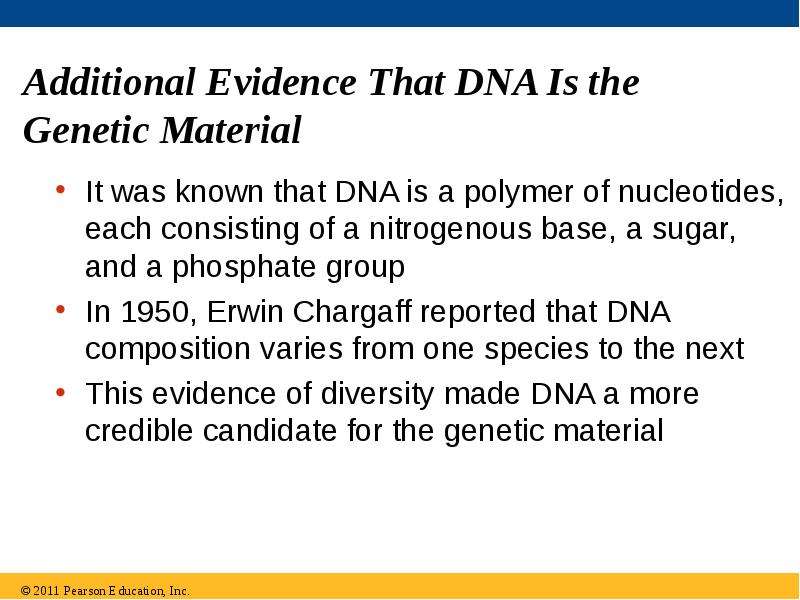
Additional Evidence That DNA Is the Genetic Material

Слайд 19


The molecular basis of inheritance. (Chapter 16), слайд №19
Описание слайда:

Слайд 20


Two findings became known as Chargaff’s rules Two findings became known as Chargaff’s rules The base composition of DNA varies between species In any...
Описание слайда:
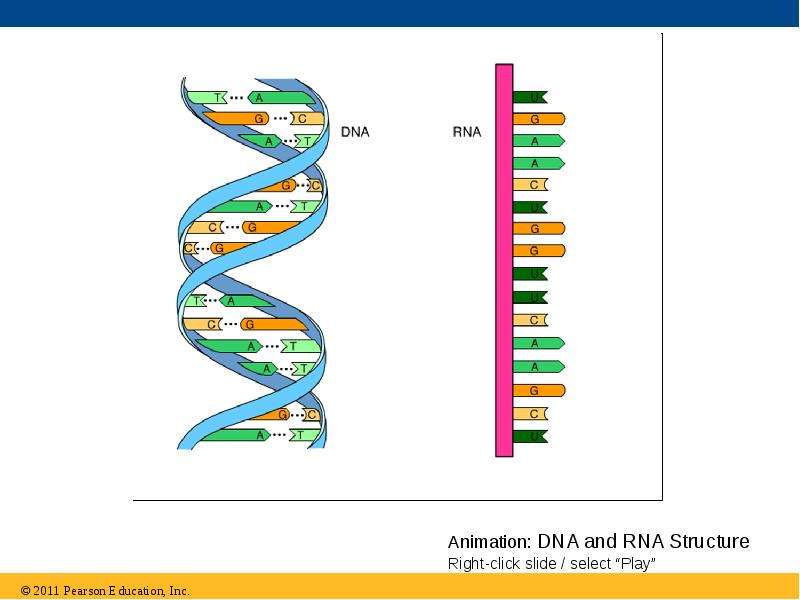
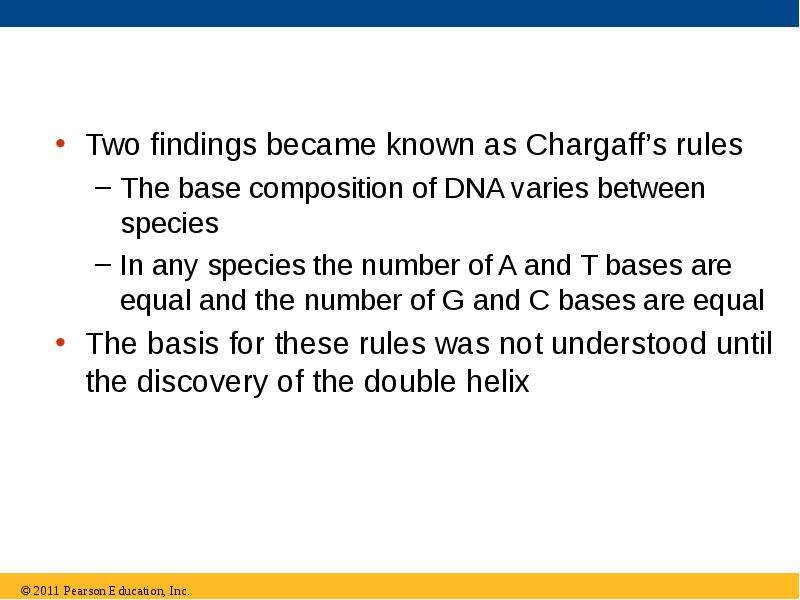
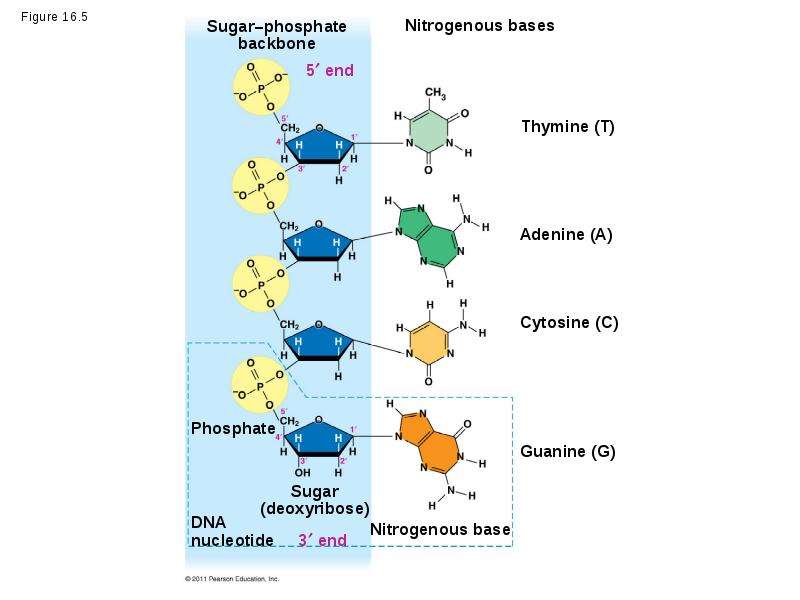
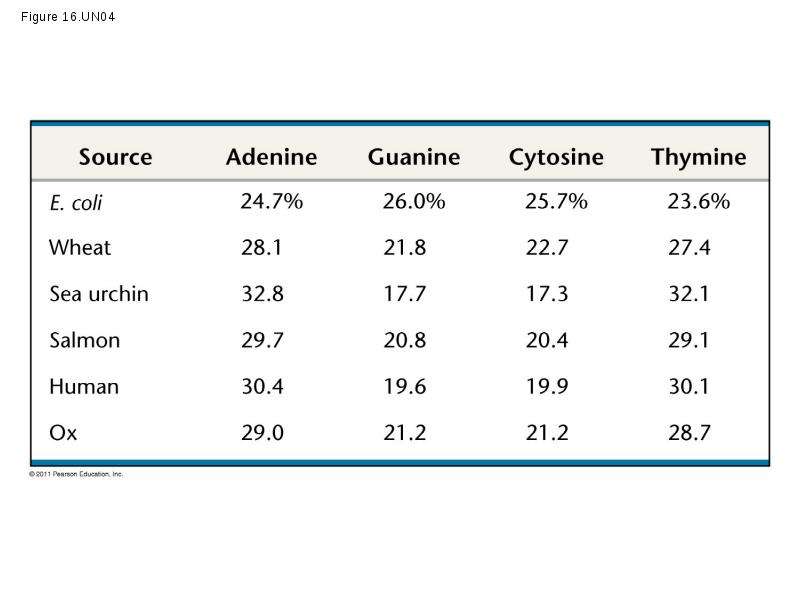
Two findings became known as Chargaff’s rules Two findings became known as Chargaff’s rules The base composition of DNA varies between species In any species the number of A and T bases are equal and the number of G and C bases are equal The basis for these rules was not understood until the discovery of the double helix

Слайд 21


Figure 16.5
Описание слайда:
Figure 16.5

Слайд 22


Building a Structural Model of DNA: Scientific Inquiry After DNA was accepted as the genetic material, the challenge was to determine how its...
Описание слайда:
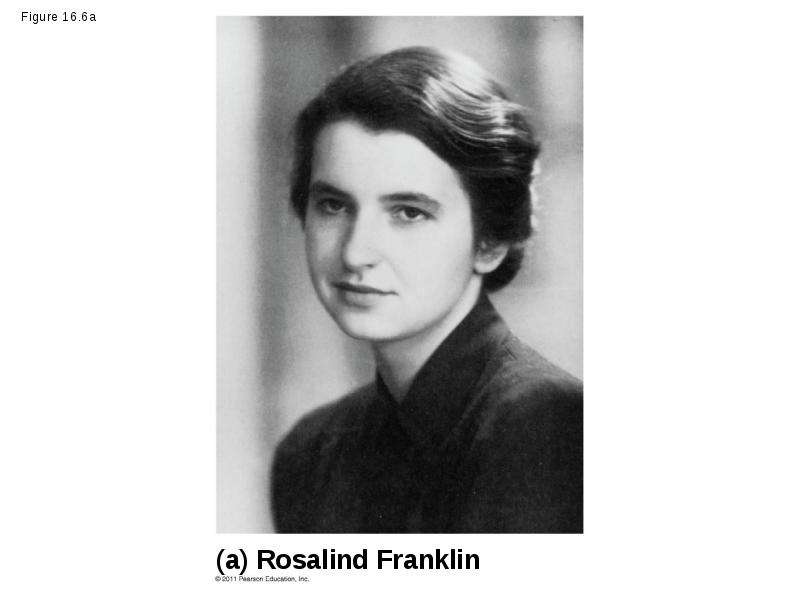
Building a Structural Model of DNA: Scientific Inquiry After DNA was accepted as the genetic material, the challenge was to determine how its structure accounts for its role in heredity Maurice Wilkins and Rosalind Franklin were using a technique called X-ray crystallography to study molecular structure Franklin produced a picture of the DNA molecule using this technique

Слайд 23


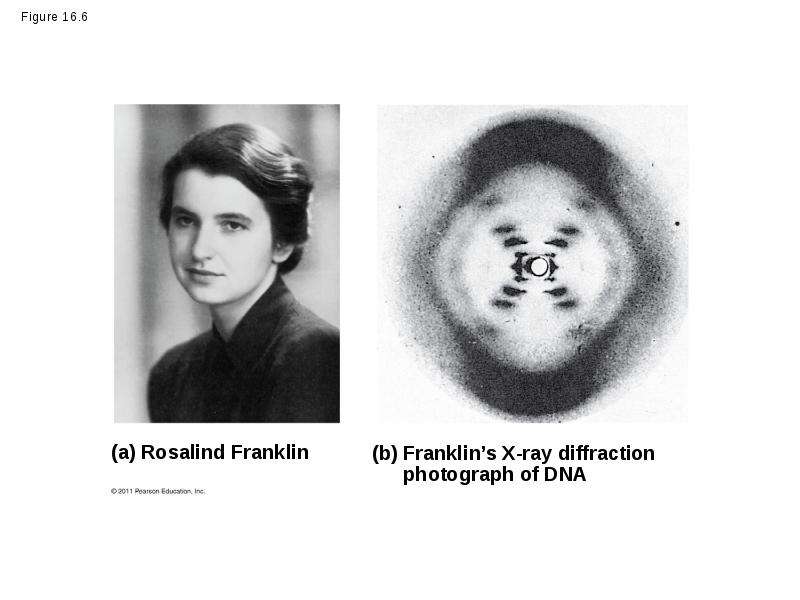
Figure 16.6
Описание слайда:
Figure 16.6

Слайд 24


Figure 16.6a
Описание слайда:
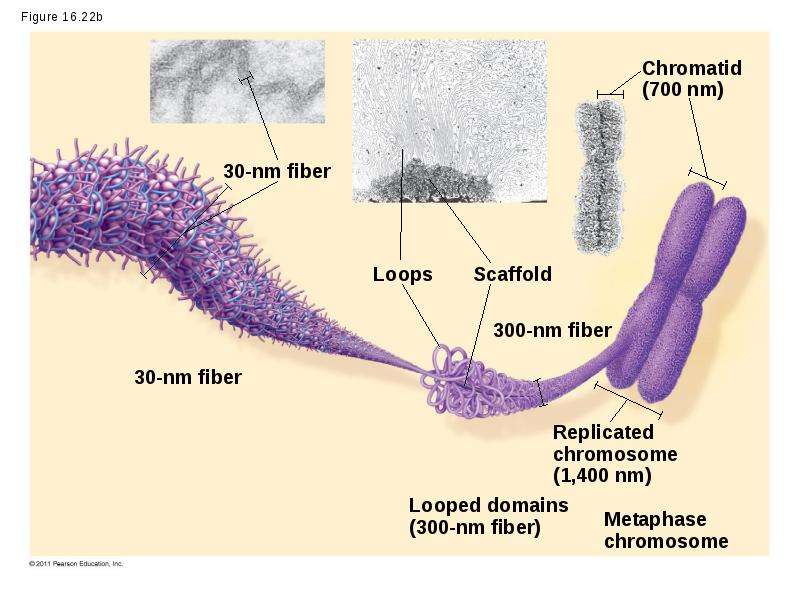
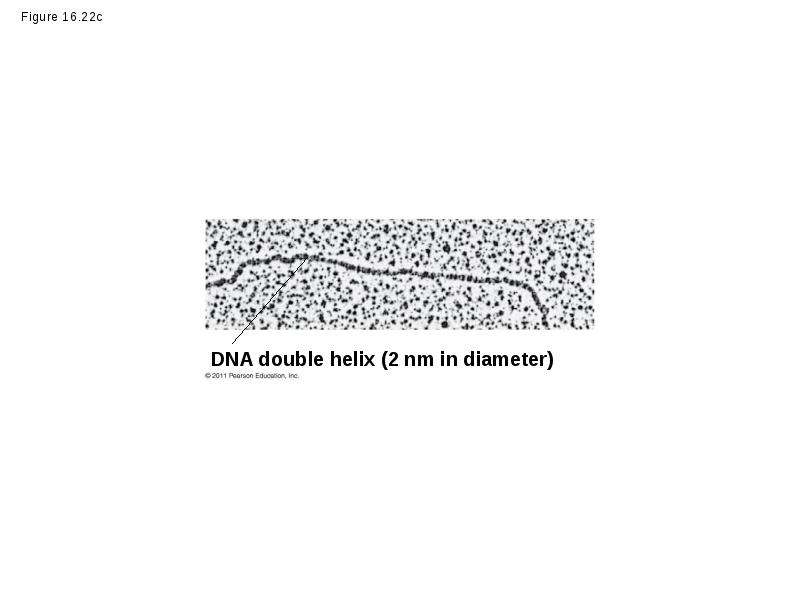
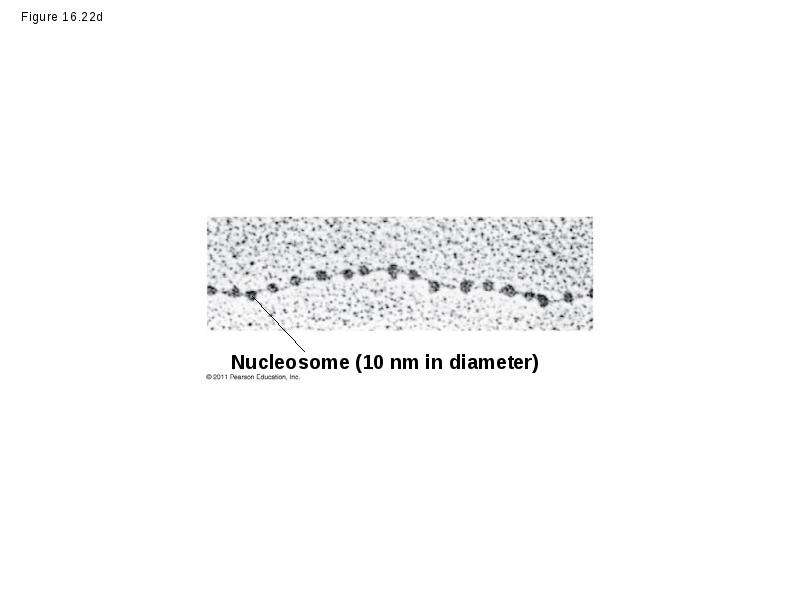
Figure 16.6a

Слайд 25


Figure 16.6b
Описание слайда:
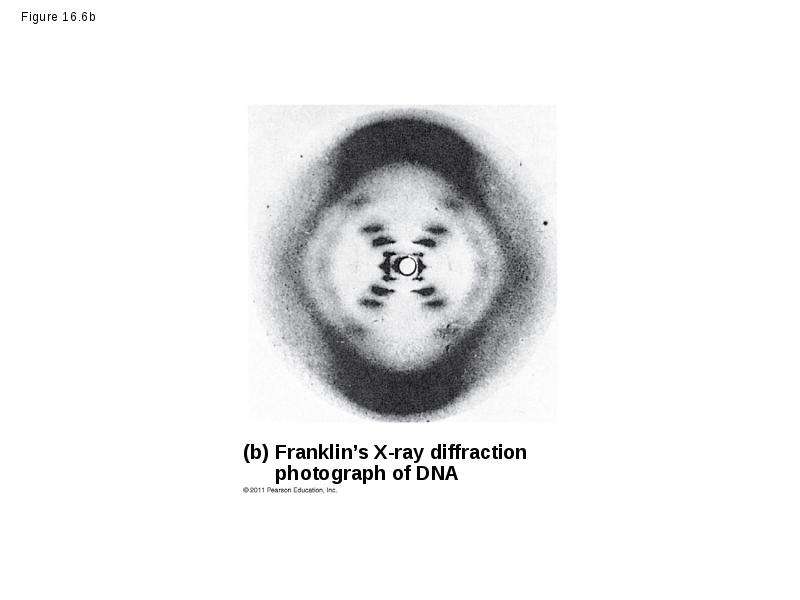
Figure 16.6b

Слайд 26


Franklin’s X-ray crystallographic images of DNA enabled Watson to deduce that DNA was helical Franklin’s X-ray crystallographic images of DNA enabled...
Описание слайда:
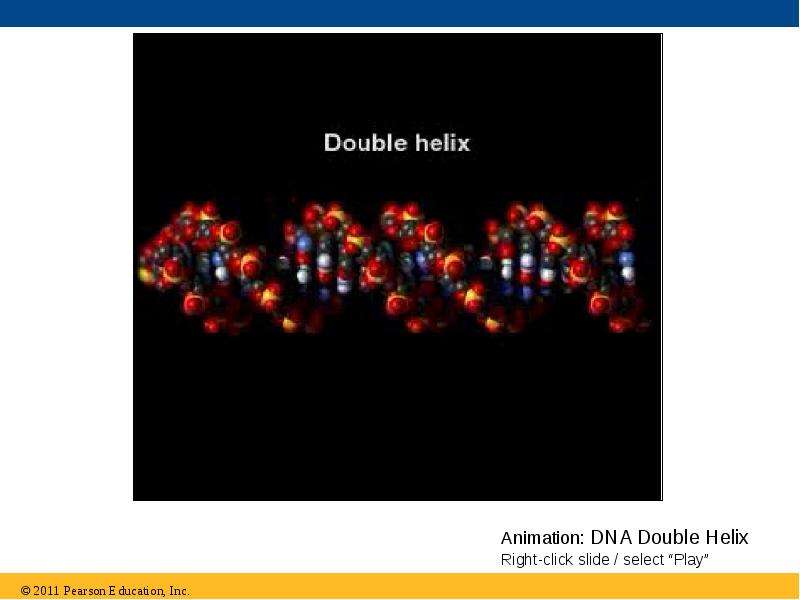
Franklin’s X-ray crystallographic images of DNA enabled Watson to deduce that DNA was helical Franklin’s X-ray crystallographic images of DNA enabled Watson to deduce that DNA was helical The X-ray images also enabled Watson to deduce the width of the helix and the spacing of the nitrogenous bases The pattern in the photo suggested that the DNA molecule was made up of two strands, forming a double helix

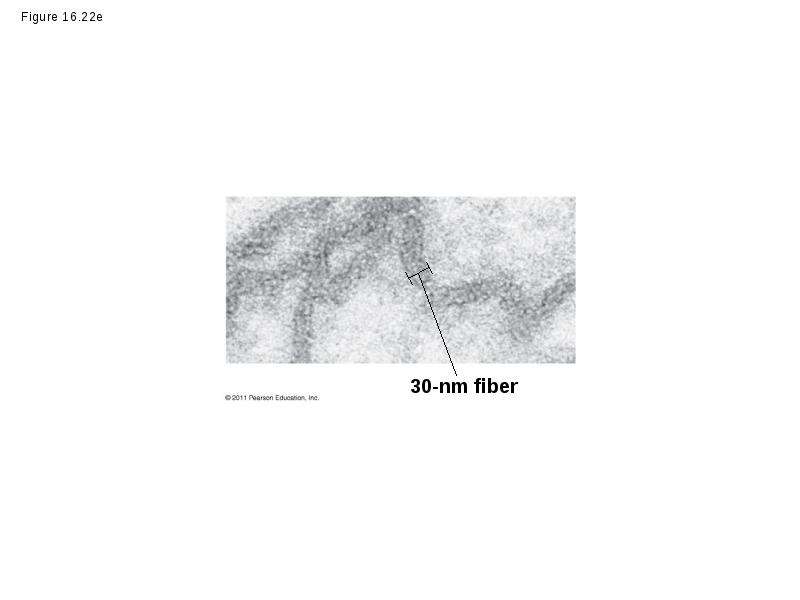
Слайд 27


The molecular basis of inheritance. (Chapter 16), слайд №27
Описание слайда:

Слайд 28


Figure 16.7
Описание слайда:
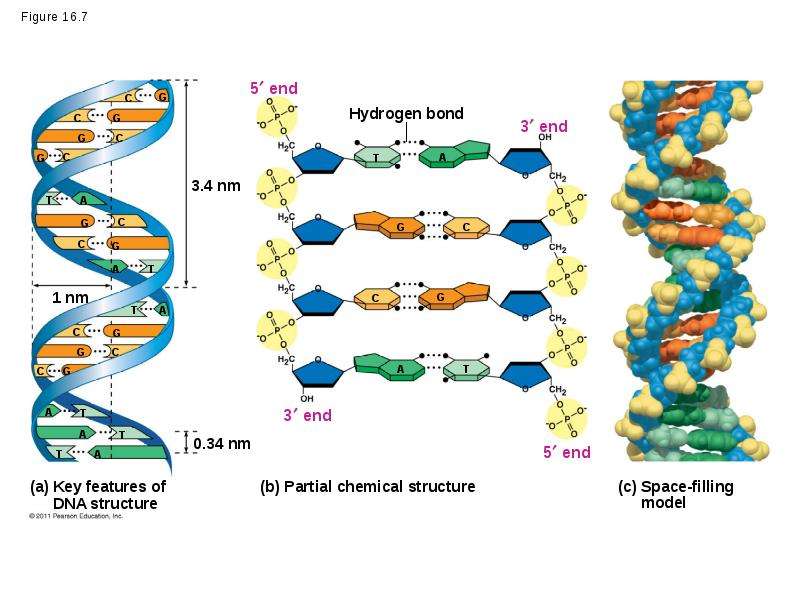
Figure 16.7

Слайд 29


Figure 16.7a
Описание слайда:
Figure 16.7a

Слайд 30


Figure 16.7b
Описание слайда:
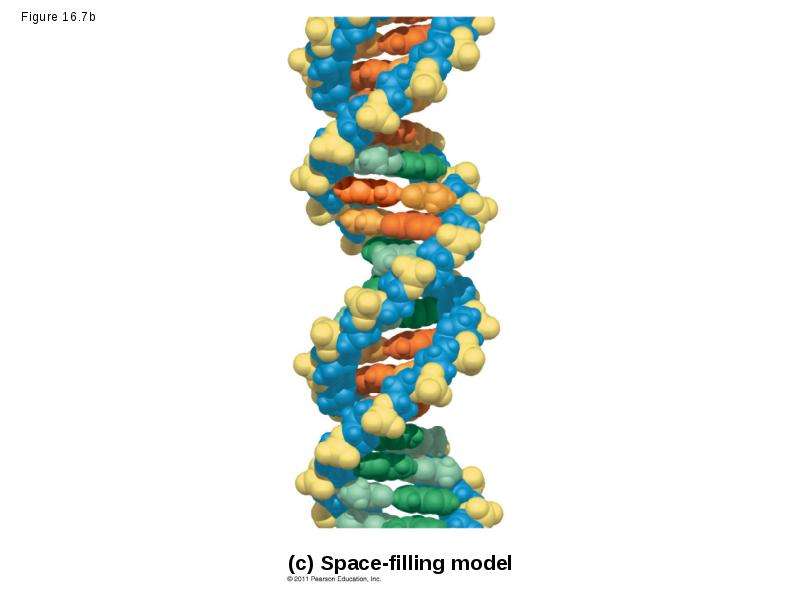
Figure 16.7b

Слайд 31


Watson and Crick built models of a double helix to conform to the X-rays and chemistry of DNA Watson and Crick built models of a double helix to...
Описание слайда:
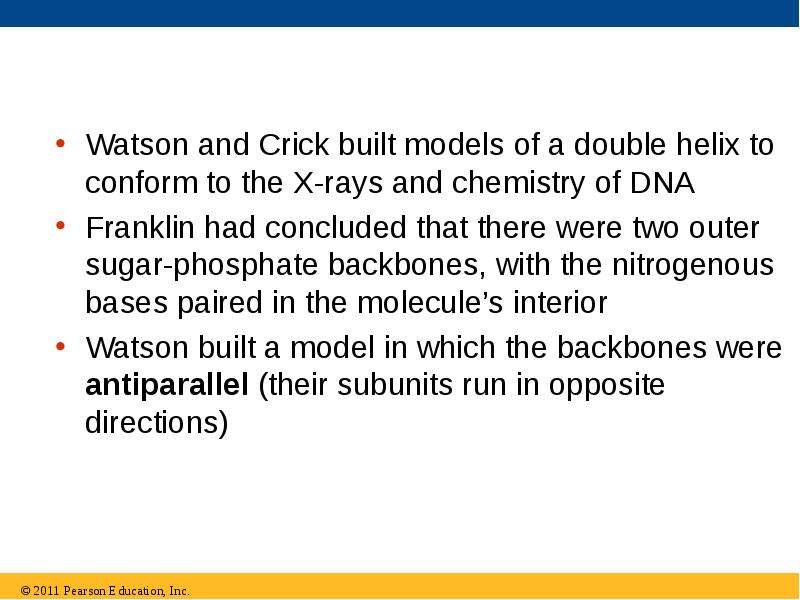
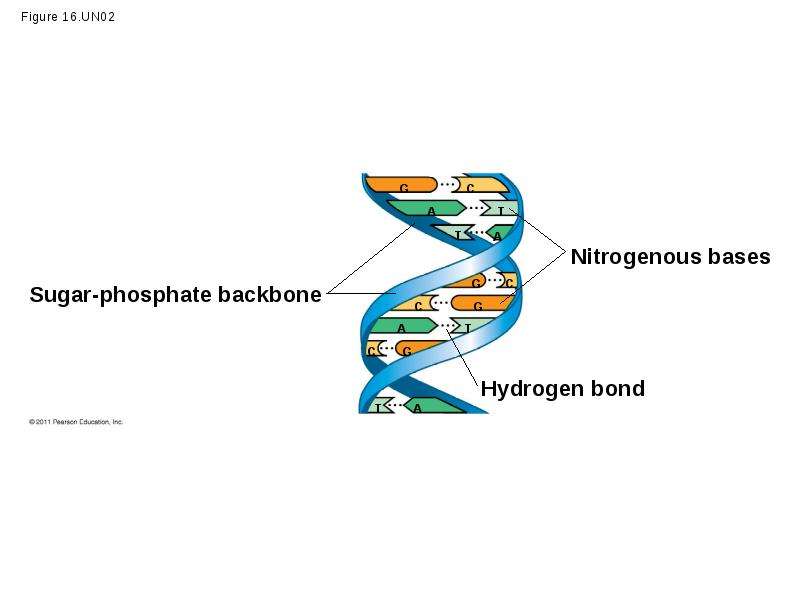
Watson and Crick built models of a double helix to conform to the X-rays and chemistry of DNA Watson and Crick built models of a double helix to conform to the X-rays and chemistry of DNA Franklin had concluded that there were two outer sugar-phosphate backbones, with the nitrogenous bases paired in the molecule’s interior Watson built a model in which the backbones were antiparallel (their subunits run in opposite directions)

Слайд 32


At first, Watson and Crick thought the bases paired like with like (A with A, and so on), but such pairings did not result in a uniform width At...
Описание слайда:
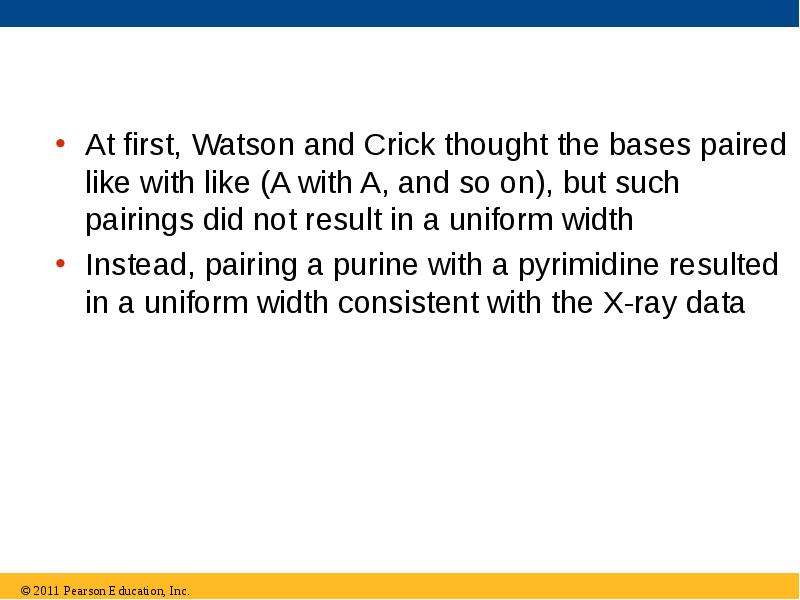
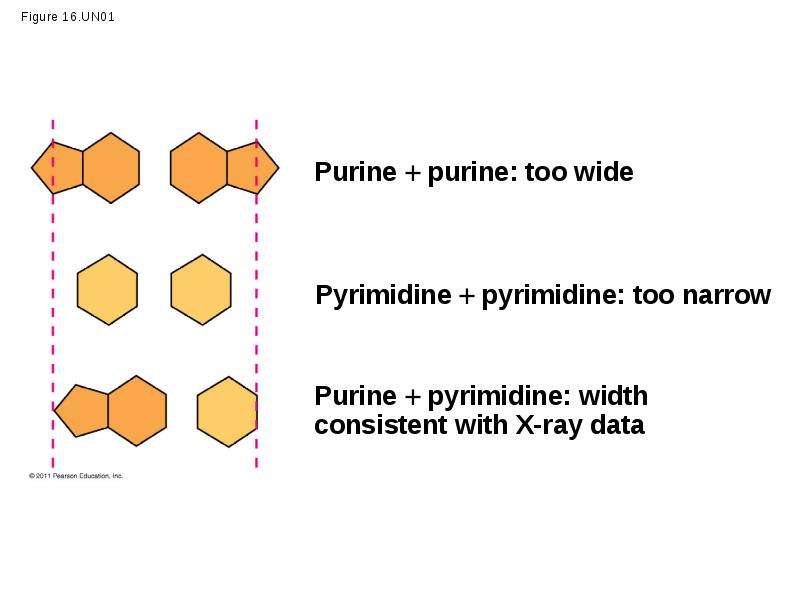
At first, Watson and Crick thought the bases paired like with like (A with A, and so on), but such pairings did not result in a uniform width At first, Watson and Crick thought the bases paired like with like (A with A, and so on), but such pairings did not result in a uniform width Instead, pairing a purine with a pyrimidine resulted in a uniform width consistent with the X-ray data

Слайд 33


Figure 16.UN01
Описание слайда:
Figure 16.UN01

Слайд 34


Watson and Crick reasoned that the pairing was more specific, dictated by the base structures Watson and Crick reasoned that the pairing was more...
Описание слайда:
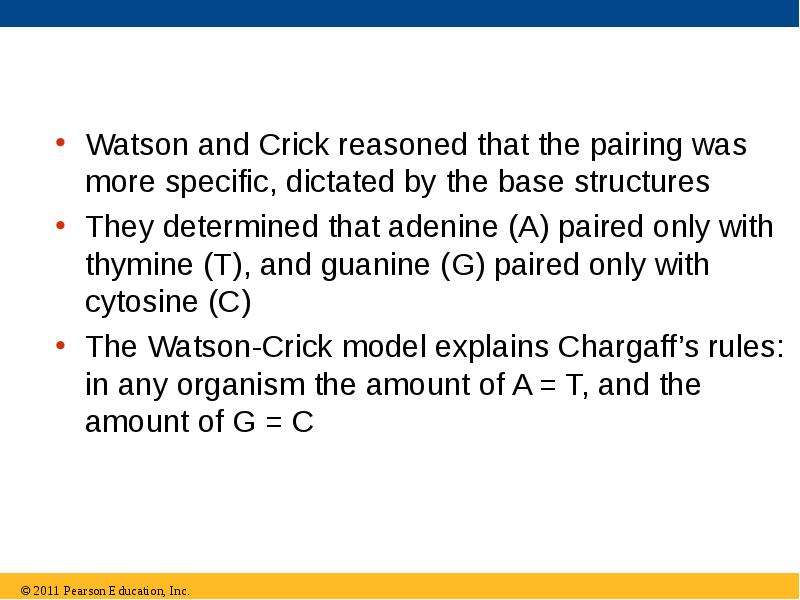
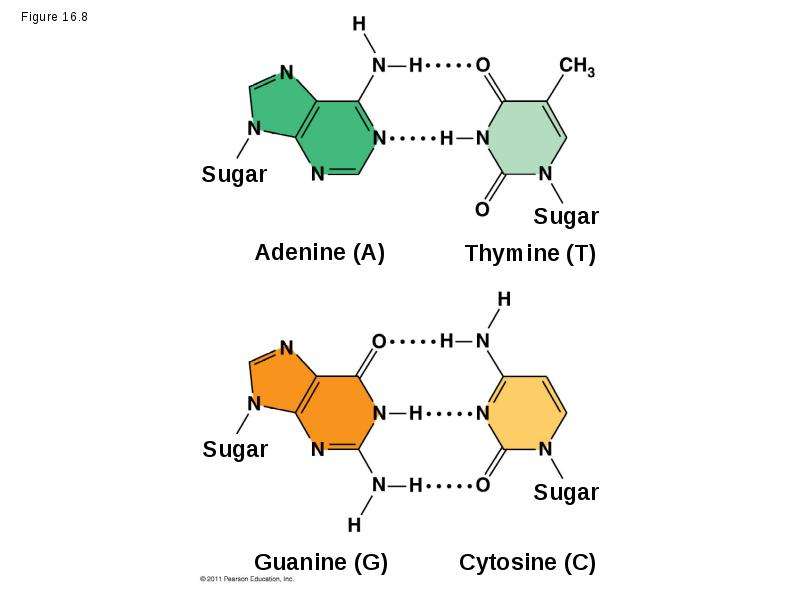
Watson and Crick reasoned that the pairing was more specific, dictated by the base structures Watson and Crick reasoned that the pairing was more specific, dictated by the base structures They determined that adenine (A) paired only with thymine (T), and guanine (G) paired only with cytosine (C) The Watson-Crick model explains Chargaff’s rules: in any organism the amount of A = T, and the amount of G = C

Слайд 35


Figure 16.8
Описание слайда:
Figure 16.8

Слайд 36


Concept 16.2: Many proteins work together in DNA replication and repair The relationship between structure and function is manifest in the double...
Описание слайда:
Concept 16.2: Many proteins work together in DNA replication and repair The relationship between structure and function is manifest in the double helix Watson and Crick noted that the specific base pairing suggested a possible copying mechanism for genetic material

Слайд 37


The Basic Principle: Base Pairing to a Template Strand Since the two strands of DNA are complementary, each strand acts as a template for building a...
Описание слайда:
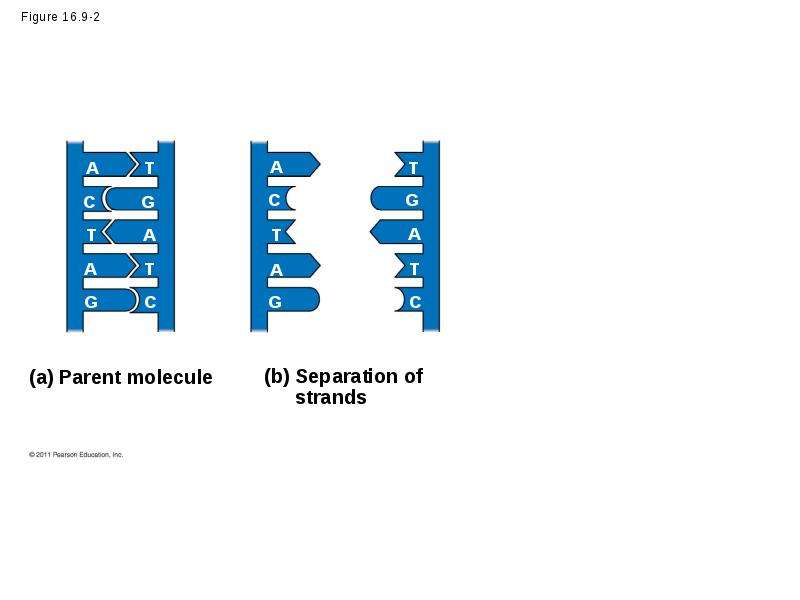
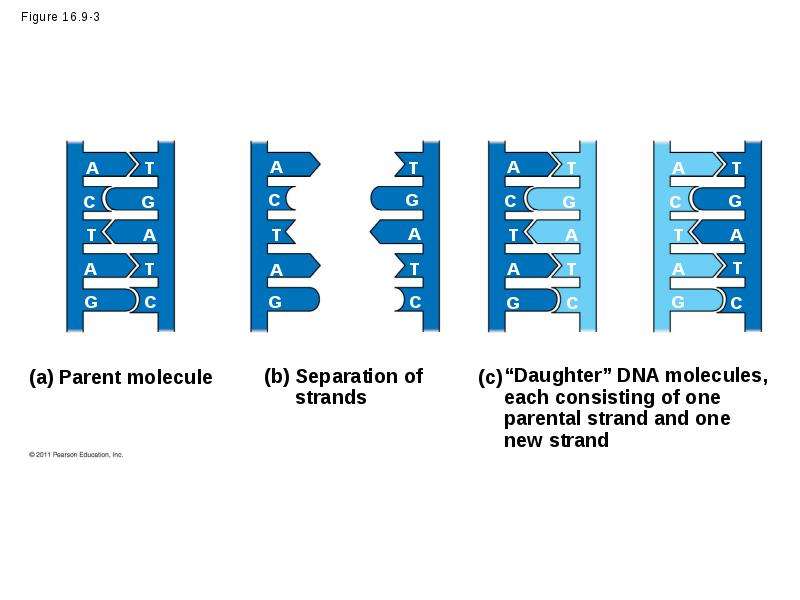
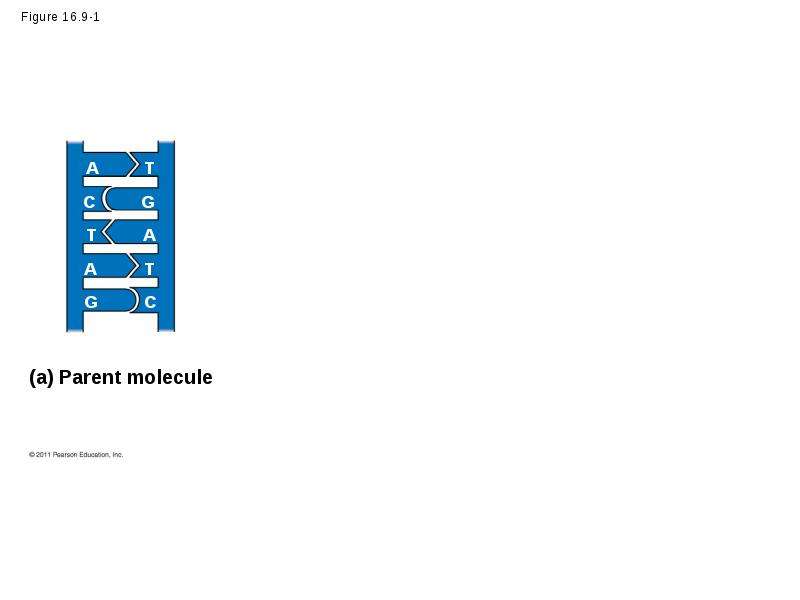
The Basic Principle: Base Pairing to a Template Strand Since the two strands of DNA are complementary, each strand acts as a template for building a new strand in replication In DNA replication, the parent molecule unwinds, and two new daughter strands are built based on base-pairing rules

Слайд 38


The molecular basis of inheritance. (Chapter 16), слайд №38
Описание слайда:

Слайд 39


Figure 16.9-1
Описание слайда:
Figure 16.9-1

Слайд 40


Figure 16.9-2
Описание слайда:
Figure 16.9-2

Слайд 41


Figure 16.9-3
Описание слайда:
Figure 16.9-3

Слайд 42


Watson and Crick’s semiconservative model of replication predicts that when a double helix replicates, each daughter molecule will have one old...
Описание слайда:
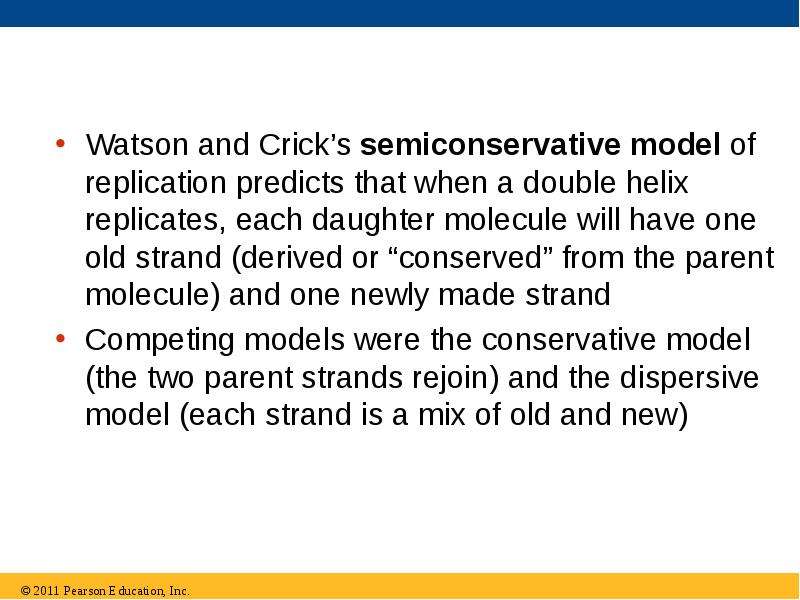
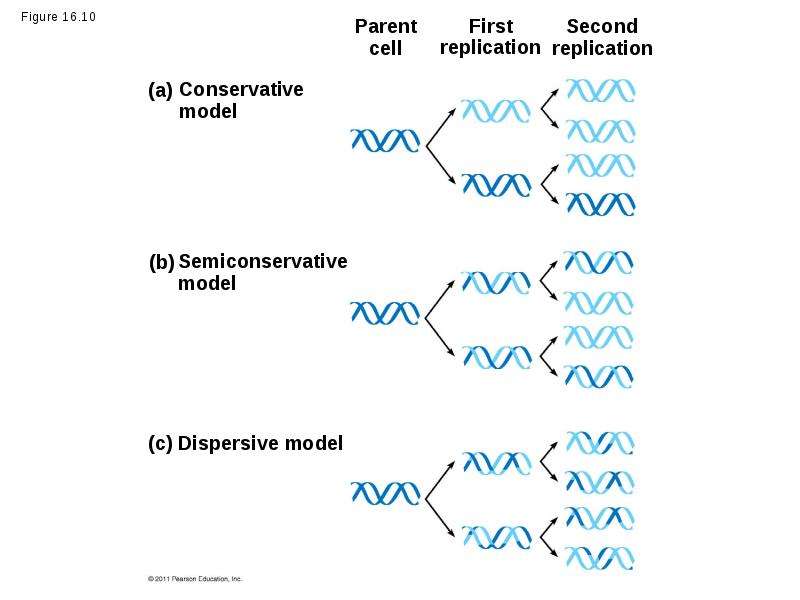
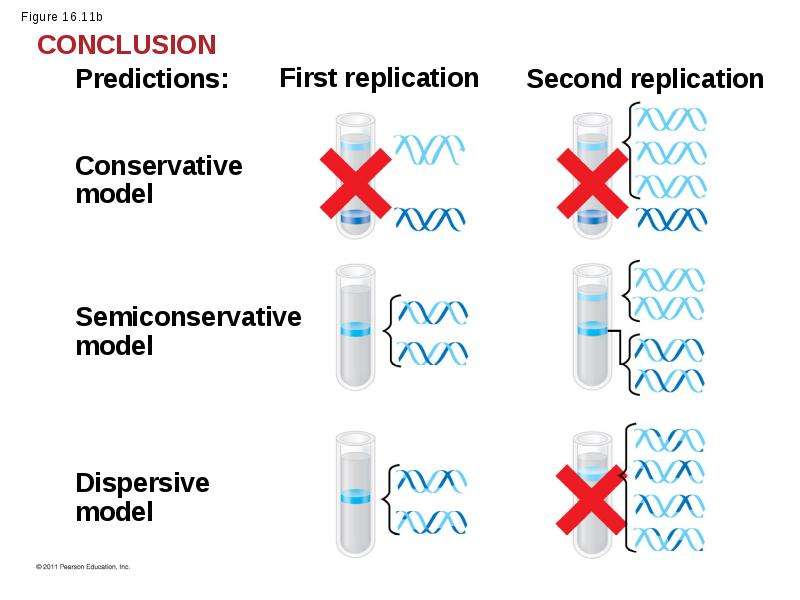
Watson and Crick’s semiconservative model of replication predicts that when a double helix replicates, each daughter molecule will have one old strand (derived or “conserved” from the parent molecule) and one newly made strand Watson and Crick’s semiconservative model of replication predicts that when a double helix replicates, each daughter molecule will have one old strand (derived or “conserved” from the parent molecule) and one newly made strand Competing models were the conservative model (the two parent strands rejoin) and the dispersive model (each strand is a mix of old and new)

Слайд 43


Figure 16.10
Описание слайда:
Figure 16.10

Слайд 44


Experiments by Matthew Meselson and Franklin Stahl supported the semiconservative model Experiments by Matthew Meselson and Franklin Stahl supported...
Описание слайда:
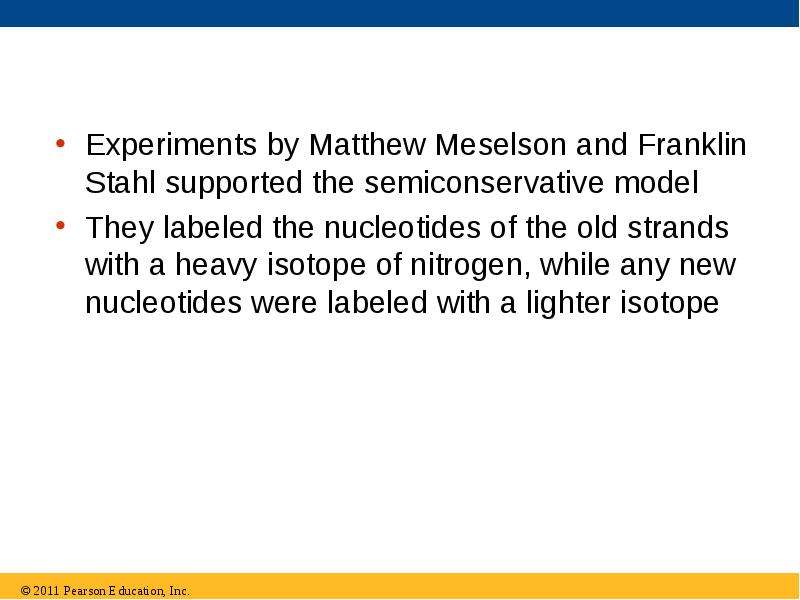
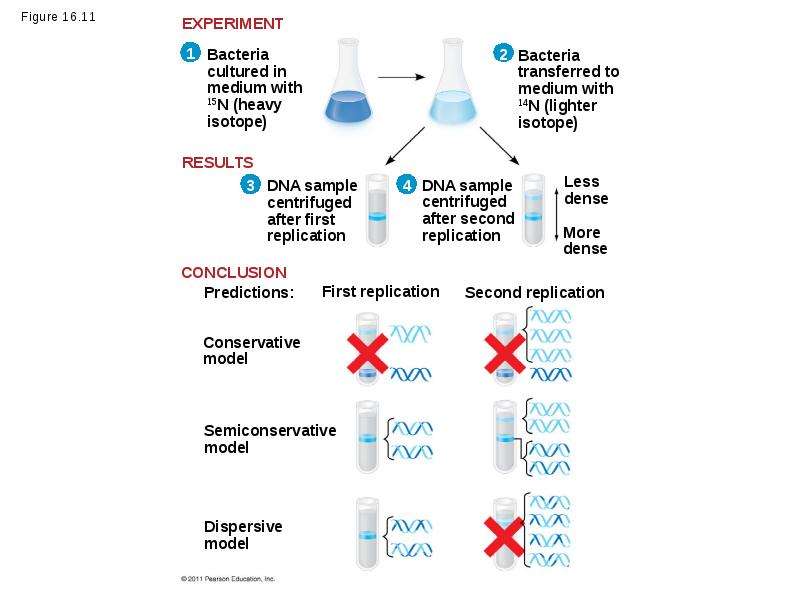
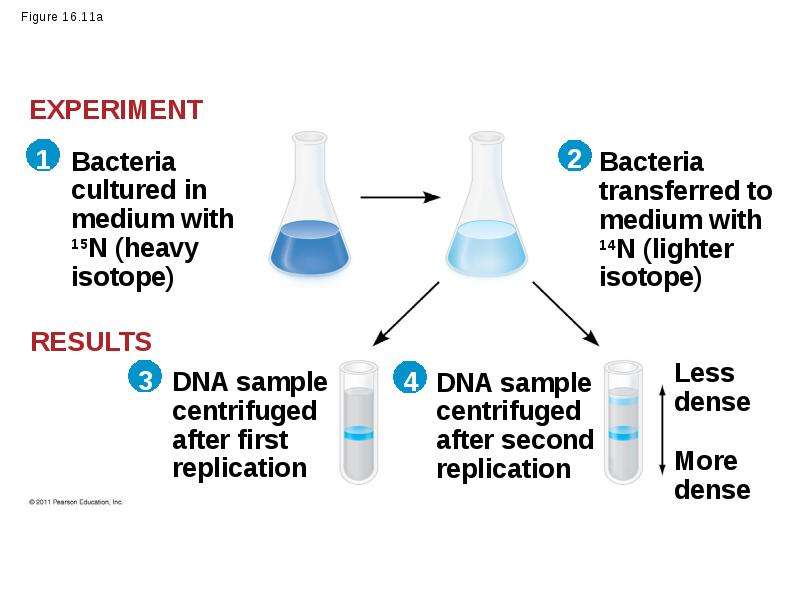
Experiments by Matthew Meselson and Franklin Stahl supported the semiconservative model Experiments by Matthew Meselson and Franklin Stahl supported the semiconservative model They labeled the nucleotides of the old strands with a heavy isotope of nitrogen, while any new nucleotides were labeled with a lighter isotope

Слайд 45


The first replication produced a band of hybrid DNA, eliminating the conservative model The first replication produced a band of hybrid DNA,...
Описание слайда:
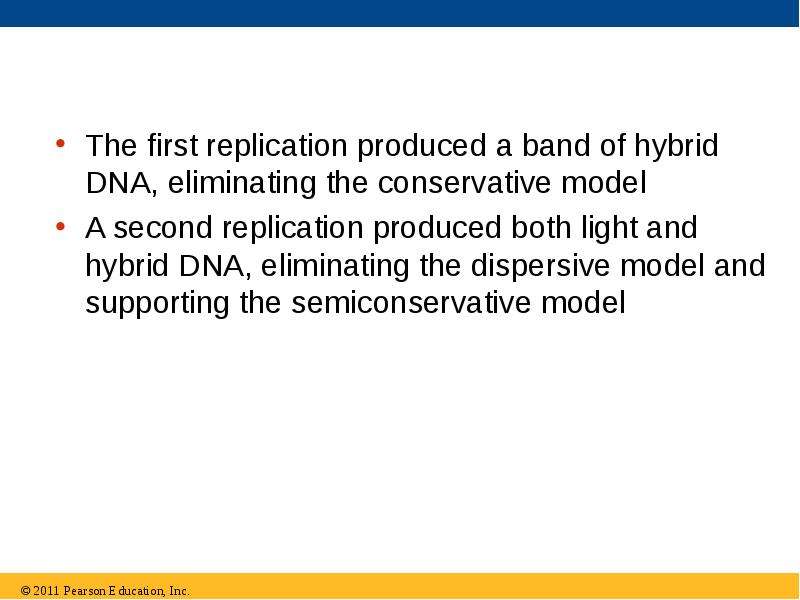
The first replication produced a band of hybrid DNA, eliminating the conservative model The first replication produced a band of hybrid DNA, eliminating the conservative model A second replication produced both light and hybrid DNA, eliminating the dispersive model and supporting the semiconservative model

Слайд 46


Figure 16.11
Описание слайда:
Figure 16.11

Слайд 47


Figure 16.11a
Описание слайда:
Figure 16.11a

Слайд 48


Figure 16.11b
Описание слайда:
Figure 16.11b

Слайд 49


DNA Replication: A Closer Look The copying of DNA is remarkable in its speed and accuracy More than a dozen enzymes and other proteins participate in...
Описание слайда:
DNA Replication: A Closer Look The copying of DNA is remarkable in its speed and accuracy More than a dozen enzymes and other proteins participate in DNA replication

Слайд 50


Getting Started Replication begins at particular sites called origins of replication, where the two DNA strands are separated, opening up a...
Описание слайда:
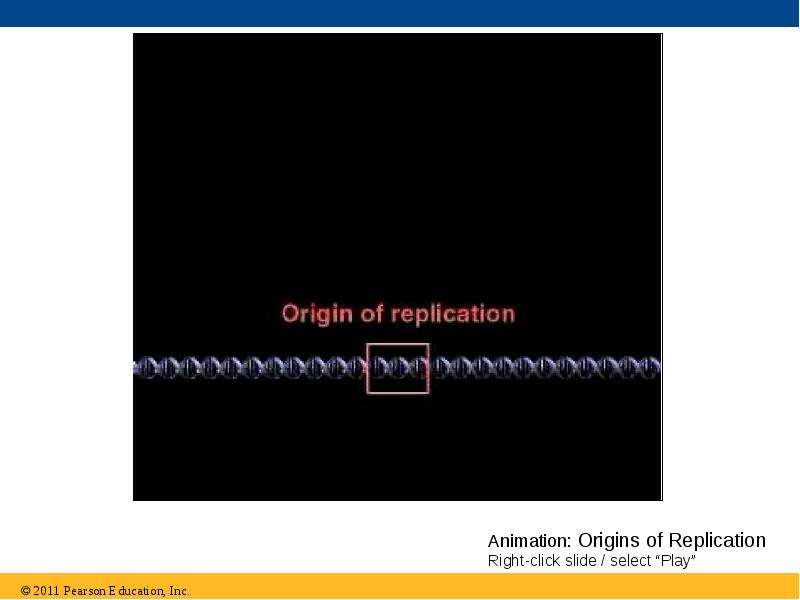
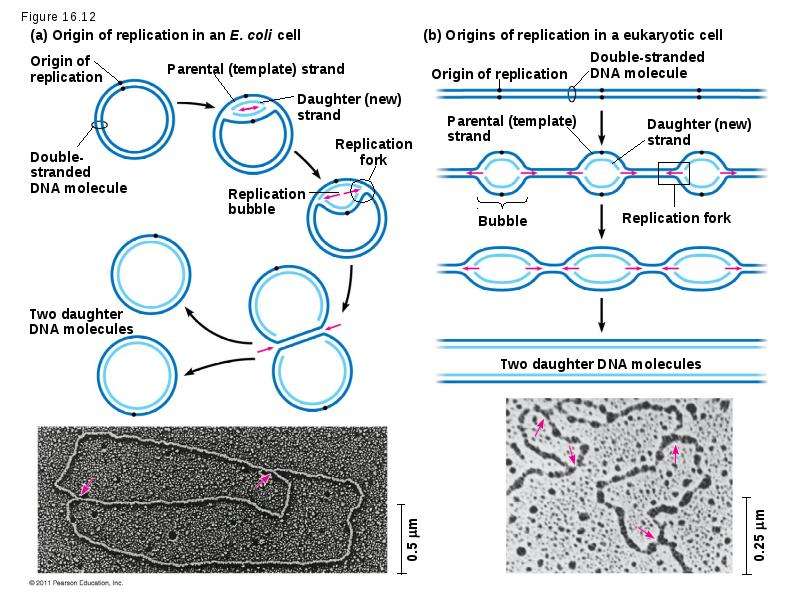
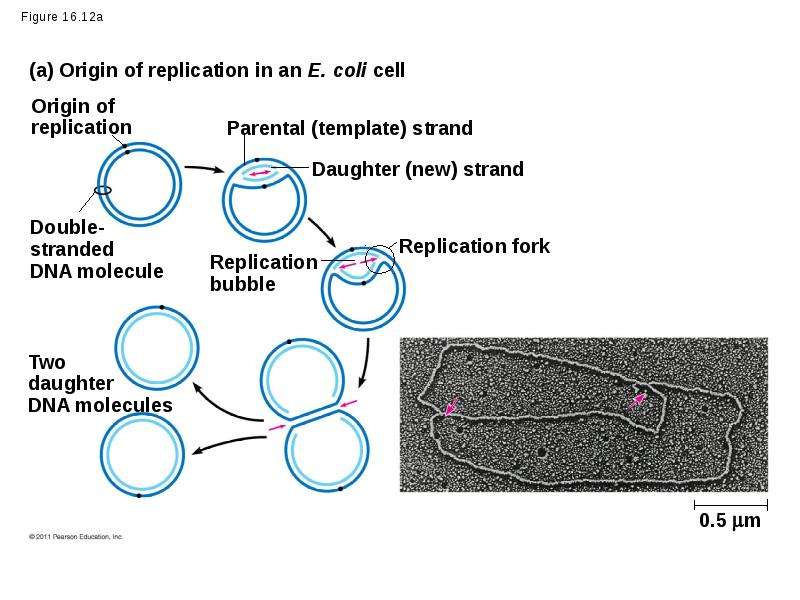
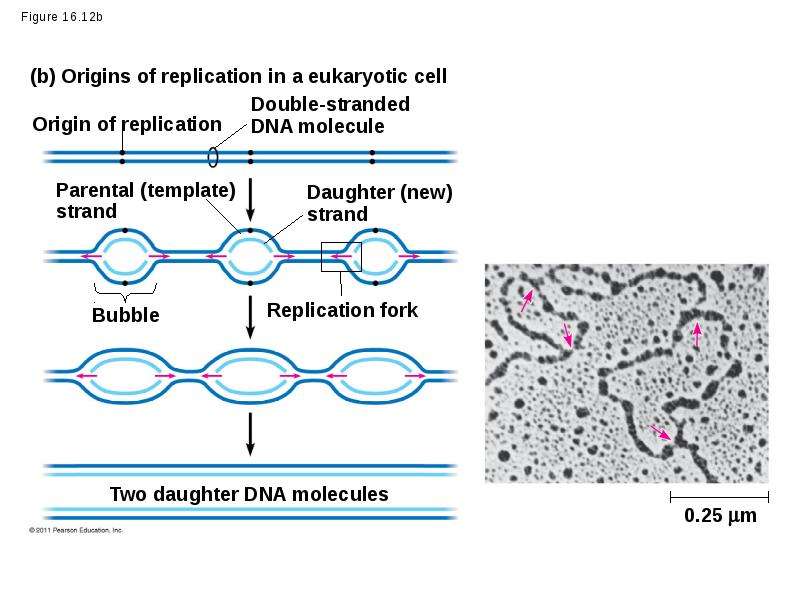
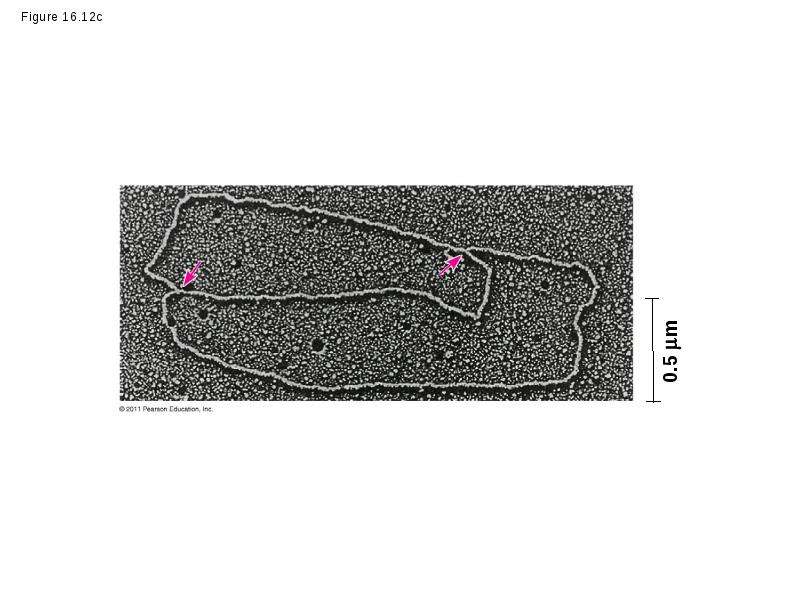
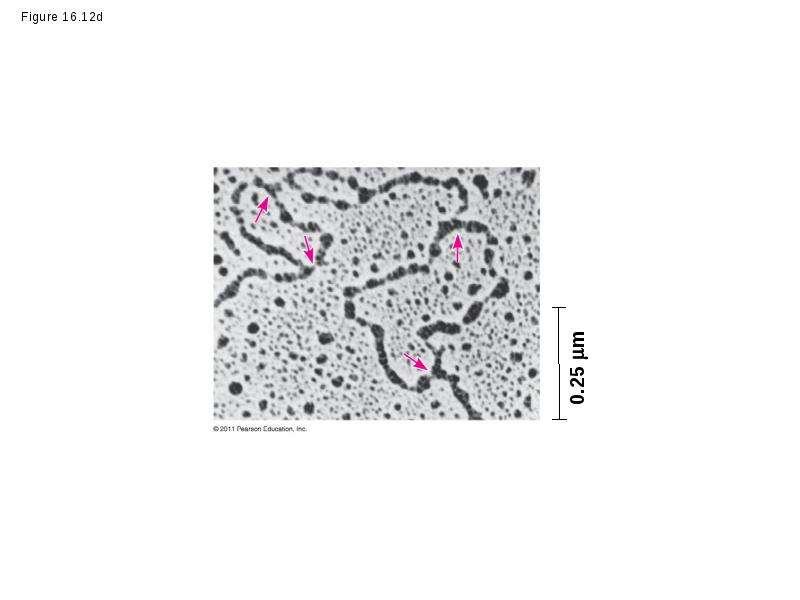
Getting Started Replication begins at particular sites called origins of replication, where the two DNA strands are separated, opening up a replication “bubble” A eukaryotic chromosome may have hundreds or even thousands of origins of replication Replication proceeds in both directions from each origin, until the entire molecule is copied

Слайд 51


The molecular basis of inheritance. (Chapter 16), слайд №51
Описание слайда:

Слайд 52


Figure 16.12
Описание слайда:
Figure 16.12

Слайд 53


Figure 16.12a
Описание слайда:
Figure 16.12a

Слайд 54


Figure 16.12b
Описание слайда:
Figure 16.12b

Слайд 55


Figure 16.12c
Описание слайда:
Figure 16.12c

Слайд 56


Figure 16.12d
Описание слайда:
Figure 16.12d

Слайд 57


At the end of each replication bubble is a replication fork, a Y-shaped region where new DNA strands are elongating At the end of each replication...
Описание слайда:
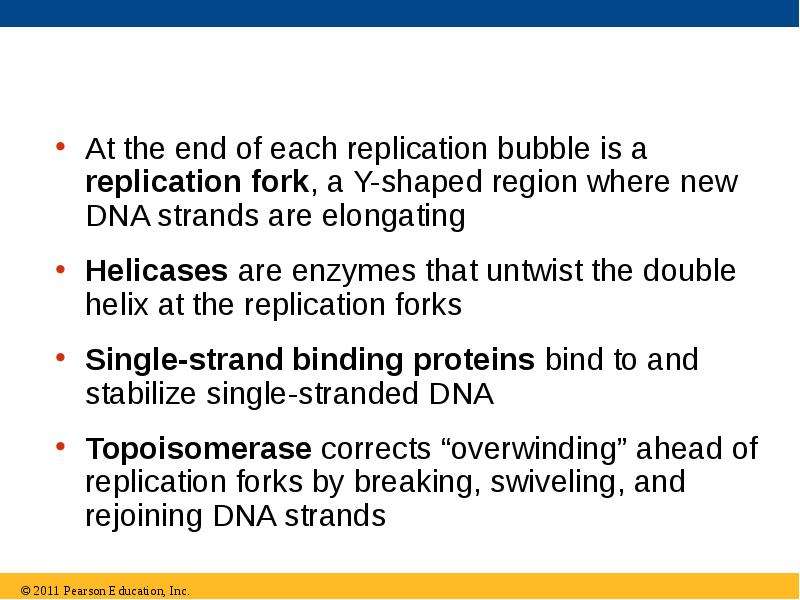
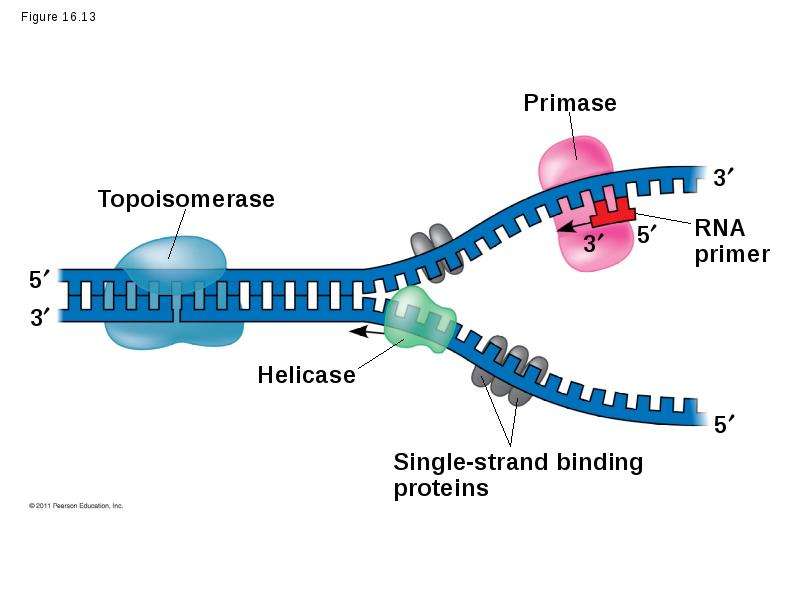
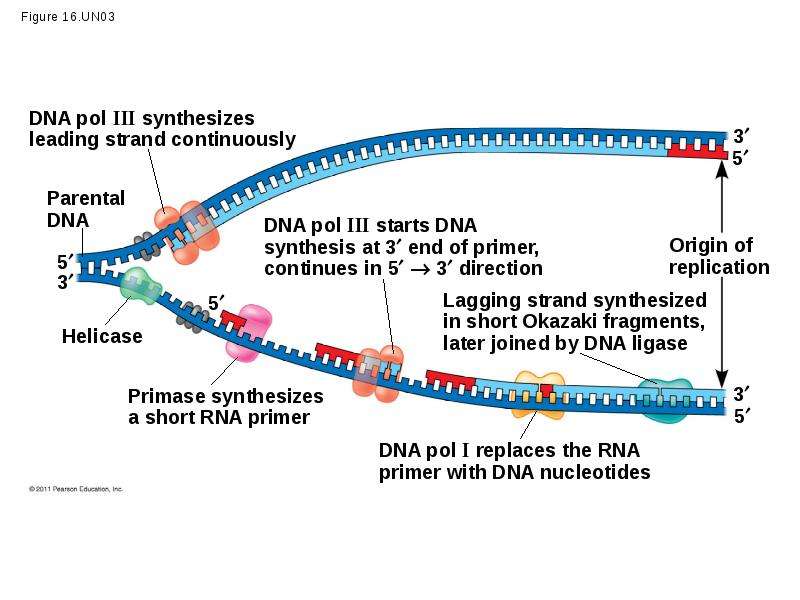
At the end of each replication bubble is a replication fork, a Y-shaped region where new DNA strands are elongating At the end of each replication bubble is a replication fork, a Y-shaped region where new DNA strands are elongating Helicases are enzymes that untwist the double helix at the replication forks Single-strand binding proteins bind to and stabilize single-stranded DNA Topoisomerase corrects “overwinding” ahead of replication forks by breaking, swiveling, and rejoining DNA strands

Слайд 58


Figure 16.13
Описание слайда:
Figure 16.13

Слайд 59


DNA polymerases cannot initiate synthesis of a polynucleotide; they can only add nucleotides to the 3 end DNA polymerases cannot initiate synthesis...
Описание слайда:
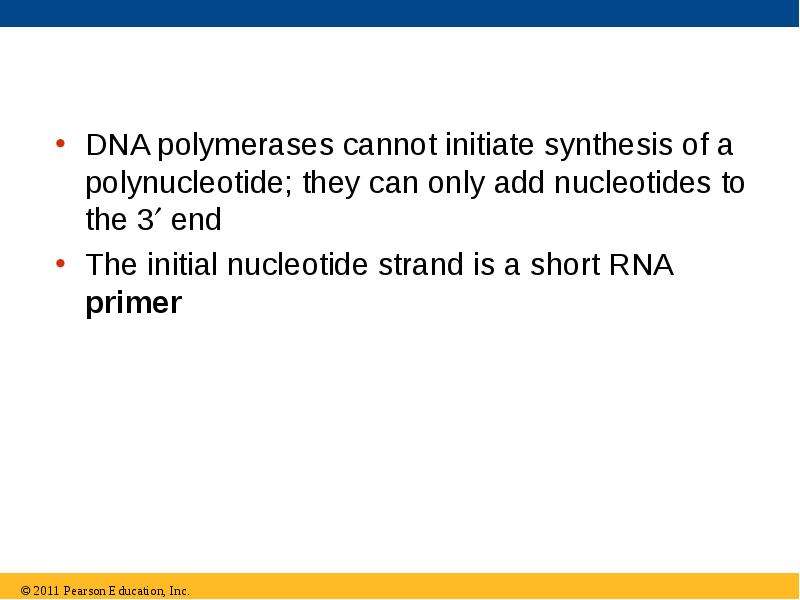
DNA polymerases cannot initiate synthesis of a polynucleotide; they can only add nucleotides to the 3 end DNA polymerases cannot initiate synthesis of a polynucleotide; they can only add nucleotides to the 3 end The initial nucleotide strand is a short RNA primer

Слайд 60


An enzyme called primase can start an RNA chain from scratch and adds RNA nucleotides one at a time using the parental DNA as a template An enzyme...
Описание слайда:
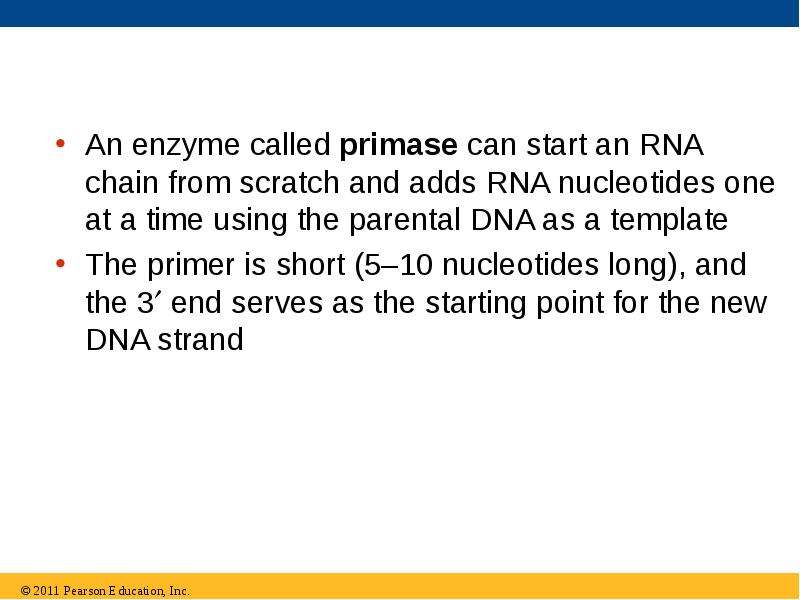
An enzyme called primase can start an RNA chain from scratch and adds RNA nucleotides one at a time using the parental DNA as a template An enzyme called primase can start an RNA chain from scratch and adds RNA nucleotides one at a time using the parental DNA as a template The primer is short (5–10 nucleotides long), and the 3 end serves as the starting point for the new DNA strand

Слайд 61


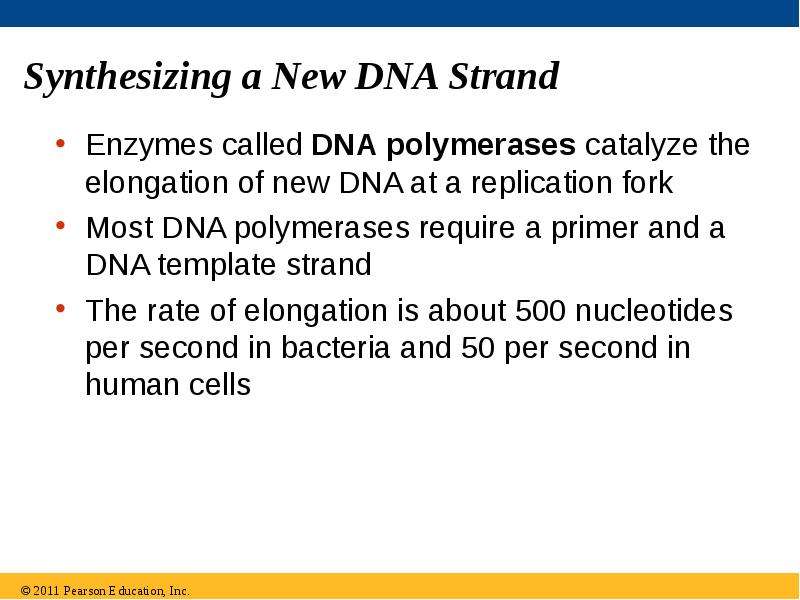
Synthesizing a New DNA Strand Enzymes called DNA polymerases catalyze the elongation of new DNA at a replication fork Most DNA polymerases require a...
Описание слайда:
Synthesizing a New DNA Strand Enzymes called DNA polymerases catalyze the elongation of new DNA at a replication fork Most DNA polymerases require a primer and a DNA template strand The rate of elongation is about 500 nucleotides per second in bacteria and 50 per second in human cells

Слайд 62


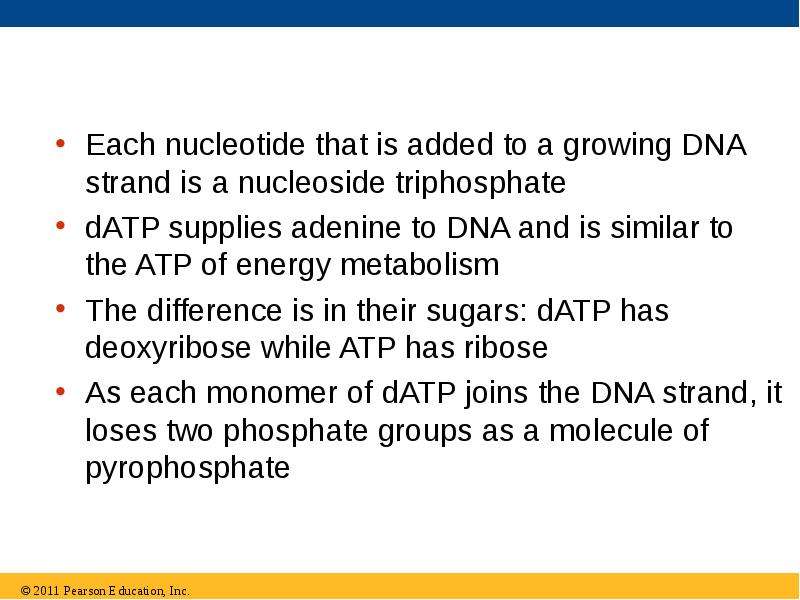
Each nucleotide that is added to a growing DNA strand is a nucleoside triphosphate Each nucleotide that is added to a growing DNA strand is a...
Описание слайда:
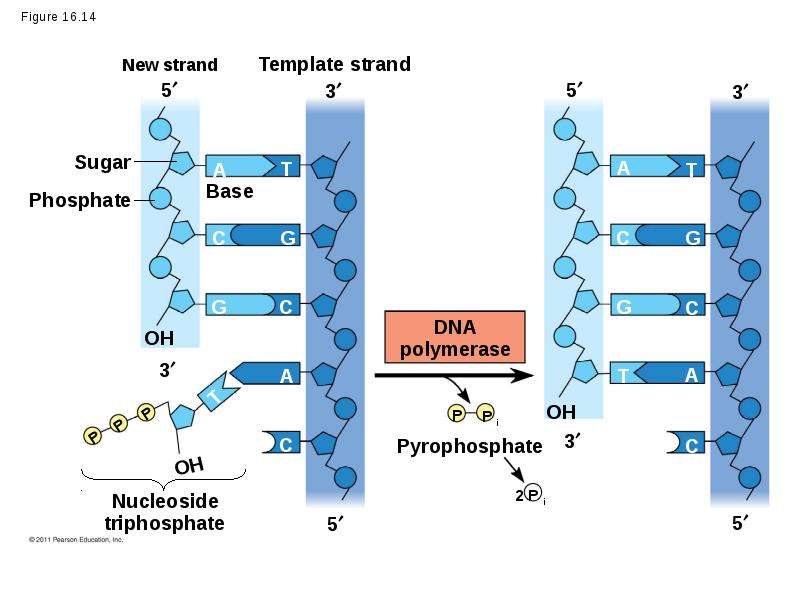
Each nucleotide that is added to a growing DNA strand is a nucleoside triphosphate Each nucleotide that is added to a growing DNA strand is a nucleoside triphosphate dATP supplies adenine to DNA and is similar to the ATP of energy metabolism The difference is in their sugars: dATP has deoxyribose while ATP has ribose As each monomer of dATP joins the DNA strand, it loses two phosphate groups as a molecule of pyrophosphate

Слайд 63


Figure 16.14
Описание слайда:
Figure 16.14

Слайд 64


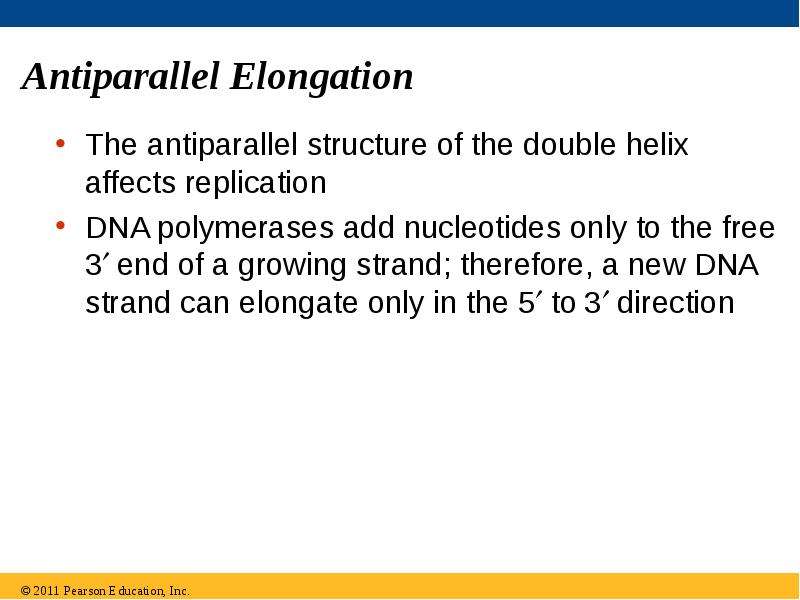
Antiparallel Elongation The antiparallel structure of the double helix affects replication DNA polymerases add nucleotides only to the free 3end of...
Описание слайда:
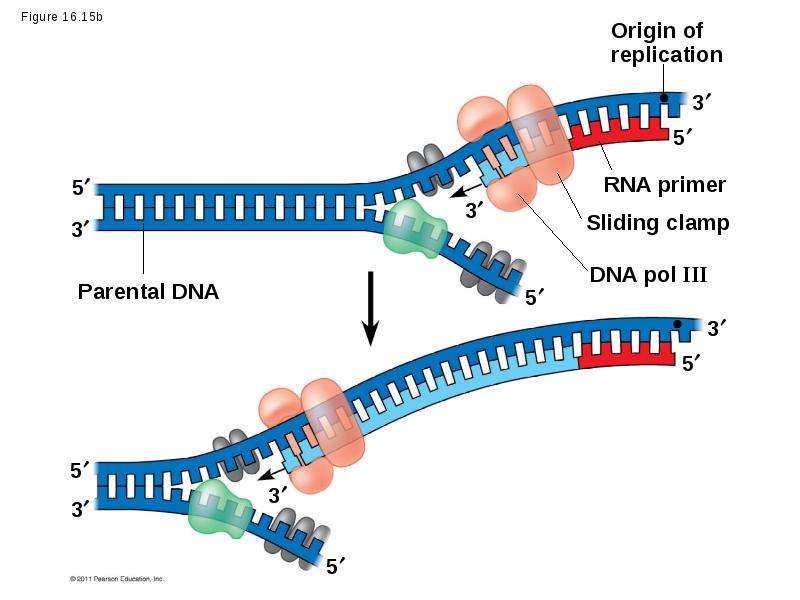
Antiparallel Elongation The antiparallel structure of the double helix affects replication DNA polymerases add nucleotides only to the free 3end of a growing strand; therefore, a new DNA strand can elongate only in the 5to3direction

Слайд 65


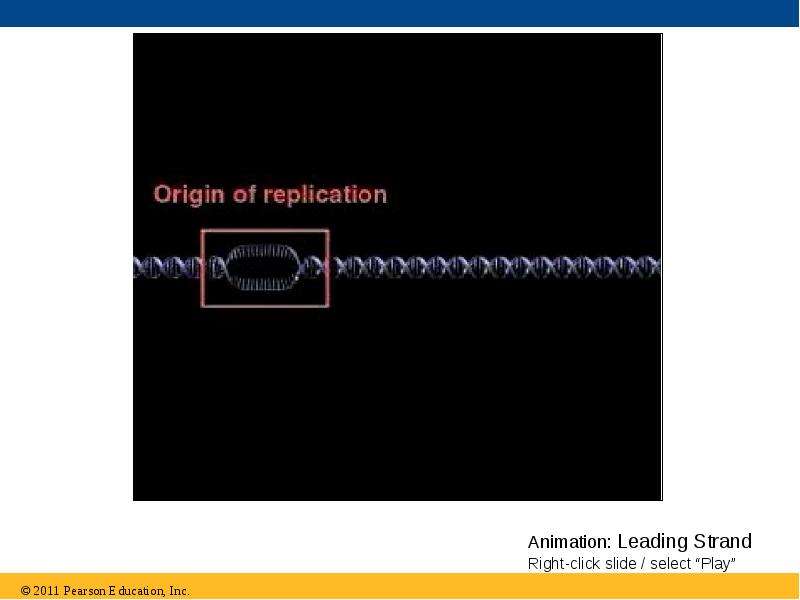
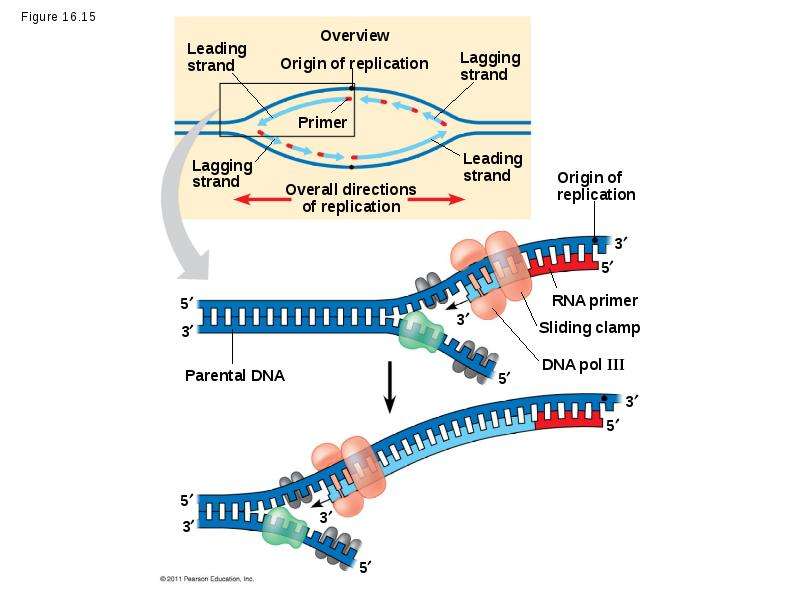
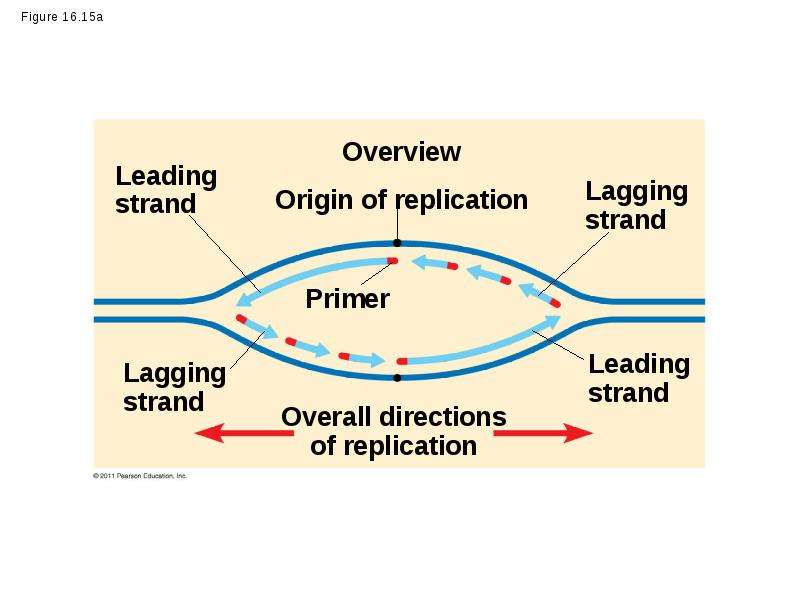
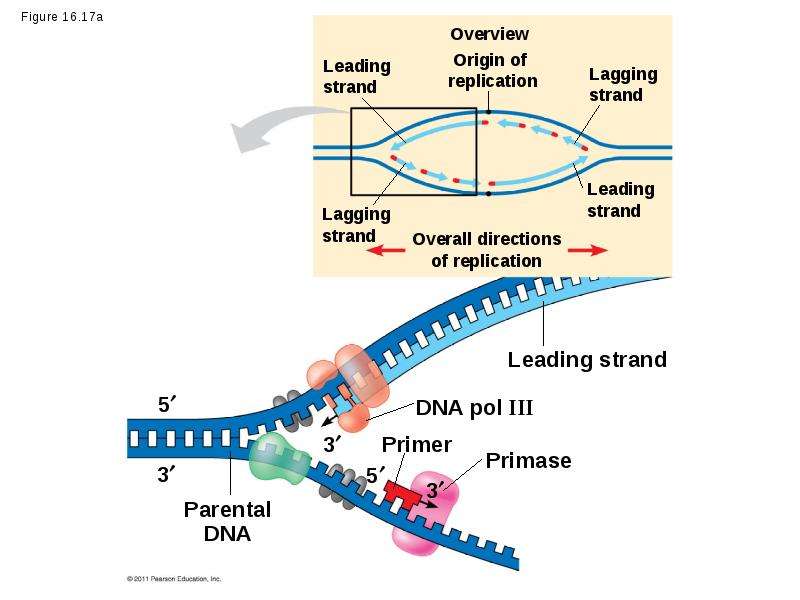
Along one template strand of DNA, the DNA polymerase synthesizes a leading strand continuously, moving toward the replication fork Along one template...
Описание слайда:
Along one template strand of DNA, the DNA polymerase synthesizes a leading strand continuously, moving toward the replication fork Along one template strand of DNA, the DNA polymerase synthesizes a leading strand continuously, moving toward the replication fork

Слайд 66


The molecular basis of inheritance. (Chapter 16), слайд №66
Описание слайда:

Слайд 67


Figure 16.15
Описание слайда:
Figure 16.15

Слайд 68


Figure 16.15a
Описание слайда:
Figure 16.15a

Слайд 69


Figure 16.15b
Описание слайда:
Figure 16.15b

Слайд 70


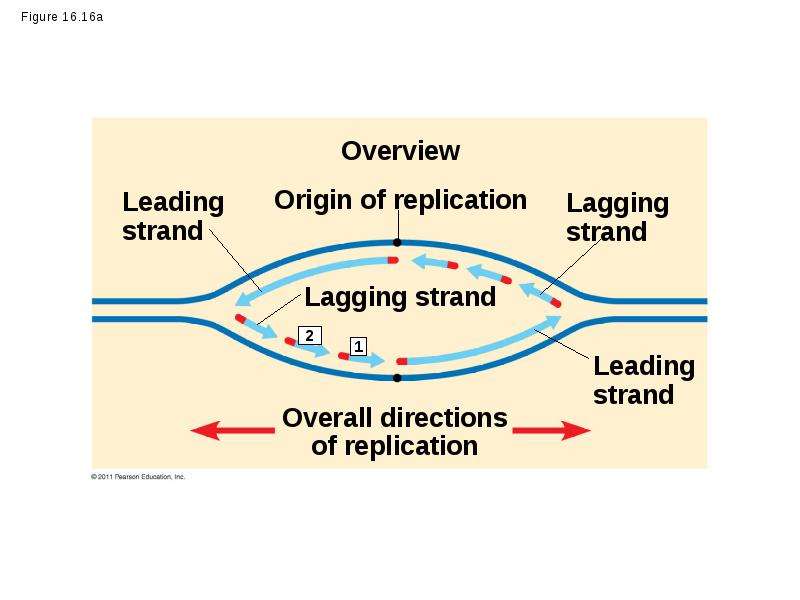
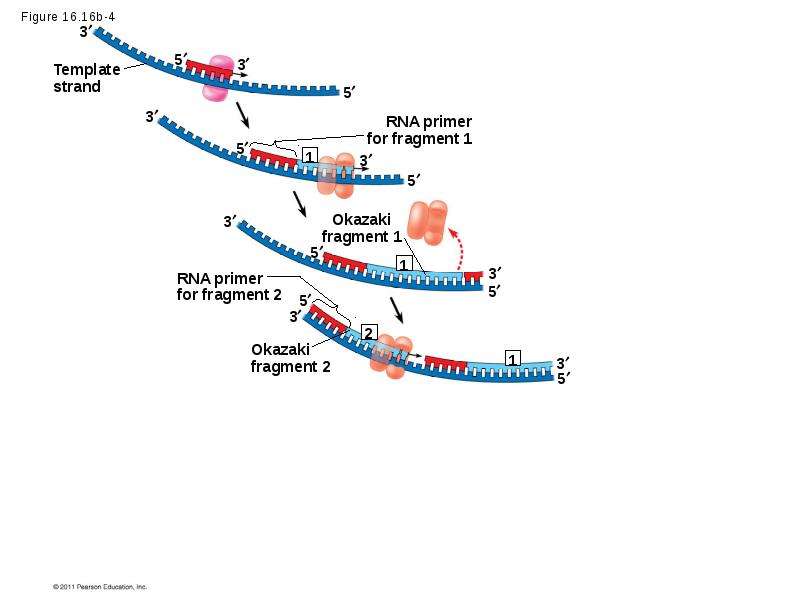
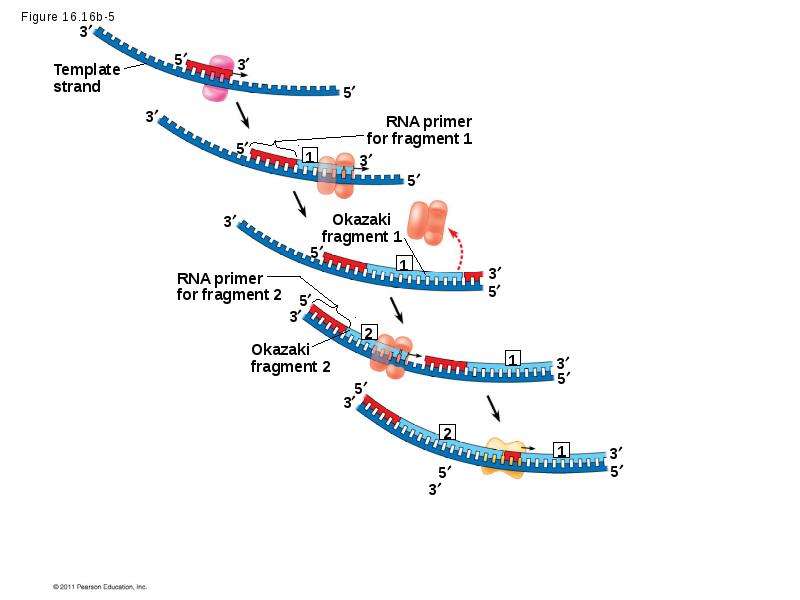
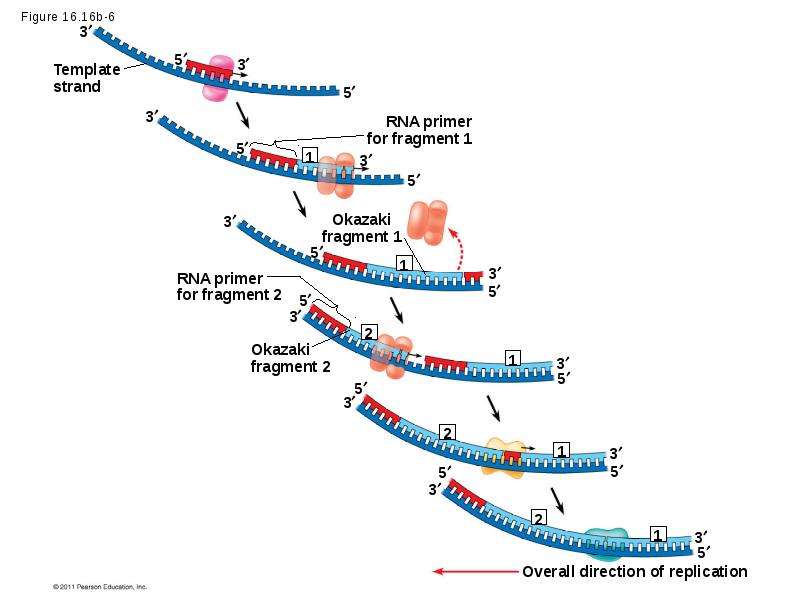
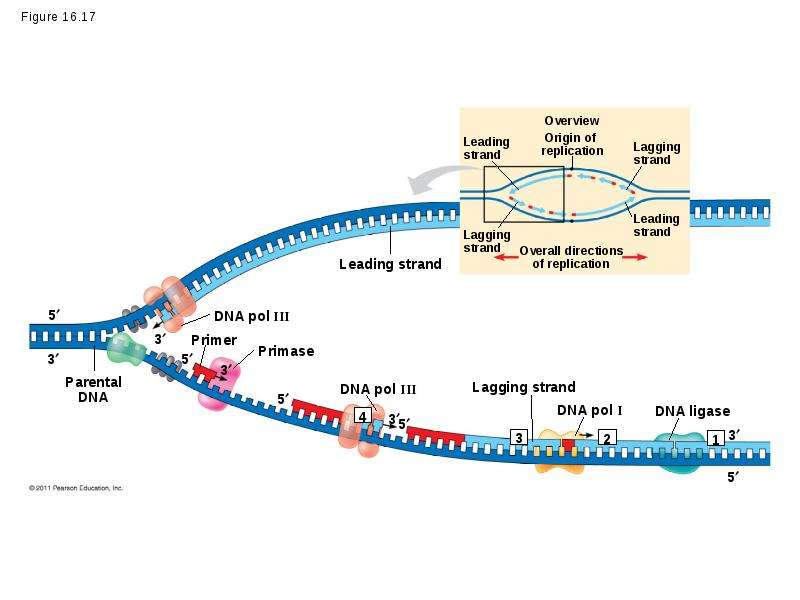
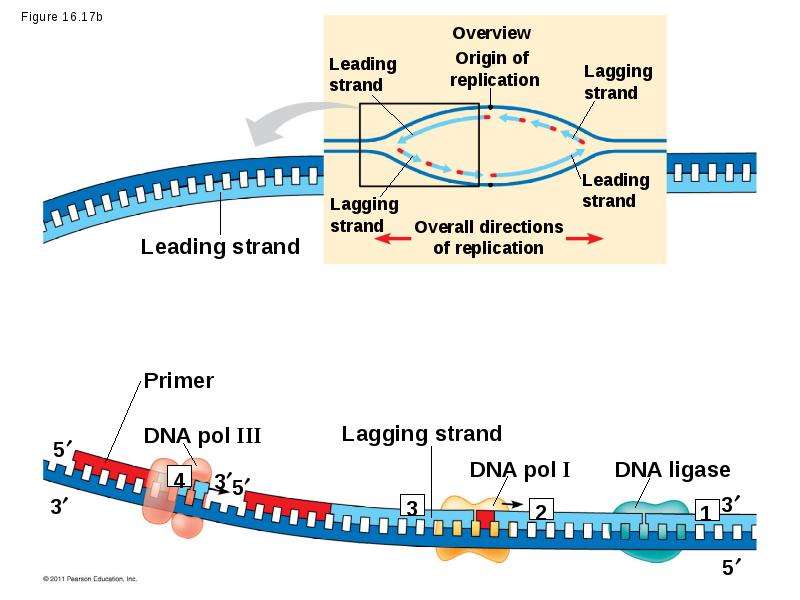
To elongate the other new strand, called the lagging strand, DNA polymerase must work in the direction away from the replication fork To elongate the...
Описание слайда:
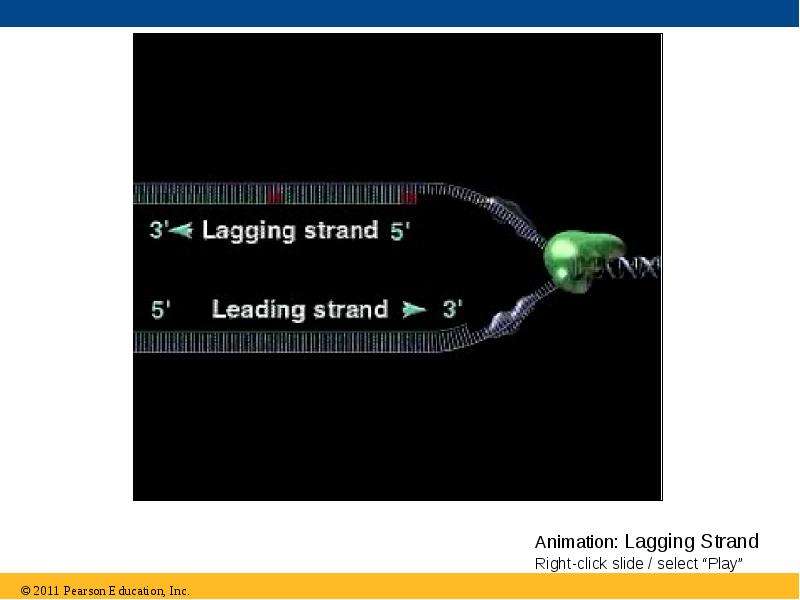
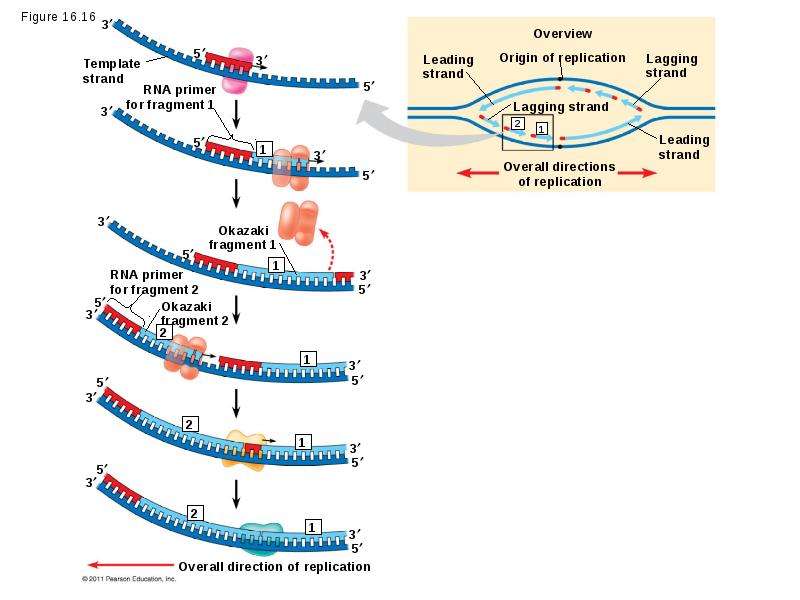
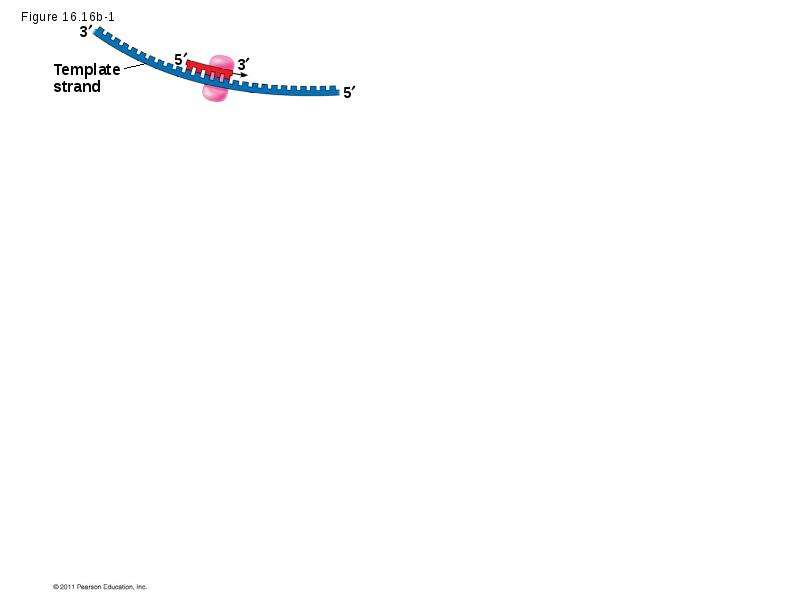
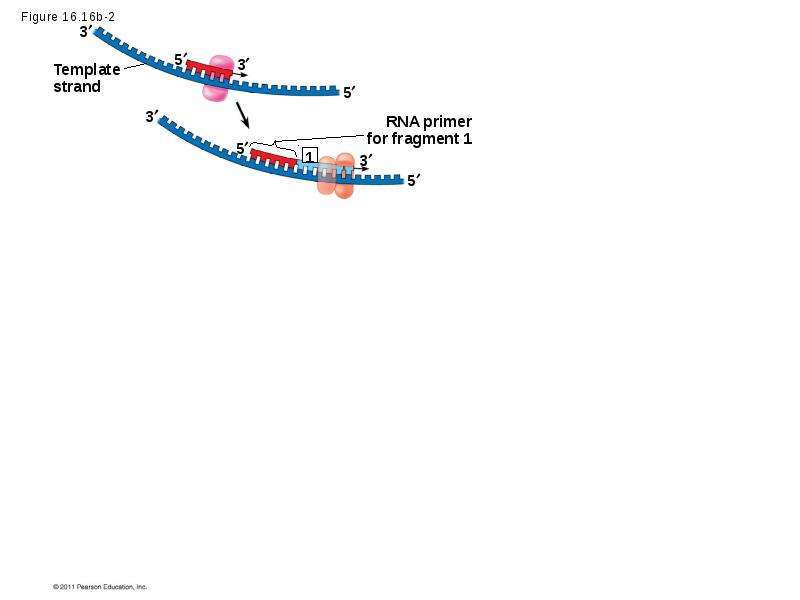
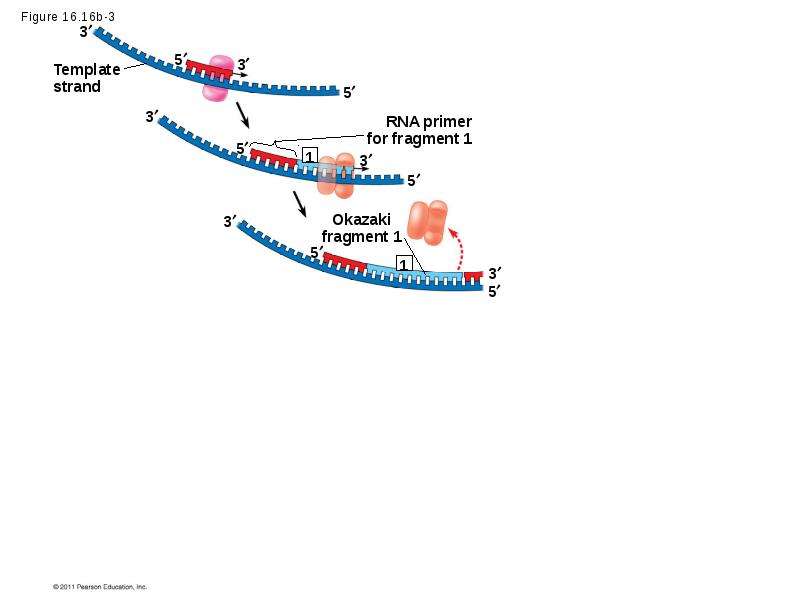
To elongate the other new strand, called the lagging strand, DNA polymerase must work in the direction away from the replication fork To elongate the other new strand, called the lagging strand, DNA polymerase must work in the direction away from the replication fork The lagging strand is synthesized as a series of segments called Okazaki fragments, which are joined together by DNA ligase

Слайд 71


The molecular basis of inheritance. (Chapter 16), слайд №71
Описание слайда:

Слайд 72


Figure 16.16
Описание слайда:
Figure 16.16

Слайд 73


Figure 16.16a
Описание слайда:
Figure 16.16a

Слайд 74


Figure 16.16b-1
Описание слайда:
Figure 16.16b-1

Слайд 75


Figure 16.16b-2
Описание слайда:
Figure 16.16b-2

Слайд 76


Figure 16.16b-3
Описание слайда:
Figure 16.16b-3

Слайд 77


Figure 16.16b-4
Описание слайда:
Figure 16.16b-4

Слайд 78


Figure 16.16b-5
Описание слайда:
Figure 16.16b-5

Слайд 79


Figure 16.16b-6
Описание слайда:
Figure 16.16b-6

Слайд 80


Figure 16.17
Описание слайда:
Figure 16.17

Слайд 81


Figure 16.17a
Описание слайда:
Figure 16.17a

Слайд 82


Figure 16.17b
Описание слайда:
Figure 16.17b

Слайд 83


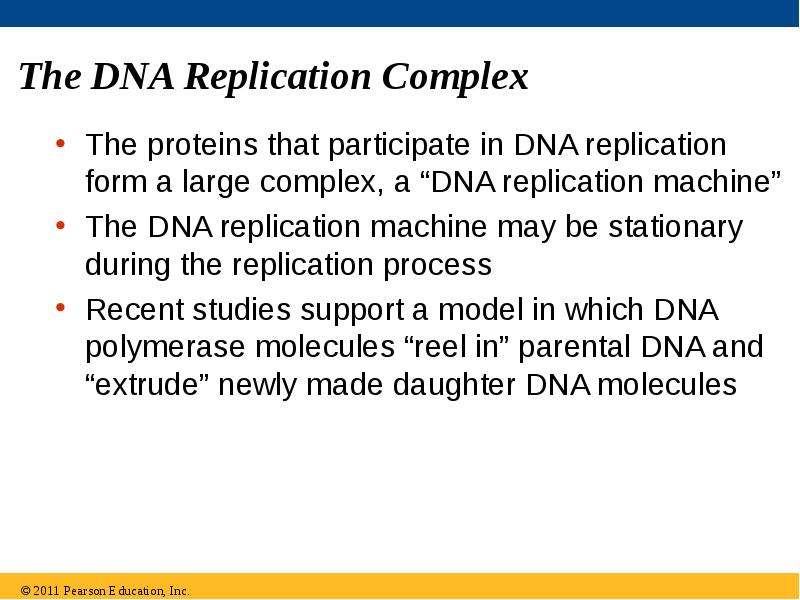
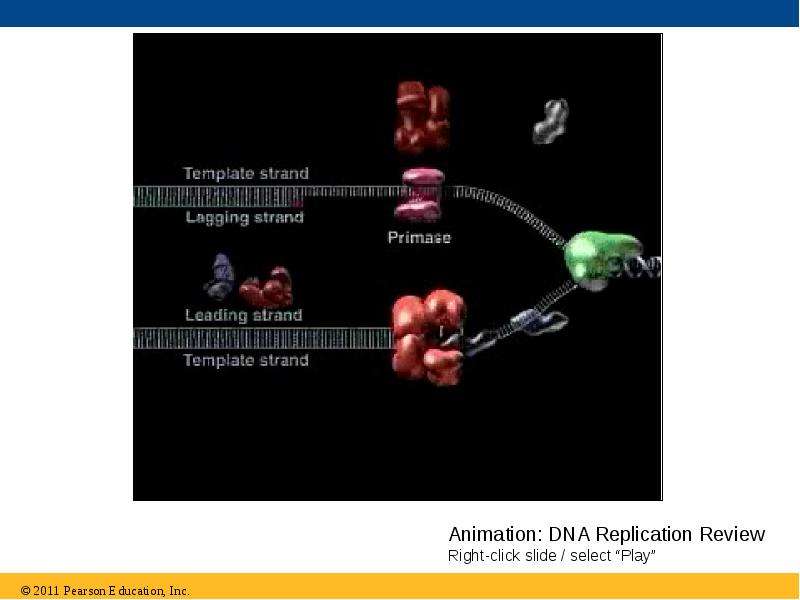
The DNA Replication Complex
Описание слайда:
The DNA Replication Complex

Слайд 84


The molecular basis of inheritance. (Chapter 16), слайд №84
Описание слайда:

Слайд 85


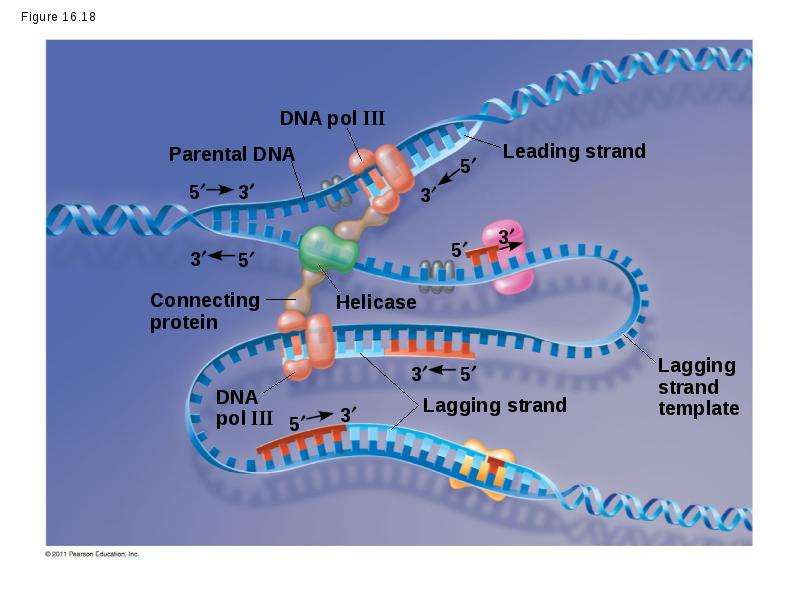
Figure 16.18
Описание слайда:
Figure 16.18

Слайд 86


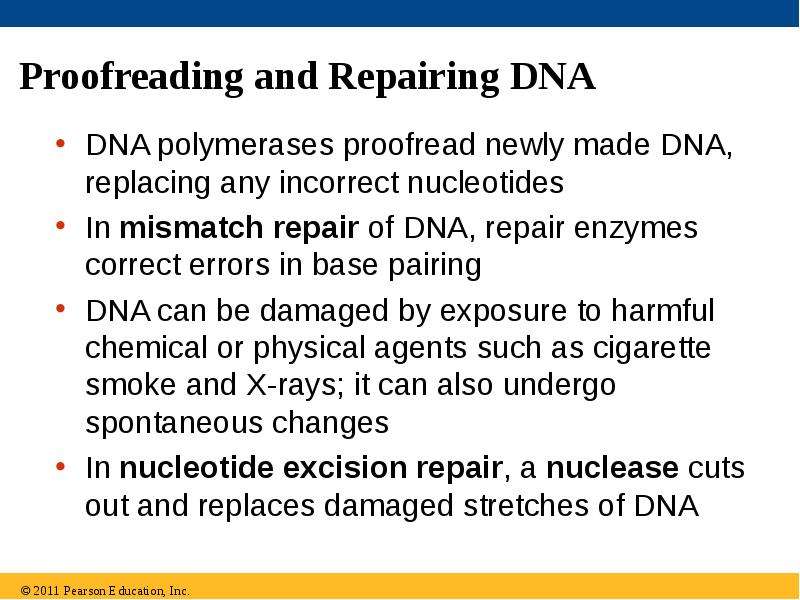
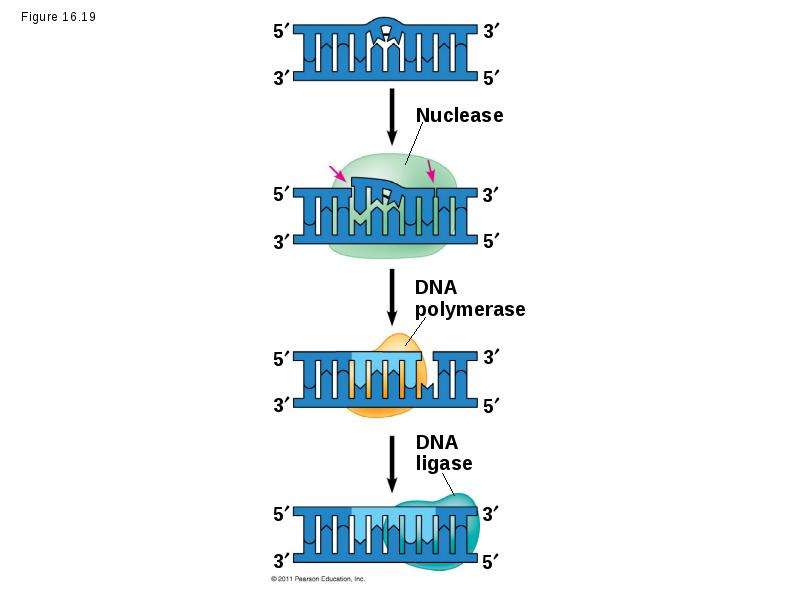
Proofreading and Repairing DNA DNA polymerases proofread newly made DNA, replacing any incorrect nucleotides In mismatch repair of DNA, repair...
Описание слайда:
Proofreading and Repairing DNA DNA polymerases proofread newly made DNA, replacing any incorrect nucleotides In mismatch repair of DNA, repair enzymes correct errors in base pairing DNA can be damaged by exposure to harmful chemical or physical agents such as cigarette smoke and X-rays; it can also undergo spontaneous changes In nucleotide excision repair, a nuclease cuts out and replaces damaged stretches of DNA

Слайд 87


Figure 16.19
Описание слайда:
Figure 16.19

Слайд 88


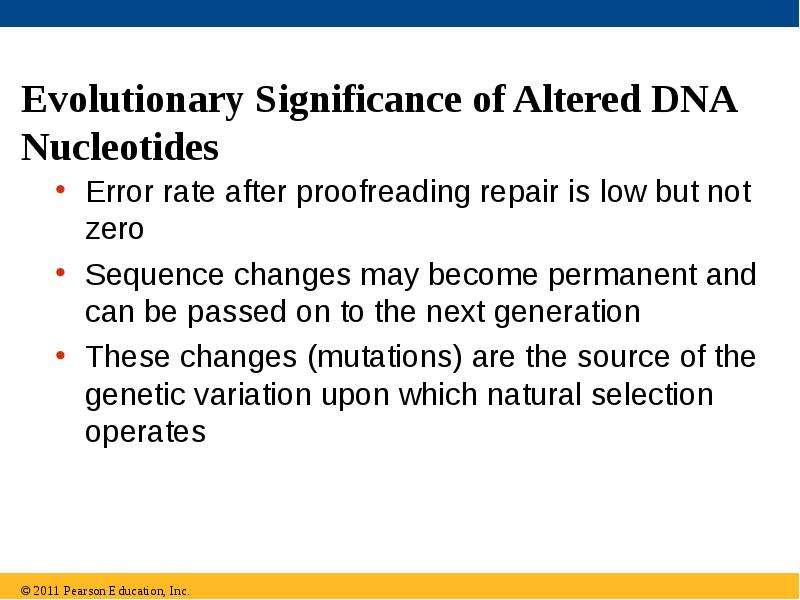
Evolutionary Significance of Altered DNA Nucleotides Error rate after proofreading repair is low but not zero Sequence changes may become permanent...
Описание слайда:
Evolutionary Significance of Altered DNA Nucleotides Error rate after proofreading repair is low but not zero Sequence changes may become permanent and can be passed on to the next generation These changes (mutations) are the source of the genetic variation upon which natural selection operates

Слайд 89


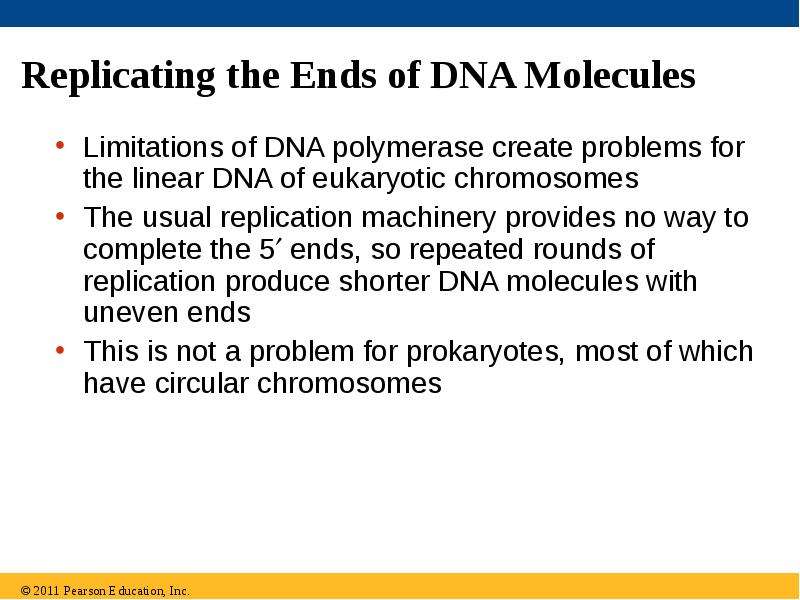
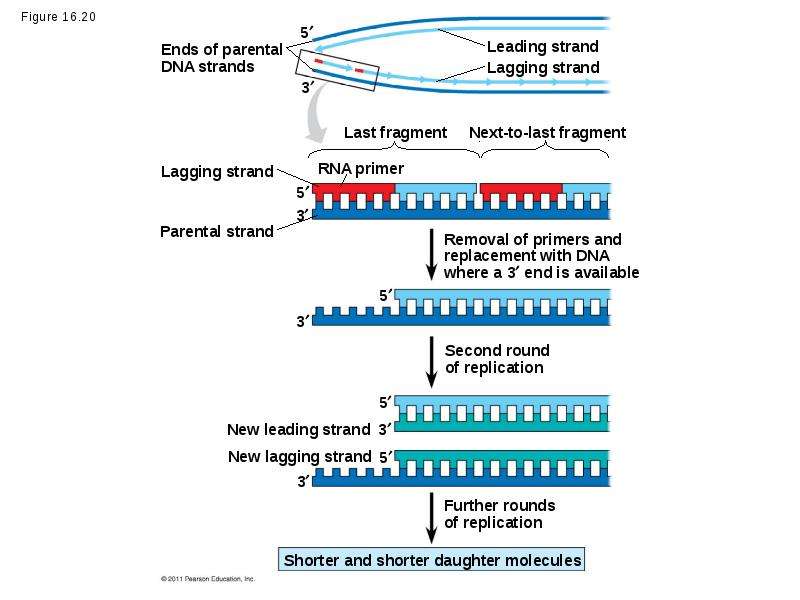
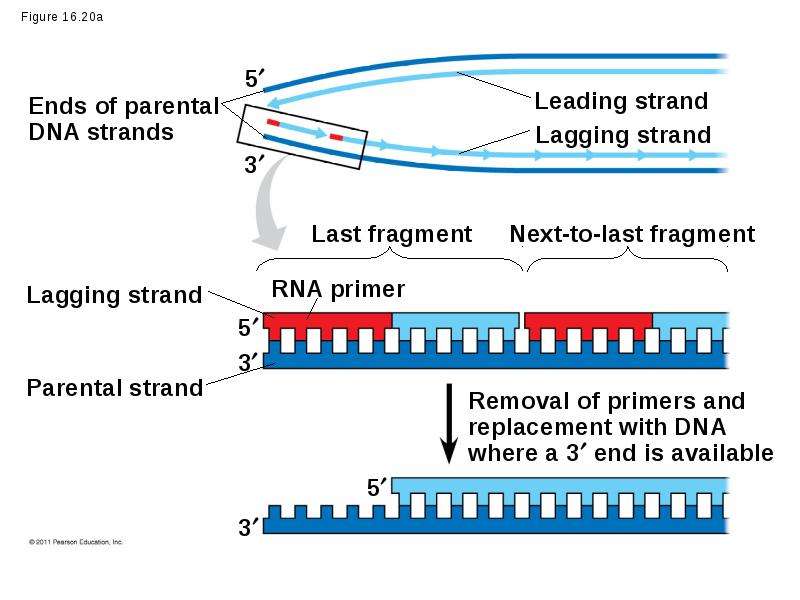
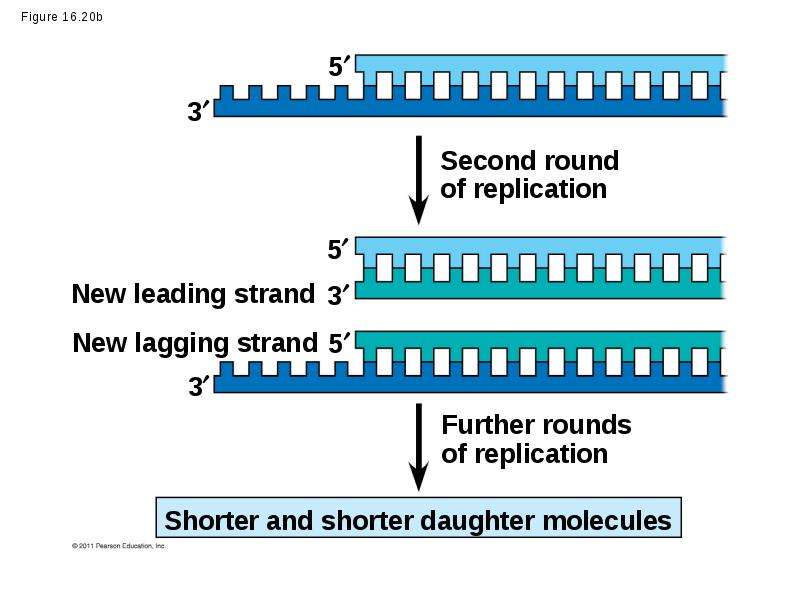
Replicating the Ends of DNA Molecules Limitations of DNA polymerase create problems for the linear DNA of eukaryotic chromosomes The usual...
Описание слайда:
Replicating the Ends of DNA Molecules Limitations of DNA polymerase create problems for the linear DNA of eukaryotic chromosomes The usual replication machinery provides no way to complete the 5 ends, so repeated rounds of replication produce shorter DNA molecules with uneven ends This is not a problem for prokaryotes, most of which have circular chromosomes

Слайд 90


Figure 16.20
Описание слайда:
Figure 16.20

Слайд 91


Figure 16.20a
Описание слайда:
Figure 16.20a

Слайд 92


Figure 16.20b
Описание слайда:
Figure 16.20b

Слайд 93


Eukaryotic chromosomal DNA molecules have special nucleotide sequences at their ends called telomeres Eukaryotic chromosomal DNA molecules have...
Описание слайда:
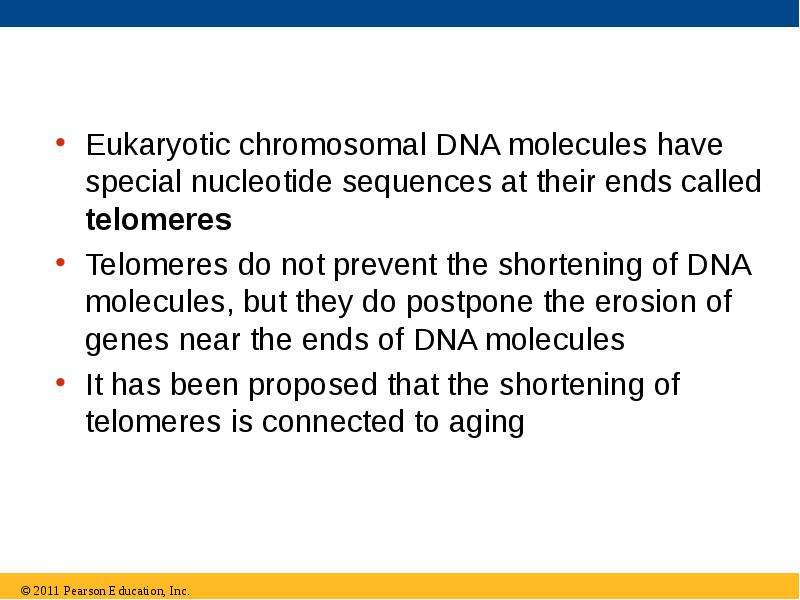
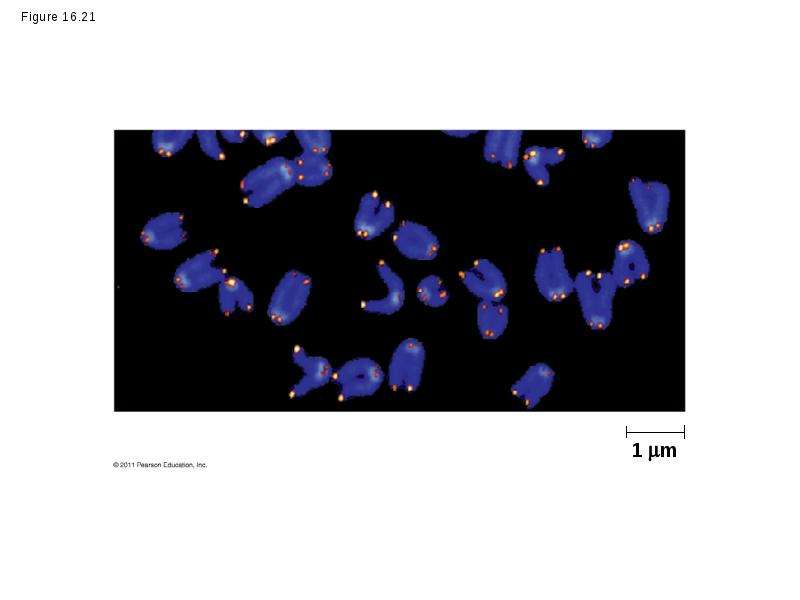
Eukaryotic chromosomal DNA molecules have special nucleotide sequences at their ends called telomeres Eukaryotic chromosomal DNA molecules have special nucleotide sequences at their ends called telomeres Telomeres do not prevent the shortening of DNA molecules, but they do postpone the erosion of genes near the ends of DNA molecules It has been proposed that the shortening of telomeres is connected to aging

Слайд 94


Figure 16.21
Описание слайда:
Figure 16.21

Слайд 95


If chromosomes of germ cells became shorter in every cell cycle, essential genes would eventually be missing from the gametes they produce If...
Описание слайда:
If chromosomes of germ cells became shorter in every cell cycle, essential genes would eventually be missing from the gametes they produce If chromosomes of germ cells became shorter in every cell cycle, essential genes would eventually be missing from the gametes they produce An enzyme called telomerase catalyzes the lengthening of telomeres in germ cells

Слайд 96


The shortening of telomeres might protect cells from cancerous growth by limiting the number of cell divisions The shortening of telomeres might...
Описание слайда:
The shortening of telomeres might protect cells from cancerous growth by limiting the number of cell divisions The shortening of telomeres might protect cells from cancerous growth by limiting the number of cell divisions There is evidence of telomerase activity in cancer cells, which may allow cancer cells to persist

Слайд 97


Concept 16.3 A chromosome consists of a DNA molecule packed together with proteins The bacterial chromosome is a double-stranded, circular DNA...
Описание слайда:
Concept 16.3 A chromosome consists of a DNA molecule packed together with proteins The bacterial chromosome is a double-stranded, circular DNA molecule associated with a small amount of protein Eukaryotic chromosomes have linear DNA molecules associated with a large amount of protein In a bacterium, the DNA is “supercoiled” and found in a region of the cell called the nucleoid

Слайд 98


Chromatin, a complex of DNA and protein, is found in the nucleus of eukaryotic cells Chromatin, a complex of DNA and protein, is found in the nucleus...
Описание слайда:
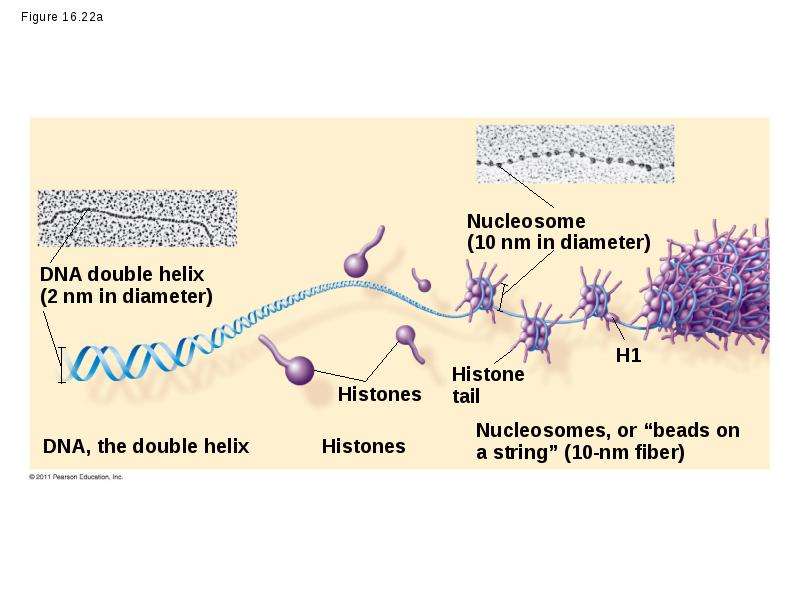
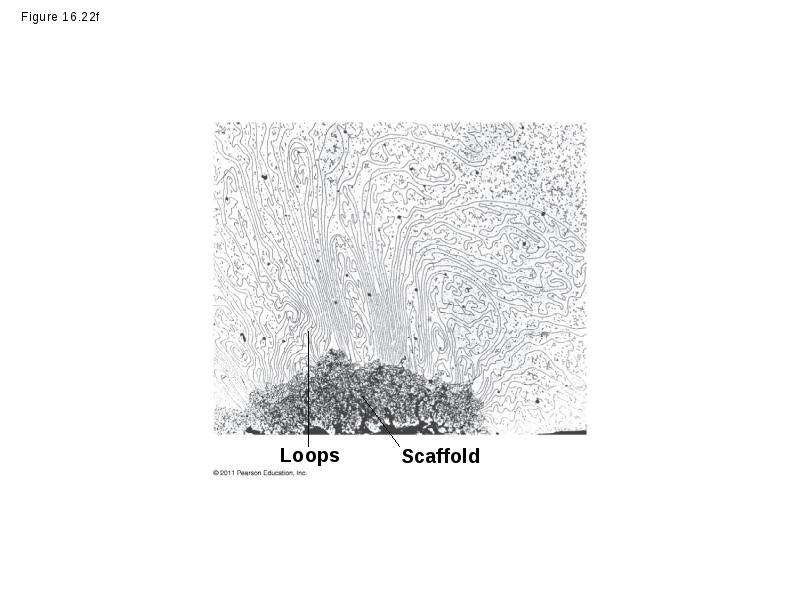
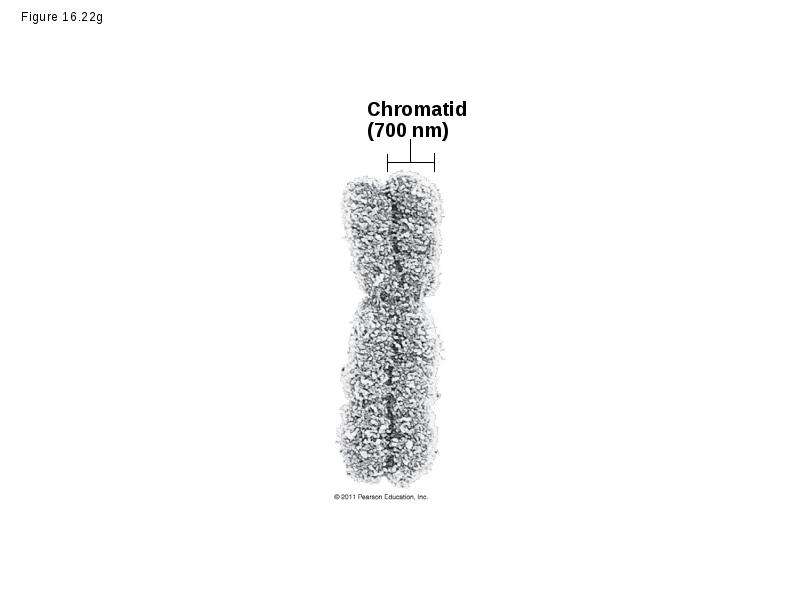
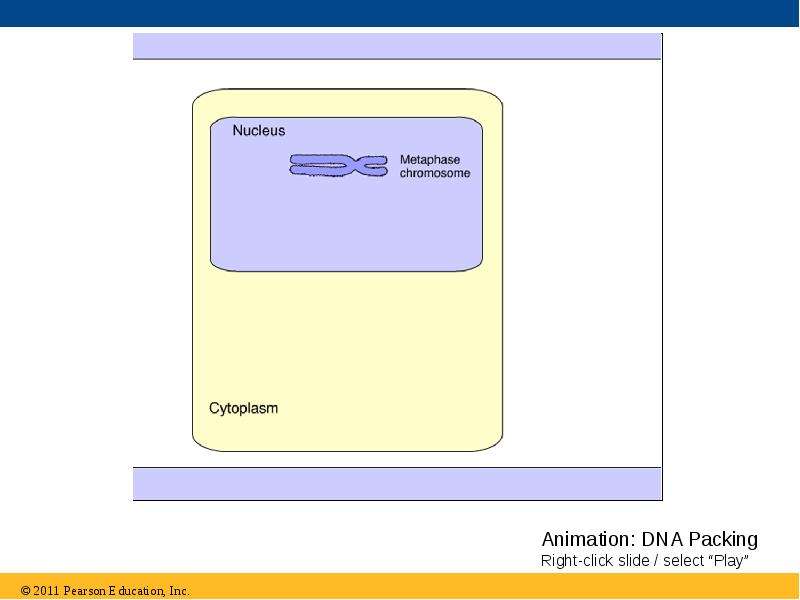
Chromatin, a complex of DNA and protein, is found in the nucleus of eukaryotic cells Chromatin, a complex of DNA and protein, is found in the nucleus of eukaryotic cells Chromosomes fit into the nucleus through an elaborate, multilevel system of packing

Слайд 99


The molecular basis of inheritance. (Chapter 16), слайд №99
Описание слайда:

Слайд 100


Figure 16.22a
Описание слайда:
Figure 16.22a

Слайд 101


Figure 16.22b
Описание слайда:
Figure 16.22b

Слайд 102


Figure 16.22c
Описание слайда:
Figure 16.22c

Слайд 103


Figure 16.22d
Описание слайда:
Figure 16.22d

Слайд 104


Figure 16.22e
Описание слайда:
Figure 16.22e

Слайд 105


Figure 16.22f
Описание слайда:
Figure 16.22f

Слайд 106


Figure 16.22g
Описание слайда:
Figure 16.22g

Слайд 107


Chromatin undergoes changes in packing during the cell cycle Chromatin undergoes changes in packing during the cell cycle At interphase, some...
Описание слайда:
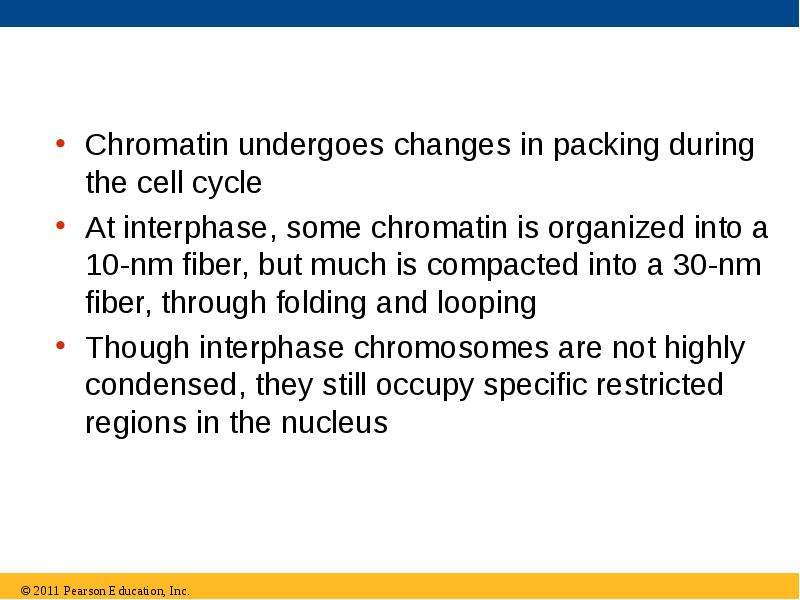
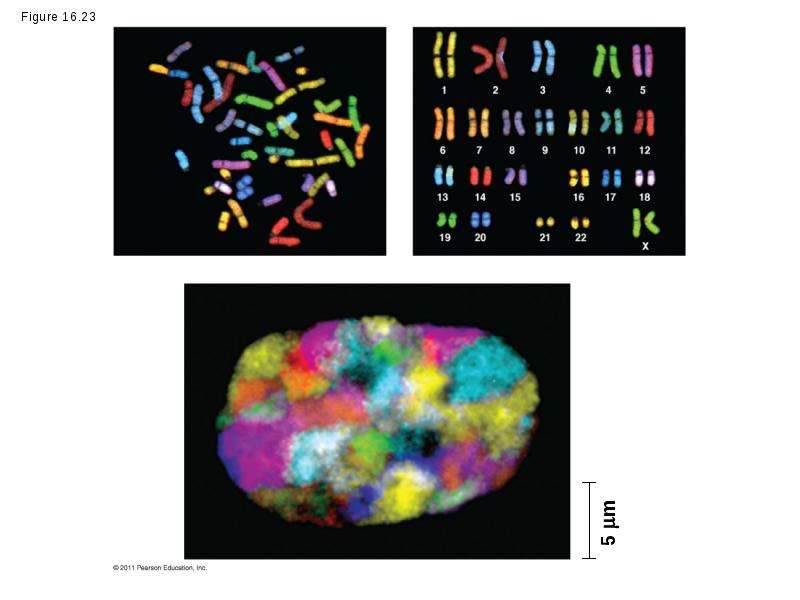
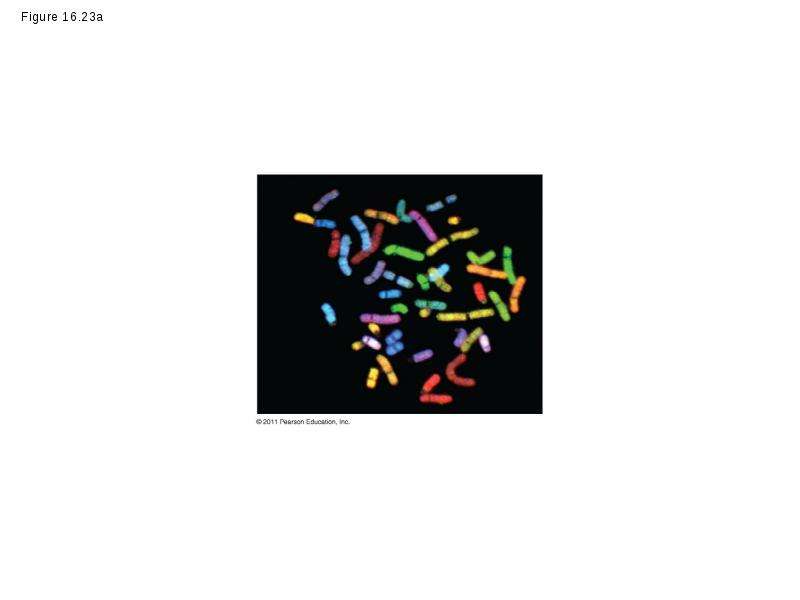
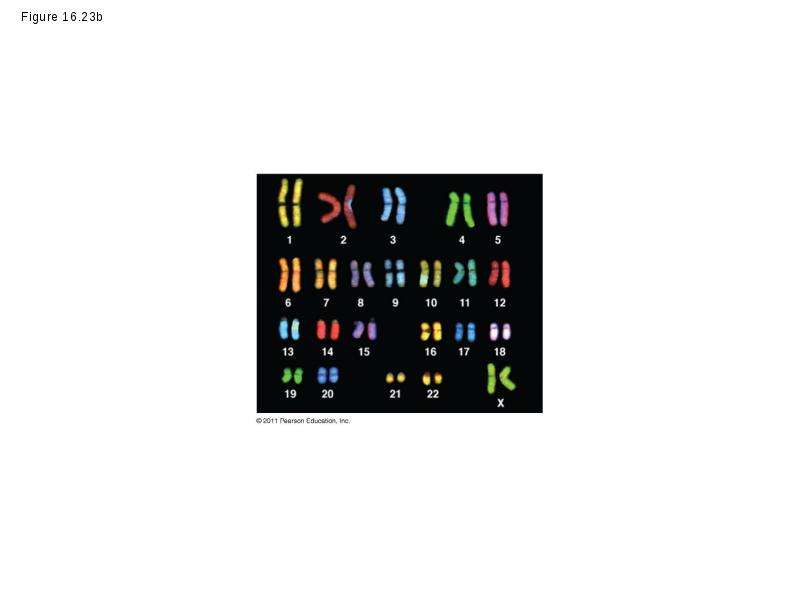
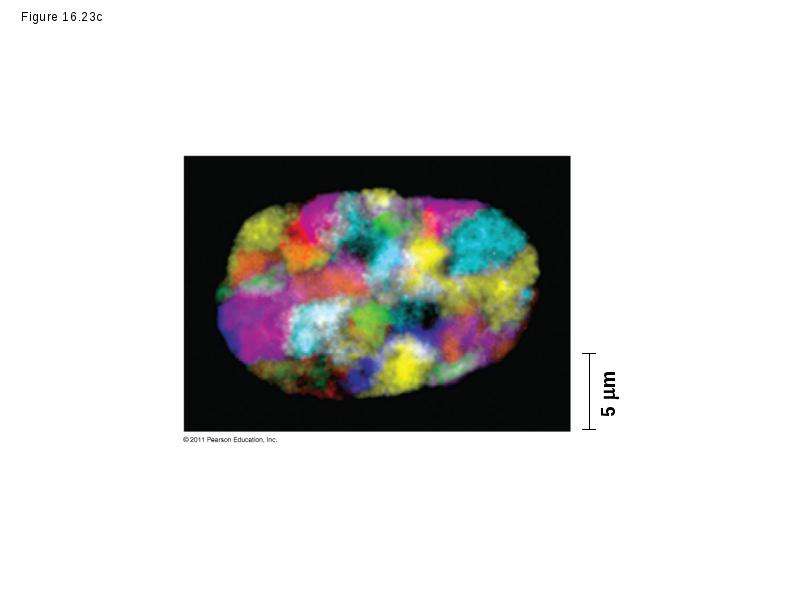
Chromatin undergoes changes in packing during the cell cycle Chromatin undergoes changes in packing during the cell cycle At interphase, some chromatin is organized into a 10-nm fiber, but much is compacted into a 30-nm fiber, through folding and looping Though interphase chromosomes are not highly condensed, they still occupy specific restricted regions in the nucleus

Слайд 108


Figure 16.23
Описание слайда:
Figure 16.23

Слайд 109


Figure 16.23a
Описание слайда:
Figure 16.23a

Слайд 110


Figure 16.23b
Описание слайда:
Figure 16.23b

Слайд 111


Figure 16.23c
Описание слайда:
Figure 16.23c

Слайд 112


Most chromatin is loosely packed in the nucleus during interphase and condenses prior to mitosis Most chromatin is loosely packed in the nucleus...
Описание слайда:
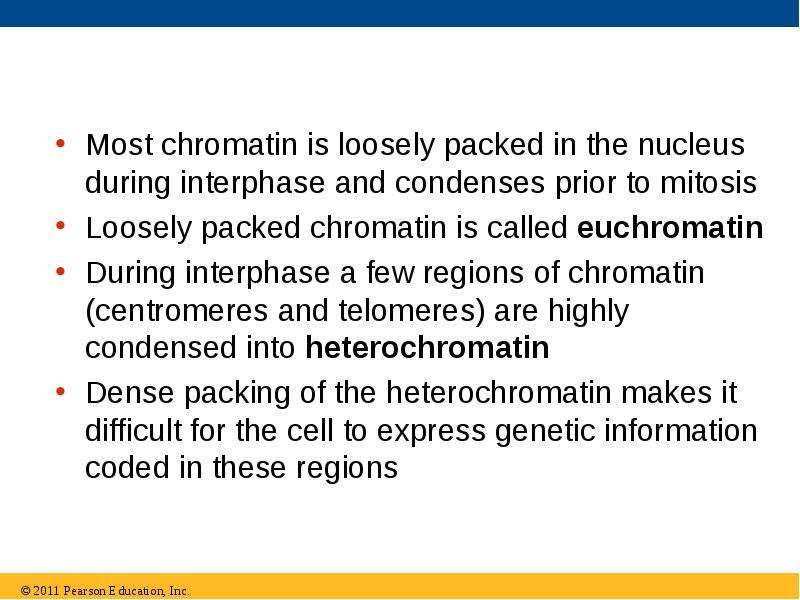
Most chromatin is loosely packed in the nucleus during interphase and condenses prior to mitosis Most chromatin is loosely packed in the nucleus during interphase and condenses prior to mitosis Loosely packed chromatin is called euchromatin During interphase a few regions of chromatin (centromeres and telomeres) are highly condensed into heterochromatin Dense packing of the heterochromatin makes it difficult for the cell to express genetic information coded in these regions

Слайд 113


Histones can undergo chemical modifications that result in changes in chromatin organization Histones can undergo chemical modifications that result...
Описание слайда:
Histones can undergo chemical modifications that result in changes in chromatin organization Histones can undergo chemical modifications that result in changes in chromatin organization

Слайд 114


Figure 16.UN02
Описание слайда:
Figure 16.UN02

Слайд 115


Figure 16.UN03
Описание слайда:
Figure 16.UN03

Слайд 116


Figure 16.UN04
Описание слайда:
Figure 16.UN04

Слайд 117


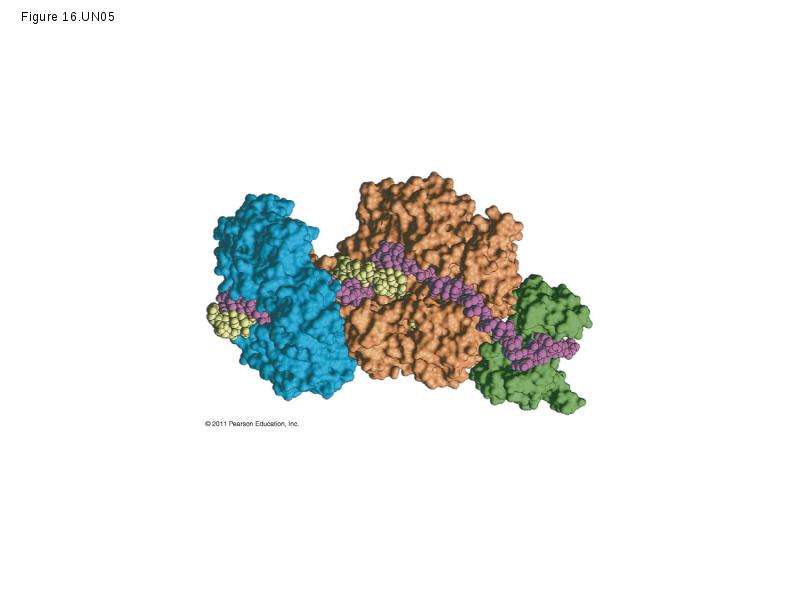
Figure 16.UN05
Описание слайда:
Figure 16.UN05

Слайд 118


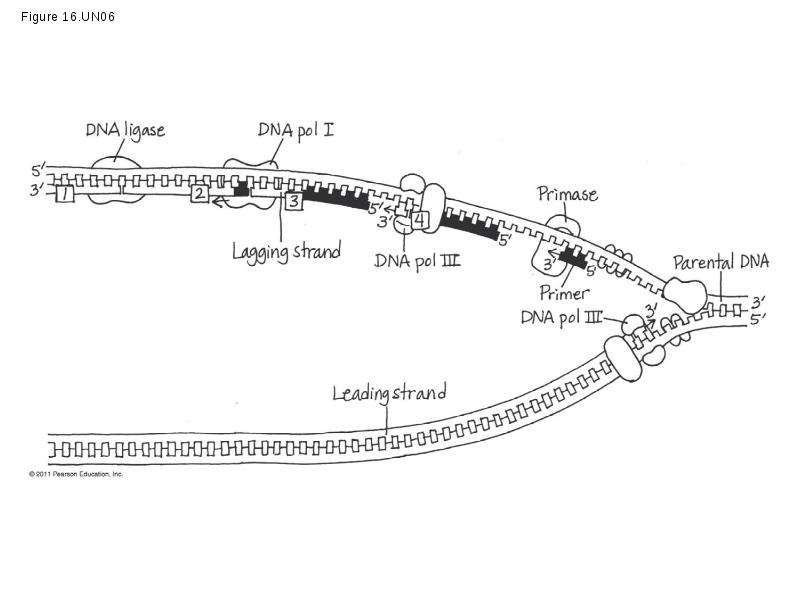
Figure 16.UN06
Описание слайда:
Figure 16.UN06

Слайд 119


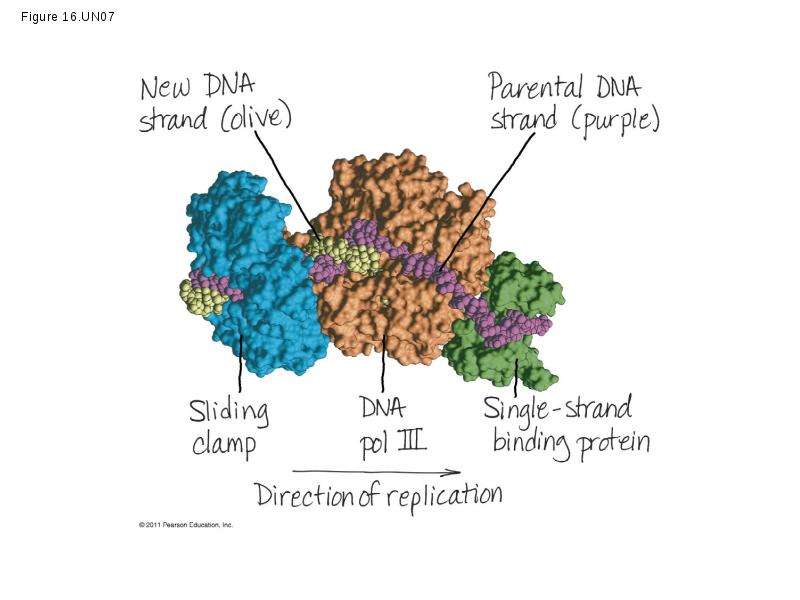
Figure 16.UN07
Описание слайда:
Figure 16.UN07


Похожие презентации
Mypresentation.ru
Загрузить презентацию