🗊 Презентация Neurodevelopmental disorders

Нажмите для полного просмотра!
Neurodevelopmental disorders, слайд №1 Neurodevelopmental disorders, слайд №2 Neurodevelopmental disorders, слайд №3 Neurodevelopmental disorders, слайд №4 Neurodevelopmental disorders, слайд №5 Neurodevelopmental disorders, слайд №6 Neurodevelopmental disorders, слайд №7 Neurodevelopmental disorders, слайд №8 Neurodevelopmental disorders, слайд №9 Neurodevelopmental disorders, слайд №10 Neurodevelopmental disorders, слайд №11 Neurodevelopmental disorders, слайд №12 Neurodevelopmental disorders, слайд №13 Neurodevelopmental disorders, слайд №14 Neurodevelopmental disorders, слайд №15 Neurodevelopmental disorders, слайд №16 Neurodevelopmental disorders, слайд №17 Neurodevelopmental disorders, слайд №18 Neurodevelopmental disorders, слайд №19 Neurodevelopmental disorders, слайд №20 Neurodevelopmental disorders, слайд №21 Neurodevelopmental disorders, слайд №22 Neurodevelopmental disorders, слайд №23 Neurodevelopmental disorders, слайд №24 Neurodevelopmental disorders, слайд №25 Neurodevelopmental disorders, слайд №26 Neurodevelopmental disorders, слайд №27 Neurodevelopmental disorders, слайд №28 Neurodevelopmental disorders, слайд №29 Neurodevelopmental disorders, слайд №30 Neurodevelopmental disorders, слайд №31 Neurodevelopmental disorders, слайд №32 Neurodevelopmental disorders, слайд №33 Neurodevelopmental disorders, слайд №34 Neurodevelopmental disorders, слайд №35 Neurodevelopmental disorders, слайд №36 Neurodevelopmental disorders, слайд №37 Neurodevelopmental disorders, слайд №38 Neurodevelopmental disorders, слайд №39 Neurodevelopmental disorders, слайд №40 Neurodevelopmental disorders, слайд №41 Neurodevelopmental disorders, слайд №42 Neurodevelopmental disorders, слайд №43 Neurodevelopmental disorders, слайд №44 Neurodevelopmental disorders, слайд №45 Neurodevelopmental disorders, слайд №46 Neurodevelopmental disorders, слайд №47 Neurodevelopmental disorders, слайд №48 Neurodevelopmental disorders, слайд №49 Neurodevelopmental disorders, слайд №50 Neurodevelopmental disorders, слайд №51 Neurodevelopmental disorders, слайд №52 Neurodevelopmental disorders, слайд №53 Neurodevelopmental disorders, слайд №54 Neurodevelopmental disorders, слайд №55 Neurodevelopmental disorders, слайд №56 Neurodevelopmental disorders, слайд №57 Neurodevelopmental disorders, слайд №58

Содержание
Вы можете ознакомиться и скачать презентацию на тему Neurodevelopmental disorders. Доклад-сообщение содержит 58 слайдов. Презентации для любого класса можно скачать бесплатно. Если материал и наш сайт презентаций Mypresentation Вам понравились – поделитесь им с друзьями с помощью социальных кнопок и добавьте в закладки в своем браузере.
Слайды и текст этой презентации


Слайд 1


Chapter 14 Neurodevelopmental Disorders
Описание слайда:
Chapter 14 Neurodevelopmental Disorders

Слайд 2


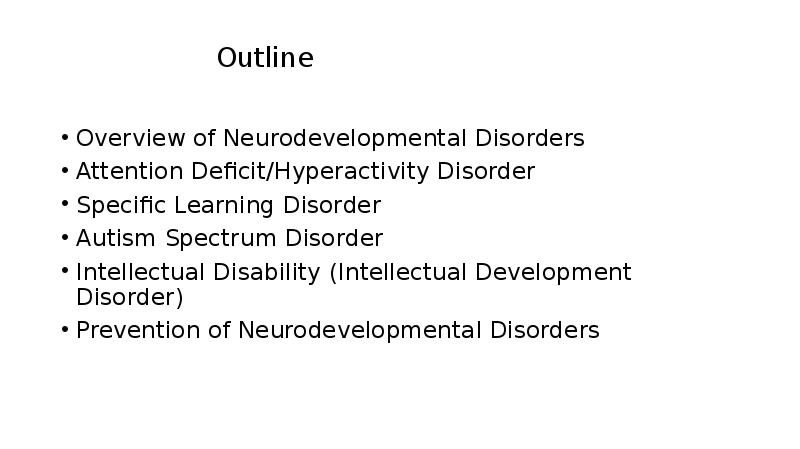
Outline Overview of Neurodevelopmental Disorders Attention Deficit/Hyperactivity Disorder Specific Learning Disorder Autism Spectrum Disorder...
Описание слайда:
Outline Overview of Neurodevelopmental Disorders Attention Deficit/Hyperactivity Disorder Specific Learning Disorder Autism Spectrum Disorder Intellectual Disability (Intellectual Development Disorder) Prevention of Neurodevelopmental Disorders

Слайд 3


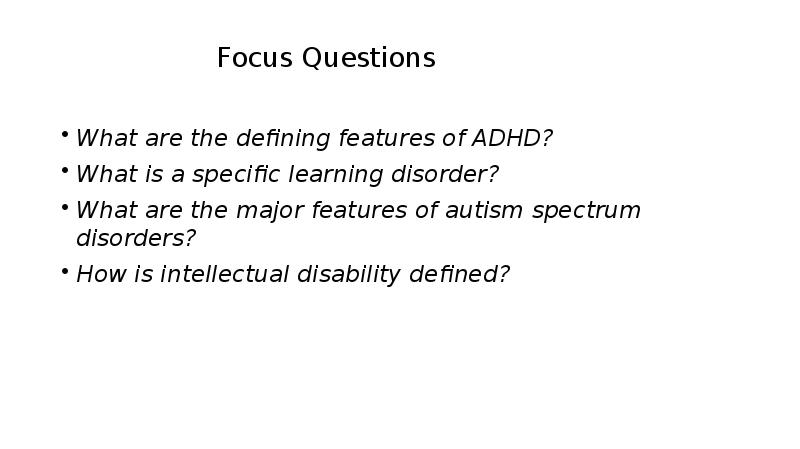
Focus Questions What are the defining features of ADHD? What is a specific learning disorder? What are the major features of autism spectrum...
Описание слайда:
Focus Questions What are the defining features of ADHD? What is a specific learning disorder? What are the major features of autism spectrum disorders? How is intellectual disability defined?

Слайд 4


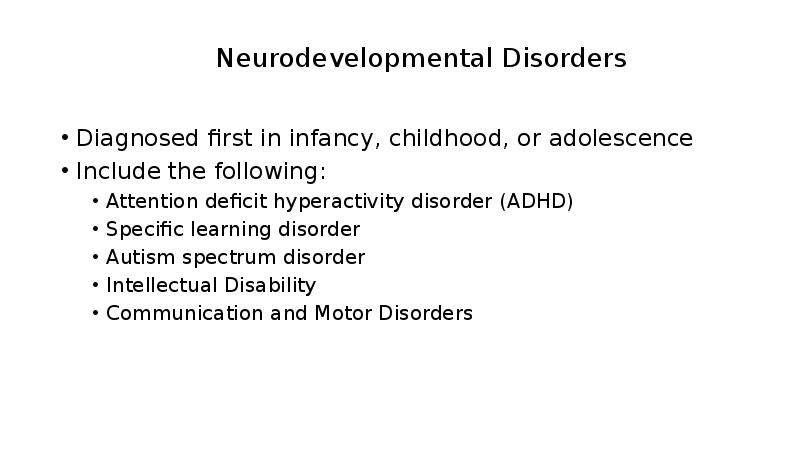
Neurodevelopmental Disorders Diagnosed first in infancy, childhood, or adolescence Include the following: Attention deficit hyperactivity disorder...
Описание слайда:
Neurodevelopmental Disorders Diagnosed first in infancy, childhood, or adolescence Include the following: Attention deficit hyperactivity disorder (ADHD) Specific learning disorder Autism spectrum disorder Intellectual Disability Communication and Motor Disorders

Слайд 5


Nature of Developmental Psychopathology: An Overview Normal vs. abnormal development Consider age and environment of child Developmental...
Описание слайда:
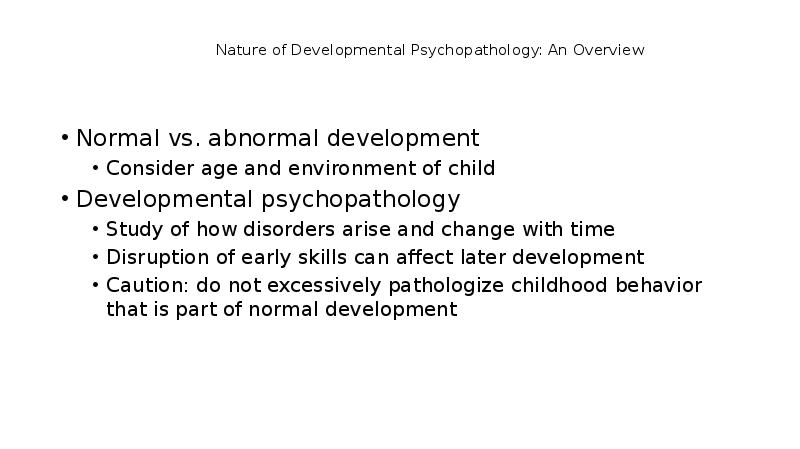
Nature of Developmental Psychopathology: An Overview Normal vs. abnormal development Consider age and environment of child Developmental psychopathology Study of how disorders arise and change with time Disruption of early skills can affect later development Caution: do not excessively pathologize childhood behavior that is part of normal development

Слайд 6


Stuttering Cluttering -rapid and/or irregular speech rate causative gene mutations linked to stuttering
Описание слайда:
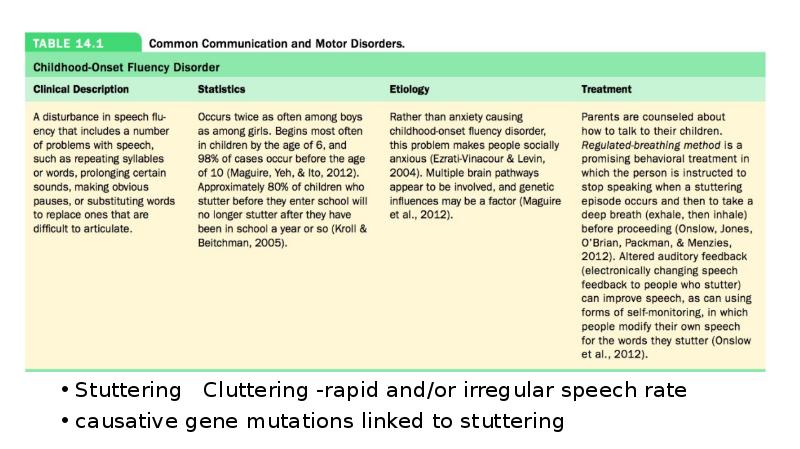
Stuttering Cluttering -rapid and/or irregular speech rate causative gene mutations linked to stuttering

Слайд 7


Neurodevelopmental disorders, слайд №7
Описание слайда:

Слайд 8


Neurodevelopmental disorders, слайд №8
Описание слайда:

Слайд 9


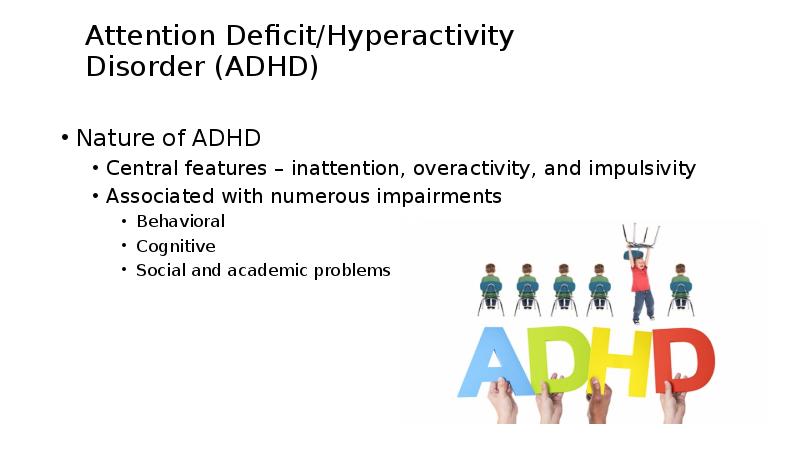
Attention Deficit/Hyperactivity Disorder (ADHD) Nature of ADHD Central features – inattention, overactivity, and impulsivity Associated with numerous...
Описание слайда:
Attention Deficit/Hyperactivity Disorder (ADHD) Nature of ADHD Central features – inattention, overactivity, and impulsivity Associated with numerous impairments Behavioral Cognitive Social and academic problems

Слайд 10


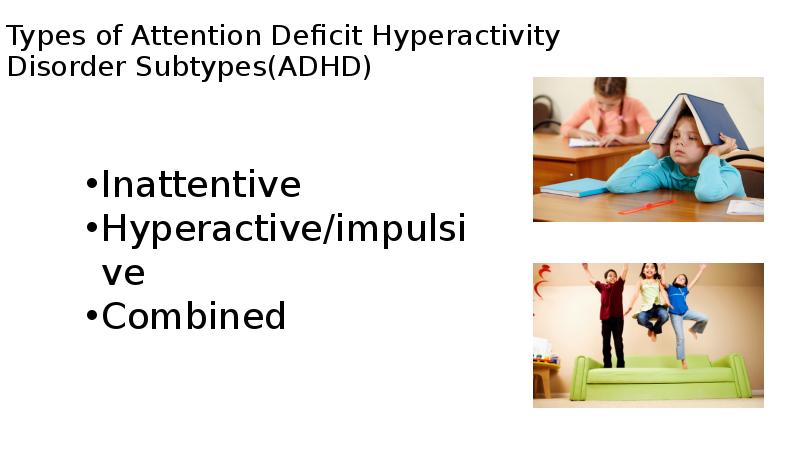
Types of Attention Deficit Hyperactivity Disorder Subtypes(ADHD) Inattentive Hyperactive/impulsive Combined
Описание слайда:
Types of Attention Deficit Hyperactivity Disorder Subtypes(ADHD) Inattentive Hyperactive/impulsive Combined

Слайд 11


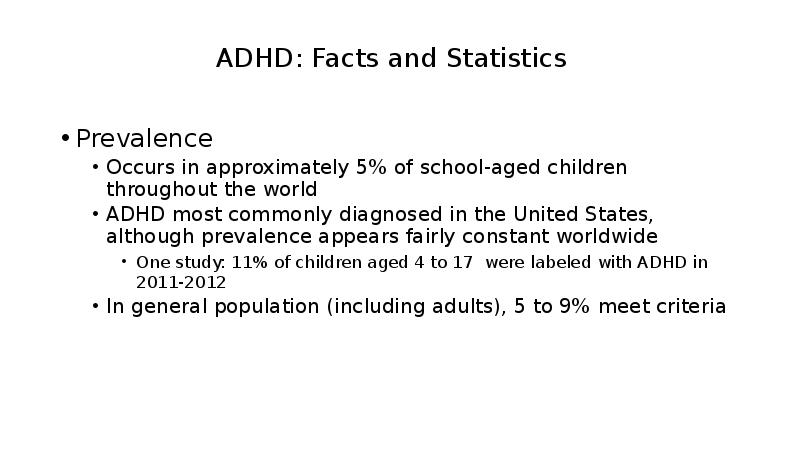
ADHD: Facts and Statistics Prevalence Occurs in approximately 5% of school-aged children throughout the world ADHD most commonly diagnosed in the...
Описание слайда:
ADHD: Facts and Statistics Prevalence Occurs in approximately 5% of school-aged children throughout the world ADHD most commonly diagnosed in the United States, although prevalence appears fairly constant worldwide One study: 11% of children aged 4 to 17 were labeled with ADHD in 2011-2012 In general population (including adults), 5 to 9% meet criteria

Слайд 12


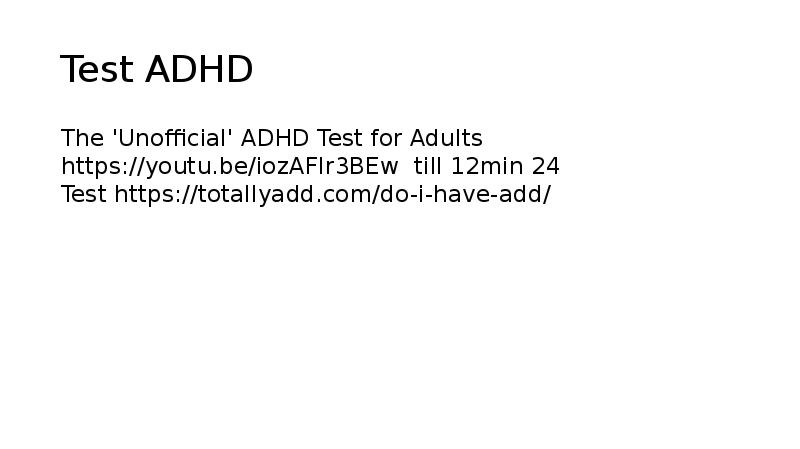
Test ADHD The 'Unofficial' ADHD Test for Adults till 12min 24 Test
Описание слайда:
Test ADHD The 'Unofficial' ADHD Test for Adults till 12min 24 Test

Слайд 13


ADHD: Facts and Statistics, Continued Course of ADHD Symptoms usually appear around age 3 to 4 Half of children with ADHD continue to have...
Описание слайда:
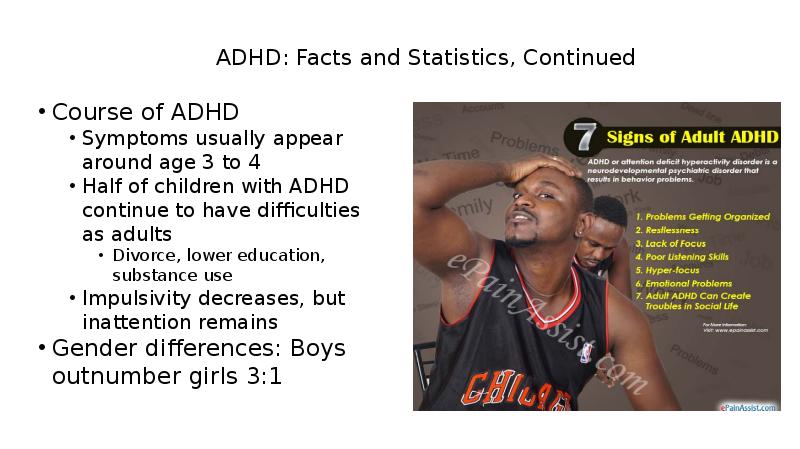
ADHD: Facts and Statistics, Continued Course of ADHD Symptoms usually appear around age 3 to 4 Half of children with ADHD continue to have difficulties as adults Divorce, lower education, substance use Impulsivity decreases, but inattention remains Gender differences: Boys outnumber girls 3:1

Слайд 14


Causes of ADHD: Biological Contributions Genetic contributions ADHD seems to run in families Partially explained by copy number variants – extra or...
Описание слайда:
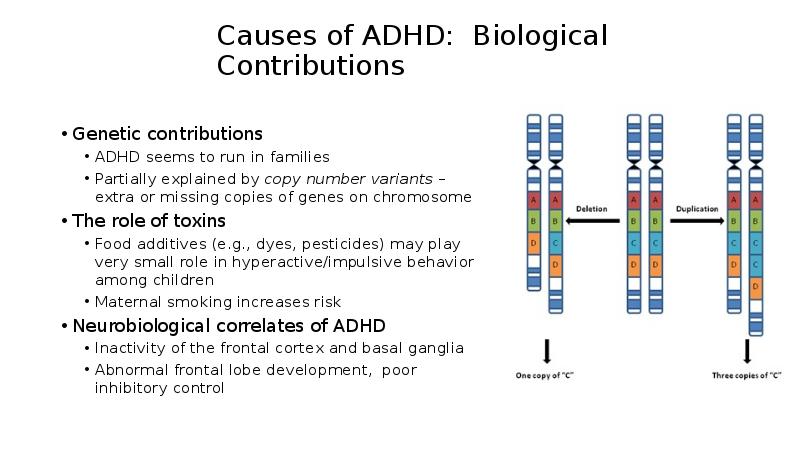
Causes of ADHD: Biological Contributions Genetic contributions ADHD seems to run in families Partially explained by copy number variants – extra or missing copies of genes on chromosome The role of toxins Food additives (e.g., dyes, pesticides) may play very small role in hyperactive/impulsive behavior among children Maternal smoking increases risk Neurobiological correlates of ADHD Inactivity of the frontal cortex and basal ganglia Abnormal frontal lobe development, poor inhibitory control

Слайд 15


Causes of ADHD: Psychosocial Contributions Psychosocial factors ADHD children are often viewed negatively by others > Frequent negative feedback from...
Описание слайда:
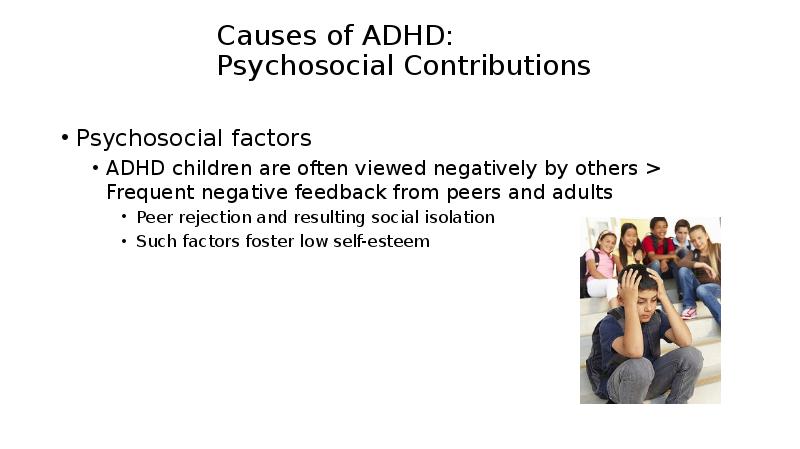
Causes of ADHD: Psychosocial Contributions Psychosocial factors ADHD children are often viewed negatively by others > Frequent negative feedback from peers and adults Peer rejection and resulting social isolation Such factors foster low self-esteem

Слайд 16


Treatment of ADHD Goal of biological treatments: reduce impulsivity and hyperactivity, improve attention Behavioral treatment for children...
Описание слайда:
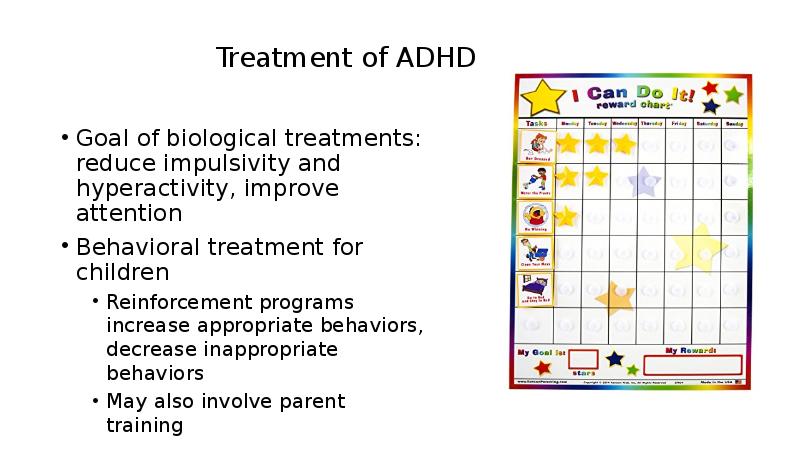
Treatment of ADHD Goal of biological treatments: reduce impulsivity and hyperactivity, improve attention Behavioral treatment for children Reinforcement programs increase appropriate behaviors, decrease inappropriate behaviors May also involve parent training

Слайд 17


Надо какое ниб упражнение
Описание слайда:
Надо какое ниб упражнение

Слайд 18


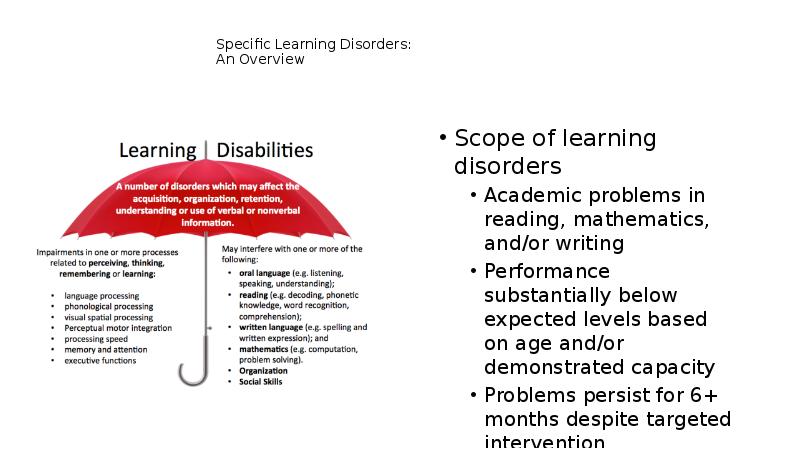
Specific Learning Disorders: An Overview Scope of learning disorders Academic problems in reading, mathematics, and/or writing Performance...
Описание слайда:
Specific Learning Disorders: An Overview Scope of learning disorders Academic problems in reading, mathematics, and/or writing Performance substantially below expected levels based on age and/or demonstrated capacity Problems persist for 6+ months despite targeted intervention

Слайд 19


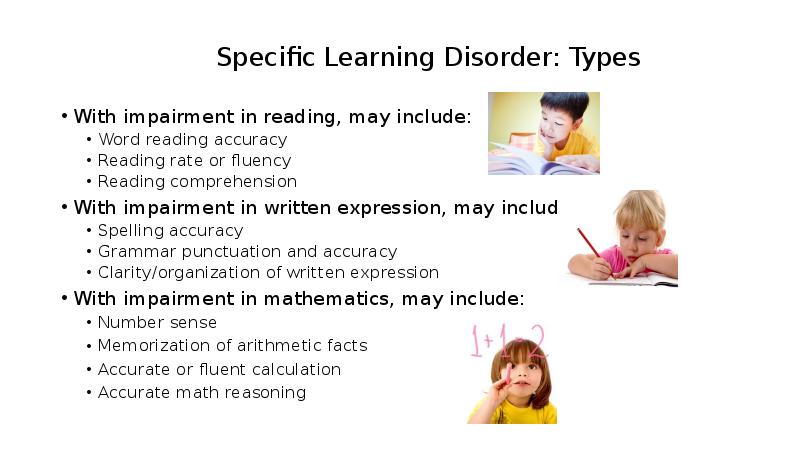
Specific Learning Disorder: Types With impairment in reading, may include: Word reading accuracy Reading rate or fluency Reading comprehension With...
Описание слайда:
Specific Learning Disorder: Types With impairment in reading, may include: Word reading accuracy Reading rate or fluency Reading comprehension With impairment in written expression, may include: Spelling accuracy Grammar punctuation and accuracy Clarity/organization of written expression With impairment in mathematics, may include: Number sense Memorization of arithmetic facts Accurate or fluent calculation Accurate math reasoning

Слайд 20


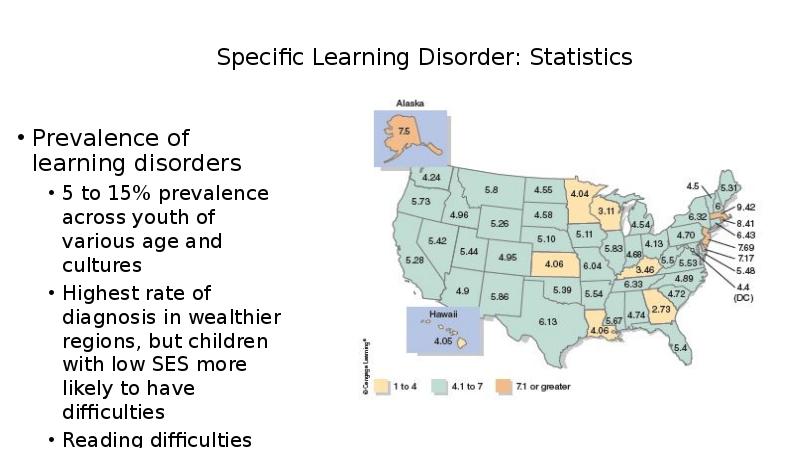
Specific Learning Disorder: Statistics Prevalence of learning disorders 5 to 15% prevalence across youth of various age and cultures Highest rate of...
Описание слайда:
Specific Learning Disorder: Statistics Prevalence of learning disorders 5 to 15% prevalence across youth of various age and cultures Highest rate of diagnosis in wealthier regions, but children with low SES more likely to have difficulties Reading difficulties most common, affect 7% of the general population

Слайд 21


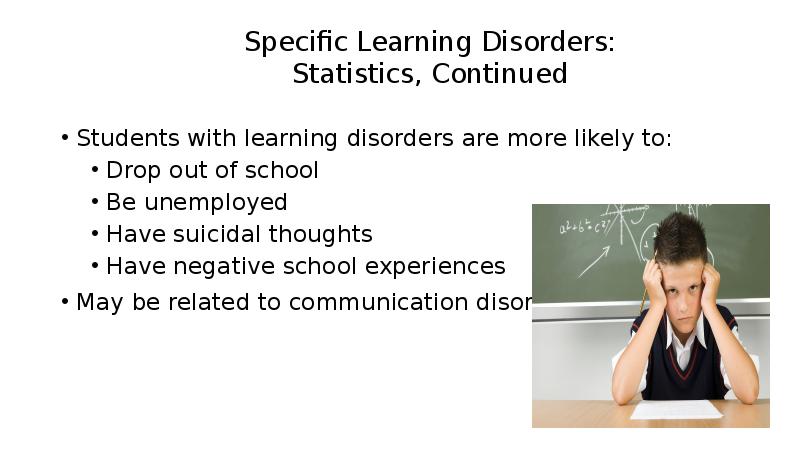
Specific Learning Disorders: Statistics, Continued Students with learning disorders are more likely to: Drop out of school Be unemployed Have...
Описание слайда:
Specific Learning Disorders: Statistics, Continued Students with learning disorders are more likely to: Drop out of school Be unemployed Have suicidal thoughts Have negative school experiences May be related to communication disorders

Слайд 22


Causes of Specific Learning Disorder Genetic and neurobiological contributions Learning disorders run in families, but specific difficulties are not...
Описание слайда:
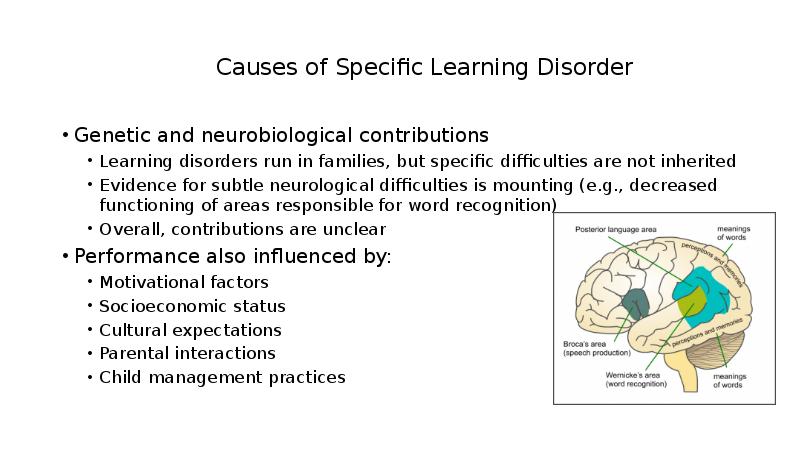
Causes of Specific Learning Disorder Genetic and neurobiological contributions Learning disorders run in families, but specific difficulties are not inherited Evidence for subtle neurological difficulties is mounting (e.g., decreased functioning of areas responsible for word recognition) Overall, contributions are unclear Performance also influenced by: Motivational factors Socioeconomic status Cultural expectations Parental interactions Child management practices

Слайд 23


Neurological Differences in Dyslexia
Описание слайда:
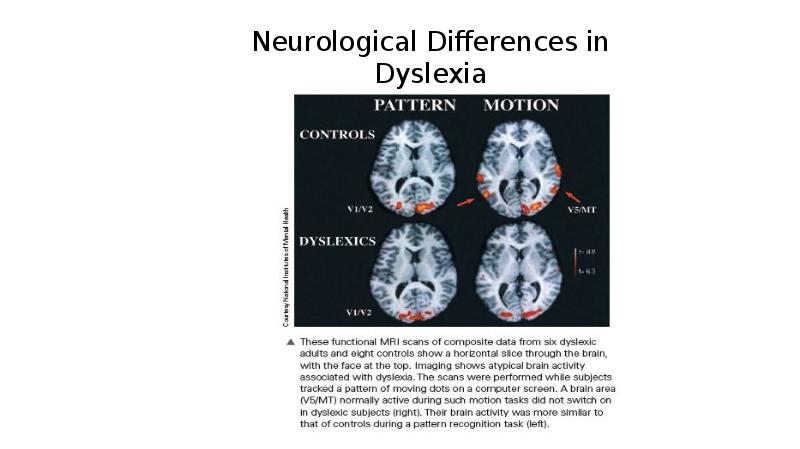
Neurological Differences in Dyslexia

Слайд 24


Treatment of Specific Learning Disorder Requires intense educational interventions Remediation of basic processing problems, cognitive skills, and...
Описание слайда:
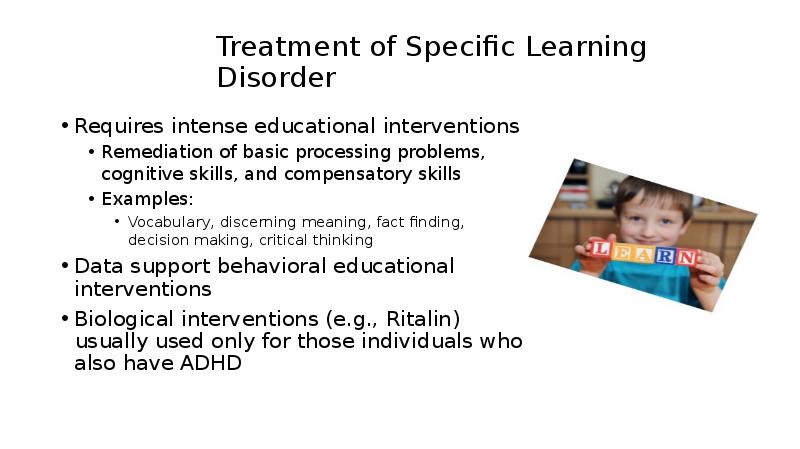
Treatment of Specific Learning Disorder Requires intense educational interventions Remediation of basic processing problems, cognitive skills, and compensatory skills Examples: Vocabulary, discerning meaning, fact finding, decision making, critical thinking Data support behavioral educational interventions Biological interventions (e.g., Ritalin) usually used only for those individuals who also have ADHD

Слайд 25


Autism Spectrum Disorder Problems occur in language, socialization, and cognition Pervasive – problems span many life areas 25% don’t acquire...
Описание слайда:
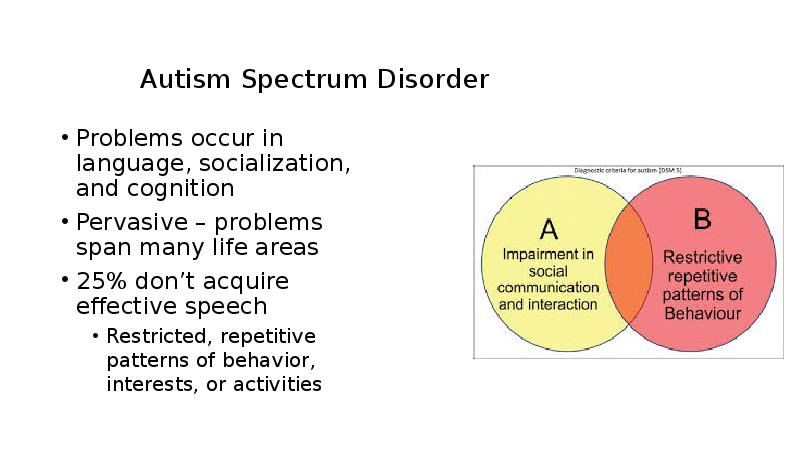
Autism Spectrum Disorder Problems occur in language, socialization, and cognition Pervasive – problems span many life areas 25% don’t acquire effective speech Restricted, repetitive patterns of behavior, interests, or activities

Слайд 26


Autism Spectrum Disorder Label is new to DSM-5 Encompasses several disorders previously classified as “pervasive developmental disorders” Including:...
Описание слайда:
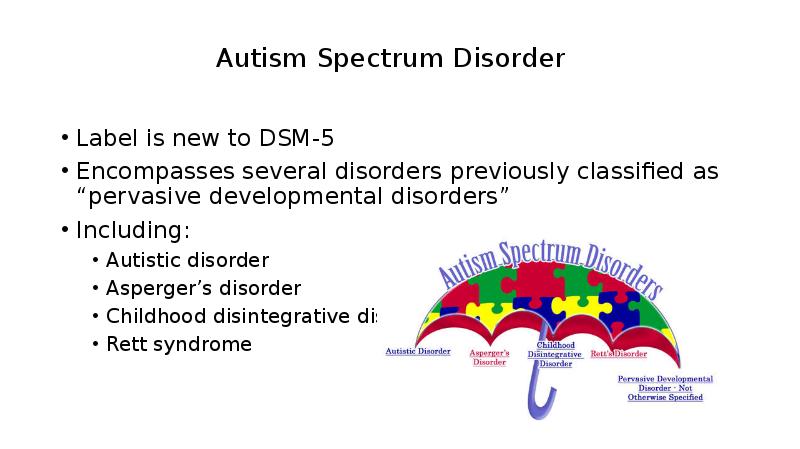
Autism Spectrum Disorder Label is new to DSM-5 Encompasses several disorders previously classified as “pervasive developmental disorders” Including: Autistic disorder Asperger’s disorder Childhood disintegrative disorder Rett syndrome

Слайд 27


Rett Syndrom
Описание слайда:
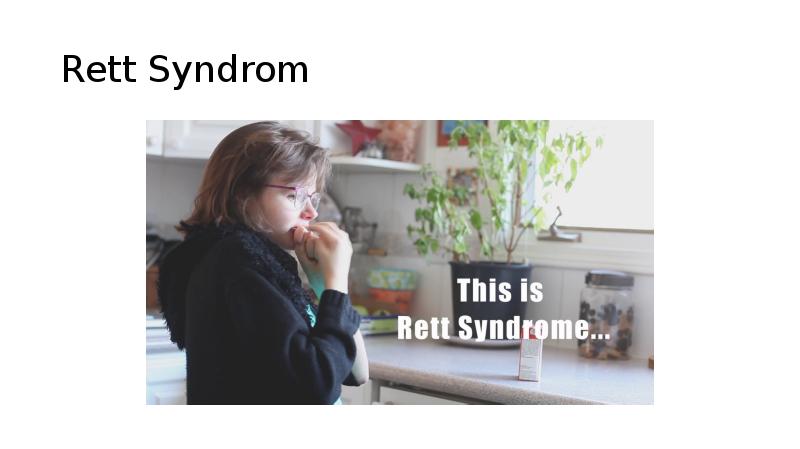
Rett Syndrom

Слайд 28


Impairment in Social Communication and Interaction Defining characteristic: Failure to develop age-appropriate social relationships Trouble...
Описание слайда:
Impairment in Social Communication and Interaction Defining characteristic: Failure to develop age-appropriate social relationships Trouble initiating and maintaining relationships Trouble with nonverbal communication May lack appropriate expressions, tone Trouble with social reciprocity Deficits in joint attention – the ability to communicate interest in an external stimulus and another person at the same time

Слайд 29


What Autism Looks Like [INSERT Photo, p. 526 HERE]
Описание слайда:
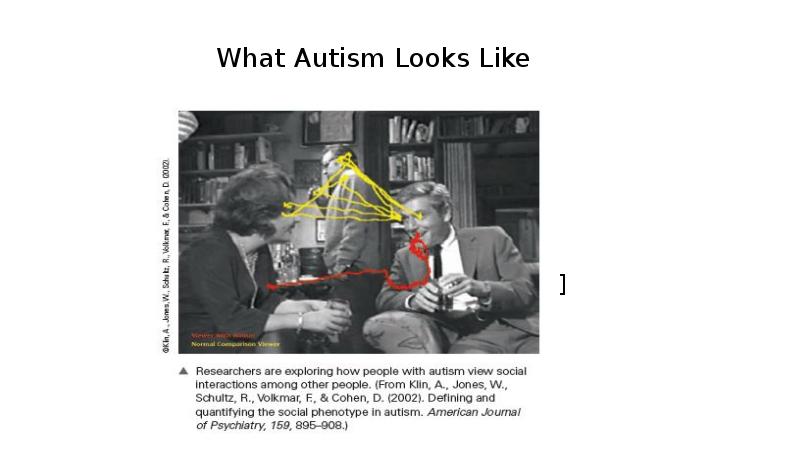
What Autism Looks Like [INSERT Photo, p. 526 HERE]

Слайд 30


Restricted or Repetitive Behaviors and Interests Preference for the status quo – maintenance of sameness Severe forms: Stereotyped or ritualistic...
Описание слайда:
Restricted or Repetitive Behaviors and Interests Preference for the status quo – maintenance of sameness Severe forms: Stereotyped or ritualistic behavior E.g., spinning, waving hands, rocking Less severe forms: Intense, circumscribed interest in very specific subjects Having restricted areas of interest may compound difficulties relating to others

Слайд 31


Autism Spectrum Disorder: Prevalence Previously thought to be very rare, but this is not the case 1 in 50 school-aged children meet criteria More...
Описание слайда:
Autism Spectrum Disorder: Prevalence Previously thought to be very rare, but this is not the case 1 in 50 school-aged children meet criteria More commonly diagnosed in males Gender ratio: 4 to 5:1 IQ interaction 38% show intellectual disabilities Occurs worldwide The better the language skills and IQ test performance, the better the prognosis

Слайд 32


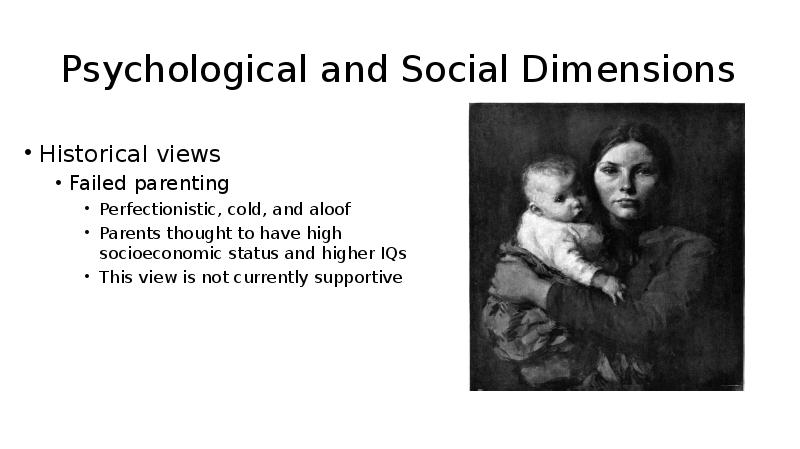
Psychological and Social Dimensions Historical views Failed parenting Perfectionistic, cold, and aloof Parents thought to have high socioeconomic...
Описание слайда:
Psychological and Social Dimensions Historical views Failed parenting Perfectionistic, cold, and aloof Parents thought to have high socioeconomic status and higher IQs This view is not currently supportive

Слайд 33


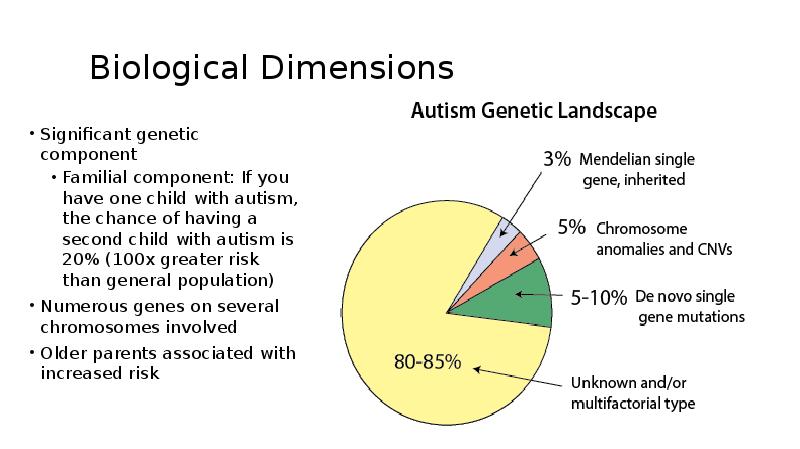
Biological Dimensions Significant genetic component Familial component: If you have one child with autism, the chance of having a second child with...
Описание слайда:
Biological Dimensions Significant genetic component Familial component: If you have one child with autism, the chance of having a second child with autism is 20% (100x greater risk than general population) Numerous genes on several chromosomes involved Older parents associated with increased risk

Слайд 34


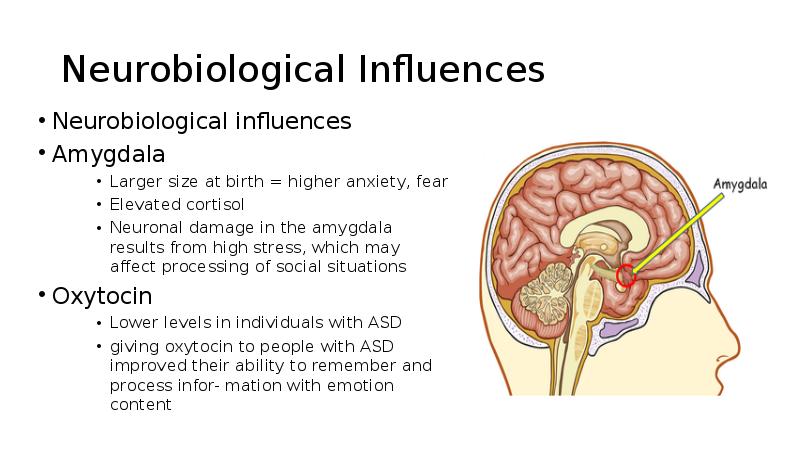
Neurobiological Influences Neurobiological influences Amygdala Larger size at birth = higher anxiety, fear Elevated cortisol Neuronal damage in the...
Описание слайда:
Neurobiological Influences Neurobiological influences Amygdala Larger size at birth = higher anxiety, fear Elevated cortisol Neuronal damage in the amygdala results from high stress, which may affect processing of social situations Oxytocin Lower levels in individuals with ASD giving oxytocin to people with ASD improved their ability to remember and process infor- mation with emotion content

Слайд 35


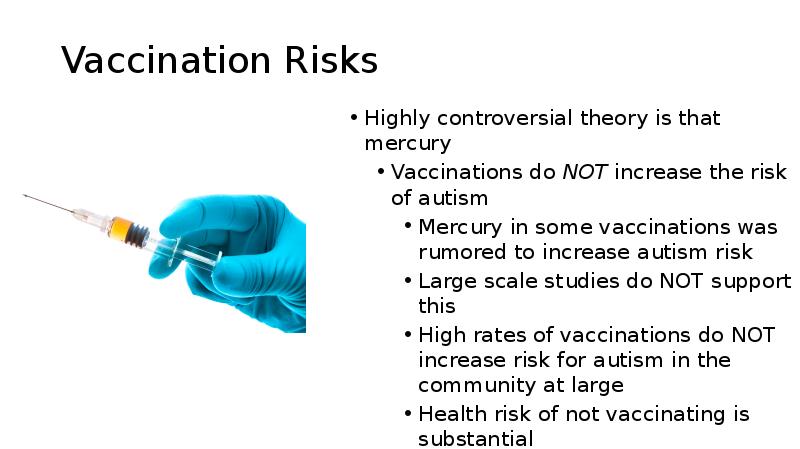
Vaccination Risks Highly controversial theory is that mercury Vaccinations do NOT increase the risk of autism Mercury in some vaccinations was...
Описание слайда:
Vaccination Risks Highly controversial theory is that mercury Vaccinations do NOT increase the risk of autism Mercury in some vaccinations was rumored to increase autism risk Large scale studies do NOT support this High rates of vaccinations do NOT increase risk for autism in the community at large Health risk of not vaccinating is substantial

Слайд 36


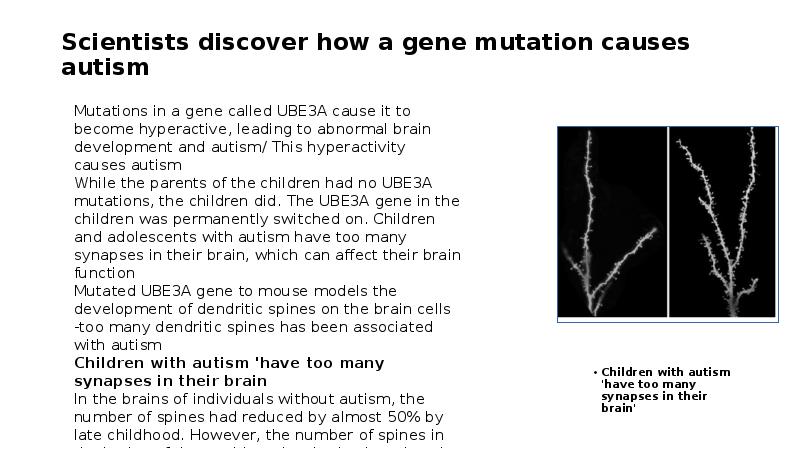
Scientists discover how a gene mutation causes autism Children with autism 'have too many synapses in their brain'
Описание слайда:
Scientists discover how a gene mutation causes autism Children with autism 'have too many synapses in their brain'

Слайд 37


Treatment of Autism Spectrum Disorder Psychosocial treatments Behavioral approaches Skill building Reduce problem behaviors Communication and...
Описание слайда:
Treatment of Autism Spectrum Disorder Psychosocial treatments Behavioral approaches Skill building Reduce problem behaviors Communication and language training Increase socialization Naturalistic teaching strategies Early intervention is critical – may “normalize” the functioning of the developing brain

Слайд 38


Treatment of Autism Spectrum Disorder, Continued Biological treatments Medical intervention has had little positive impact on core dysfunction Some...
Описание слайда:
Treatment of Autism Spectrum Disorder, Continued Biological treatments Medical intervention has had little positive impact on core dysfunction Some drugs decrease agitation Tranquilizers SSRIs Indicators of good prognosis High IQ, good language ability

Слайд 39


Treatment of Autism Spectrum Disorder, Part 3 Integrated treatments Preferred model: Multidimensional, comprehensive focus Children offered special...
Описание слайда:
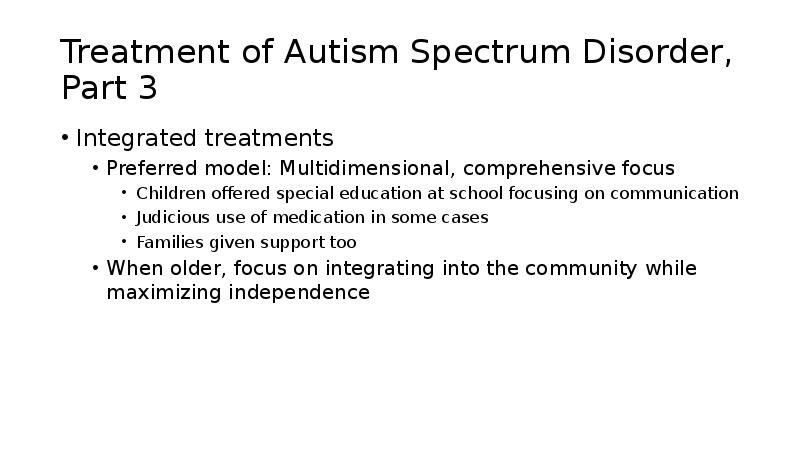
Treatment of Autism Spectrum Disorder, Part 3 Integrated treatments Preferred model: Multidimensional, comprehensive focus Children offered special education at school focusing on communication Judicious use of medication in some cases Families given support too When older, focus on integrating into the community while maximizing independence

Слайд 40


Intellectual Disability (Intellectual Development Disorder) Overview Below-average intellectual and adaptive functioning First evident in childhood...
Описание слайда:
Intellectual Disability (Intellectual Development Disorder) Overview Below-average intellectual and adaptive functioning First evident in childhood Range of impairment varies greatly Previously called mental retardation

Слайд 41


Intellectual Disability IQ typically below 70 to 75 Previously distinguished different levels of severity; IQ may be as low as under 20 Previously...
Описание слайда:
Intellectual Disability IQ typically below 70 to 75 Previously distinguished different levels of severity; IQ may be as low as under 20 Previously diagnosed on DSM-IV Axis II Reserved for conditions that 1) are chronic and pervasive and 2) are likely to influence the presentation of other mental disorders

Слайд 42


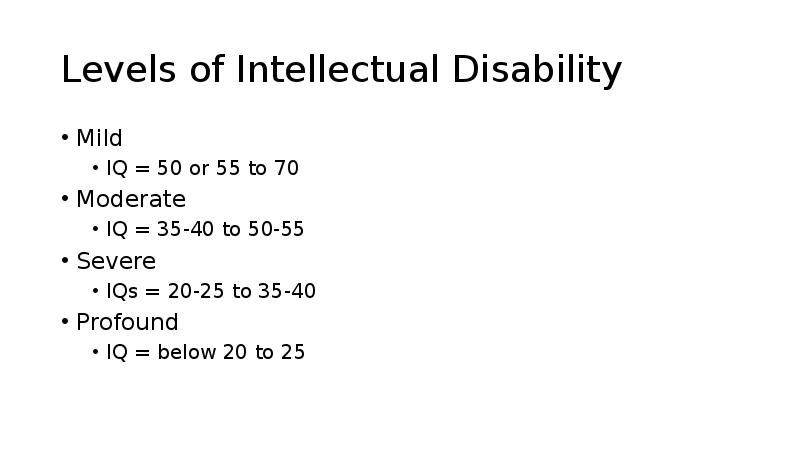
Levels of Intellectual Disability Mild IQ = 50 or 55 to 70 Moderate IQ = 35-40 to 50-55 Severe IQs = 20-25 to 35-40 Profound IQ = below 20 to 25
Описание слайда:
Levels of Intellectual Disability Mild IQ = 50 or 55 to 70 Moderate IQ = 35-40 to 50-55 Severe IQs = 20-25 to 35-40 Profound IQ = below 20 to 25

Слайд 43


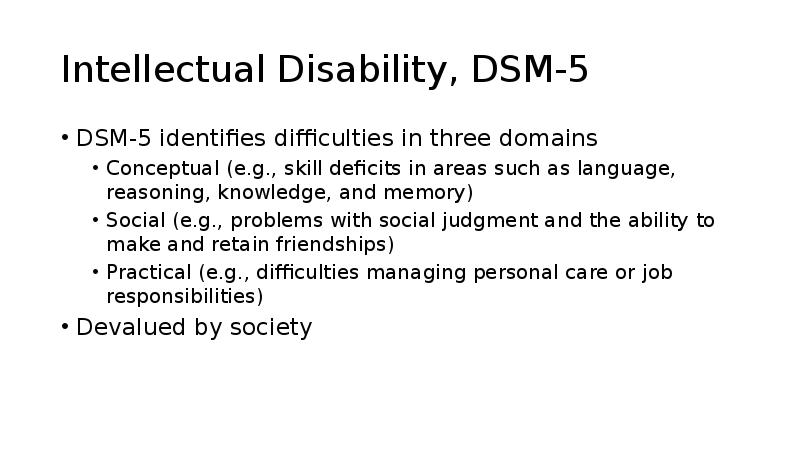
Intellectual Disability, DSM-5 DSM-5 identifies difficulties in three domains Conceptual (e.g., skill deficits in areas such as language, reasoning,...
Описание слайда:
Intellectual Disability, DSM-5 DSM-5 identifies difficulties in three domains Conceptual (e.g., skill deficits in areas such as language, reasoning, knowledge, and memory) Social (e.g., problems with social judgment and the ability to make and retain friendships) Practical (e.g., difficulties managing personal care or job responsibilities) Devalued by society

Слайд 44


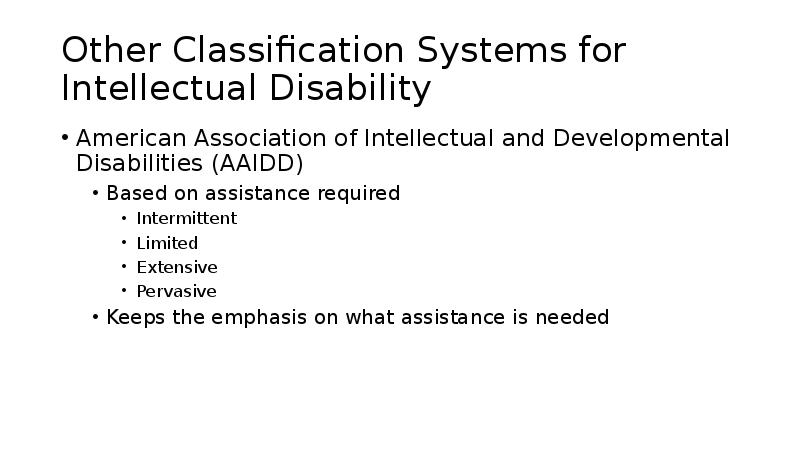
Other Classification Systems for Intellectual Disability American Association of Intellectual and Developmental Disabilities (AAIDD) Based on...
Описание слайда:
Other Classification Systems for Intellectual Disability American Association of Intellectual and Developmental Disabilities (AAIDD) Based on assistance required Intermittent Limited Extensive Pervasive Keeps the emphasis on what assistance is needed

Слайд 45


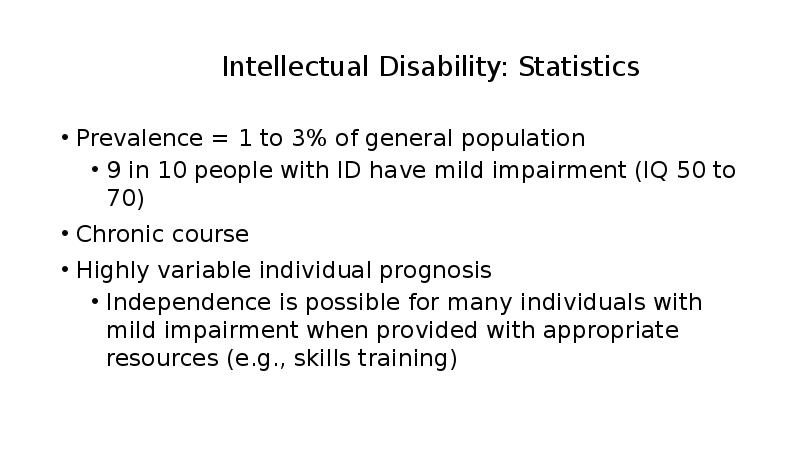
Intellectual Disability: Statistics Prevalence = 1 to 3% of general population 9 in 10 people with ID have mild impairment (IQ 50 to 70) Chronic...
Описание слайда:
Intellectual Disability: Statistics Prevalence = 1 to 3% of general population 9 in 10 people with ID have mild impairment (IQ 50 to 70) Chronic course Highly variable individual prognosis Independence is possible for many individuals with mild impairment when provided with appropriate resources (e.g., skills training)

Слайд 46


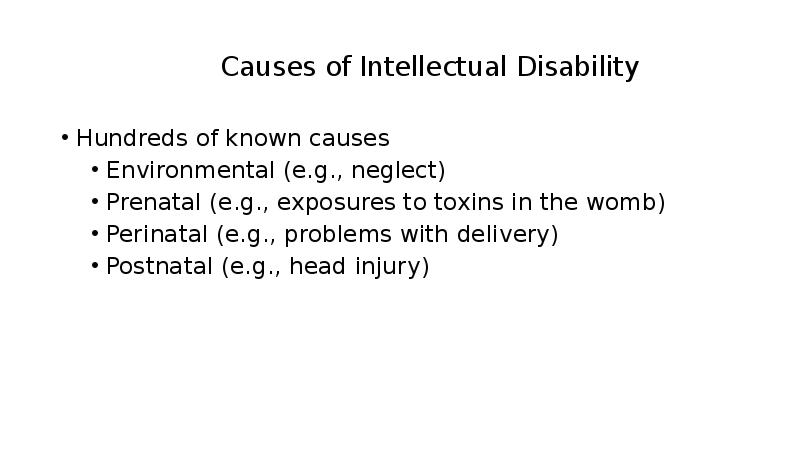
Causes of Intellectual Disability Hundreds of known causes Environmental (e.g., neglect) Prenatal (e.g., exposures to toxins in the womb) Perinatal...
Описание слайда:
Causes of Intellectual Disability Hundreds of known causes Environmental (e.g., neglect) Prenatal (e.g., exposures to toxins in the womb) Perinatal (e.g., problems with delivery) Postnatal (e.g., head injury)

Слайд 47


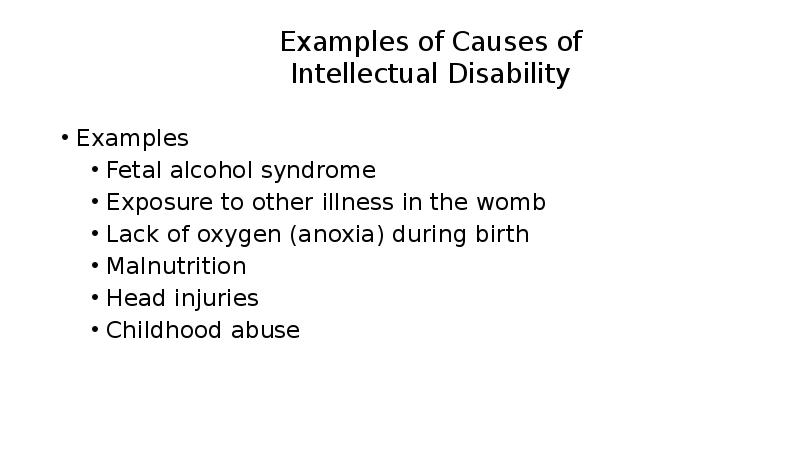
Examples of Causes of Intellectual Disability Examples Fetal alcohol syndrome Exposure to other illness in the womb Lack of oxygen (anoxia) during...
Описание слайда:
Examples of Causes of Intellectual Disability Examples Fetal alcohol syndrome Exposure to other illness in the womb Lack of oxygen (anoxia) during birth Malnutrition Head injuries Childhood abuse

Слайд 48


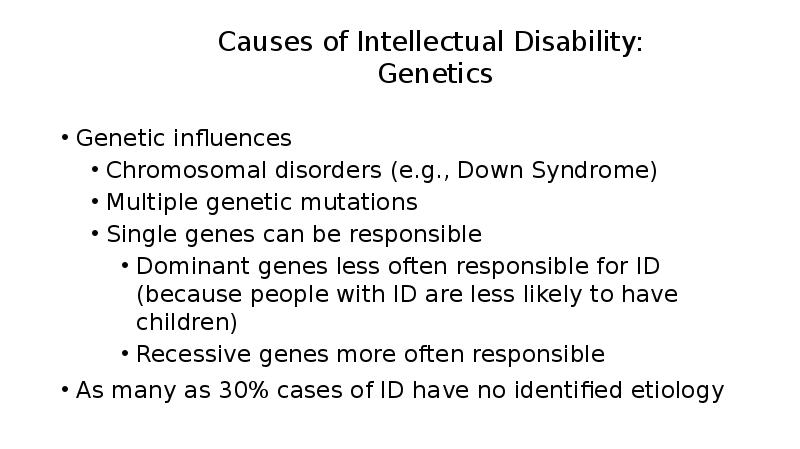
Causes of Intellectual Disability: Genetics Genetic influences Chromosomal disorders (e.g., Down Syndrome) Multiple genetic mutations Single genes...
Описание слайда:
Causes of Intellectual Disability: Genetics Genetic influences Chromosomal disorders (e.g., Down Syndrome) Multiple genetic mutations Single genes can be responsible Dominant genes less often responsible for ID (because people with ID are less likely to have children) Recessive genes more often responsible As many as 30% cases of ID have no identified etiology

Слайд 49


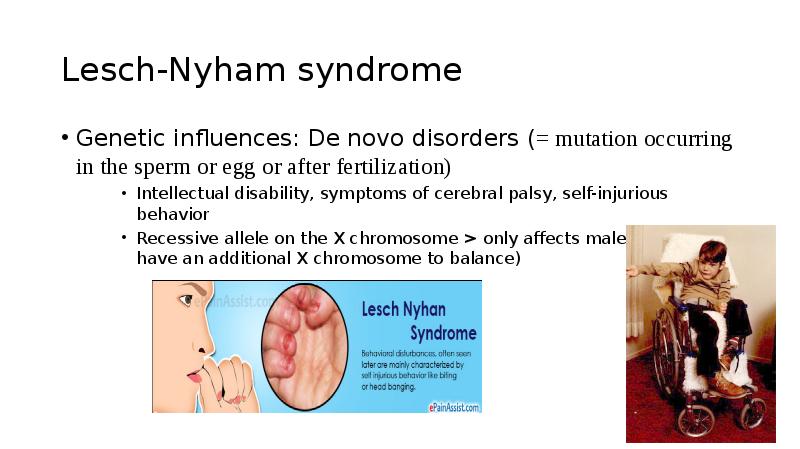
Lesch-Nyham syndrome Genetic influences: De novo disorders (= mutation occurring in the sperm or egg or after fertilization) Intellectual disability,...
Описание слайда:
Lesch-Nyham syndrome Genetic influences: De novo disorders (= mutation occurring in the sperm or egg or after fertilization) Intellectual disability, symptoms of cerebral palsy, self-injurious behavior Recessive allele on the X chromosome > only affects males (females have an additional X chromosome to balance)

Слайд 50


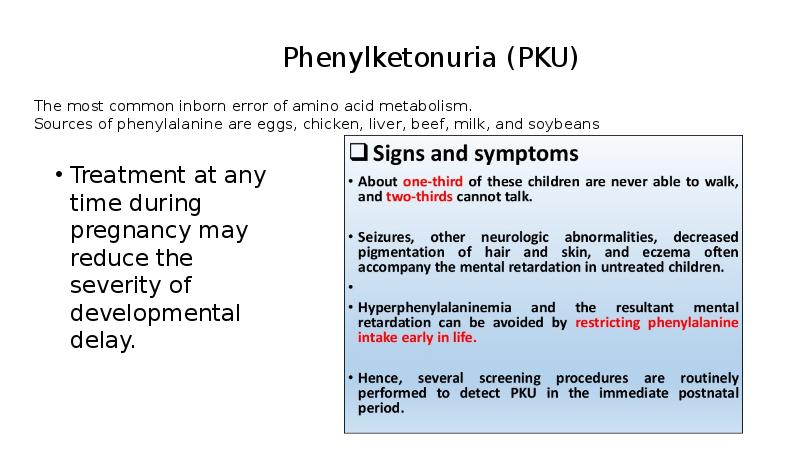
Phenylketonuria (PKU) Treatment at any time during pregnancy may reduce the severity of developmental delay.
Описание слайда:
Phenylketonuria (PKU) Treatment at any time during pregnancy may reduce the severity of developmental delay.

Слайд 51


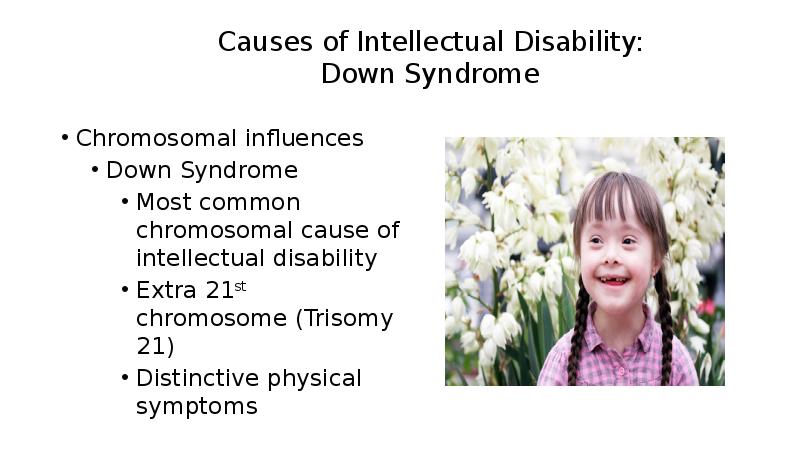
Causes of Intellectual Disability: Down Syndrome Chromosomal influences Down Syndrome Most common chromosomal cause of intellectual disability Extra...
Описание слайда:
Causes of Intellectual Disability: Down Syndrome Chromosomal influences Down Syndrome Most common chromosomal cause of intellectual disability Extra 21st chromosome (Trisomy 21) Distinctive physical symptoms

Слайд 52


Causes of Intellectual Disability: Down Syndome, Continued Down Syndrome Higher risk with advanced maternal age Detectable with some prenatal tests...
Описание слайда:
Causes of Intellectual Disability: Down Syndome, Continued Down Syndrome Higher risk with advanced maternal age Detectable with some prenatal tests Amniocentesis Chorionic villus sampling (CVS) Mother’s blood tests Tests do not indicate severity of impairment 1 in 4 mothers elects to terminate the pregnancy

Слайд 53


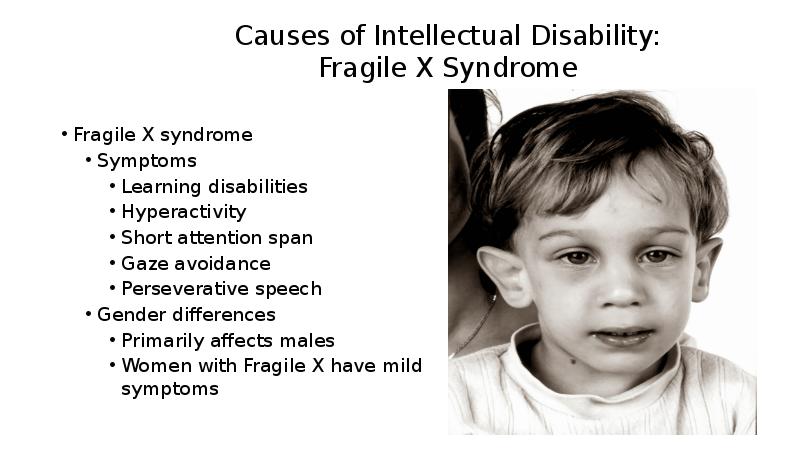
Causes of Intellectual Disability: Fragile X Syndrome Fragile X syndrome Symptoms Learning disabilities Hyperactivity Short attention span Gaze...
Описание слайда:
Causes of Intellectual Disability: Fragile X Syndrome Fragile X syndrome Symptoms Learning disabilities Hyperactivity Short attention span Gaze avoidance Perseverative speech Gender differences Primarily affects males Women with Fragile X have mild symptoms

Слайд 54


Causes of Intellectual Disability: Cultural-Familial Intellectual Disability Cultural-familial intellectual disability: Refers to intellectual...
Описание слайда:
Causes of Intellectual Disability: Cultural-Familial Intellectual Disability Cultural-familial intellectual disability: Refers to intellectual disability influenced by social environmental factors, such as: Abuse Neglect Social deprivation These factors likely interact with existing biological factors

Слайд 55


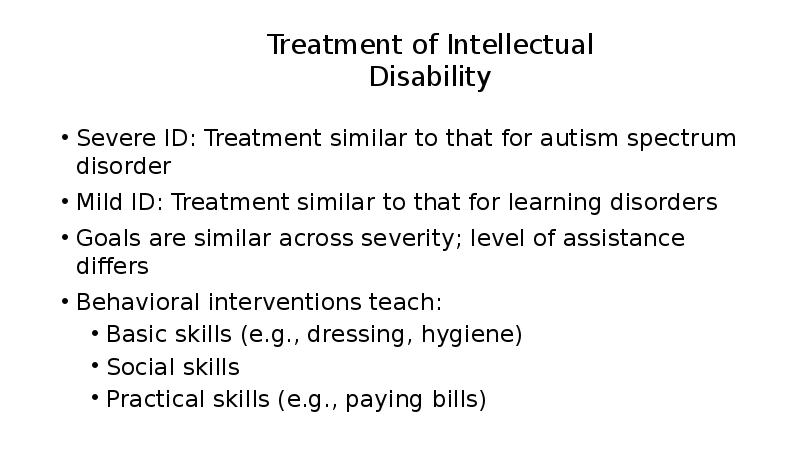
Treatment of Intellectual Disability Severe ID: Treatment similar to that for autism spectrum disorder Mild ID: Treatment similar to that for...
Описание слайда:
Treatment of Intellectual Disability Severe ID: Treatment similar to that for autism spectrum disorder Mild ID: Treatment similar to that for learning disorders Goals are similar across severity; level of assistance differs Behavioral interventions teach: Basic skills (e.g., dressing, hygiene) Social skills Practical skills (e.g., paying bills)

Слайд 56


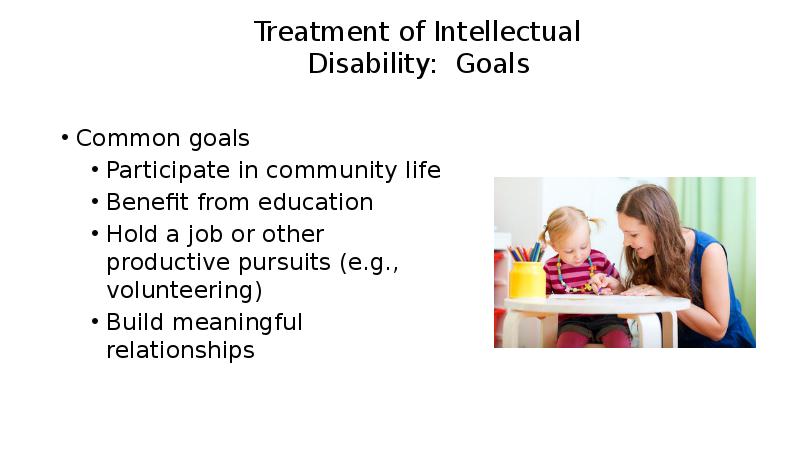
Treatment of Intellectual Disability: Goals Common goals Participate in community life Benefit from education Hold a job or other productive pursuits...
Описание слайда:
Treatment of Intellectual Disability: Goals Common goals Participate in community life Benefit from education Hold a job or other productive pursuits (e.g., volunteering) Build meaningful relationships

Слайд 57


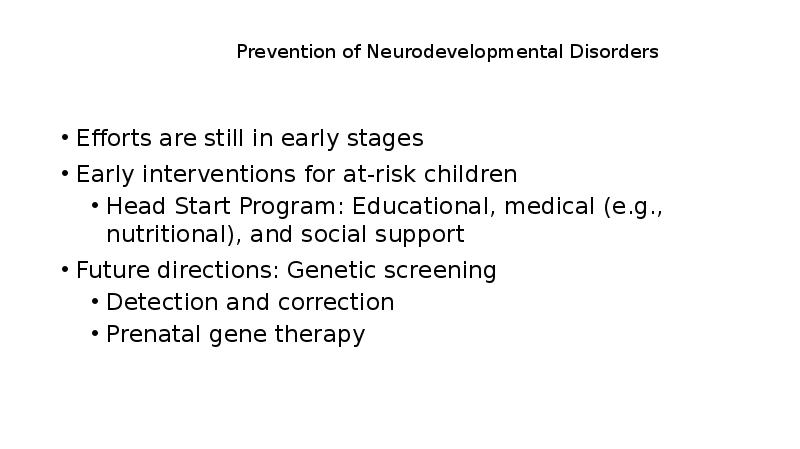
Prevention of Neurodevelopmental Disorders Efforts are still in early stages Early interventions for at-risk children Head Start Program:...
Описание слайда:
Prevention of Neurodevelopmental Disorders Efforts are still in early stages Early interventions for at-risk children Head Start Program: Educational, medical (e.g., nutritional), and social support Future directions: Genetic screening Detection and correction Prenatal gene therapy

Слайд 58


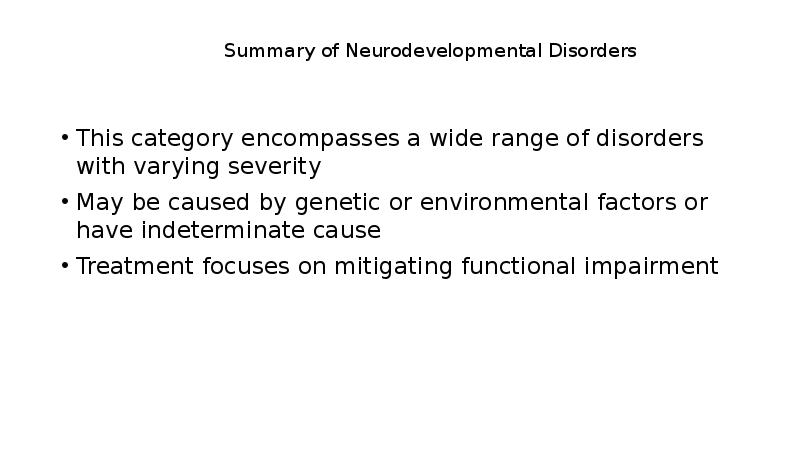
Summary of Neurodevelopmental Disorders This category encompasses a wide range of disorders with varying severity May be caused by genetic or...
Описание слайда:
Summary of Neurodevelopmental Disorders This category encompasses a wide range of disorders with varying severity May be caused by genetic or environmental factors or have indeterminate cause Treatment focuses on mitigating functional impairment


Похожие презентации
Mypresentation.ru
Загрузить презентацию